
The Government Shutdown Is Over — Kind of…
When the 43-day federal government shutdown finally ended on November 12, 2025, millions of Americans let out a sigh of relief. But for many households — especially Black and low-income families — the concerns didn’t disappear overnight. The SNAP benefits from the government shutdown 2025 crisis exposed fragile systems, political fractures, and deep inequities in who suffers the most when Washington stops working.
The newly signed funding bill reopened federal agencies, restored government operations, and secured full SNAP funding through September 2026. But this moment is more than a policy update — it’s a window into the economic ripple effects across communities, and a reminder of how political brinkmanship hits Black households with disproportionate force.
This article breaks down what happened, who crossed party lines, how services are restarting, what this means for youth and future generations, and what the community can do moving forward.
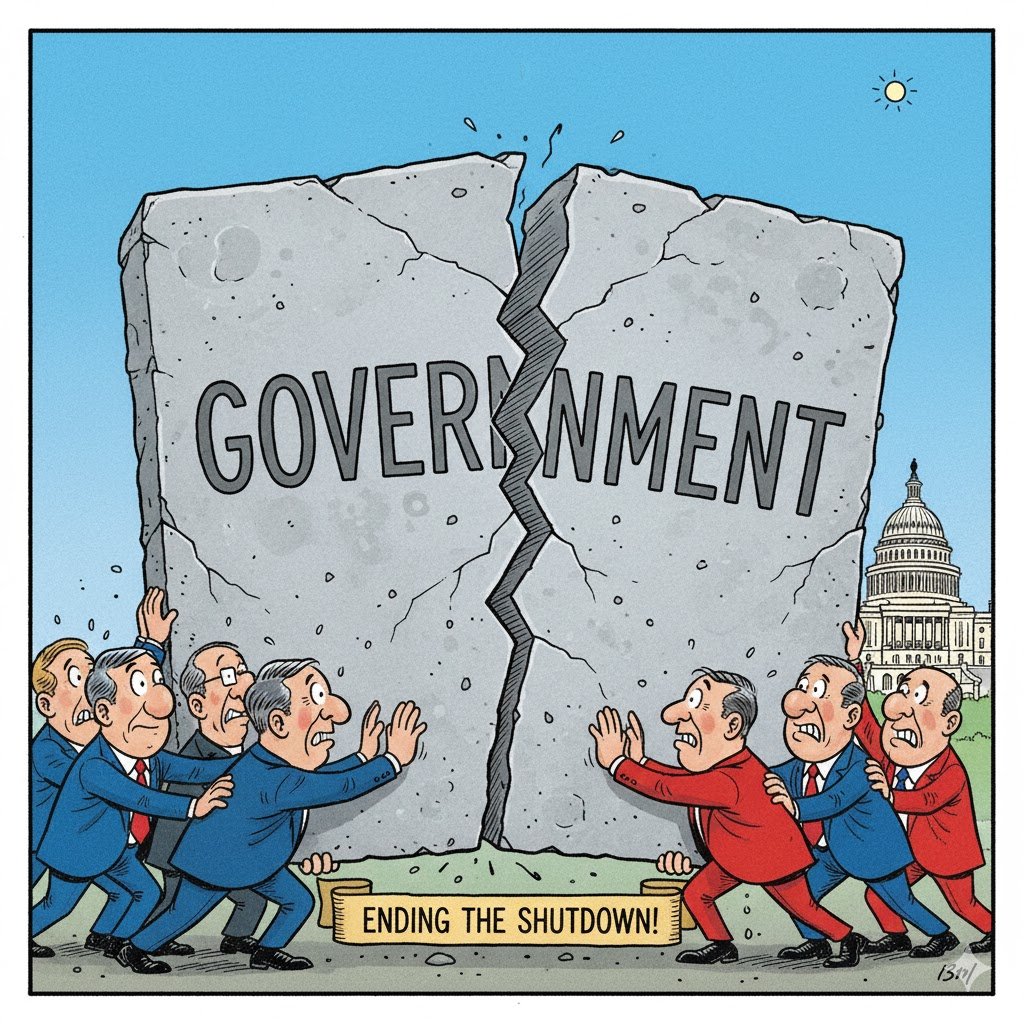
“How We Got Over” – What Actually Happened
While the deal did fund most of the government with a short-term continuing resolution (CR) until January 30, 2026, it also included full-year funding for a few specific agencies.
Here is the breakdown of the funding:
1. Short-Term Funding (Until Jan. 30, 2026)
- The majority of federal agencies were funded by a continuing resolution (CR) that extended their operations at current levels through January 30, 2026.
- This also included short-term extensions for various health programs, such as community health centers and Medicare telehealth flexibilities.
2. Full-Year Funding (Until Sept. 30, 2026)
The bill included three full-year appropriations measures for the following departments, funding them through the end of the fiscal year (September 30, 2026):
- Agriculture, Rural Development, and the Food and Drug Administration (USDA/FDA): This was a critical part of the deal, as it secured full-year funding for programs like SNAP and WIC.
- Military Construction and Veterans Affairs (VA): This ensured that veterans’ services and military construction projects were funded for the entire year.
- Legislative Branch: This bill funded the operations of Congress itself.
In summary, the deal used a short-term patch to reopen most of the government while simultaneously passing full, long-term funding for a few key areas, including Agriculture (SNAP) and Veterans Affairs.
The deal that ended the shutdown on November 12, 2025, was not a full-year solution. It was a “two-tiered” or “minibus” bill that only provided full-year funding for a few parts of the government, while postponing the fight for all the others.
The New Shutdown Deadline: January 30, 2026
The funding bill passed on November 12 was a temporary fix for most of the government. Here is a breakdown of what was not covered, the new deadline, and how the next votes are expected to happen.
- New Shutdown Date: Funding for the majority of federal agencies—those not in the full-year package—will expire on Friday, January 30, 2026.
- What Happens Then? If Congress fails to pass new funding bills by that date, all agencies covered by the short-term continuing resolution (CR) will shut down again.
What Was Not Covered? (The 9 Remaining Bills)
While the November 12 bill provided full-year funding (until September 30, 2026) for three appropriations bills (Agriculture/FDA, Military Construction/VA, and Legislative Branch), it left the remaining nine annual appropriations bills on the short-term extension.
This means the following major departments and agencies are only funded until January 30, 2026:
- Department of Defense
- Department of Health and Human Services (HHS), including the NIH, CDC, and NCI
- Department of Homeland Security (DHS)
- Department of Justice (DOJ)
- Department of Commerce
- Department of Education
- Department of Energy
- Department of the Interior
- Department of Labor
- Department of State
- Department of Transportation
- Department of the Treasury (including the IRS)
- Environmental Protection Agency (EPA)
Many key programs, such as Medicare telehealth flexibilities and funding for community health centers, were also only extended until the January 30 deadline.
How and When Will the Next Votes Happen?
Congress now has until January 30, 2026, to negotiate and pass funding for all the agencies listed above.
- The Goal (Regular Order): The House and Senate Appropriations Committees will try to negotiate and pass these remaining nine full-year spending bills, either individually or bundled together in another “minibus” package. This is the stated goal of Republican leadership, who want to avoid a single, massive “omnibus” bill at the deadline.
- The Backup Plan (Another CR): If they cannot reach an agreement on the full-year bills, their only option to avoid another shutdown would be to pass another short-term continuing resolution, pushing the deadline even further into 2026.
- The ACA Vote (A Separate Deal): A key part of the compromise to end the shutdown was a promise from Senate leadership to hold a separate vote on extending the Affordable Care Act (ACA) enhanced premium tax credits. This vote is expected to happen in mid-December 2025, but it is separate from the main government funding deadline.
How the 2025 Shutdown Happened — And Why It Lasted 43 Days
Government shutdowns aren’t rare, but this one became historic for its length and the scale of disruption.
The 2025 shutdown began on October 1, triggered by stalled negotiations between Congressional leadership over federal spending limits, border security, and healthcare allocations.
Party Divides — And the Officials Who Broke Ranks
Despite early pressure to “hold the line,” several lawmakers crossed party lines to push for reopening the government. Their names quickly became national talking points:
- Republican moderates in swing districts who feared voter backlash
- Democratic centrists urging compromise to reduce harm to federal workers
- Bipartisan senators who publicly warned that extended shutdowns harm national security and the economy
By early November, both political camps faced growing frustration from:
- Federal workers missing paychecks
- Businesses losing contracts
- SNAP participants unsure about food access
- Families delaying healthcare
- States running out of contingency funds
In short: public pressure worked. And younger voters — especially Black youth — played a major role in amplifying the urgency on social platforms.
What the Shutdown Meant for SNAP — And Why This Moment Still Matters
Full Benefits Are Returning, But Unevenly

The shutdown created massive confusion for millions of households who rely on SNAP. Although the reopening bill includes full funding through September 2026, the damage from delays and uncertainty is still unfolding.
Here’s the current landscape:
- Full benefits for November are being issued
- States are actively distributing remaining or delayed payments
- If you received a partial payment, your state will issue the rest
- If you received no payment, the state will release your full allotment
- Timing varies by state, but most began payments between Nov. 13–20
- December benefits are expected to follow the normal schedule
For many families, this update is a lifeline. Nearly 40% of Black households with children rely on SNAP or similar support programs — and when those benefits are disrupted, entire communities feel the pressure.
The Hidden Cost of Delayed Benefits
Even temporary interruptions can cause:
- Increased reliance on food banks
- Higher household debt
- School meal shortages
- Emotional strain on families and children
- Food insecurity spikes that outlast the shutdown
This is why the SNAP benefits government shutdown 2025 crisis turned into one of the loudest community concerns. Black households, single parents, seniors, and young adults living independently were among the most affected.
Healthcare Fallout — What Patients and Providers Are Experiencing Now
Healthcare impacts are often overshadowed by headline-grabbing political drama, but during this shutdown, they were severe.
Delayed Appointments and Longer Wait Times
Federal healthcare systems experienced:
- Appointment cancellations at VA hospitals
- Delays in Medicare claims processing
- Slower lab result turnaround
- Reduced staffing for federally funded clinics
Lower-income families and Black patients already face systemic delays — the shutdown worsened them.
Programs Supporting New Mothers and Children Were Stretched Thin
WIC, Medicaid support programs, and early childhood nutrition initiatives faced funding uncertainty. While emergency funds kept services afloat, many families feared losing access to:
- Formula
- Nutritional counseling
- Prenatal appointments
- Pediatric screenings
Younger parents — especially Gen Z and Millennials with young children — felt this acutely.
Business and Tax Disruptions — The Economic Ripple Effect
Shutdowns aren’t just political events. They’re economic earthquakes.
Small Businesses Took a Hit
Black-owned small businesses were particularly vulnerable because many rely on:
- SBA loans
- Federal contracts
- Federal tax credits
- Access to IRS customer support
- Supply chains tied to federal operations
During the shutdown:
- Loan processing stopped
- IRS phone lines were limited
- Federal contracts were paused
- Certification approvals were delayed
For small businesses already operating on thin margins, even short disruptions cause cascading consequences.
IRS and Tax Delays Will Spill Into Early 2026
The shutdown happened right before tax preparation season. The IRS is now behind on:
- Refund processing
- Amended returns
- Identity verification
- Taxpayer assistance backlogs
This will especially impact:
- College students filing independently
- Low-income households expecting refunds
- Small business owners filing quarterly taxes
Black taxpayers, who are statistically more likely to be audited due to inequitable IRS systems, may face extended processing delays.
Youth and Cross-Generational Impact — Why Young People Felt This the Most
Shutdowns hit differently in an age where Gen Z and young Millennials rely heavily on:
- Digital federal services
- FAFSA
- Student aid portals
- Healthcare appointments
- Tax filing apps
- Online immigration updates
- Social service platforms
FAFSA Disruptions Were a Wake-Up Call
Federal agencies handling FAFSA, Pell Grants, and loan services slowed dramatically. For college-bound Black youth, this created stress during an already intense financial aid season.
Younger Generations Became Leading Voices
Social media — especially TikTok, Threads, and X — saw a wave of young Black creators explaining the stakes, debunking misinformation, and pressuring lawmakers. Youth were not passive observers; they influenced the conversation.
Key Milestones in the Shutdown Fight
A quick, clear timeline of what moved the needle:
- Oct 1 — Shutdown begins
- Week 1 — Federal workers miss pay; SNAP distribution confusion rises
- Week 2 — Business groups demand action
- Week 3 — Several lawmakers signal willingness to compromise
- Week 4 — Biden administration releases updated economic impact projections
- Early Nov — Bipartisan Senate coalition forms
- Nov 12 — Funding bill passed and signed, reopening the government
- Nov 13–20 — States begin reissuing full SNAP benefits
These milestones matter because they show that political standoffs are responsive to public pressure.
What This Shutdown Reveals About the Future — And What Communities Must Prepare For
Shutdowns Are Becoming More Frequent
Younger generations may have to navigate more shutdowns in their lifetime. That means:
- Budgeting with disruption in mind
- Demanding accountability from lawmakers
- Building local support networks
- Advocating for stronger safety nets
State-Level Systems Need More Transparency
Families shouldn’t need to refresh EBT apps daily to know whether they can buy food. The crisis highlighted the need for:
- Real-time status updates
- Faster emergency communication
- Better coordination between states and federal offices
Community Organizations Are Filling the Gaps
Food banks, mutual aid groups, and churches — especially in Black communities — stepped in during this shutdown. Their role will remain vital.
Key Takeaways
- The shutdown lasted 43 days, ending on November 12, 2025
- SNAP benefits were fully restored, with all November payments now being issued
- Healthcare delays, especially for mothers, seniors, and veterans, will continue temporarily
- Small businesses and taxpayers face lasting disruptions
- Young people and Black communities were among the most impacted
- Several officials crossed party lines, ultimately enabling the reopening
- Shutdown fallout will continue into early 2026
What Our Community Can Do Moving Forward
This moment isn’t only about recovery — it’s about preparation and empowerment.
1. Stay Updated on State-Level SNAP Announcements
Every state is issuing benefits on a different schedule. Checking regularly is essential.
2. Strengthen Community Safety Nets
Mutual aid organizations, food drives, and local nonprofits proved their importance.
3. Support Black-Owned Small Businesses
Shutdowns disrupt their revenue streams — community support helps close the gap.
4. Encourage Young People to Stay Engaged
Youth activism influenced lawmakers this time; that energy should continue.
5. Push for Reform
Shutdowns should not be bargaining chips. Community advocacy can shape policy.
Related HfYC Content
- Government Shutdown Impact on SNAP Benefits: Urgent for Black Community
- The Government Shutdown Step-by-Step: A Story of Power, Politics and Community Impact
- Is a Rightward Democratic Shift Still Aligned with Black Values?
- Little White Lies: The History of the “Welfare Queen” Stereotype
- Is Jasmine Crockett “Too Much”—or Exactly What This Moment Demands?
- Zohran Mamdani for Mayor: Firebrand, Policy Nerd, or the Change New York Actually Needs?
- Hashtag to Action: How NJ’s Black Gen Z Is Rewriting the Rules of Social Change
Other Related Content
- Congressional Budget Office – Economic Effects of Shutdowns – https://www.cbo.gov
- USDA – SNAP Program Updates and Guidance – https://www.usda.gov
References (APA Style)
- Congressional Budget Office. (2025). Federal shutdowns and their economic impact. Washington, D.C.
- U.S. Department of Agriculture. (2025). SNAP emergency allotments and program continuity guidance. USDA.gov.
- Centers for Medicare & Medicaid Services. (2025). Healthcare program delays and contingency operations. CMS.gov.