
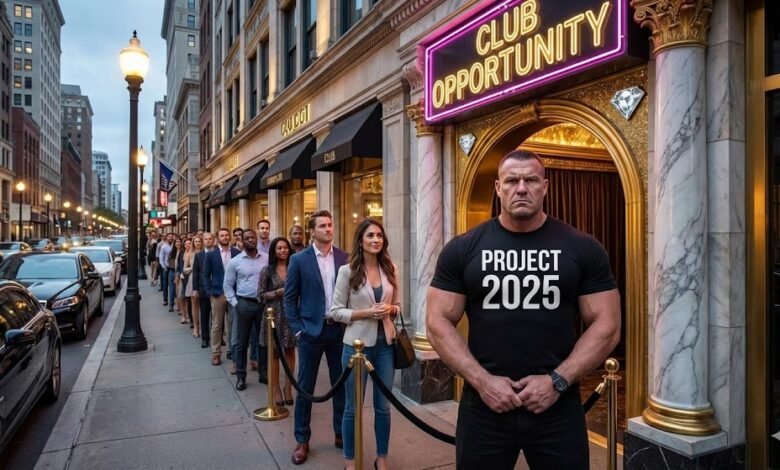
The Looming Threat of Project 2025 on Black America: What’s Really at Stake for Our Rights, Schools, and Economic Future
The national conversation around Project 2025 has reached a boiling point — and for good reason. A new report from the Thurgood Marshall Institute lays out in stark detail how the Project 2025 impact on Black communities would reshape civil rights, public education, criminal justice, and economic opportunity as we know it. The proposed agenda reads less like a policy document and more like a blueprint for undoing decades of hard-won progress.
And while much of the country is only catching up, Black communities — especially young people — are already asking the right question: What does this mean for our future?
This article breaks down the stakes across seven core areas, why this fight matters urgently for Black Gen Z and millennials, and what our communities must prepare for if even a fraction of this agenda becomes law.
A Blueprint with Us in the Crosshairs
Project 2025’s architecture is sweeping — reorganizing or dismantling entire federal departments, shifting enforcement power, reshaping the courts, and consolidating executive authority. But beneath the bureaucratic language is a clear pattern:
Programs used most heavily by Black families, workers, students, and neighborhoods are the ones placed on the chopping block.
The Thurgood Marshall Institute’s findings highlight disproportionate threats across:
- Civil rights enforcement
- Education funding
- Criminal legal system protections
- Housing stability
- Worker protections
- Voting rights infrastructure
- Social safety net programs
This isn’t just ideological — it’s targeted.
Dismantling the Department of Education: A Direct Hit to Black Students and Families

Project 2025 calls for eliminating the U.S. Department of Education, which would immediately end federal oversight and funding for programs that Black families disproportionately rely on.
Head Start in the Crosshairs
Nearly 28% of Head Start participants are Black children, meaning this single cut would destabilize early-childhood learning for hundreds of thousands of families. These programs aren’t luxuries — they’re lifelines.
Pell Grants at Risk
Project 2025 frames the federal student aid system as “bloated,” opening the door to major cuts or restructuring. Because Black students are disproportionately Pell Grant recipients, this would:
- Reduce college access
- Increase student debt
- Widen already stark opportunity gaps
Younger readers are already feeling the tight squeeze of rising tuition. This would multiply it.
Rolling Back Criminal Justice Reform — and Re-Weaponizing the System
The agenda calls for reversing federal efforts to address police misconduct, constraining the DOJ’s Civil Rights Division, and expanding punitive measures historically used against Black communities.
Weakening Police Accountability
Project 2025 opposes consent decrees — one of the strongest tools for reforming police departments with histories of excessive force.
Removing this safeguard leaves Black residents with fewer ways to challenge abuse.
Expanding the Death Penalty
The plan frames capital punishment as an essential deterrent. But decades of data show the death penalty is applied disproportionately to Black defendants. Expanding its use would deepen that racial imbalance.
This isn’t reform. It’s regression.
Undermining Anti-Discrimination Laws and Worker Protections
Project 2025 proposes:
- Weakening federal oversight of discrimination claims
- Eliminating diversity, equity, and inclusion programs
- Rolling back overtime protections
Less Oversight, More Exploitation
Black workers file discrimination claims at higher rates because they experience discrimination at higher rates. Cutting enforcement doesn’t reduce racism — it reduces accountability.
Overtime Rollbacks Hit Black Households Hardest
Millions of Black workers in health care, logistics, hospitality, and public service rely on overtime pay to make ends meet. Removing guarantees would drain household income, widen wealth gaps, and reduce economic mobility.
Housing Instability on Steroids: The Threat to Section 8 and HUD

Project 2025 aims to transfer control of major housing programs — including Section 8 — from federal management to the states.
This may sound administrative, but the implications are massive.
State Politics Will Decide Who Gets Housing
Federal oversight exists because states have long histories of racial discrimination in housing. Without federal guardrails, states could:
- Drastically reduce eligibility
- Cut funding
- Prioritize certain neighborhoods over others
- Reinforce racial segregation
Low-income Black families — already burdened by skyrocketing rents — would be left without critical support.
Voting Rights and Democratic Power at Risk
While Project 2025 avoids the language of voter suppression, the structural changes it outlines would weaken:
- DOJ civil rights oversight
- Voting rights enforcement
- Federal protections against discriminatory districting
Young Black voters — now one of the most politically active demographics in the country — would face a reduced ability to challenge inequitable election practices.
The Silent Strategy: Were Politicians Just Waiting for Election Week to Pass?
Some analysts argue that many elected officials have been noticeably quiet about Project 2025’s most extreme elements — not because they oppose them, but because calling attention to them before Election Day risked alienating moderates and Black voters.
It raises unsettling questions:
- Were the stakes intentionally downplayed to avoid backlash?
- Were promises of moderation simply placeholders until ballots were cast?
- Is the sudden distancing from Project 2025 now a genuine shift — or political theater?
Younger voters especially are calling out the pattern:
“They wait until after we vote to show us what they really plan to do.”
This section should be placed after the criminal justice analysis and before the anti-discrimination section to maintain narrative flow and political context.
Why Black Youth Are Sounding the Alarm First
Gen Z and younger millennials have grown up politically online — which means they read policy drafts, track receipts, and follow implications in real time.
They’re not waiting for cable news to catch up.
They see the stakes clearly:
- Cuts to education funding impact their degrees.
- Rollbacks to civil rights shape their workplaces.
- Housing instability affects whether they can build a future.
- Criminal justice shifts determine whether their communities stay safe.
Their anxiety isn’t hypothetical. It’s grounded in experience, data, and history.
Short-Term Shocks, Long-Term Consequences
Immediate Impacts
- Loss of early childhood education programs
- Increased policing power with fewer safeguards
- Reduced financial aid
- Threats to affordable housing
- Economic strain on working families
Long-Term Damage
- Widened racial wealth gaps
- Lower college completion rates for Black students
- Entrenched voter suppression
- Reduced federal accountability on discrimination
- Intergenerational setbacks in health, education, and economic mobility
If fully implemented, Project 2025 could fundamentally alter the trajectory of Black communities for decades.
Where We Go From Here: Protecting Our Rights, Our Future, and Our Communities
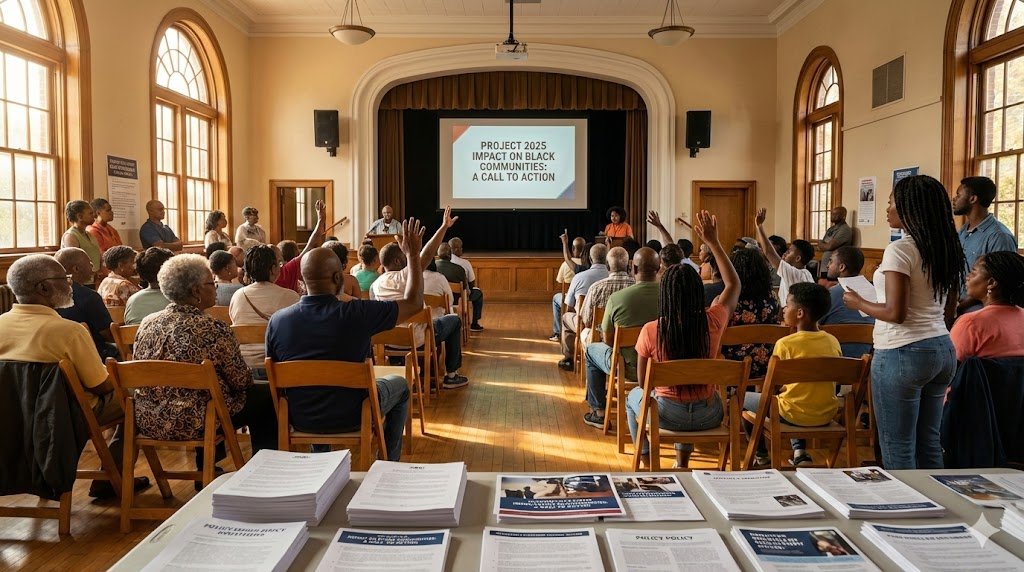
This moment demands action:
Community Awareness
Share credible information about what Project 2025 proposes — especially with younger voters, elders, and community leaders.
Political Engagement
Local, state, and national elections all shape what parts of this agenda could become real.
Advocacy & Organizing
Support organizations challenging policy rollbacks legally and publicly.
Collective Storytelling
Black communities have always resisted erasure through story. Use platforms like Here For You Central to amplify real experiences and local impact.
Key Takeaways
- The Project 2025 impact on Black communities is not abstract — it is direct, measurable, and deeply harmful across education, housing, civil rights, and the economy.
- Black youth are among the most informed and vocal about the stakes.
- Political silence before elections may have been strategic, not accidental.
- The moment calls for vigilance, unity, and proactive organizing.
Conclusion
Project 2025 is more than a policy wish list — it’s a referendum on the future of Black America. Whether you’re a parent fighting for educational resources, a young voter navigating an uncertain political landscape, or an elder who remembers what life was like before civil rights protections, this is a moment to stay informed and stay ready.
Our communities have fought back against attempts to undermine our rights before — and we will again. But it starts with knowing what we’re up against.
HfYC Poll of the Day
Do you think politicians stayed quiet about Project 2025 before the election because they never planned to tell Black voters the truth? Follow us and respond on social media, drop some comments on the article, or write your own perspective!
Other Perspectives:
- If Project 2025 is so “misunderstood,” why did so many politicians wait until after Election Day to distance themselves?
- Do you believe voters got the full story about Project 2025 before heading to the polls?
- So… were politicians reading Project 2025 at the same time as the rest of us, or just pretending it didn’t exist?
Related HfYC Content
- How the One Big Beautiful Bill Impacts Black Communities Across America
- Malcolm X Warnings & Nikki Minaj at the UN
- The ‘No Kings’ Protest Is Here. Are We Joining, or Are We Tired?
- Little White Lies: The History of the “Welfare Queen” Stereotype
- Zohran Mamdani for Mayor: Firebrand, Policy Nerd, or the Change New York Actually Needs?
Other Related Content
- Thurgood Marshall Institute Report on Project 2025 – A detailed breakdown of the proposed policy agenda.
- Brennan Center Analysis of Voting Rights Risks – Contextualizing how structural changes could affect underserved communities.
- Addressing the Disastrous Impacts of Project 2025 on the Black Community – NAACP
- What Project 2025 Means for Black Communities – The Thurgood Marshall Institute
- Black Americans Sound the Alarm on Project 2025 – The Congressional Black Caucus Foundation
References
- Thurgood Marshall Institute. (2024). Project 2025: Policy threats to civil rights and equity. NAACP Legal Defense Fund.
- Brennan Center for Justice. (2024). Voting rights and structural threats in federal policy proposals. Brennan Center Publications.



2 Comments