

Newark Policing Reform: The End of a Federal Era and the Beginning of Newark’s Next Test
For the first time in nearly a decade, Newark is standing on its own. In November 2025, a federal judge officially terminated the longstanding consent decree that had governed the Newark Police Department (NPD) since 2016—a decree born out of a blistering U.S. Department of Justice investigation that revealed years of unconstitutional policing. With that ruling, Newark closed the chapter on one of the most consequential police reform efforts in modern city history.
But if you ask Newark residents—especially Black youth, long-time community leaders, and civil rights advocates—this moment feels less like a finish line and more like a crossroads. Newark policing reform has come far, but the real test begins now.
Mayor Ras Baraka calls this a “victory for self-governance.” Public Safety Director Emanuel Miranda has hailed the ruling as proof that Newark can “transform itself without re-creating past harms.” Meanwhile, voices like Ryan Haygood of the New Jersey Institute for Social Justice are urging caution. As Haygood told NJ Advance Media,
“The consent decree may be ending, but the work of building trust between residents and police is ongoing.”
This is not an ending—it’s an unfiltered beginning.
To understand what comes next, we must understand how Newark got here, what reforms actually stuck, and why the fight for oversight and accountability is far from over.
How We Got Here: The Federal Investigation That Exposed the Truth
To appreciate the significance of this moment, it’s important to revisit what triggered federal oversight in the first place.
In 2014, the U.S. Department of Justice Civil Rights Division issued a damning 49-page report concluding that the Newark Police Department engaged in widespread unconstitutional policing, including:
- Unlawful stops and arrests
- Excessive force
- Retaliation against residents who recorded police
- Targeting of Black residents at disproportionate rates
- Systemic failures to investigate misconduct
According to the DOJ’s findings, nearly 75% of pedestrian stops lacked a constitutional basis. Investigators also found that internal affairs—charged with policing the police—sustained less than 1% of civilian complaints over a six-year period.
Federal intervention was not optional. It was necessary.
In 2016, Newark entered a court-enforced consent decree requiring:
- Body-worn cameras
- Improved use-of-force policies
- Bias-free policing training
- Data-driven accountability systems
- A new internal affairs framework
- Community policing initiatives
- Independent monitoring
This marked a new era of Newark policing reform—one that would reshape the department from the inside out.
Nine Years of Work: What “Substantial Compliance” Really Means
On the surface, the judge’s ruling suggests Newark passed its test. But what exactly does “substantial compliance” mean?
Federal Judge Arleo, in her termination order, emphasized that “substantial compliance” does not mean perfection. It means the systems built under the consent decree are reliable enough to be self-sustaining without federal supervision.
The independent monitor’s reports showed real progress:
- Use-of-force incidents declined
- Unlawful stop rates dropped significantly
- Policies now meet constitutional standards
- Supervisors review officer interactions on camera
- Internal affairs now investigates complaints with actual rigor
- Community engagement programs expanded
Newark became a national example—used by The New York Times and Washington Post as proof that reform can work when leadership and community pressure align.
But even with this progress, many Newarkers experience policing through a more complicated lens.
The Community Reaction: Celebration, Skepticism, and Cautious Hope
Mayor Ras Baraka described the decree’s end as a “testament to Newark’s ability to evolve without losing its soul.” Advocates, however, are more measured.
Ryan Haygood told reporters:
“We celebrate this moment, but we do not confuse compliance with completion.”
This sentiment resonates deeply among Newark residents, particularly Black youth who have lived their entire lives under both the shadows of over-policing and the promises of reform.
Younger Newarkers view the decree’s end with a generational realism shaped by:
- Viral videos of police misconduct nationwide
- High-profile failures of accountability in other cities
- The distrust inherited from parents and grandparents
- Their own experiences navigating over-policing in public spaces
For them, Newark policing reform is meaningful—but fragile. Many worry the progress made under federal oversight could erode without structural accountability mechanisms in place.
Older generations, who remember Newark’s policing struggles of the ’80s and ’90s, share this concern but also express hope—hope that the reforms now embedded into policy will outlast federal supervision if given proper support.
State Senator Angela McKnight Steps In: The Push for Real Civilian Oversight

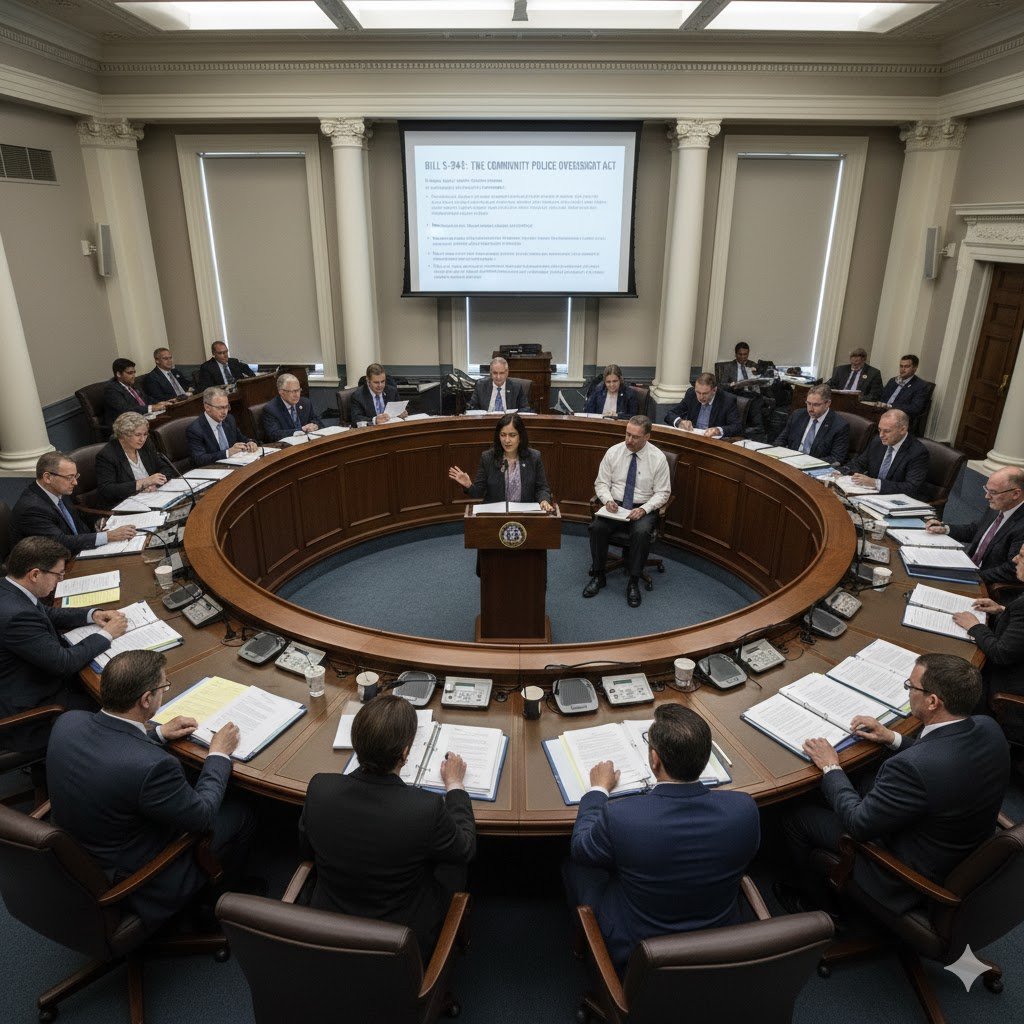
As Newark exits federal oversight, the next major battleground is unfolding in Trenton, where State Senator Angela McKnight is championing legislation that could define the future of Newark policing reform and statewide accountability.
Bill S-2943, currently gaining momentum in the New Jersey Senate, would:
- Authorize municipalities to create Civilian Review Boards (CRBs)
- Grant CRBs real subpoena power
- Allow boards to independently investigate misconduct
- Mandate police cooperation with community oversight bodies
This bill stems from a long fight. In 2020, the New Jersey Supreme Court ruled Newark’s existing CRB could not issue subpoenas, severely limiting its ability to hold officers accountable. That ruling left Newark—and cities like it—without a true watchdog.
McKnight has been clear about the stakes. In a public statement, she said:
“With federal oversight ending, local communities deserve the tools to hold their departments accountable. Trust cannot be rebuilt without transparency.”
Activists call subpoena power the soul of any oversight body. Without it, a CRB becomes symbolic—a toothless committee that must beg for cooperation.
Newark policing reform succeeded under federal oversight because the federal government had the authority to demand compliance. S-2943, if passed, would shift that authority to the people.
Why Newark’s Next Era Depends on Oversight, Not Optimism

Federal oversight provided structure. It provided rules. It provided consequences. Without that scaffolding, the question becomes: Can Newark maintain the standards it fought so hard to build?
Advocates warn that history shows reform often backslides when:
- Leadership changes
- Public attention fades
- Political priorities shift
- Budgets tighten
- Community pressure decreases
The fear is not unreasonable. Cities like Cleveland, Baltimore, and Oakland saw progress stall or reverse once consent decrees ended or loosened.
Newark could become the exception—but only if new oversight mechanisms take root.
The CRB bill is more than legislation; it’s Newark’s long-term insurance policy.
Youth Perspective: A Generation Raised on Both Surveillance and Injustice
For Black youth in Newark, the end of the consent decree is more than a headline—it intersects with their lived reality.
They grew up in a country where:
- Police body cameras became standard
- Viral videos changed national consciousness
- Protests erupted from Ferguson to Minneapolis
- Young people learned early to film every encounter
- “Know your rights” became everyday language
So when they hear the consent decree ended, their reactions are a mix of:
- cautious optimism
- generational skepticism
- and a clear understanding that reform is not linear
Young Newarkers voice a concern older generations also share:
Will police accountability remain strong without the federal government watching?
For them, Newark policing reform isn’t abstract policy—it shapes whether they feel safe walking to school, hanging out downtown, or navigating public spaces.
Short-Term Impacts: Relief, Uncertainty, and a Shift in Responsibility
Immediately, the end of the consent decree means:
- Newark officials regain control of police oversight
- The federal monitor steps back but provides a final summary report
- Community organizations increase pressure on city leadership
- Policymakers shift attention to implementing CRB legislation
There’s relief from city officials, who felt the decree sometimes slowed internal decision-making. But there’s also uncertainty—because without federal authority, accountability now depends on local commitment and political will.
The spotlight has moved from federal courtrooms to Newark’s city hall and the New Jersey legislature.
Long-Term Impacts: A Tipping Point for New Jersey Policing
The long-term outcomes of Newark policing reform will depend on whether structural accountability becomes part of Newark’s identity.
If the CRB bill passes:
- Communities gain real oversight
- Misconduct investigations become more transparent
- Trust may gradually deepen
- New Jersey becomes a national model for community-led accountability
If it does not:
- Newark risks losing momentum
- Progress could erode quietly
- Community trust could falter
- Misconduct could increase without public visibility
This moment is Newark’s chance to not only sustain reform—but to reinvent what public safety looks like for generations.
Key Takeaways
- Newark policing reform reached a major milestone with the consent decree termination.
- The DOJ investigation that led to the decree exposed systemic unconstitutional practices.
- Federal oversight helped NPD modernize use-of-force policies, improve accountability, and build trust.
- The community acknowledges progress but warns the work is far from done.
- Sen. Angela McKnight’s CRB bill is now the centerpiece of Newark’s future accountability system.
- Young people bring a realistic, vigilant perspective shaped by the digital era of policing.
- Newark’s long-term success depends on structural oversight—not federal supervision alone.
Call to Action — Reform Doesn’t End, It Evolves
Now is the moment for Newark to define what sustainable reform looks like.
Residents, advocates, and city leaders must:
- Support legislation that strengthens civilian oversight
- Stay engaged with NPD’s public meetings, reports, and community sessions
- Continue advocating for equitable policing
- Keep pressure on leadership when transparency wavers
- Ensure young people’s voices are centered in future reforms
The end of federal oversight is not the end of Newark’s policing story.
It is the beginning of Newark deciding—on its own terms—what justice should feel like.
HfYC Poll of the Day
Do you think Newark’s policing reforms will stay strong now that federal oversight has ended?
Alternate Perspectives:
- Will Newark’s progress continue without federal supervision?
- Is the end of the consent decree a milestone—or a warning sign?
- Should New Jersey give cities real subpoena power for police oversight?
Related HfYC Content
- Beyond the Bullet: How Jersey is Healing the Streets
- The Baraka Gambit: Can a Unified Black Agenda Reshape New Jersey Politics?
- Digital Eyes, Enduring Bias: How Surveillance Tech Threatens New Jersey’s Black Community
- Hashtag to Action: How NJ’s Black Gen Z Is Rewriting the Rules of Social Change
- 11 PM in Newark: Safety, Freedom, and the Generation Caught in the Middle
- Newark’s 1967 Rebellion and Today’s Struggle for Minority Rights
- A Party for a Plague? Irvington’s Opioid Fund Scandal and the Betrayal of Public Trust
- Is Jasmine Crockett “Too Much”—or Exactly What This Moment Demands?
- Newark, NJ: Brick City, Black Brilliance, and the Beat of New Jersey’s Soul
Other Related Content
- “DOJ Releases Report on Newark Police Unconstitutional Practices”
- “NJ Supreme Court Limits Newark’s Civilian Review Board Powers”
REFERENCES
- U.S. Department of Justice. (2014). Investigation of the Newark Police Department. https://www.justice.gov
- New Jersey Advance Media. (2025). Federal judge ends Newark’s consent decree; officials react to new era. https://www.nj.com
- New Jersey Supreme Court. (2020). Fraternal Order of Police v. City of Newark. https://njcourts.gov






2 Comments