Newark, New York, and the New Frontlines: How Black Leaders Are Confronting ICE and Federal Power
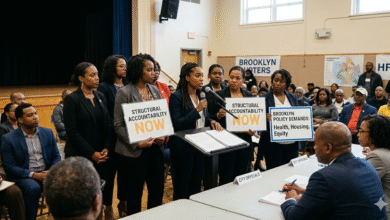
The conflict between federal immigration enforcement and local Black political leadership is no longer theoretical. In New Jersey and New York, it has become legal, political, and at times physical — unfolding in courtrooms, detention facilities, city halls, and on the steps of federal buildings. What began as resistance to ICE operations has hardened into a broader confrontation over power, accountability, and the safety of Black communities navigating an increasingly aggressive federal posture.
At the center of this moment are Newark and New York City — two jurisdictions where Black elected officials have moved beyond rhetoric and into direct confrontation with federal authority, even as President Donald Trump’s rhetoric around immigration and “law and order” continues to sharpen political fault lines.
The Legal Front: When Oversight Becomes a Crime
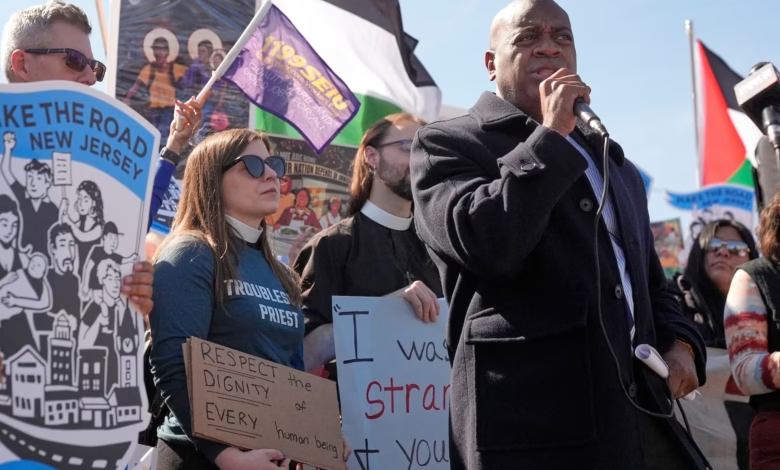
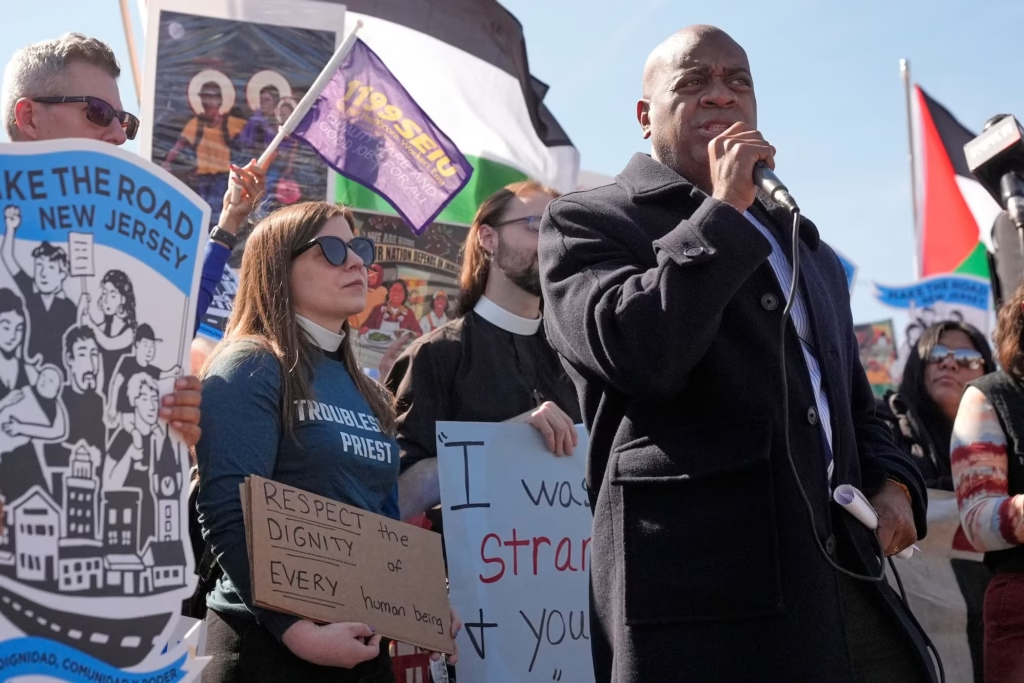
In May 2025, Newark Mayor Ras Baraka was arrested outside the Delaney Hall ICE detention facility while attempting to inspect the site alongside members of Congress. The incident reverberated nationally, reframing Newark’s long-standing sanctuary posture as something far riskier: direct confrontation with federal enforcement infrastructure.
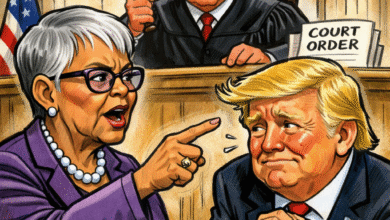
The arrest did not end at symbolism. It marked a shift toward criminalizing oversight itself. In the months that followed, legal scrutiny expanded beyond the mayor to include elected officials whose presence at detention facilities was framed by federal authorities as interference rather than governance.
For Black political leaders, this raised a chilling question: When does representing constituents become prosecutable conduct? The answer remains unresolved — and intentionally so — as cases continue to move through the courts.
The Political Front: Sanctuary Cities Under Pressure
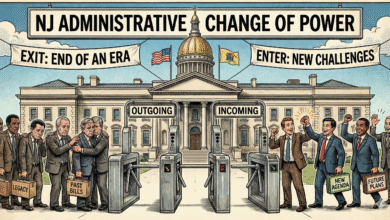
Newark’s resistance is not isolated. Across New Jersey and New York, sanctuary policies have become flashpoints in a broader struggle between municipal autonomy and federal enforcement mandates.
In Newark, city officials have doubled down on non-cooperation policies, refusing to share resident data or deploy municipal resources in support of ICE operations. In New York City, elected officials have taken similar positions — often facing federal threats tied to funding, jurisdiction, or “public safety” narratives.
What makes this moment distinct is how explicitly Black leadership has been targeted in the discourse. Mayors, council members, and members of Congress are not merely debating immigration policy — they are defending the legitimacy of Black-led governance itself in cities where immigrant and Black communities overlap deeply.
The Physical Front: Detention Centers, Federal Buildings, and the Street

The struggle has also moved into physical space.
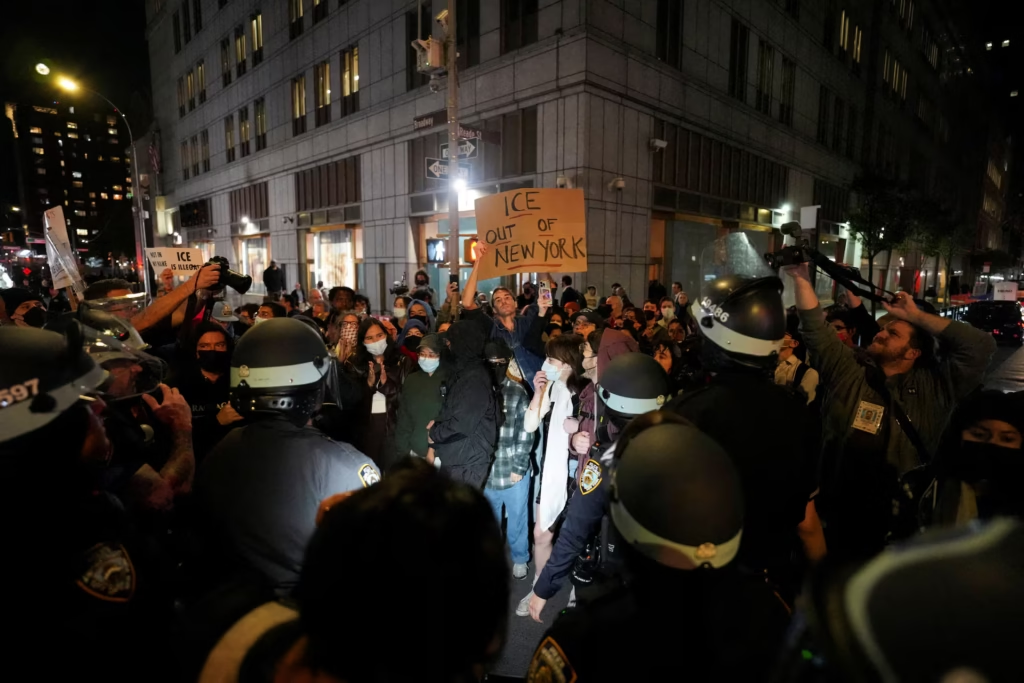
Detention facilities like Delaney Hall in Newark have become focal points not only for protest, but for serious safety and human rights concerns. In New York, confrontations at federal immigration courts and administrative buildings have placed ICE operations directly in the daily path of families, workers, and elected officials.
These moments matter because they shift public understanding. ICE is no longer an abstract federal agency operating somewhere else — it is present, visible, and increasingly aggressive in Black-led cities that have long borne the costs of over-policing and state surveillance.
The Expansion Front: Where the Next Battles Are Emerging
Beyond Newark and Manhattan, new concerns are surfacing around potential detention expansion in parts of New Jersey, raising alarms among local officials and residents before construction even begins.
This preemptive resistance reflects hard-earned lessons: once a detention facility is operational, community leverage narrows. By opposing expansion early, Black leaders are attempting to fight the next battle before it becomes another entrenched federal outpost.
Black Communities Under Pressure — and Watching Closely
While New Jersey and New York are the most visible theaters right now, Black communities nationwide are reading the signs. From the Midwest to the South, aggressive enforcement actions, publicized raids, and inflammatory political rhetoric have created a shared atmosphere of vigilance.
Importantly, many Black leaders are resisting the urge to universalize every local conflict. Instead, they are drawing connections carefully — emphasizing patterns without flattening regional realities. The message is not panic, but preparedness.
Public Action or Private Resolve?
This moment has forced an uncomfortable but necessary question inside Black communities:
Is this a season for public confrontation — or quiet preparation?
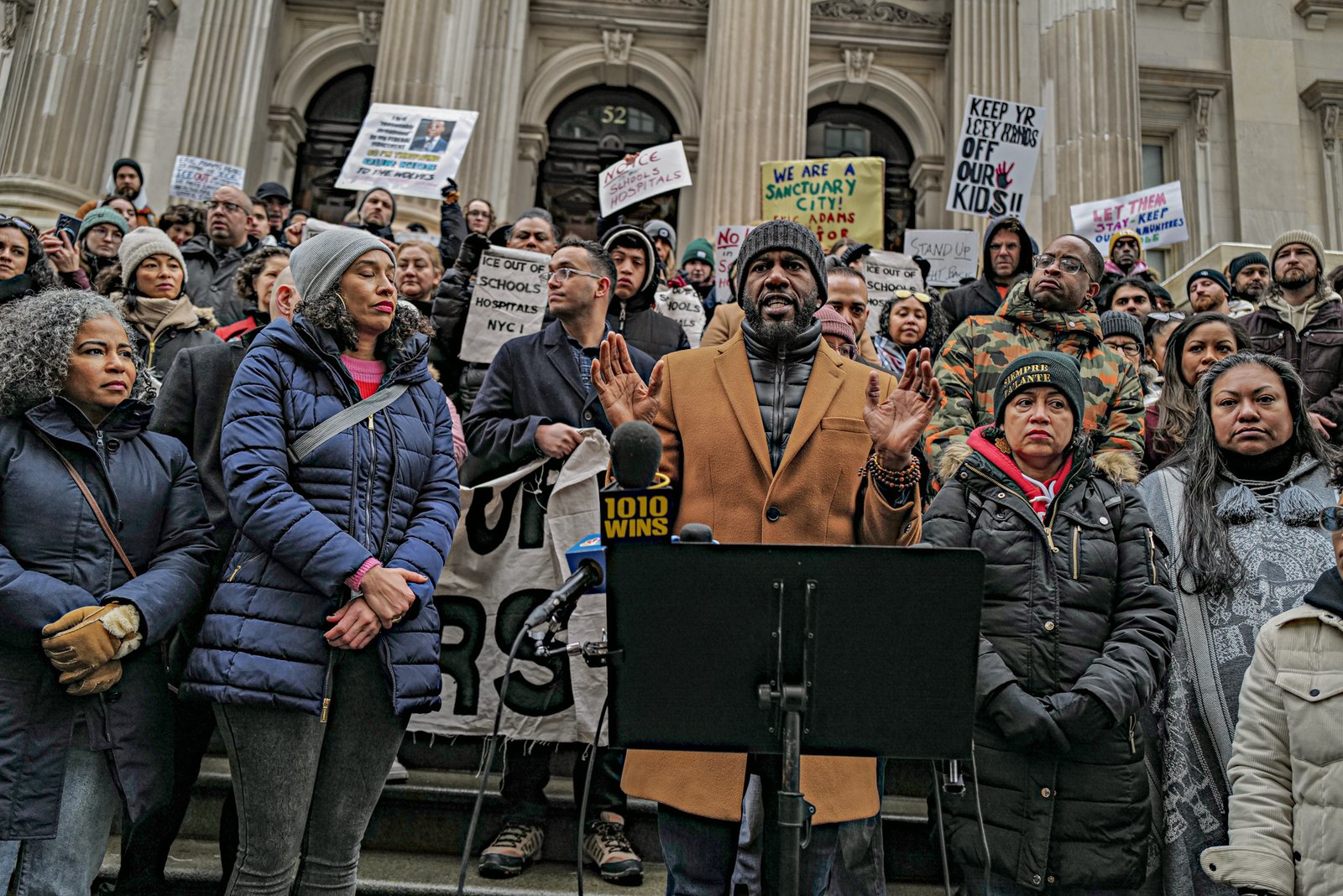
For some, public action remains essential: protests, court oversight, litigation, and visible resistance that draws national attention. For others, survival demands private resolve: legal readiness, documentation, family planning, and community-based “know your rights” networks that operate below the spotlight.
Increasingly, leaders are modeling both — recognizing that visibility and protection are not mutually exclusive, but situational.
What This Moment Reveals
The current struggle is not only about immigration. It is about who governs Black cities, who defines public safety, and whether Black political power can assert itself without being criminalized.
Newark and New York are not anomalies — they are test cases. How these confrontations resolve will shape the boundaries of local authority, federal enforcement, and Black civic leadership for years to come.
Key Takeaways
- Black political leaders in NJ and NY are confronting ICE across legal, political, and physical fronts.
- Oversight itself is increasingly treated as a federal offense, raising constitutional concerns.
- Detention centers and immigration courts have become visible flashpoints in Black-led cities.
- Communities are debating strategy: public resistance versus private preparedness.
- Newark and New York may preview conflicts other Black communities will soon face.
HfYC Poll of the Day
Follow us and respond on social media, drop some comments on the article, or write your own perspective!
Is this a moment for public protest — or quiet preparation — in Black communities facing aggressive federal enforcement?
Poll Question Perspectives
- Should Black leaders continue direct confrontation with ICE, even at legal risk?
- How can communities balance visibility with safety right now?
- Are sanctuary policies enough without deeper federal reform?
Related HfYC Content
- $970M Newark Budget Plan Raises Painful Tax Concerns
- Newark Policing Reform: The End of a Federal Era
- Is a Rightward Democratic Shift Still Aligned with Black Values?
- The Looming Threat of Project 2025 on Black America
Other Related Content
- Politico — A New Jersey Mayor’s Arrest at ICE Facility Fires Up Democrats
- Reuters — Coverage of immigration court confrontations in New York
- Associated Press — Reporting on ICE enforcement incidents and accountability debates
References
Politico. (2025). A New Jersey mayor’s arrest at ICE facility fires up Democrats.
Associated Press. (2025–2026). Reporting on immigration enforcement and public accountability.
Reuters. (2025–2026). ICE operations and federal-local tensions in U.S. cities.