
The New Political Landscape — November 2025 Elections
Impact on Epstein Files, ACA and More
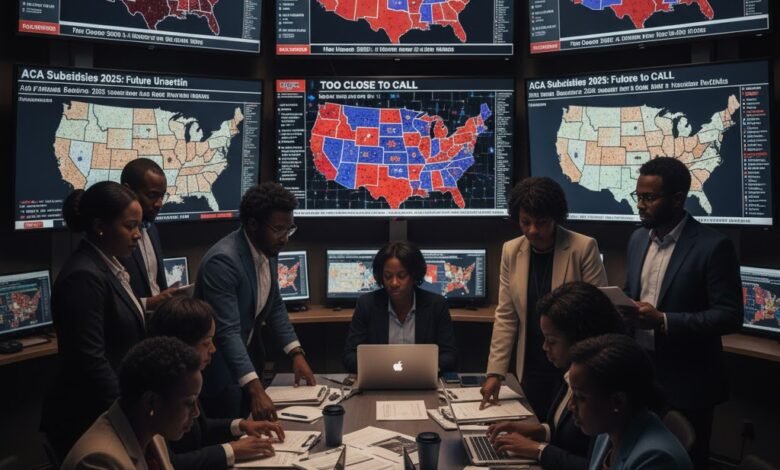
The political earthquake from this month’s mixed, contested elections is still shaking Washington. Both parties claimed victory. Neither party got what they wanted. And now the entire fight around ACA subsidies 2025, benefits, and the fallout from the 2025 shutdown is taking place in one of the most unpredictable political environments we’ve seen in a decade.
For Black communities — who felt the shutdown’s pressure, rely heavily on SNAP, and benefit from ACA marketplace subsidies — the results matter in very real ways. Because the biggest policy battles of 2026 are no longer just about ideology. They’re about survival.
This article breaks down what the latest elections changed, why both parties are scrambling, and how this all shapes the year ahead for health care, benefits, and economic stability.
(SEO Note: The focus keyword ACA subsidies 2025 appears in the opening section and throughout the article.)
What Exactly Is an Off-Year Election — And Why It Matters More Than People Think
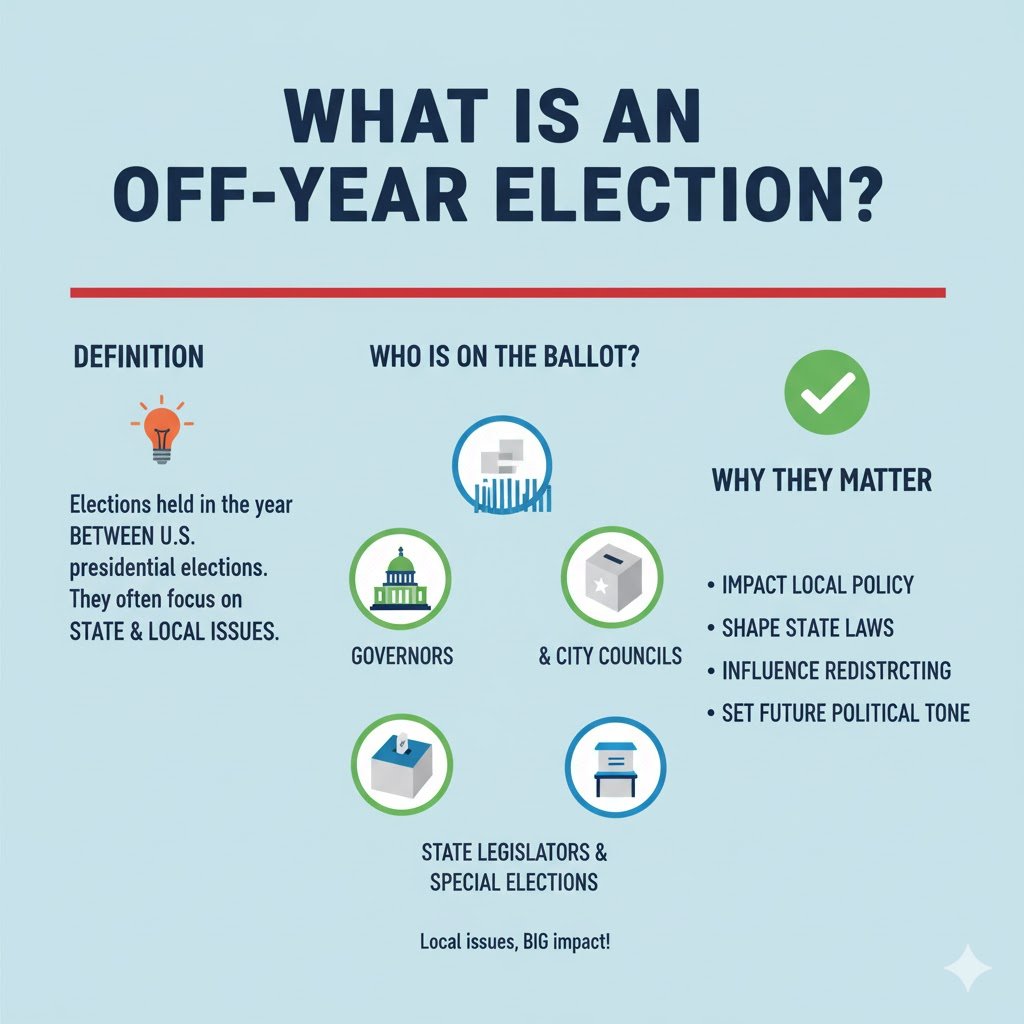
Most people only tune into presidential elections, but off-year elections carry their own political power. An off-year election is any election that takes place in an odd-numbered year — like the November 2025 elections — when the presidency is not on the ballot.
Even though turnout tends to be lower, the impact can be huge because these races often include:
Key Roles Decided in Off-Year Elections
- Governors
- Mayors
- State legislators
- County executives and commissioners
- Judges and prosecutors
- Ballot initiatives
- Special elections for the U.S. House or Senate
These positions shape daily life in direct, tangible ways — often more than federal politics.
Why Off-Year Elections Matter in the Political Cycle
In political strategy terms, off-year elections are viewed as:
- Mood checks: A preview of how voters feel leading into midterms or presidential years.
- Momentum builders: Wins in off-years energize a party’s base and influence donor confidence.
- Messaging tests: Parties experiment with themes they may use in the next major election.
- Map shapers: Local and state elections control redistricting, policing budgets, school boards, and public health policy.
For Black communities, off-year elections often determine:
- Whether hospitals close or stay open
- How schools are funded
- Whether prosecutors reform or reinforce broken systems
- How voting rights are protected or weakened
- How aggressively states push back against or embrace ACA policies
Key Terms in the Election Cycle (and What They Really Mean)
- Midterm Elections: Held halfway through a president’s term. Historically, the president’s party loses seats.
- Special Elections: Elections held to fill unexpected vacancies — often unpredictable and high-stakes.
- Runoffs: A second election when no candidate reaches a required threshold. These frequently change outcomes dramatically.
- Wave Election: When one party wins significantly more seats than expected.
- Bellwether: A district or state whose results tend to predict national trends.
Understanding these terms helps communities read the political moment more clearly — and prepare for the fights ahead.
A Mixed Election With No Clear Winner — And Why That’s Dangerous for Everyday People
The elections earlier this month delivered a chaotic, contradictory message from voters nationwide. Democrats won big in several cities and suburban regions. Republicans won or held critical rural and exurban seats. Some elections remain contested, with recounts and court challenges underway.
The result is a map that looks purple, not red or blue — and a Congress even more fractured than before.

What the Results Actually Look Like
- Democrats overperformed in major cities, college towns, and diverse suburbs.
- Republicans strengthened their hold in rural districts and flipped a small number of competitive seats.
- Independent and unaffiliated candidates made surprising gains in some regions, signaling growing frustration with both parties.
- Several races are within 0.5% margins, worsening distrust and intensifying partisan messaging.
Instead of clarity, Americans received confusion. And both parties are now recalibrating their strategies — especially around the ACA, benefits, and the upcoming January 2026 funding showdown.
How Republicans Are Rewriting Their Strategy After a Mixed Election
For Republicans, the results were a paradox: strong enough to claim momentum, weak enough to reveal deep vulnerabilities.
Where They Feel Empowered
- They held onto crucial swing-district House seats
- Rural and conservative turnout stayed high
- Their base responded strongly to immigration and inflation messaging
- Their narrow House majority survived — barely
This keeps the GOP’s “trifecta government” narrative alive: the White House, House, and Senate remain aligned under Republican leadership.
Where They Feel Exposed
- Suburban and youth voters shifted away from them
- Health care remains their weakest policy area
- Many independents blamed them for the 2025 shutdown
- Polling shows overwhelming public support for extending ACA subsidies
With ACA subsidies 2025 set to expire on December 31 of this year, Republicans are trapped between the priorities of their conservative base and the backlash risk from independents, suburban voters, and Black households.
The GOP’s New Goals After This Election
Republicans are now signaling three strategic pivots:
- Let ACA subsidies expire silently while blaming Democrats for “failing to negotiate.”
- Develop a symbolic “ACA replacement framework” to shield vulnerable incumbents in 2026.
- Use the January 30, 2026 funding negotiations to push unrelated conservative priorities (border security, spending caps), not health care.
But nothing is guaranteed. Their coalition is divided, and mixed election outcomes mean no Republican can assume the public backs a full repeal-adjacent approach to the ACA.
How Democrats Are Shifting Their Playbook After Surprising Wins — and Bitter Disappointments
Democrats came out of these elections with energy — but also internal fractures.
Where Democrats Gained Ground
- Black voters in major cities boosted turnout despite frustration
- Youth turnout surged in college towns and metropolitan districts
- Democrats flipped or held several legislative chambers and mayoral seats
- Suburban women and independents responded strongly to health care and cost-of-living messaging
Strategists immediately latched onto an idea: ACA subsidies 2025 may be the Democrats’ strongest issue heading into the 2026 midterms.
Where Democrats Are Still Struggling
- The party’s progressive wing is furious about the shutdown compromise
- Eight centrist Democratic senators voted to reopen the government without securing ACA subsidies
- The party’s messaging remains muddled on economic issues
- Black voters remain mobilized but increasingly skeptical of Democrats’ tangible delivery
And Democrats remain out of power at the federal level — which limits their ability to secure policy wins now.
Democrats’ New Strategy After These Elections
Democrats appear to be moving in three directions:
- Turn ACA subsidies 2025 into a defining 2026 campaign issue: “Republicans raised your premiums.”
- Mobilize Black, youth, and working-class voters by tying health care affordability to everyday economic survival.
- Lean on public polling showing bipartisan support for extending ACA tax credits.
For Democrats, the roadmap is simple: win back the House in 2026 or lose the ACA subsidies fight for a generation.
The Political Landscape From a Black American Perspective
The truth is this: the mixed election results mean instability, and instability always hits Black communities hardest.
Black Voters Are Still a Moral and Political Force — But Both Parties Take Them for Granted
Black turnout saved Democrats in multiple cities. Yet neither party delivered meaningful advancements on:
- ACA subsidies
- Maternal health
- Hospital closures
- Medicaid expansion in the South
- Gun violence reduction
- School funding disparities
- Economic protections for gig workers
- Student loan cancellation
Republicans made small but notable gains in some working-class Black neighborhoods by emphasizing economic frustration — even though their policies don’t materially address those frustrations.
Democrats rely on Black loyalty — but loyalty without tangible deliverables is wearing thin.
The ACA Fight Is Deeply Racial Whether Politicians Admit It or Not

If ACA subsidies 2025 expire:
- Black uninsured rates will rise
- Black households on fixed incomes will struggle most
- Black gig workers will face the biggest premium shocks
- Communities with low hospital access will be hit hardest
- Chronic conditions (diabetes, hypertension, asthma) will worsen
The policy is national. The consequences are not.
SNAP Is Safe — Because Communities Fought Harder Than Congress
Unlike the ACA, SNAP benefits are fully funded through September 2026.
Why?
Because grassroots organizers, faith leaders, and Black civic networks forced Congress to remove SNAP from bargaining during the shutdown.
It wasn’t grace. It was pressure.
What’s at Stake Now — ACA Subsidies, Shutdown Politics, and January 2026
The next big flashpoint is January 30, 2026, when Congress must pass the remaining appropriations bills.
What’s on the table:
- Defense
- Homeland Security
- Health and Human Services
- IRS
- Education
- Housing
What’s not on the table:
- SNAP (already funded)
- ACA subsidies 2025 (on a separate political track)
That separation is a problem. Democrats lost their biggest leverage point for securing the subsidies. And Republicans know it.
The next two months will determine whether premiums double or triple for millions of families — including a disproportionate number in Black America.
How the New Political Landscape Shapes the Fallout From the Epstein Files Release

The release of the Epstein files — a trove of previously sealed documents naming associates, visitors, and individuals connected to Jeffrey Epstein’s network — dropped at a politically volatile moment. And the mixed and contested nature of the November 2025 elections are already influencing how both parties respond to the fallout.
Why the Timing Matters
Normally, explosive revelations like this would dominate Washington.
But with:
- a divided electorate,
- razor-thin congressional margins,
- and ACA subsidies 2025 hanging in the balance, the Epstein files are landing in a hyper-politicized, strategically cautious environment.
Republicans’ Approach After the Election
The GOP’s reaction is complicated:
- Hard-liners want aggressive investigations, believing the file release could damage Democratic figures or elites tied to previous administrations.
- Moderate Republicans are cautious, worried about appearing partisan or fueling conspiracy chaos right before a decisive legislative period.
- The Trump administration sees the files as a political weapon, but also a risk — because several prominent conservatives and donors appear in flight logs or correspondence.
The election results only reinforce this split. Republicans gained enough wins to stay confident, but not enough to feel secure. That makes their Epstein strategy unpredictable.
Democrats’ Approach After the Election
Democrats are equally conflicted:
- Progressives want full transparency, framing the release as a broader indictment of elite abuse and institutional failure.
- Centrists prefer to minimize the controversy, worried that further attention could overshadow economic issues like ACA subsidies 2025 and give Republicans an opening.
- The party knows mixed election results mean voters are watching closely, especially suburban women, Black parents, and younger voters concerned with safety and justice.
The Epstein files risk becoming a political distraction — but also a moral test, especially as both parties try to court young voters who demand accountability across the board.
The Black Community Lens: What the Epstein Fallout Reveals
From a Black American perspective, the Epstein case highlights deeper systemic issues:
- Wealthy abusers receive institutional protection, while poor, Black, and marginalized communities face harsh punishment for lesser crimes.
- Survivors — especially women and girls of color — rarely receive justice, resources, or media attention.
- The elite networks involved span political lines, reinforcing that abuse of power is not partisan — it’s systemic.
The mixed election results, combined with shutdown politics and ACA uncertainty, mean Washington may try to bury or politicize the Epstein files rather than seek truth.
This is precisely why community advocacy and media platforms like HfYC must continue applying pressure.
What Happens Next?
The political landscape suggests:
- Investigations are likely in House committees, but may be shaped by GOP internal divisions.
- Senate action will depend on bipartisan cooperation, which is fragile after the shutdown.
- Neither party wants to be perceived as protecting elites, especially going into the 2026 midterms.
- Public pressure — especially from younger voters — will determine whether transparency or political theater wins out.
For Black communities, the question is whether the Epstein file release sparks real accountability — or just becomes another political football in a year already shaped by instability.
Key Takeaways
- The latest elections were mixed, leaving the country politically divided and unpredictable.
- Neither party got a mandate, putting pressure on both sides to refine strategies.
- Republicans feel energized but exposed on health care policy.
- Democrats feel momentum but fractured over strategy.
- ACA subsidies 2025 remain at risk, and millions may face higher premiums.
- SNAP is protected through 2026 thanks to community pressure.
- Black voters remain decisive — but still underserved by both parties.
- The 2026 midterms will determine whether health care becomes more affordable or more chaotic.
What Our Communities Can Do Next
- Demand Clear Answers on ACA Subsidies 2025
When candidates visit churches, campuses, or community boards, ask directly:
“Will you vote to extend ACA subsidies?”
- Prepare Financially for Possible Premium Changes
Enroll early. Compare plans. Track subsidy updates.
- Support Organizations Fighting for Health Equity
Local clinics, navigators, and health-justice groups will be essential.
- Vote Strategically in 2026
The future of ACA subsidies, SNAP stability, and shutdown politics depends heavily on House and Senate outcomes.
Related HfYC Content
- Government Shutdown Impact on SNAP Benefits: Urgent for Black Community
- The Government Shutdown Step-by-Step: A Story of Power, Politics and Community Impact
- Is a Rightward Democratic Shift Still Aligned with Black Values?
- Little White Lies: The History of the “Welfare Queen” Stereotype
- Is Jasmine Crockett “Too Much”—or Exactly What This Moment Demands?
- Zohran Mamdani for Mayor: Firebrand, Policy Nerd, or the Change New York Actually Needs?
- 2025 US State and Local Elections: A Turning Point for Black American Communities
- Little White Lies: The History of the “Welfare Queen” Stereotype
- How the One Big Beautiful Bill Impacts Black Communities Across America
Other Related Content
- Reuters – ACA tax credit polling – https://www.reuters.com
- Commonwealth Fund – Premium projections – https://www.commonwealthfund.org
References (APA Style)
Commonwealth Fund. (2025). Analysis of ACA premium tax credit expiration.
Reuters. (2025). Poll: Majority support extending ACA subsidies.
AP News. (2025). Shutdown negotiations and ACA impact.
KFF. (2025). Public attitudes on health care subsidies.
Poll Question for the Comment Section:
After another “mixed election,” do you trust either party to protect your health care in 2026?




One Comment