
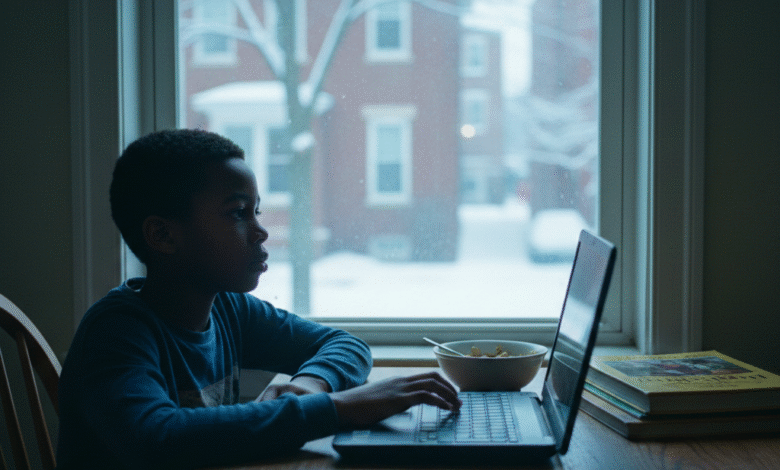
The Digital Snow Day: Is Remote Learning Failing Newark’s Families?
NEWARK, NJ — The sound of snow shovels hitting the pavement across Northern New Jersey and Brooklyn this morning was accompanied by a different kind of stress: the chime of login screens. Following a historic winter storm on Sunday, January 25, 2026, that dumped up to 14 inches of snow across the region, Mayor Zohran Mamdani in New York and officials in Newark mandated a shift to remote learning for Monday, January 26. But for many in our community, the “Digital Snow Day” is exposing old wounds in the Newark remote learning digital divide.
Infrastructure Under Ice: Why the City Shifted
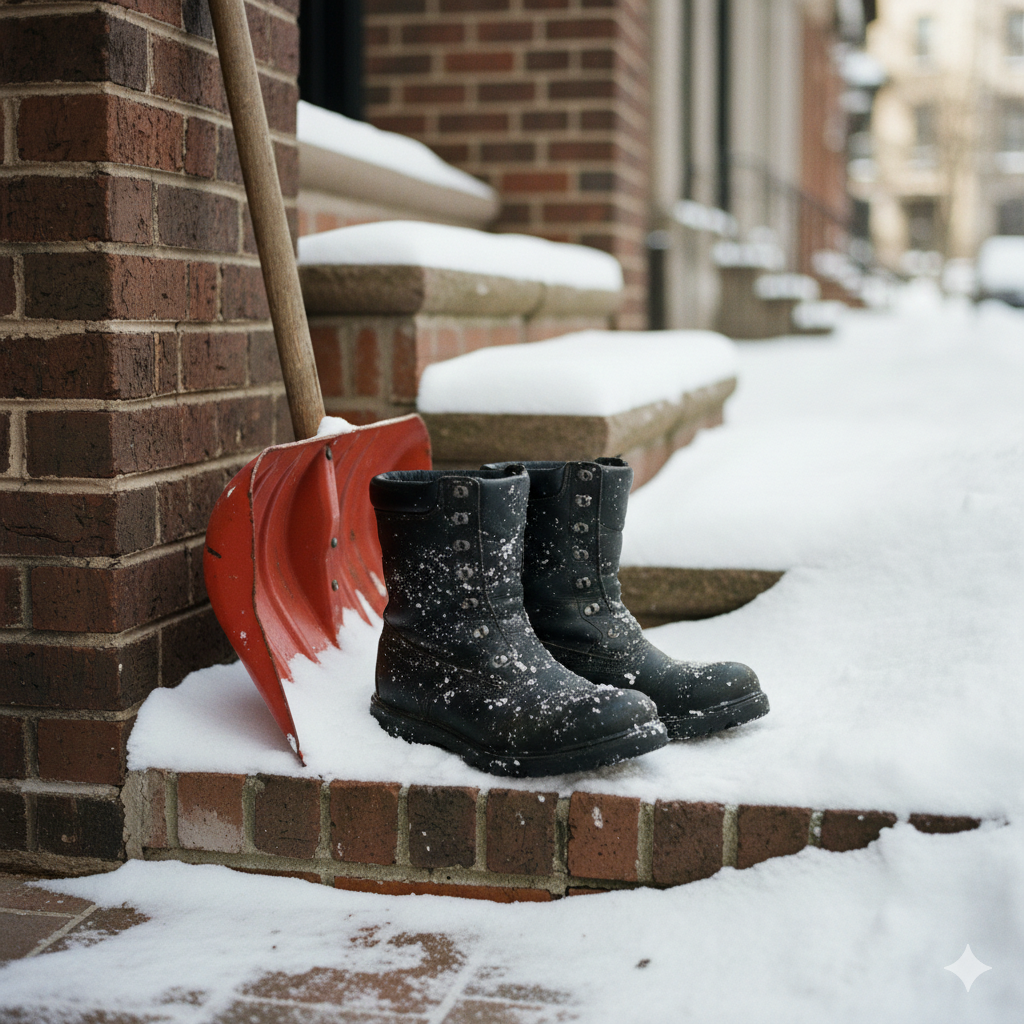
The decision to go remote was driven by a State of Emergency declared by Governor Mikie Sherrill and a State Disaster Emergency from Governor Kathy Hochul as the storm created “hazardous conditions posing an imminent danger.” While the physical safety of students was the priority, the storm’s impact was felt immediately:
- Road Closures: Major arteries including I-280 and I-78 faced heavy travel restrictions to allow for more than 70 snow-removal trucks to clear Newark’s streets.
- Power & Utility Risks: High winds and heavy snowfall created widespread threats of power outages, which the Governors warned could disrupt essential services for weeks.
- Warming Centers: With temperatures dropping to dangerous levels, Brooklyn high schools like Midwood and the Urban Assembly for Law and Justice were converted into warming centers rather than classrooms.
The Dead Zones: When High-Speed is a Myth
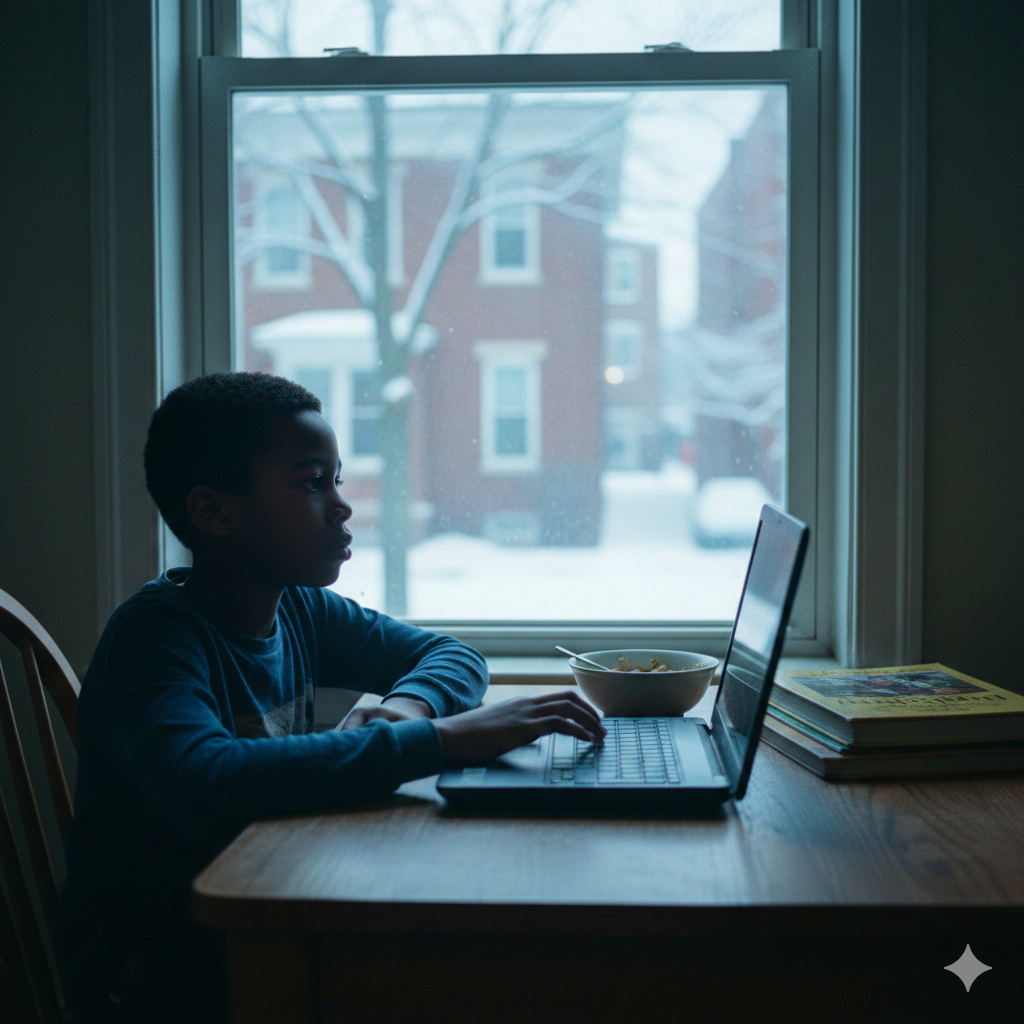
While the city moves to the cloud, many residents remain grounded by “digital redlining”—a practice where providers invest in fiber optics for wealthier areas while leaving low-income and Black blocks with aging, slow infrastructure. In Newark, this manifests as “dead zones” where even a minor storm can cause the Wi-Fi to buckle.
- Device Access: Research indicates that while many schools provide laptops, roughly 1 in 3 Black and Latino households in New York still lack the desktop or tablet devices necessary to participate fully in remote schooling or work.
- The Privilege of Connection: For families in poverty, the divide is stark: 46% of New Yorkers living in poverty have no home broadband access at all. This transforms a “safe” remote day into a day of lost education.
Policy & The Fight for a Basic Utility
The conversation is shifting from “charity” to “civil rights.” Leaders are increasingly framing broadband as a basic utility, as essential as water or electricity.
- The Affordable Broadband Act: A landmark New York law now requires providers to offer $15/month high-speed plans to low-income families, a move recently upheld by the Supreme Court to bridge the gap.
- NJ Digital Divide Solutions: New Jersey’s “Digital Divide Solutions Grant Program” was established to ensure every student has a connected device and a Wi-Fi hotspot during remote learning periods.
- Federal Lifelines: Despite these local efforts, the expiration of federal programs like the Affordable Connectivity Program (ACP) has left many Black families in Newark and Brooklyn vulnerable, sparking calls from groups like the NAACP for a permanent federal solution to internet affordability.
Key Takeaways
- Safety vs. Access: Remote learning keeps kids off icy streets but leaves those without high-speed internet or parental supervision behind.
- Digital Redlining: The storm highlights how unequal infrastructure investment leaves Black neighborhoods more vulnerable during crises.
- Broadband as a Right: New laws in NY and NJ are moving toward treating the internet as a public utility, but the “homework gap” remains a reality for thousands.
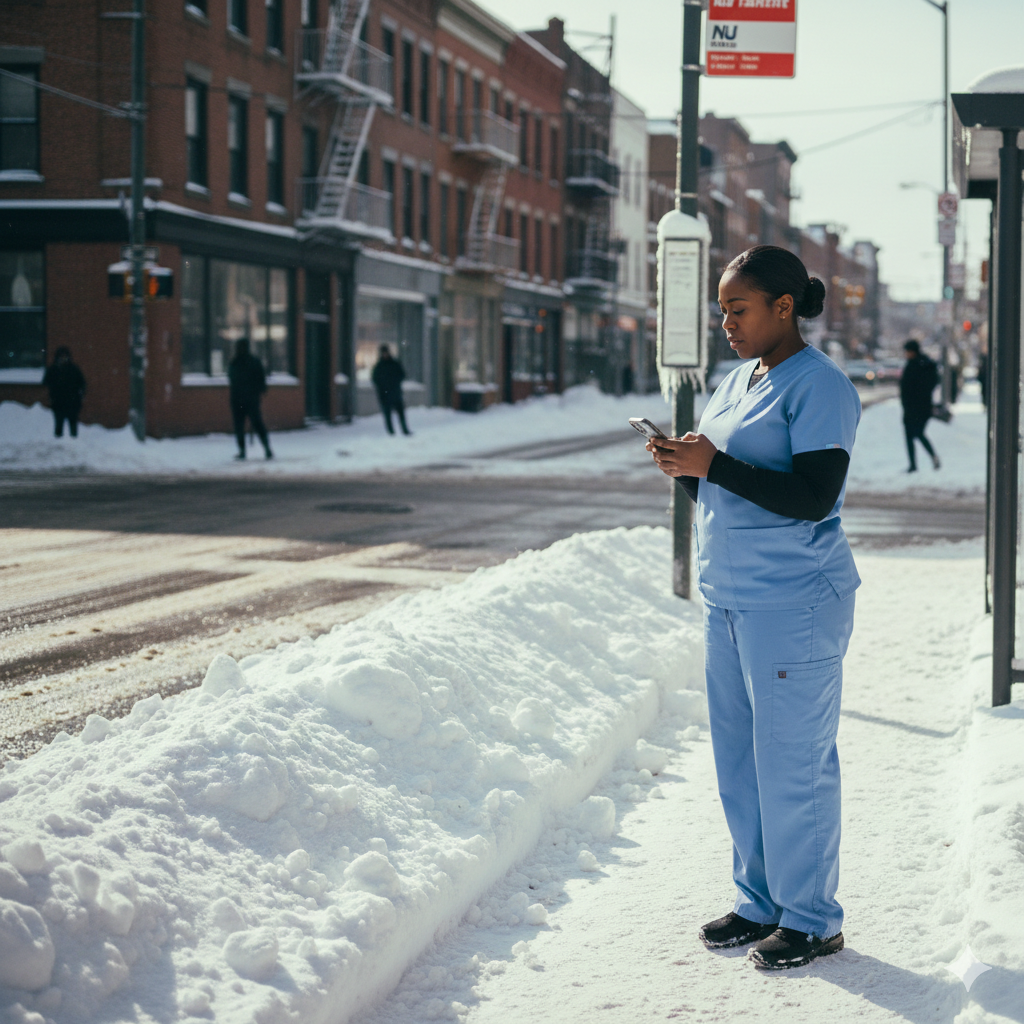
HfYC Poll of the Day
Follow us and respond on social media, drop some comments on the article, or write your own perspective!
How has today’s shift to remote learning impacted your household?
- It was seamless—we were prepared.
- It was a struggle due to work/childcare.
- We had technical/internet issues.
- I miss the traditional “No-School” snow days.
Alternative Perspectives
- Does your neighborhood have the Wi-Fi strength to handle a “Digital Snow Day”?
- Should cities go back to traditional snow days to avoid penalizing students without internet?
Related HfYC Content
- Newark Silicon Garden: How a City Planted in Grit Is Blooming Into a National Tech Powerhouse – https://hereforyoucentral.com/newark-silicon-garden-tech-growth/
- Brooklyn’s Digital Lifeline: How the NYC Digital Equity Roadmap 2025 Hits Home – https://hereforyoucentral.com/the-nyc-digital-equity-roadmap-2025/
- Employee Engagement Decline Hits Home in Northern NJ & Brooklyn – https://hereforyoucentral.com/employee-engagement-northern-nj-brooklyn/
- The Housing Crossroads: Brooklyn’s Fight for a Place to Live – https://hereforyoucentral.com/affordable-housing-crisis-brooklyn/
Other Related Content
- Mamdani Administration Mobilizes Full Citywide Response – NYC.gov – https://www.nyc.gov/mayors-office/news/2026/01/mamdani-administration-mobilizes-full-citywide-response-as-major
- Governor Sherrill Declares State of Emergency – NJ.gov – https://www.nj.gov/governor/news/2026/20260123b.shtml
- Bridging the Digital Divide in the Black Community – NAACP – https://naacp.org/resources/bridging-digital-divide-and-creating-sustainable-solutions-connectivity-black-community
References
- Governor of New York. (2026). Executive Order No. 57: Declaring a Disaster Emergency Throughout the State of New York.
- Mayor’s Office of the City of Newark. (2026). Mayor Baraka Urges Residents to Heed Winter Storm Precautions.
- New York State Unified Court System. (n.d.). The Digital Divide and Access to Justice.
- New Jersey Legislature. (2020). Senate Bill No. 2947: Digital Divide Solutions Grant Program.





One Comment