Nicki Minaj, Trump, and the Political Weaponization of Black Women: From Celebrity “Unraveling” to Predictable Power Plays
Why the Nicki Minaj–Trump Moment Feels Uncomfortable for a Reason
When headlines began circulating that Nicki Minaj was leaning further into MAGA-aligned politics, appearing to welcome co-signs connected to Donald Trump and JD Vance, while publicly clashing with California Governor Gavin Newsom, the reaction inside Black communities wasn’t just political disagreement. It was discomfort. Fatigue. Déjà vu.
Because this wasn’t just about Nicki Minaj.
And it definitely wasn’t just about Trump.
It was about watching yet another highly visible Black woman — brilliant, influential, culturally formative — drift into a political alignment that has historically been hostile to Black life, while media ecosystems framed the moment as bold independence, free thinking, or fearless rebellion.
This article situates the Nicki Minaj–Trump moment inside a much older and more dangerous pattern: the political weaponization of Black celebrity, particularly when that celebrity is framed as unstable, unraveling, or “unhinged.”
And it asks a harder question we often avoid:
Why do we keep participating in a political system that predictably uses us — especially our most vulnerable, most visible, or most volatile figures — and then discards us once the spectacle is complete?
From Influence to Instrument: Why Black Celebrity Is Never Neutral
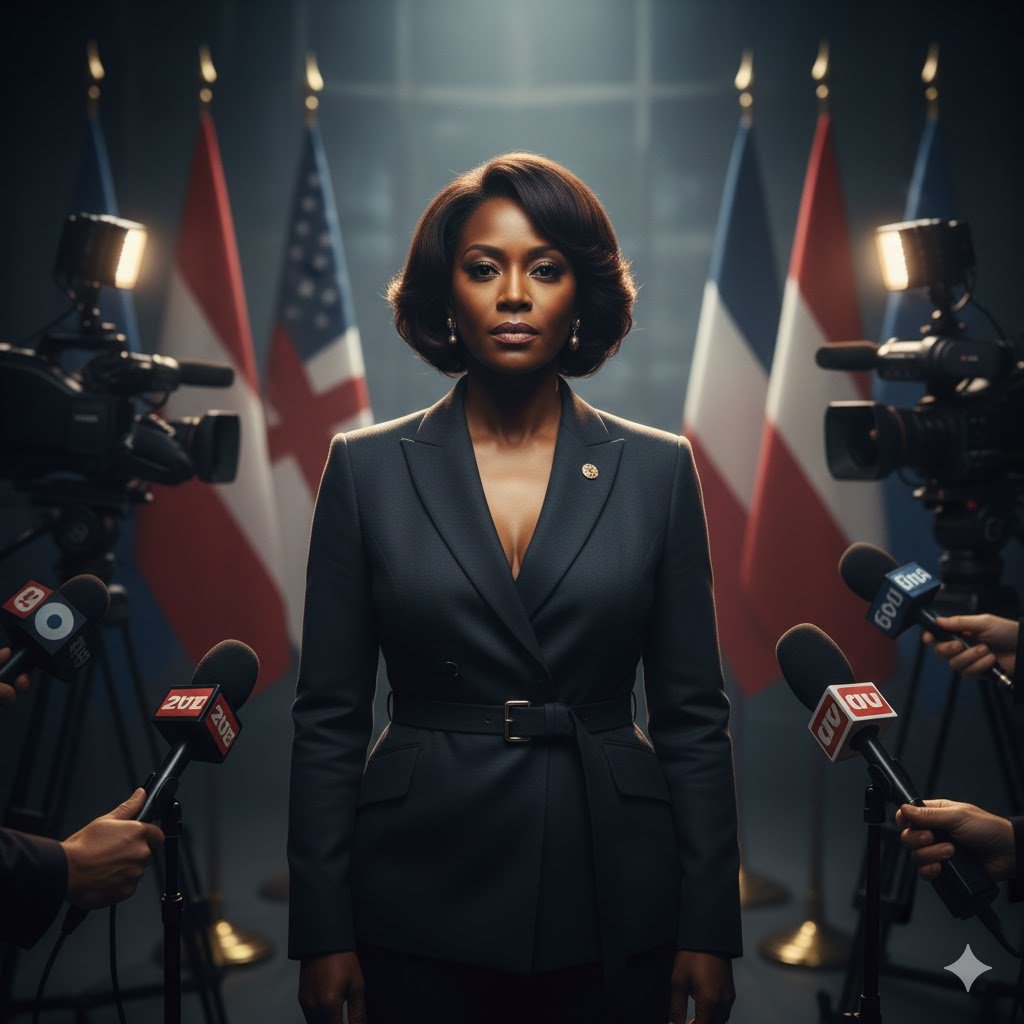
Black celebrities don’t move through political spaces the way white celebrities do. Their presence is never just symbolic — it’s strategic.
When Black women like Nicki Minaj enter right-wing political discourse, they are often framed as:
- Proof that racism is exaggerated
- Evidence of “free thought” inside a supposedly monolithic Black community
- Cultural shields against accusations of white supremacy
This is not accidental. It is political utility.
The danger isn’t that Black women hold divergent views. The danger is that those views are amplified only when they destabilize Black consensus or undermine Black political leverage.
Online “Unraveling” as Political Currency
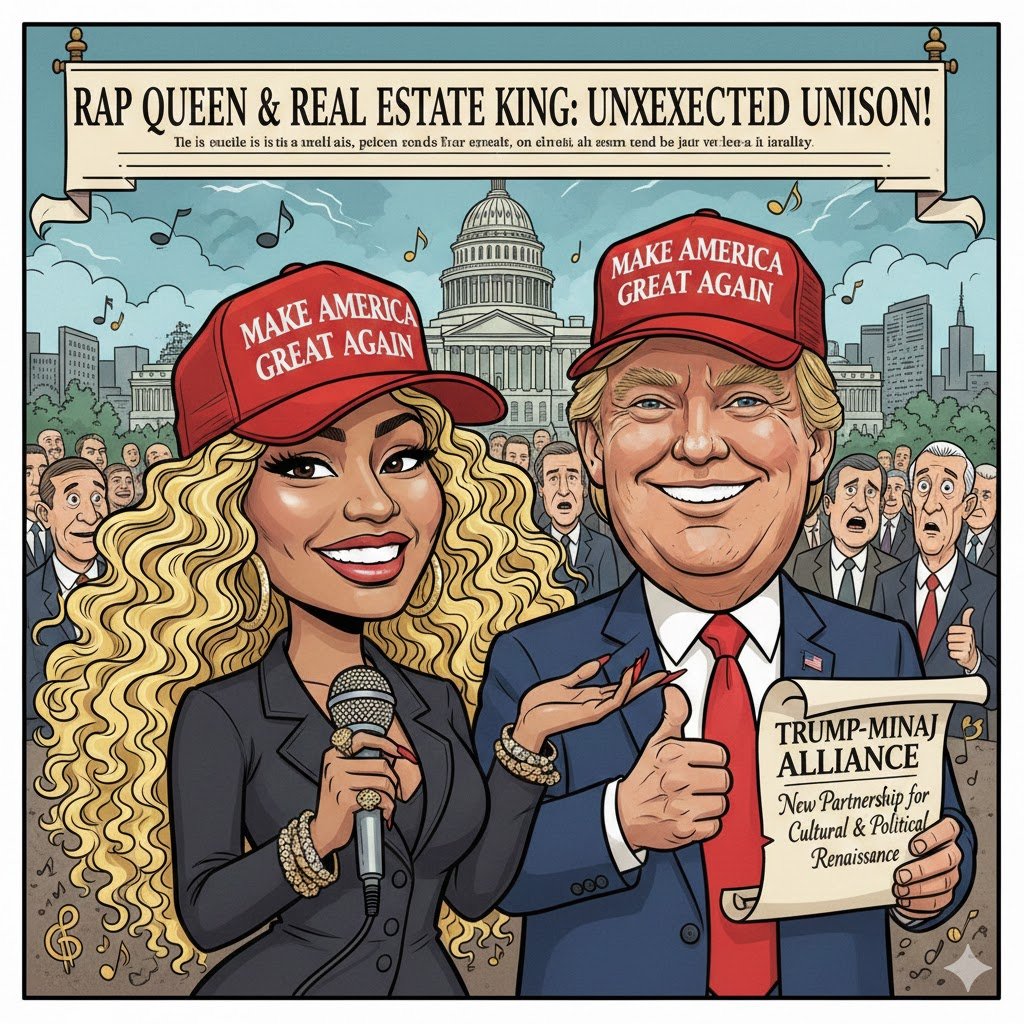
A key element of this moment — one that deserves more scrutiny — is how online unraveling becomes part of the political value proposition.
Nicki Minaj’s recent visibility does not exist in a vacuum. It follows years of:
- Highly emotional public conflicts
- Social media spirals
- Feuds framed as obsession or instability
- Media narratives questioning her mental and emotional state
The more volatile the presentation, the more clickable the moment.
And volatility is not a liability in modern politics — it’s a feature.
Kanye West: The Blueprint We Pretend Not to See
If this sounds familiar, it’s because we’ve already watched it play out — loudly, painfully, and in real time — with Kanye West.
Kanye’s political arc followed a disturbingly clear pattern:
- Public mental health struggles became spectacle
- His volatility was reframed as “truth-telling”
- He was embraced by far-right political actors
- His instability was leveraged as authenticity
- Once usefulness declined, protection disappeared
Kanye was not empowered by the political system.
He was used as proof of concept.
His pain became propaganda. His breakdowns became branding. His Blackness became cover.
The lesson wasn’t subtle — but many of us hoped it was an exception.
It wasn’t.
Why Black Women Face a Double Bind Kanye Didn’t
When Black women experience public unraveling, the framing shifts.
We are:
- Pathologized faster
- Given less grace
- Interpreted as emotional rather than ideological
- Reduced to character flaws instead of systemic pressure
Nicki Minaj’s emotional visibility — especially during conflicts with Cardi B and others — has often been framed as obsession, instability, or jealousy, rather than the psychological toll of hypervisibility, misogyny, and constant public consumption.
That framing makes it easier to:
- Discredit her
- Isolate her
- Reposition her as politically “available”
Instability becomes a doorway.
Why Do We Keep Doing This? The Hard Question
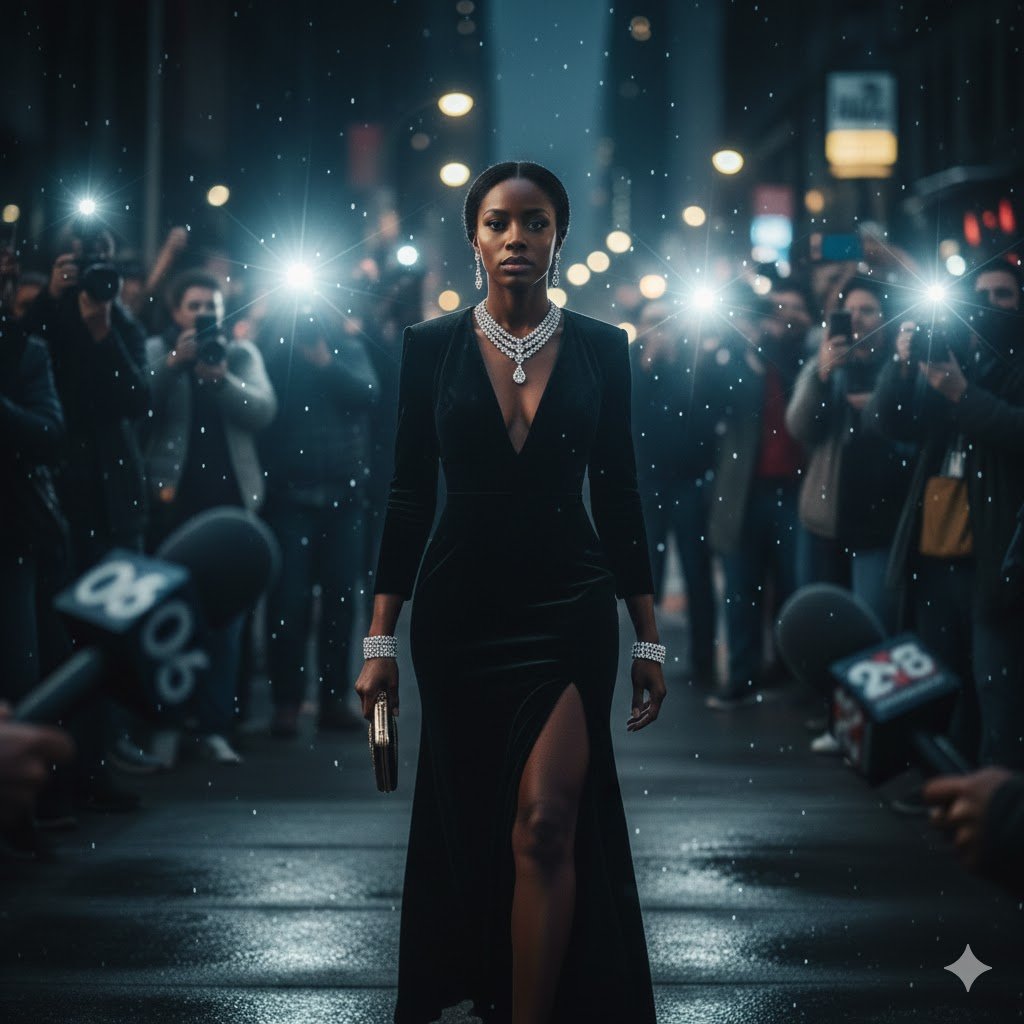
At some point, we have to ask ourselves:
Why do we keep participating in a political system that has shown us — repeatedly — that our pain, volatility, and fragmentation are more valuable to it than our liberation?
Why do we:
- Confuse visibility with power
- Celebrate proximity to institutions that have never protected us
- Treat participation as progress, even when outcomes remain unchanged
This isn’t about voter shame or disengagement rhetoric. It’s about predictability.
If a system consistently:
- Elevates Black dissent that weakens Black collective power
- Rewards instability over coherence
- Offers symbolism instead of structural change
Then continued participation without interrogation becomes complicity — not in ideology, but in outcome.
Historical Context: This Strategy Is Older Than Social Media
Long before algorithms, the strategy was the same.
Throughout U.S. history, Black figures deemed “exceptional” were elevated to:
- Undermine mass movements
- Signal inclusion without redistribution
- Provide moral cover for violent or exclusionary policies
The tools have changed. The logic hasn’t.
Nicki Minaj, Kanye West, Condoleezza Rice, Stacey Dash, Candace Owens — these are not identical people. But they are used inside the same political grammar.
Youth Perspective: Why Younger Generations Are Alarmed, Not Amused

Younger Black audiences are less interested in the personality drama and more focused on outcomes.
They are asking:
- Why does instability make someone more politically valuable?
- Why does Black dissent get monetized but Black organizing gets criminalized?
- Why do we keep falling for “representation” that delivers no material change?
This isn’t cynicism. It’s historical literacy meeting algorithmic awareness.
Short-Term Impact: Chaos That Distracts From Power
In the short term, moments like this:
- Dominate discourse
- Divide communities
- Exhaust attention
Meanwhile:
- Policy decisions continue quietly
- Wealth gaps widen
- Black political leverage weakens
Spectacle does its job.
Long-Term Consequences: When Predictability Becomes a Trap
If we continue down this path, the long-term risks are clear:
- Political fatigue masked as independence
- Cultural leaders isolated from community accountability
- A generation taught that chaos equals courage
Worst of all, it teaches us that our most visible people are expendable.
What Should We Do Instead?
This moment demands discernment, not dismissal.
We can:
- Stop mistaking visibility for leverage
- Resist turning Black women into symbols — positive or negative
- Interrogate who benefits from our division
- Build political imagination beyond participation-as-proof
Freedom has never come from predictability.
Key Takeaways the Community Should Sit With
- Instability is being marketed as authenticity
- Black celebrity dissent is often politically useful, not politically protected
- Participation without power analysis repeats history
- Representation without redistribution is theater
- Pattern recognition is not paranoia — it’s survival intelligence
The Real Question Isn’t About Nicki — It’s About Us
The Nicki Minaj–Trump moment isn’t just about her choices.
It’s about our collective relationship to a political system that has mastered the art of using Black brilliance, Black pain, and Black instability against us.
If we don’t ask why the pattern keeps repeating, we’ll keep acting surprised when the ending never changes.
Community Poll Question
When Black celebrities unravel publicly and get embraced politically, is that empowerment — or exploitation?
Alternative Versions:
- Why does political power only “listen” to Black voices when they’re unstable or isolated?
- Are we participating in a system that benefits from our chaos more than our unity?
- At what point does representation become predictable manipulation?
Related HfYC Content
- Malcolm X Warnings & Nicki Minaj at the UN
- Diddy Legacy Documentary: The Reckoning Reshaping Hip-Hop’s Memory
- Charlie Kirk Loves the Dolls: Conservative Hypocrisy, Viral Tea, and the Politics of Repression
- Attacks on Christians in Nigeria – Hidden Truths & Political Lies
- Little White Lies: The History of the “Welfare Queen” Stereotype
- Campbell Soup Exec Tells Us How Big Business Really Feels
- Charlie Kirk Got Shot: Whoopty-Do or Much Ado?
Other Related Content
- Nicki Minaj Dives Further Into MAGA Support With Trump And Vance Co-Sign, Beef With Newsom – https://blavity.com/nicki-minaj-maga-support-co-sign-trump-vance
References (APA Style)
- Blavity. (2024). Nicki Minaj dives further into MAGA support with Trump and Vance co-sign, beef with Newsom.
- Collins, P. H. (2000). Black feminist thought: Knowledge, consciousness, and the politics of empowerment.
- West, K. (Public discourse analysis, 2016–2023).