Under Fire and Under the Microscope: Attacks on Christians in Nigeria
If you scroll social media right now, you’ll see people arguing about attacks on Christians in Nigeria with more heat than facts. President Donald Trump is threatening military action. Nicki Minaj is giving viral speeches about “Christian genocide.” Comment sections are on fire. But for families in Plateau, Benue, Kaduna, Borno, and beyond, this isn’t content — it’s survival. And the truth is both more complicated and more disturbing than the soundbites.
Yes, Christians in Nigeria are being targeted and killed. But so are Muslims, traditionalists, and anyone who happens to live in the wrong village at the wrong time. The violence is real — and so are the political games being played on top of that pain.
This piece digs into what’s actually happening on the ground, how U.S. politicians and celebrities are using it, the big questions about who funds the weapons, and what Black communities — in Nigeria and across the diaspora — should be watching for in this moment.
When Celebrity Outrage Meets a Real Crisis
Let’s start with my truth and the loudest voices.
Sean, The American-African, Currently Living in Nigeria
I’m an American who grew up in Mississippi. I moved to Accra, Ghana in 2014 and Lagos, Nigeria in 2017. I live in the Southern part of the country and the reported “religious genocide” is happening in the Northern part of Nigeria. So I have to start with saying that I mean no disrespect to the families and communities impacted. My personal experience is, everything in the biggest city in the country is business as usual. It’s not a topic, I don’t feel fear gripping the community. Everything I have heard said that there are definitely issues going on, but it is not based on religion, anyone near specific areas are getting victimized. That’s my own two cents.
Nicki Minaj at the UN — Viral, Emotional, and Not the Full Story

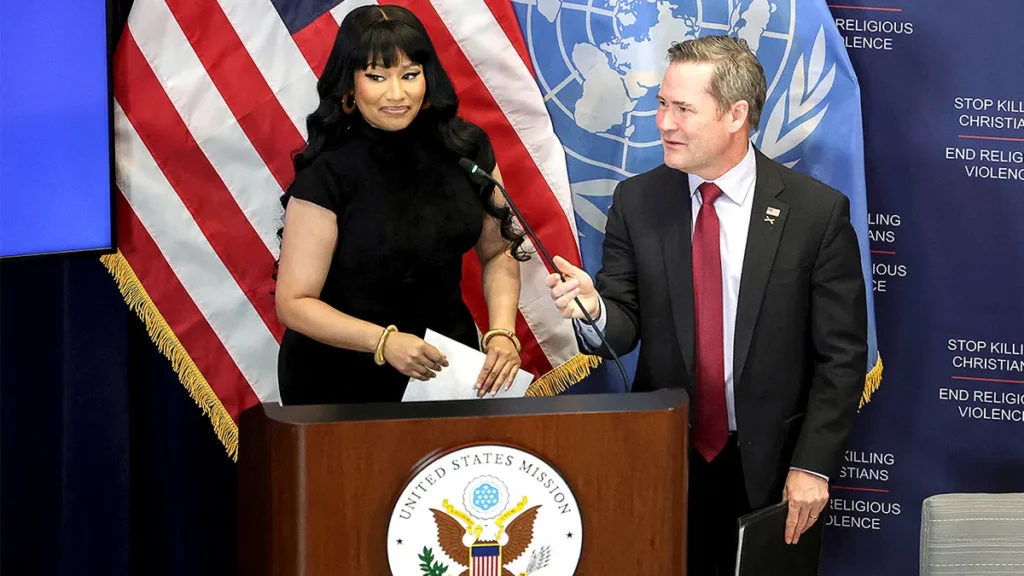
Nicki Minaj’s recent appearance at the United Nations — where she spoke passionately about “Christian genocide” in Nigeria — lit up timelines and group chats. Clips of her speech circulated with captions like “Finally someone is speaking the truth” and “Why is the world ignoring this?” Yes, the same Nikki having a purported drug induced mental breakdown on social media weeks ago in a feud with rapper Cardi B…
Nicki tapped into something very real: people are watching videos of burned churches, mass graves, and grieving families, and feeling like global institutions move faster for some lives than others. That frustration is valid.
But here’s where it gets tricky:
- The violence in Nigeria is not only about Christians versus Muslims.
- Many attacks that hit Christian communities are driven by overlapping forces: land disputes, climate stress, criminal banditry, weak governance, and yes, sometimes religious extremism.
- Muslims are also being massacred, kidnapped, and displaced by some of the same armed groups.
- Who has been in deep thought about politics and faith, and thought; “What would Nikki do?”
When a celebrity simplifies that into “the government is allowing Christians to be wiped out,” it can flatten an entire country’s complex conflict into a single, emotionally satisfying narrative — one that isn’t fully accurate and can be weaponized for other agendas.
Trump, “Christian Genocide,” and Talk of Invasion
On the U.S. side, President Trump has leaned all the way into this story. He has:
- Redesignated Nigeria a “Country of Particular Concern” (CPC) under U.S. religious freedom law, citing “systematic, ongoing, and egregious violations” against Christians.
- Threatened to cut U.S. aid and even suggested the U.S. could use military force if Nigeria “fails to stop the killing of Christians.”
Nigeria’s foreign minister pushed back, calling state-backed religious persecution “impossible” under the constitution and insisting that the government is not sponsoring attacks on Christians. Reuters
For many Black Christians in the U.S., this creates cognitive dissonance:
- On one hand, they see horrifying images from Nigeria and appreciate someone calling it out.
- On the other, they remember this same leader overseeing harsh immigration enforcement, family separation, and ICE raids that traumatized Black and Brown communities — all while branding himself as protector of “Christian civilization.”
So we’re left with a hard question:
Is this solidarity — or selective outrage that turns Nigerian pain into U.S. political capital?
What’s Really Happening on the Ground in Nigeria?
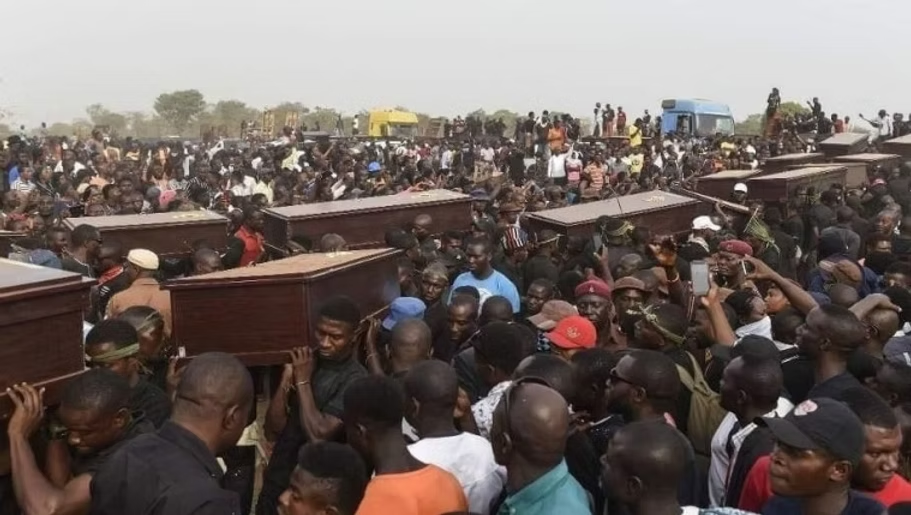
To understand attacks on Christians in Nigeria, we have to look beyond the speeches and into the actual conflict map.
Boko Haram, ISWAP, and Jihadist Violence
In the northeast (Borno, Yobe, Adamawa), jihadist groups like Boko Haram and Islamic State West Africa Province (ISWAP) have spent more than a decade attacking civilians:
- Bombing churches and mosques
- Kidnapping schoolchildren and clergy
- Targeting security forces, markets, and IDP camps
These groups often justify their violence with extremist religious ideology. Christians are absolutely targeted. But so are Muslims who refuse to join them, criticize them, or simply live under government-controlled areas. CSW
Farmer–Herder Conflict and Banditry in the Middle Belt
Move into central states like Benue, Plateau, and southern Kaduna, and the pattern shifts:
- Heavily armed militias, often described as Fulani herder groups, have carried out mass killings and village raids, frequently hitting Christian farming communities.
- At the same time, retaliatory attacks and ethnic mobilization have also put Muslim communities at risk.
- Bandit gangs in northwestern states (Zamfara, Katsina, Kaduna) kidnap people for ransom regardless of religion, targeting whoever can pay. 36ng
The U.S. Commission on International Religious Freedom (USCIRF) and human rights groups have documented thousands of Christian deaths in recent years — but also highlighted that Muslims have been killed in large numbers in overlapping conflicts. USCIRF

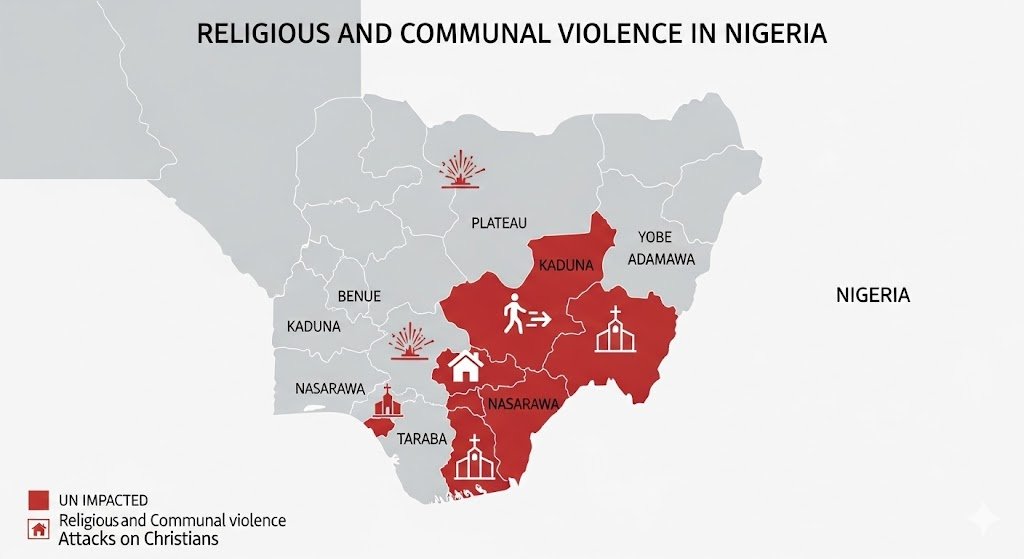
So yes:
- There are targeted attacks on Christian communities.
- There is a crisis of religious freedom and state failure.
- But the frame of “the government is openly waging war on Christians” does not match the legal structure or the regional reality.
It’s closer to this: a weak, sometimes complicit state has allowed a mix of extremists, militias, and criminal gangs to terrorize both Christians and Muslims — with Christians in certain regions bearing the brunt.
Who Bought the Guns? Following the Money and the Metal
Social media is flooded with posts asking, “Who paid for these weapons?” and “Which Western powers are behind this?” Those questions come from a real place — especially after what happened in Libya and Iraq.
What we do know from researchers, journalists, and security analysts:
- Weapons flow into Nigeria from multiple sources:
- Looted stockpiles from post-Gaddafi Libya and the wider Sahel arms market
- Cross-border smuggling through Niger, Chad, and Cameroon
- Corruption within local security forces who “lose” weapons that end up with non-state actors
- Armed groups finance themselves through:
- Kidnapping-for-ransom
- Illegal mining (including gold and other minerals)
- Cattle rustling and village-level extortion
On top of that, Nigeria’s renewed push into critical minerals — like lithium and other resources used in batteries and tech — has drawn fresh foreign interest and raised fears that outside powers may be more focused on contracts than peace. The Guardian
What we don’t have clear, public proof of (as of now):
- A single Western government secretly directing or bankrolling specific militias to attack Christians.
- A coordinated foreign plot to “invade Nigeria” under the cover of Christian protection.
Could geopolitical interests lead powerful countries to exaggerate or instrumentalize this crisis — including using sanctions, military bases, or “counterterrorism cooperation” as leverage? Absolutely. That’s why we should stay alert. But we shouldn’t replace one oversimplified narrative with another.
Libya, Iraq, and the Fear of “Humanitarian” Intervention
For many Africans and the diaspora, the phrase “protecting Christians” triggers flashbacks:
- Iraq was invaded under the banner of fighting terror and spreading democracy. Christian and Muslim communities alike were devastated.
- Libya was bombed in the name of civilian protection; the country has since collapsed into militia rule, slave markets, and arms flows that now destabilize the whole Sahel — including Nigeria.
So when Trump talks about “swift military action” in Nigeria, and when parts of Congress talk about an “existential threat to Christians” that the U.S. must address, Nigerians — Christian and Muslim — have every right to ask:
Are you here to save us, or to use us?
That skepticism doesn’t mean the violence isn’t real. It means people remember what happens when Western powers use someone else’s suffering to justify “solutions” that leave communities more broken than before.
Faith, Facts, and the Politics of “Christian Values”
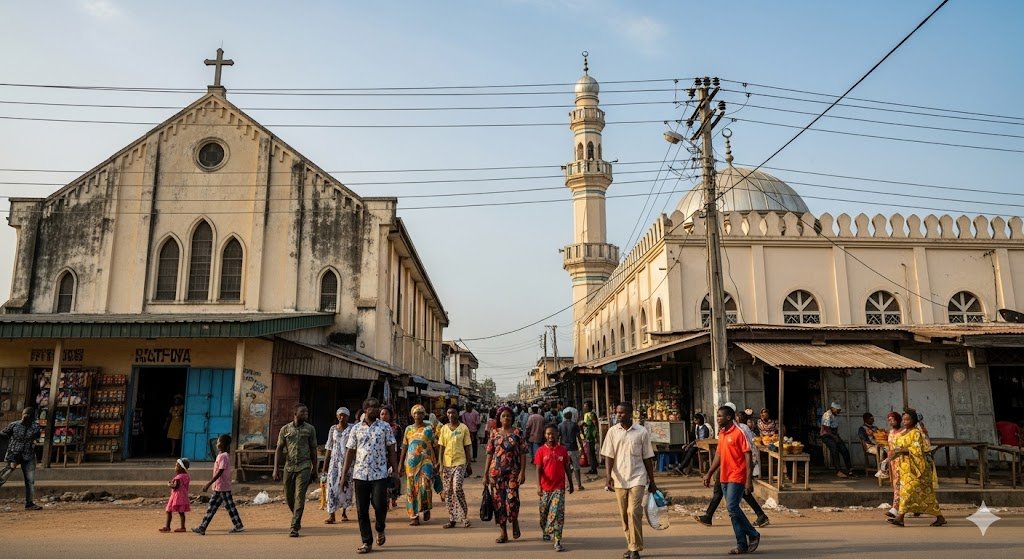
There’s another uncomfortable thread in all this: the way political leaders brand themselves as defenders of “Christian values” abroad while pursuing policies at home that harm Black and Brown communities.
Black Christians in the U.S. are asking:
- How does threatening to bomb a majority-Black nation line up with “Christian love” or justice?
- How do ICE raids, family separations, and hostile immigration policies aimed at African migrants square with passionate speeches about protecting Christians in Africa?
- Why do some politicians only seem to care about religious freedom when it fits their culture-war narratives?
Meanwhile, inside Nigeria, many believers are also side-eyeing their own leaders. Nigeria’s constitution promises religious freedom, yet corruption, weak governance, and politicized security responses mean communities are left unprotected while officials argue on TV.
For both Nigerians and the diaspora, this moment is forcing a hard look at who gets to claim Christianity — and whose lives those “values” really cover.
Why Attacks on Christians in Nigeria Should Matter to Black Youth
If you’re a young Black person in New York, Lagos, Atlanta, Abuja, London, or Johannesburg, this might all feel far away and overwhelming. But there are real reasons this should be on your radar:
- It’s about Black life. Whether Christian, Muslim, or neither, the people being killed, displaced, and traumatized are overwhelmingly Black Africans. Our grief is global.
- It’s about media narratives. Who gets treated as a victim worth saving versus a “security threat” worth bombing says a lot about whose humanity is recognized.
- It’s about precedent. If Western powers normalize intervention in African countries under the banner of “saving Christians” while ignoring African voices, that playbook won’t end with Nigeria.
- It’s about truth-telling. We need our own outlets, researchers, and storytellers documenting what’s happening beyond Western talking points and conspiracy rabbit holes.
Young people are already doing the work — from Nigerian journalists documenting attacks in rural communities, to diaspora organizers pushing for nuanced policy that protects all civilians without feeding another endless war.
Key Takeaways — Beyond the Soundbites
Let’s bring this home. Here are some core truths to hold onto:
- The violence is real and horrifying.
Attacks on Christians in Nigeria are part of a broader crisis of religious freedom, weak governance, and militarized non-state actors. Christians, Muslims, and others are all being targeted in different regions and contexts. - Misinformation helps the powerful, not the vulnerable.
Oversimplified claims — whether from celebrities, politicians, or anonymous accounts — can distort policy debates, fuel Islamophobia, and justify heavy-handed “solutions” that don’t actually protect Nigerians on the ground. - Follow the systems, not just the headlines.
It’s not only about who pulled the trigger in a village; it’s about arms flows, corrupt officials, climate stress, resource extraction, and a global order that treats some Black lives as leverage, not people. - Faith without solidarity is branding.
If leaders claim to defend Christians abroad while harming Black and Brown communities at home, that’s not faith — that’s marketing.
What We Can Do — From the Pew to the Timeline
This isn’t a story we can fix overnight, but there are real steps we can take:
For Black Churches & Faith Communities
- Pray with knowledge, not just vibes. Incorporate accurate updates on Nigeria into sermons and Bible studies.
- Support trusted Nigerian-led organizations working on peacebuilding, trauma care, and humanitarian support in affected regions.
- Press your representatives to support policies that:
- Address arms trafficking and corruption
- Fund conflict-resolution and community protection
- Avoid one-sided, militarized responses that escalate the situation
For Young People in the Diaspora
- Fact-check before reposting. Use reputable African and Nigerian outlets, human rights reports, and on-the-ground voices.
- Amplify Nigerian journalists and organizers instead of only U.S. politicians or influencers.
- Connect the dots between this and issues at home: policing, surveillance, voter suppression, and how “security” is used to justify harm in Black communities.
For All of Us
The bottom line: we don’t have to choose between naming attacks on Christians in Nigeria and acknowledging that Muslims and others are also under fire. The point isn’t to compete over victimhood. It’s to insist on a politics — and a faith — that refuses to treat any Black life as disposable, on either side of the Atlantic.
HfYC Poll of the Day
When you hear politicians talk about “saving Christians in Nigeria,” do you hear real concern for Black lives — or a convenient excuse to flex power on African soil?
Alternative Perspectives:
- Is the loud Western outrage over attacks on Christians in Nigeria about protecting people, or about protecting a storyline that makes certain leaders look like heroes of “Christian civilization”?
- Do you think the global conversation about violence in Nigeria is helping protect communities on the ground, or mostly serving outside political agendas?
- If a politician ignores Black folks at home but suddenly “finds Jesus” when talking about Christians in Nigeria, are you believing the sermon or changing the channel?
Related HfYC Content
- Little White Lies: The History of the “Welfare Queen” Stereotype
- 2025 US State and Local Elections: A Turning Point for Black American Communities
- The ‘No Kings’ Protest Is Here. Are We Joining, or Are We Tired?
- The Government Shutdown Step-by-Step: A Story of Power, Politics and Community Impact
- Finding Our Reflection: Deconstructing the White-Washed Jesus
Other Related Content
- USCIRF Reiterates Call for CPC Designation for Nigeria
- US President Designates Nigeria a Country of Particular Concern
- US Congress to Probe Alleged Christian Genocide in Nigeria
References (APA Style)
- U.S. Commission on International Religious Freedom. (2025, June 18). USCIRF reiterates call for CPC designation for Nigeria. https://www.uscirf.gov/news-room/releases-statements/uscirf-reiterates-call-cpc-designation-nigeria USCIRF
- Christian Solidarity Worldwide. (2025, November 3). US President designates Nigeria a Country of Particular Concern.https://www.csw.org.uk/2025/11/03/press/6656/article.htm CSW
- Reuters. (2025, November 4). Nigeria’s Tuggar to Trump: State-backed religious persecution impossible under constitution. Reuters
- Telegraph Nigeria. (2025, November 17). US Congress to probe alleged Christian genocide in Nigeria Thursday.https://telegraph.ng/news/2025/11/17/us-congress-to-probe-alleged-christian-genocide-in-nigeria-thursday/ The Telegraph Nigeria
- Budd, T. (2025, September 12). Senator Budd leads colleagues condemning violence against Christians in Nigeria, calling for redesignation of CPC status. https://www.budd.senate.gov
-
-
-
-