Starting from the Top: How the funding process leads us to a government shutdown step-by-step
When we talk about the government shutdown step-by-step, we’re actually describing how the entire federal funding process unravels into a stalemate—with real consequences for communities, including Black American households and young people across the African diaspora. The chain of events may look like dry legislative procedure, but it’s loaded with human impact.
Here’s how we got here:
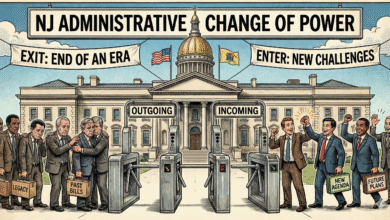
- Appropriations deadline approaches: At the end of the fiscal year (September 30 in the U.S.), all federal agencies must have funding authorisation in place—typically via 12 separate appropriations bills.
- Failure to pass bills or a continuing resolution (CR): If Congress fails to pass the full bills, they may pass a CR—a short-term measure that keeps government funded at current levels. When even a CR fails, a funding gap opens.
- Funding lapse at midnight: Once the deadline passes without the required legislation, many agencies must halt non-essential operations; essential services may continue, but many programs face disruption.
- Shutdown procedures kick in: Agencies classify workers as “essential” (keep working, often without pay) or “non-essential” (furloughed). The official rules stem from the Antideficiency Act.
- Negotiations continue amid disruption: While the funding gap exists, both sides (House, Senate, Executive) negotiate—but tensions grow as programs, workers, and communities feel the strain.
- Impasse deepens or resolution is reached: Either the parties reach a deal (pass appropriations or CR) or the shutdown drags on, increasing economic and social effects.
This “step-by-step” sequence helps explain how the machinery works — but why is each side holding out? That’s where the politics and priorities come in.

Behind the Scenes: Why Each Side Is Holding Out in the Shutdown Deadlock
Republican priorities
- Many Republicans insist on spending cuts, policy riders (amendments tied to funding), changes in foreign aid or domestic programmes as conditions for agreeing to funding. For example, they may demand reductions in non-defence discretionary spending or changes to immigration policy.
- The House passed a so-called “clean” CR (continuing resolution) earlier, aiming to keep spending at current levels until November 21, but wanted to delay negotiations on the full appropriations.
- From the Republican side: “Open the government first, then talk about policy.” Many feel that negotiations over policy should follow restoring basic funding.
Democratic concerns
- Democrats are pushing for protections of social programmes, health-care subsidies (especially under the Affordable Care Act), and ensuring that vulnerable communities aren’t left behind. They argue that passing a funding bill without these elements leaves major constituencies at risk.
- Some Democrats say the CR proposed lacks meaningful reforms or guardrails and hence refuse to support it unless it includes deliverables that matter to their base — like ensuring food assistance, healthcare subsidies, protecting immigrants, etc.
Why both sides dig in
- Each side believes that yielding means giving up leverage in future negotiations: Republicans fear precedent of funding increases or policy concessions; Democrats fear normalising cuts to major social programmes.
- Public opinion and electoral calculations matter: whichever side is perceived as “causing” pain (workers unpaid, services shut) could bear political cost.
- Institutional rules add complexity: The Senate’s 60-vote threshold for many bills means that blocking actions are possible even if one party holds a majority.
In short: the step-by-step breakdown of how we arrived at the shutdown shows not just legislative mechanics but the tug-of-war of priorities and power. That includes youth and communities of colour who may feel sidelined in the high-stakes game.
The Youth & Diaspora Lens: Why the Shutdown Matters for Younger Generations
For younger Black Americans and the broader diaspora, this isn’t just Washington drama — the stakes are personal.
- Planning for futures gets disrupted: Suppose you’re a young adult working in a federal contract, or part of a household where a parent/family member relies on federal pay or services. The financial instability introduced by a shutdown can derail education, early career paths or savings.
- Community programmes at risk: Many youth-facing programmes (workforce development, educational grants, community food programs) hinge on federal funding. A shutdown risks delays or cancellations.
- Generational memory and activism: This generation has grown up seeing inequality, generational wealth gaps, and systemic hurdles. Seeing the government shut down adds to a narrative of “systems not working for us.” That sentiment can fuel disengagement or alternative forms of organising.
- Inter-generational solidarity matters: Elders in the community remember past downturns — the 2008 recession, earlier shutdowns. They bring wisdom about resilience. Youth bring energy, voice and innovation (social media campaigns, mutual aid networks). A shutdown may either deepen divide or spark cross-generational bridge-building.
Short-Term vs Long-Term Consequences of the Government Shutdown Step-by-Step
Short-Term Impacts
- Federal workers furloughed or working without pay; contractors facing immediate income loss.
- Federal programmes paused or delayed: permitting, small-business loans, community grants.
- Services for families under strain: nutrition programmes, childcare support, local nonprofits see more demand. Even if agencies continue, functioning with reduced capacity means hiccups.
- Psychological stress: For households—especially low-income, Black American, diaspora households—these disruptions bring fear and unpredictability.
Long-Term Impacts
- Economic damage: According to a memo, the U.S. could lose billions in GDP per week the shutdown continues.
- Erosion of trust: When government fails to operate, trust in institutions declines. For younger generations, that can shape civic engagement for decades.
- Magnification of inequality: Communities already marginalised may fall further behind—public services, community investment slow, programmes deferred — less investment means less leverage for future growth.
- Policy precedent: If one side wins by holding out, future funding fights may get more aggressive. That could lead to more frequent burdens on vulnerable programmes.
- Youth and community resilience frameworks: On the positive side, such crises can spark more grassroots organising, alternative community networks, mutual aid—not just for reaction but for future design of support systems.
What We Can Do: Empowered Moves for Community & Youth

Immediate steps you can take:
- If anyone in your circle works for the federal government or relies on federal services, check the status of their pay, services, or programme continuity.
- Engage with local community organisations: are they prepared for service disruptions? Can you volunteer, donate, or create support systems?
- For youth: form or join peer networks to share resources, space, and information — when government services wobble, your networks matter.
- Reach out to your representatives: voice concerns about this shutdown. Moving from frustration to action helps shift power.
Long-term community building actions:
- Build local infrastructure: community co-ops, youth-run mutual aid, local food banks, financial literacy programmes. These strengthen resilience beyond federal ups and downs.
- Invest in civic education: Know how the appropriations process works, how power flows, and help others understand it. Informed youth are empowered youth.
- Collaborate cross-generationally: Youth and elders share knowledge — elders about past resilience, youth about new tools and social organising.
- Advocate for reform: The “step-by-step” breakdown means we understand vulnerabilities: call for changes that make funding processes more stable, less hostage to shutdown-threats.
Key Takeaways
- The government shutdown step-by-step sequence shows how funding deadlines, legislative process failures, and political standoffs lead to real consequences.
- Each side is holding out because of differing priorities: Republicans emphasising spending discipline and policy riders; Democrats emphasising protection of social and community programmes.
- Young people, especially in the Black American and diaspora communities, feel this not as distant policy but as real disruption to households, futures and community programmes.
- Immediate impacts include worker furloughs, service delays, financial stress. Long-term impacts include economic loss, trust erosion, and increased inequality—but also potential for grassroots resilience.
- Action matters: individual steps, community networks and civic knowledge all play a role in weathering the storm and building better systems beyond it.
Your Role in This Moment
You don’t have to watch this unfold as a powerless observer.
- Reach out — connect with community groups, youth initiatives, elders who have lived through similar moments.
- Learn — understanding the step-by-step of the funding process equips you to hold leaders accountable and participate meaningfully.
- Build — whether it’s a food pantry in your neighbourhood, a peer financial-education circle, or part of a youth policy group, take action locally while the federal picture remains uncertain.
- Share — raise your voice on social media, in local meetings, with friends and family. When we amplify community voices—especially of young Black Americans and the diaspora—we change the narrative.
Related HfYC Content
- The Frontlines: Navigating Systemic Challenges in Black Brooklyn
- 11 PM in Newark: Safety, Freedom, and the Generation Caught in the Middle
- From Street Corners to Storefronts: Black Entrepreneurs and New Jersey’s Legal Green Rush
Other Related Content
- “Why would the US government shut down?” – Reuters.
- “Everything you need to know about a government shutdown.” – United States of Facts.
References
- Delaney, N. (2025, October 8). Explainer: Why government shutdowns keep happening in the United States. Harvard Kennedy School.
- What is a government shutdown? Here’s what happens … (2025, October). CBS News.
- What to Expect During a Federal Government Shutdown. (2025). ADP SPARK Blog.
- Impact of a Government Shutdown. (n.d.). House.gov – Sarah Elfreth.
- Government shutdown: What it means for workers, federal programmes and the economy. (2025, October 20). Federal News Network.