Why Charlie Kirk and Turning Point USA Still Matter to Black America
When people hear Charlie Kirk Turning Point USA, most think “white college kids, MAGA rallies, and viral clap-backs,” not “Black community priorities.” But ignoring Kirk and TPUSA is a luxury our community doesn’t really have. His organization helps shape the worldview of millions of young voters, future judges, school-board members, and HR managers — the very people who will help decide what happens to policing, DEI, voting rights, and public schools in Black neighborhoods.
This piece breaks down who Charlie Kirk was, how Turning Point USA operates, why his rhetoric has angered so many Black Americans, what Erika Kirk’s takeover means, how Candace Owens fits into all this, and why wild conspiracy theories around Epstein and “missing girls” need to be handled with receipts, not vibes.


From Suburban Teen to Conservative Power Broker
Charlie Kirk grew up in the Chicago suburbs and never finished college. Instead, after a high-school speech at Benedictine University in 2012 impressed Tea Party activist Bill Montgomery, he pivoted into full-time political activism. Together they launched Turning Point USA, framed as a student group promoting free markets and limited government.
Over the next decade Kirk became:
- A national conservative influencer, hosting The Charlie Kirk Show and touring campuses.
- A close ally of Donald Trump and a key promoter of Christian nationalism and Trump-style populism.
- The public face of a youth-focused political machine raising tens of millions of dollars annually and boasting a presence on more than 3,500 campuses.


On September 10, 2025, he was assassinated while speaking at Utah Valley University. His killing immediately became a political flashpoint, with Trump and other right-wing figures using it to call for crackdowns on “the left,” while Black clergy and Black Lives Matter leaders condemned both the violence and efforts to whitewash Kirk’s record on race.
Whether you admired him, hated him, or barely knew his name, Charlie Kirk’s ideas — especially on race, gender, and “American values” — are still moving through the pipeline of American power.
Turning Point USA — Youth Ministry for Right-Wing Politics
Turning Point USA (TPUSA) describes its mission as identifying, educating, training, and organizing students to promote “freedom, free markets, and limited government,” and to restore “traditional American values like patriotism, family, and fiscal responsibility.”
Practically, that looks like:
- 3,500+ high school and college chapters, making TPUSA one of the largest conservative youth organizations in the country.
- High-energy conferences (AmericaFest, Young Black Leadership Summit in its earlier years, The Summit for “biblical masculinity”), which blend worship-style production with hardline politics.
- The Professor Watchlist, naming faculty accused of “leftist propaganda,” which critics say has fueled harassment and chilled academic freedom.
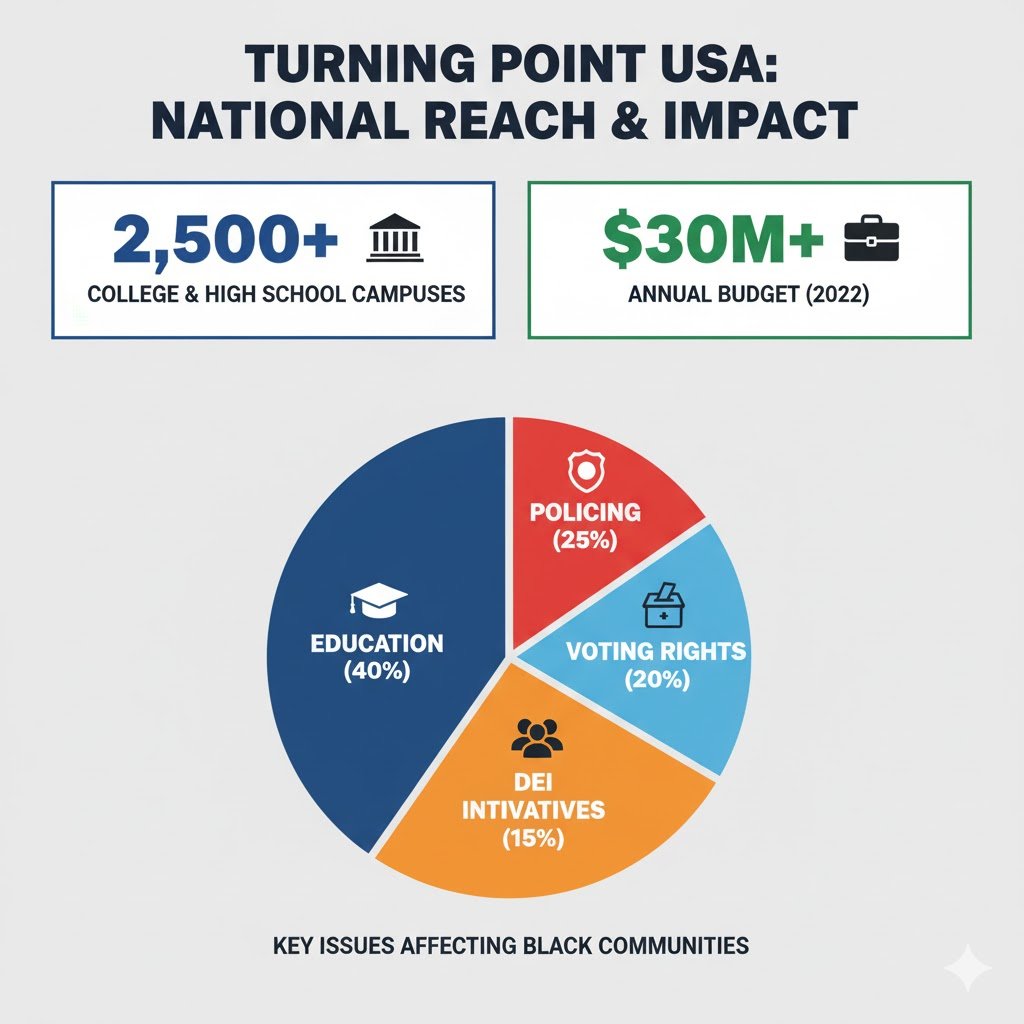
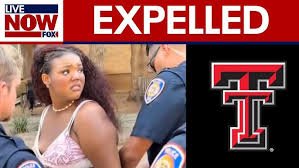
For Black students, TPUSA’s presence on campus often lands as more than just “another club.” Chapters have targeted DEI programs, African American Studies courses, and racial justice protests as “Marxist” or “anti-American,” contributing to a climate where Black students already feel over-policed and under-protected.
Why So Many Black Americans See Charlie Kirk as Harmful
To understand why “Charlie Kirk Turning Point USA” sets off alarm bells in Black communities, you have to look at his record on race.
Reporters and watchdogs have documented a long pattern of comments that many Black Americans experience as racist or, at minimum, deeply dismissive of Black reality. These include:
- Dismissing systemic racism and “white privilege” as a “myth” and a “racist, false lie,” while framing discussions of structural racism as brainwashing.
- Calling George Floyd a “scumbag” and repeatedly attacking Black Lives Matter as “anti-American” and “malevolent,” while centering riot damage rather than police violence.
- Criticizing Martin Luther King Jr. as a “mythological anti-racist creation” and suggesting he is “over-worshiped,” which many Black Christians and civil-rights veterans found deeply insulting.
- Claiming that seeing a Black airline pilot made him hope the pilot was “actually qualified,” in the context of blaming DEI for aviation problems.
- Arguing that white people are, “per capita,” more likely to be attacked by Black individuals, echoing “Black criminality” stereotypes that have historically been used to justify over-policing and voter suppression.
Black pastors across denominations have condemned his rhetoric as racist and anti-gospel, even while firmly rejecting the political violence that took his life. They’ve warned that glorifying him as a “martyr” without wrestling with the harm of his words risks baptizing racism in Christian language — a pattern Black churches have resisted for generations.
For many Black Americans, then, the problem is not just that Kirk “disagreed on policy.” It’s that his platform normalized narratives that question Black competence, minimize racial terror, and undermine the very civil-rights framework that made our current freedoms possible.
Erika Kirk’s Takeover — Grief, Legacy, and Power
After the assassination, TPUSA’s board quickly named Erika Kirk (née Frantzve) — Charlie’s widow, a former Miss Arizona USA and Christian entrepreneur — as CEO and chair of the organization.


Her public response has had two main faces:
- The grieving spouse, delivering an emotional memorial speech that emphasized forgiveness, faith, and her determination to raise their two children while continuing Charlie’s work.
- The new executive, pledging to make TPUSA “the biggest thing this nation has ever seen” and using Kirk’s death as a rallying point to sign up tens of thousands of new student activists.
For Black communities, Erika’s rise matters because she is inheriting not just a brand, but an infrastructure that has already tried to roll back DEI programs, voting protections, and narratives about structural racism. The question is not simply, “Will she be softer than Charlie?” It’s, “Will this machine keep pushing policies that harm Black people — just with a more polished, feminine, faith-branded front?”
The part that sticks out? Many of us didn’t see the grief communicated in a way that appears as “Normal” for most people. Many of us quote the lack of tears, the speed of the transition into power, and the unusual closeness to the president on stage. Some say we all grieve differently, others say shout conspiracies from the rooftops.
Sorting Fact from Fiction Around Erika Kirk
In the weeks since her husband’s death, Erika has also become the center of a swirl of conspiracy theories:
- Claims that she appears in Jeffrey Epstein’s “files” as a recruiter or associate.
- Rumors tying her to sex trafficking in Romania or “missing girls” at schools.
- Speculation that her proximity to Donald Trump and the pageant world means she is part of some broader Epstein cover-up.
Fact-checkers and court records do not support these claims. A detailed review found:
- No evidence that Erika Kirk appears in the Epstein indictments or related legal documents. At the time of Epstein’s alleged crimes (2002–2005), she was a teenager in Arizona, with no documented connection to him.
- No evidence that her Romanian charity work was a trafficking front. Local media and court records in Romania describe her nonprofit’s activities positively, and investigations found no links to trafficking or child relocation schemes.
- No law-enforcement statements linking her to missing girls, and no credible reporting to back those viral claims.
Another wave of rumors followed Erika’s announcement that she plans to release “unreleased” video content from Charlie, with some online voices insisting it must hide explosive Epstein files. Again: there is zero public evidence for that claim. Authorities have not tied Kirk’s assassination to any Epstein-related motive.
For Black audiences already skeptical of right-wing power, it’s tempting to grab any story that “fits” our suspicion. But if we care about truth and our own credibility, we need to be as rigorous about evidence here as we demand others be around police shootings or voter suppression.
Money, Israel, and the Donor Drama
Another set of claims centers on Charlie Kirk’s relationship with pro-Israel donors. Viral posts and videos have alleged he “turned down $150 million from Israel” to stick to his principles.
Here’s what we actually know from verifiable sources:
- In the days before his death, Kirk sent group texts complaining that he had “just lost another huge Jewish donor — $2 million a year” because he refused to “cancel” Tucker Carlson as a speaker.
- In those same texts, he said he would “leave the pro-Israel cause” rather than be “bullied” by donors — a sharp pivot from his long history of strongly pro-Israel commentary.
- Turning Point USA has confirmed the authenticity of these texts.
What we do not have is independent documentation of a specific $150 million offer tied to Israel or any foreign government. That figure appears in influencer videos and speculative commentary, not in donor contracts, FEC filings, or confirmed investigative reporting.
At the same time, conspiracy theories trying to pin Kirk’s murder on Israel have been forcefully rejected by both U.S. authorities and Israeli officials, including Prime Minister Benjamin Netanyahu, who called such claims “insane” and “outrageous.”
Why does this matter for Black folks? Because it shows, again, how mega-donors and foreign policy fights can shape what youth-focused groups like TPUSA say about everything from policing to Palestine — and how quickly real concerns about money and influence can slide into antisemitic or Islamophobic conspiracy content that ultimately hurts marginalized communities, including us.
Candace Owens, BLEXIT, and the Battle for Black Conservative Influence
You can’t talk about Charlie Kirk Turning Point USA and Black audiences without mentioning Candace Owens.
Owens joined TPUSA in 2017 and became its communications director, explicitly tasked with outreach to Black Americans and other communities of color. She left the formal role in 2019 but remained closely tied to TPUSA, building the BLEXIT brand to encourage Black voters to leave the Democratic Party and still appearing at TPUSA events.
Her relationship with the organization and with Kirk has gone through phases:
- Early alignment: She and Kirk toured campuses together, attacking Black Lives Matter, critical race theory, and “identity politics,” framing conservative politics as the real path to Black freedom.
- Brand synergy: BLEXIT events often overlapped with TPUSA’s donor and activist networks, helping both expand their reach into Black communities.
- Recent tension and conspiracies: After Kirk’s assassination, Owens amplified unproven theories about Israel-linked pressure, using leaked texts about donors to frame his death as part of a pro-Israel clampdown — a narrative that mixes some truth about donor influence with speculative, sometimes antisemitic framing.
For Black audiences, Owens sits at the intersection of real critique (yes, Democrats have failed us in many ways) and a conservative ecosystem that often erases structural racism while courting our votes as a branding exercise.
Key Takeaways for Black Communities
Stepping back, what does all of this — the rise and death of Charlie Kirk, TPUSA’s growth, Erika’s ascension, Owens’ role, and the conspiracy cloud — actually mean for Black people in the U.S.?

- Youth formation is the real battlefield.
TPUSA is shaping the political identities of millions of young non-Black Americans — the future cops, prosecutors, principals, and hiring managers we’ll face. When those identities are built on narratives that deny systemic racism and question Black competence, the consequences are material: from school discipline to hiring to sentencing. - Not all Black conservatives are the problem — but some infrastructures are.
Black conservatism has a long history, from Booker T. Washington to modern Black evangelicals and entrepreneurs. The issue is not “being conservative”; it’s how outfits like TPUSA and personalities like Kirk and Owens often deploy Black faces to legitimize policies and rhetoric that deepen racial inequality. - Conspiracy culture is a double-edged sword.
Black communities have every reason to be suspicious of U.S. power — COINTELPRO, Tuskegee, redlining, the list is long. But when we share shaky claims about Epstein files, missing girls, or foreign plots without evidence, we burn the credibility we desperately need when we bring receipts about voter suppression, police violence, or environmental racism. - We have agency.
TPUSA is organized. So can we be. Whether we’re opposing their campus organizing, debating their ideas in class, or building alternative institutions, the point is not just to obsess over Charlie Kirk’s legacy — it’s to out-organize the structures he built.
What We Can Do Next

For students:
Pay attention to what’s happening on your campus. If TPUSA or similar groups show up:
- Know your rights to protest, counter-organize, and demand safety policies that protect Black students from harassment.
- Build coalitions across race, gender, and faith lines. TPUSA thrives when campuses are fragmented and people are afraid to speak up.
For parents and families:
- Ask whether your child’s school hosts TPUSA or similar clubs and what guardrails exist around political activity on campus.
- Talk honestly with your kids about online influencers — left, right, and “independent” — so they can spot manipulation and distinguish documented facts from content engineered for outrage.
For organizers, faith leaders, and local officials:
- Track where TPUSA is active in your city or state and how that overlaps with fights over school boards, book bans, policing, and voting rules.
- Invest in Black-led media and civic education — platforms like Here For You Central that center our stories, not just react to theirs.
Charlie Kirk is gone, but the ecosystem he helped build is very much alive. Understanding it — without glamorizing it, demonizing every conservative, or falling into conspiracy rabbit holes — is part of defending Black futures in this political moment.
Related HfYC Content (Internal Links)
- 2025 US State and Local Elections: A Turning Point for Black American Communities
- Little White Lies: The History of the “Welfare Queen” Stereotype
- Black Greek Life and Faith: Are Fraternities and Sororities at Odds with Christianity?
- The Government Shutdown Step-by-Step: A Story of Power, Politics and Community Impact
- How the One Big Beautiful Bill Impacts Black Communities Across America
- A Real-Talk Guide to Capitalism, Socialism, and Communism
Other Related Content (External Links)
- Charlie Kirk in his own words: ‘prowling Blacks’ and ‘the great replacement strategy’ The Guardian
- Black pastors say Charlie Kirk is not a martyr, while decrying racism and political violence AP News
- Turning Point USA – Organization Overview Wikipedia
- Fact check: Erika Kirk isn’t in the Epstein files as a “recruiter” Yahoo News UK
References (APA Style)
- Associated Press. (2025, September 20). Black pastors say Charlie Kirk is not a martyr, while decrying racism and political violence. AP News. https://apnews.com/article/222eb811b6681d29ccbb0547955ac42b AP News
- Breen, K. (2025, September 18). Erika Kirk, Charlie Kirk’s widow, named new CEO of Turning Point USA. CBS News.
- Gayle, G. K. (2025, September 11). ‘We refuse to repeat this cycle’: Black Lives Matter vows to reject ‘reactionary violence’ after Charlie Kirk killing. TheGrio. https://thegrio.com The Grio+1
- Holt, J. (2019, May 2). Candace Owens departs Turning Point USA. People For the American Way. https://www.peoplefor.org People For
- Kirk, C. (2025). Charlie Kirk [Biographical entry]. Wikipedia. https://en.wikipedia.org/wiki/Charlie_Kirk Wikipedia
- Turning Point USA. (2025). About – Turning Point USA. https://www.tpusa.com/about/ TPUSA
- Turning Point USA. (2025). Our mission – Turning Point USA. https://www.tpusa.com/ourmission TPUSA
- Williams, M. (2025, September 19). Erika Kirk named CEO of Turning Point USA after husband’s murder. CNN.
- Yahoo News / Snopes. (2025, November 8). Fact check: Erika Kirk isn’t in the Epstein files as a “recruiter”. https://uk.news.yahoo.com/fact-check-erika-kirk-isnt-100000834.html Yahoo News UK
- Plus additional news coverage from The Guardian, The New York Post, The Times of India, and Politico as cited in-text.The Economic Times+4The Guardian+4The Guardian+4
🗳 Poll Question of the Day
When you hear “Charlie Kirk” and “Turning Point USA,” do you see a threat to Black futures, a needed reality check, or just another distraction from the real fights?
Alternative Perspectives:
- Are groups like Turning Point USA actually winning the culture war with our kids while we argue online about which conspiracy theory sounds better?
- Do you think Black communities should actively organize against Turning Point USA on campuses, try to engage and debate them, or mostly ignore them?Alternative 3 (funnier):
- If a Turning Point USA table pops up on your campus or timeline, what’s your first move: walk past, pull receipts, or pull up a chair and turn it into free political education?
-
-
-
-