Honoring the Image of God: A Christian Response to Police Brutality
When the Divine Face Meets the Black Body
From the smallest city street to national headlines, the brutality inflicted on Black lives by law enforcement is not merely a political or civil rights issue—it carries deep spiritual wounds. For Christians who believe in Imago Dei—that every human is made in God’s image—such violence is also a direct assault on the divine reflection in flesh. To deny that a Black person bears the image of God is to wound theology itself.
In communities across America, young Black believers ask: How must faith respond when the bodies we worship within our churches are shot, suffocated, or dehumanized on our streets? This article explores that question — diving into the meaning of honoring the image of God, the realities of police brutality, and the call for the Church to act, heal, and bear witness with integrity.
The Theological Foundation: What Does “Image of God” Mean?
“God created humankind in his own image, in the image of God he created them.” — Genesis 1:27
This foundational verse undergirds centuries of Christian theology: Imago Dei affirms that every human—regardless of race, status, or ability—carries inherent dignity simply by being made in God’s likeness.
Three Lenses on Imago Dei
Over the centuries, theologians have shaped multiple interpretations :
- Substantive view: The image is about attributes (reason, morality, consciousness) that reflect God’s nature.
- Relational view: The image is especially visible in relationships—how we love, connect, and reconcile, reflecting God’s community.
- Functional view: The image is tied to vocation and stewardship—humans representing God in creation and seeking justice.
What matters for a response to police brutality is that Imago Dei is not an abstract doctrine reserved for the pious—it is a living, embodied claim: the Black body shot at a traffic stop is no less sacred than any altar.
The Brutality We See, the Wounds We Bear
When we talk about police brutality against Black communities, the statistics are devastating :
- Black Americans are disproportionately targeted, injured, or killed by policing compared to white counterparts.
- Even non-lethal encounters—traffic stops, stops-and-frisks, encounters without arrests—carry trauma, humiliation, and generational fear.
For youth growing up in neighborhoods where police presence is heavy, the lived reality is fear walking to school, footage circulating online, and split-second second-guessing.
These are not isolated events. They leave both immediate and long-term damage :
- Immediate: grief, anger, loss, distrust of systems meant to protect, ruptured mental health.
- Long-term: generational trauma, civic disengagement, internalized doubt about self-worth, and a deep skepticism of institutional faith if the Church remains silent.
For young African Americans raised in Christian homes, the question becomes visceral: Does the Church see me? Does God see me? When silence or weak statements follow a killing, the answer often feels painfully obvious.
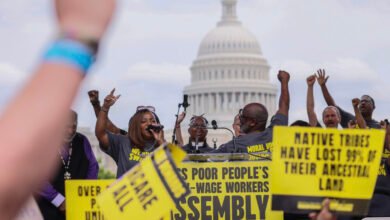
** Filename: church-protest-solidarity.jpg Alt Text: “Black church members in peaceful protest honoring Imago Dei and justice for Black lives.”
Imago Dei, Prophetic Witness, and the Black Church’s Responsibility
Theology Demands Response

If the Church believes in the image-bearing dignity of every person, silence is idolatry. The doctrine of Imago Dei gives Christians theological ground to resist violence—not only through protest, but through faithful, embodied witness.
Theologians argue that the values rooted in Imago Dei fueled movements like the Social Gospel and Civil Rights Era justice work. In the Black liberation theology tradition, Imago Dei is not passive—it aligns God with the oppressed, seeing in their suffering the face of Christ.
From Pulpit to Protest
The Church must move beyond perfunctory statements. Responding to police brutality in a way that honors Imago Dei involves :
- Public prophetic voice — sermons that name structural sin, denounce violence, and call congregants to justice.
- Concrete solidarity — partnering with community organizations, supporting legal aid or reform efforts.
- Pastoral care — trauma-informed counseling for families and youth devastated by violence.
- Reform within church structures — ensuring that churches themselves are safe, anti-racist spaces.
Young Christians I spoke with echoed this: “My faith feels hollow when the same institutions I trust on Sunday persist in silence Monday.” Their generation demands that believers live in the tension of worship and justice.
Youth Voices: Why This Matters for the Next Generation
For younger believers, police brutality is personal, immediate, and unignorable. They walk through neighborhoods where the badge is both protector and threat. Many cite:
- A sense of urgency—they don’t have the luxury of gradualism.
- A demand for authenticity—messages of love without action ring hollow.
- Interest in intersectional faith—they expect the Church to care about race, gender, and economic justice all at once.
They challenge older generations to recognize that faith is not immune from accountability. They want churches that repent, act, and stay consistent—not just during crisis seasons.
Intergenerational insight is vital, too. Elders in the church have historically served as moral anchors—but some were cautious, afraid of retaliation, or favored “staying out of politics.” Bridging those divides requires humility, storytelling, and mutual respect.

Short-Term & Long-Term Impact on the Community
Short-Term Ripples
- Increased mistrust of law enforcement and civic systems.
- Wounded faith when church leaders remain silent.
- Community uncertainty about where sacred spaces of healing exist.
Long-Term Ripples
- Generational trauma — the children of victims, the neighborhoods that see repeated violence.
- Erosion of civic engagement — when systems feel unjust, many stop believing in voting, advocacy, or institutional reform.
- Fractured theology — when believers internalize that their bodies are “less holy,” or “less worthy.”
- Missed prophetic witness — the potential for the Black Church to lead in justice-building diminishes if it remains timid.
Honoring the Image of God in response to violence is essential to both healing and hope.
Key Takeaways
- The doctrine of Imago Dei insists that all people—including Black individuals—reflect God’s own image.
- Police brutality is not only a political crisis—it’s a spiritual wound, because it attacks the divine reflection in flesh.
- The Church must respond not only with statements, but with sustained, embodied action: advocacy, pastoral care, and structural reform.
- Young believers demand integrity in faith-community responses—they won’t accept perfunctory silence.
- Honoring Imago Dei has both immediate (healing, witness) and long-term (shaping theology, restoring dignity) implications.
Call to Action: What the Faith Community Can Do Next
- Encourage courageous sermons and Bible studies that engage racial justice, Imago Dei, and structural sin.
- Build bridges with local justice organizations — offer church spaces, volunteer support, or financial resources.
- Train to become trauma-aware congregations — equip pastors, counselors, and youth leaders to respond with care and resilience.
- Create safe story spaces — forums for youth and victims’ families to share, grieve, and reclaim their voice.
- Cultivate ongoing accountability — congregational committees, partnerships, and check-ins to keep justice front and center.
If the Church can model honoring every Black life as sacred, it can reclaim prophetic credibility and bring healing to communities long wounded by violence.
Related HfYC Content
-
Celebrating Black Joy in New Jersey’s Faith & Culture Spaces (Churches)
-
Weekly Prayers, Weekly Pain: Families Gather Outside Delaney Hall in Search of Hope
Other Related Content
References (APA Style)
- DivineNarratives. (2025). The Image of God: Historical and Theological Perspectives. https://divinenarratives.org/the-image-of-god-historical-and-theological-perspectives/
- The Gospel Coalition. (n.d.). Thinking Theologically About Racial Tensions: The Image of God. https://www.thegospelcoalition.org/blogs/kevin-deyoung/thinking-theologically-about-racial-tensions-the-image-of-god/
- Yale Reflections. (n.d.). The Politics of Imago Dei. https://reflections.yale.edu/article/making-good-can-faith-repair-world/politics-imago-dei
- ODTD. (n.d.). Black Liberation Theology | Opening Doors to Discipleship. https://odtd.net/reformed-theology/black-liberation-theology/
-
-
-
-