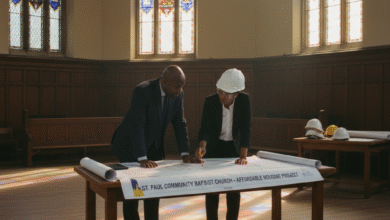
Poor People’s Campaign NJ Brooklyn Impact Explained
When marches and prayer rallies show up on courthouse steps in Newark or outside churches in Brooklyn, they are part of something much bigger than a single protest. The Poor People’s Campaign—revived nationally in recent years—frames poverty not as personal failure but as a political condition created by policy choices. In communities across Northern New Jersey and Central Brooklyn, that argument resonates with residents navigating rising costs, housing pressure, and uneven public investment.
The conversation being sparked today traces directly back to one of the last campaigns envisioned by Dr. Martin Luther King Jr.
From Resurrection City to Today’s Streets
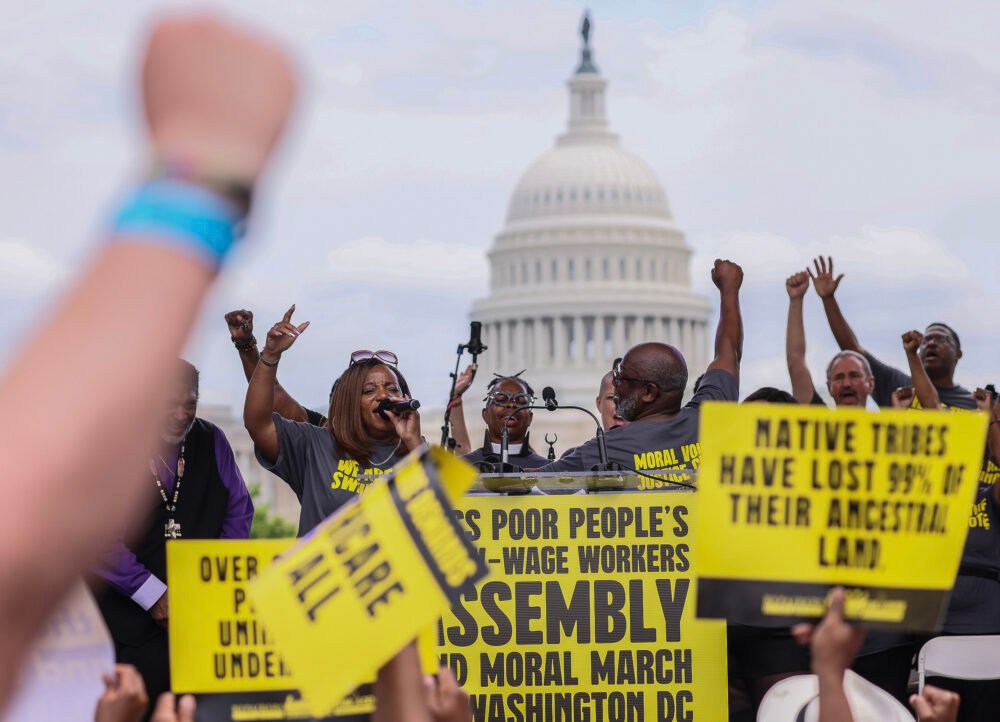
In 1968, the original Poor People’s Campaign organized what became known as “Resurrection City,” a protest encampment in Washington, D.C. that sought to force the nation to confront economic inequality across racial lines.
The campaign was built around King’s argument that civil rights victories—like desegregation—were incomplete without economic rights, including jobs, housing, and fair wages.
Today’s revival, often connected with “Moral Monday” gatherings, attempts to update that framework. Organizers argue the country still faces intertwined structural issues sometimes described as the “Triplets of Evil”:
- Racism
- Poverty
- m=Militarism
In cities like Newark and neighborhoods such as Bed-Stuy or Flatbush, those themes intersect with daily realities: housing affordability, school funding disparities, and job access.
Did the Original Movement Actually Change Policy?

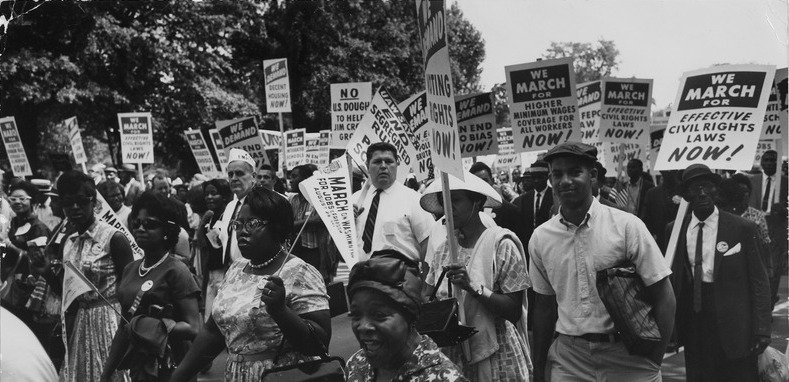
The 1968 campaign did not immediately produce a sweeping “Economic Bill of Rights.” But historians often point to an important outcome: it changed how poverty was discussed nationally.
The movement helped shift the public conversation from charity to policy responsibility, strengthening debates around federal anti-poverty programs and housing assistance in urban areas. (Specific policy outcomes tied directly to the campaign require further historical sourcing — Source Needed.)
The deeper shift was philosophical.
Earlier civil rights battles focused on equal access—for example, the right to sit at a lunch counter.
The Poor People’s Campaign reframed the question:
If you can sit at the counter, can you actually afford the meal?
That question still echoes in high-cost cities across the Northeast.
The Five Interlocking Issues Driving the Movement Today
The revived campaign describes five major structural problems shaping American life.
Systemic Racism
Advocates point to issues such as voting access debates, redistricting conflicts, and political representation across multiple states. Discussions around voter access and district maps also appear in New Jersey political conversations. (Specific NJ data Source Needed.)
Poverty
Organizers frequently highlight wage stagnation and cost-of-living pressures across the country.
Claims that one-third of workers in New Jersey earn below $15 per hour require verified labor statistics before publication (Source Needed).
Even without exact numbers, the tension is visible in both Newark and Brooklyn: housing costs rising faster than wages for many families.
Ecological Devastation
Environmental justice is a core pillar of the campaign.
In Newark’s Ironbound district, residents have long raised concerns about industrial pollution and environmental burdens concentrated near working-class neighborhoods. The issue is often cited nationally as an example of environmental inequality in urban communities.
Militarism and the “War Economy”
Movement leaders frequently argue that federal military spending diverts resources away from domestic priorities like schools, healthcare, and housing.
Claims about the amount of taxpayer funds contributed by New Jersey toward foreign wars since 2001 require verification (Source Needed).
Still, the underlying debate—how public money is allocated—is central to the campaign’s messaging.
Distorted Moral Narratives
The final issue is cultural.
Organizers argue that American political discourse often frames poverty as an individual moral failing rather than a structural policy outcome.
Changing that narrative is a central strategy of the modern campaign.
Why This Conversation Matters in Newark and Brooklyn

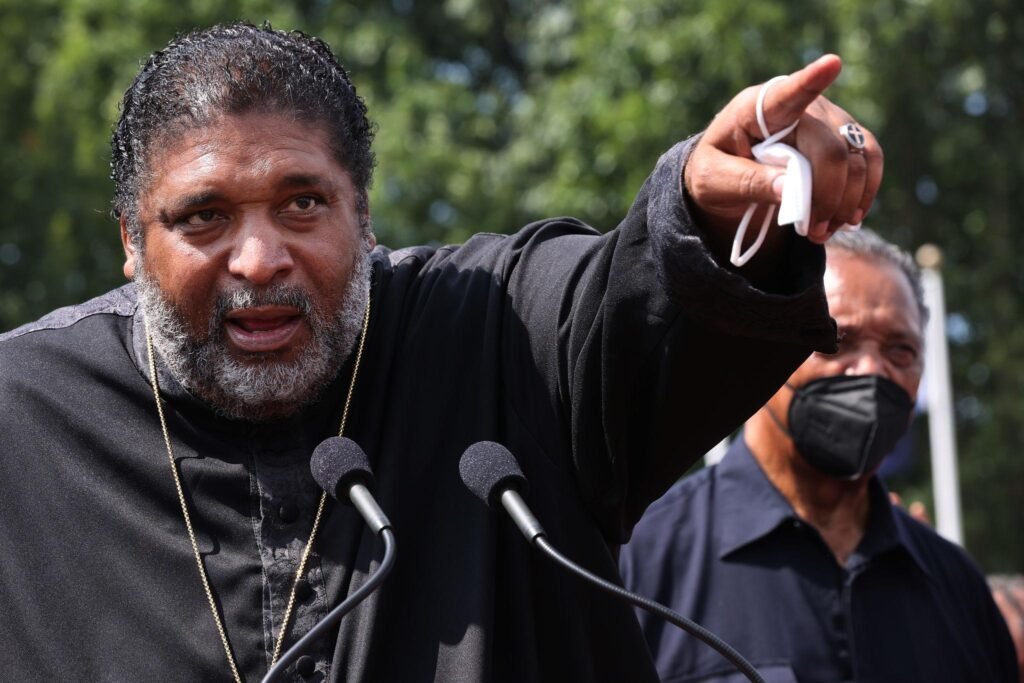
Across New Jersey and New York, debates around housing, education funding, and economic mobility continue to shape political discussions.
Some activists describe a large but under-mobilized group of poor and low-income voters nationwide who could influence election outcomes if participation increased. Estimates of this population vary widely and should be treated cautiously without specific sourcing (Source Needed).
What is clear is that economic pressure is becoming a central political issue in both regions.
And movements like the Poor People’s Campaign are attempting to frame that pressure as a shared political challenge rather than an individual struggle.
What Participation Could Look Like
For residents who want to engage, participation can take several forms:
- attending community meetings or town halls discussing economic justice
- participating in faith-based organizing networks
- registering for civic campaigns focused on policy advocacy
For platforms like Here For You Central, covering these conversations helps document how communities debate policy and power in real time.
What to Watch Going Forward

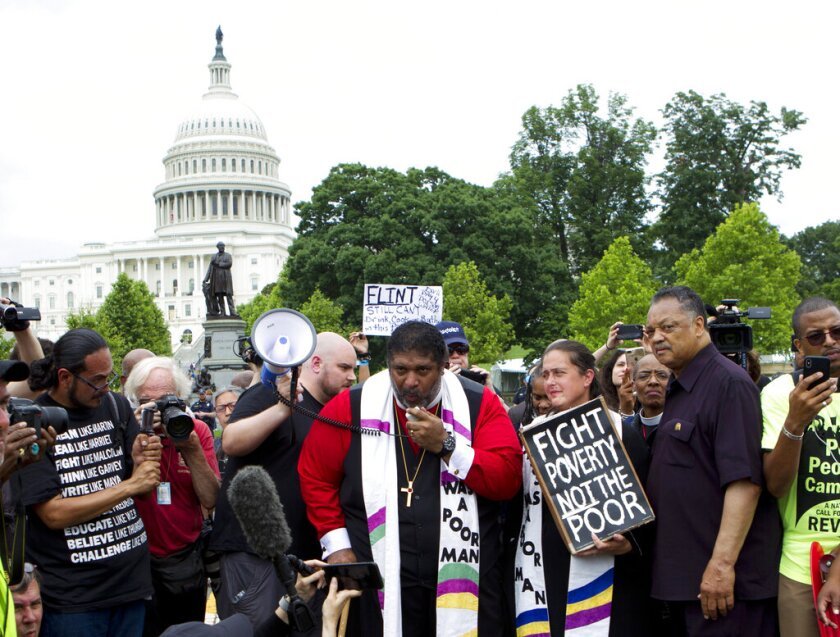
Advocates involved in the revived campaign often speak about a potential “Third Reconstruction,” referencing the Reconstruction era and the Civil Rights Movement as previous periods of structural change.
Whether that language translates into concrete legislation remains uncertain.
But the conversation itself—about wages, housing, education, and public investment—is likely to intensify as election cycles approach.
In Newark and Brooklyn alike, the debate over economic justice is no longer theoretical.
It’s happening in city halls, churches, classrooms, and neighborhood meetings.
Key Takeaways
- The modern Poor People’s Campaign builds on a 1968 movement led by Martin Luther King Jr. focused on economic rights.
- The campaign frames poverty as a policy outcome tied to systemic issues like racism, militarism, and environmental inequality.
- Communities in Newark and Brooklyn are increasingly part of national debates about housing, wages, and public investment.
- Many of the statistics used in political arguments around poverty require careful sourcing before publication.
- The movement’s larger goal is shifting how Americans think about poverty—from individual failure to structural challenge.
HfYC Poll of the Day
Follow us and respond on social media, drop some comments on the article, or write your own perspective!
Do you feel the current moral narrative in America blames poor communities for struggles that are actually caused by policy choices?
Poll Question Perspectives
Do people blame individuals too quickly for economic hardship instead of questioning the system?
Are political leaders doing enough to address structural poverty in cities like Newark and Brooklyn?
Is poverty mainly about policy decisions—or personal responsibility?
Related HfYC Content
- New Jersey’s $600K Racial Wealth Gap — Gentrification Today, Homelessness Tomorrow
- The Looming Threat of Project 2025 on Black America: What’s Really at Stake for Our Rights, Schools, and Economic Future
- The Frontlines: Navigating Systemic Challenges in Black Brooklyn
- Newark’s $970M Budget: A Double-Edged Sword
Other Related Content
- Poor People’s Campaign Official Website – https://www.poorpeoplescampaign.org
- Economic Policy Institute Research on Wage Inequality – https://www.epi.org/research/wages/
- NAACP Environmental and Climate Justice Resources – https://naacp.org/issues/environmental-climate-justice
-
-
-
-