When Malcolm X Warnings Echo Today: Are Black Celebrities Being Used Against Their Own Communities?
The conversation around Malcolm X warnings has been circulating for decades, but every so often, a real-world moment forces the community to revisit his insights with fresh eyes. One of those moments happened recently when Nicki Minaj stood before the United Nations — an image that sparked admiration for some, discomfort for others, and a wave of questions across Black social spaces.
Was it simply a celebrity leveraging her platform? Or was it something closer to what Malcolm X cautioned: the strategic use of Black entertainers to soften, redirect, or pacify the political consciousness of the masses?
That question — unsettling, necessary, and deeply relevant — forms the core of this exploration.
In the spirit of HFYC’s mission to tell the truth from our own vantage point, this article digs beneath the surface, challenges assumptions, and interrogates what this moment might mean for younger generations, long-term community organizing, and the future of Black political power.
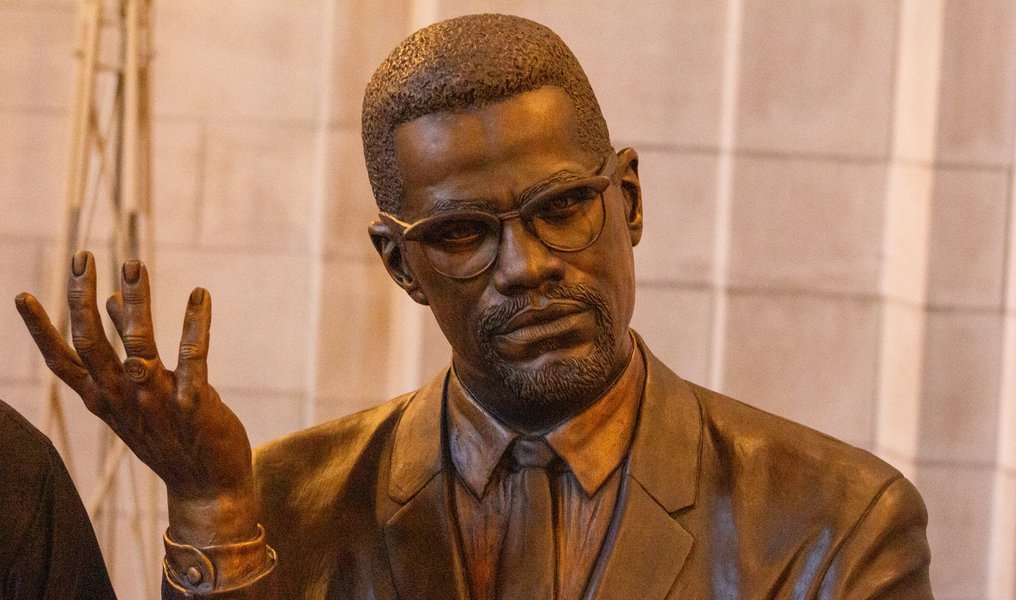
“Our People Are Easily Misled by Fame”: Revisiting the Malcolm X Warnings
Malcolm X often spoke about how mainstream institutions strategically relied on Black celebrities whenever they wanted public approval, cultural cachet, or distraction.
He believed that:
- Celebrities were often positioned as spokespeople for problems they were not politically trained to navigate.
- Their popularity made communities more vulnerable to influence, not more informed.
- Governments and media outlets knew exactly how to use fame to soften resistance.
His message wasn’t an attack on individual celebrities — it was a warning about systems. About power. About manipulation dressed up as representation.
And it hits differently in 2025, when celebrity platforms now rival entire media networks.
The Boondocks – The King is Back

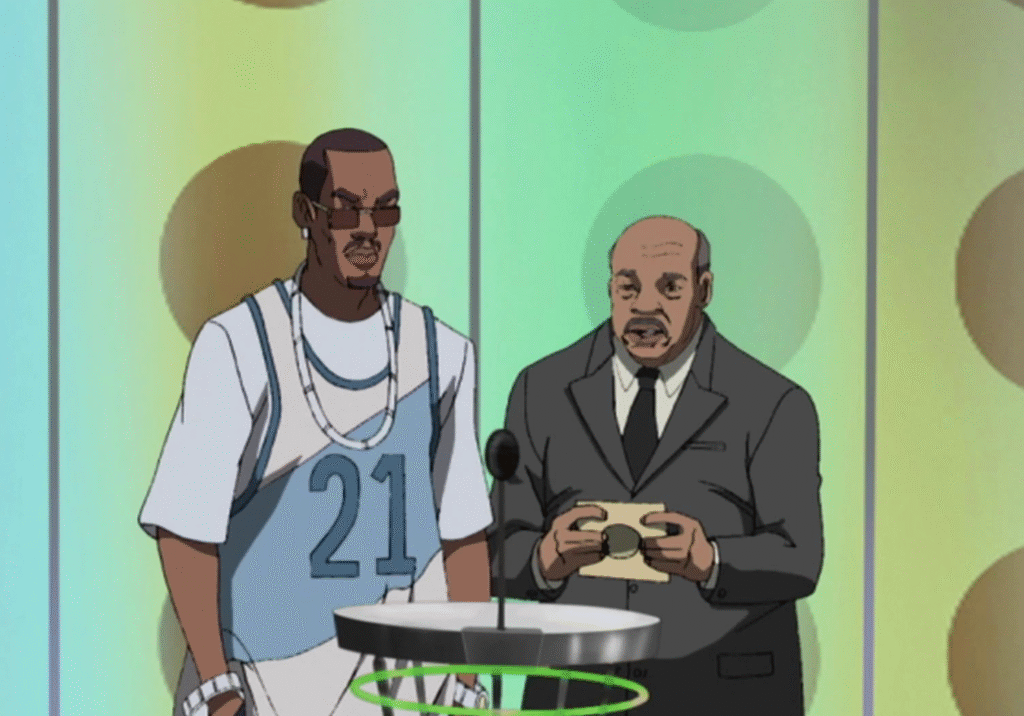
The dynamic described in this article mirrors the biting social commentary of The Boondocks episode “Return of the King,” in which a reawakened Martin Luther King Jr. confronts a modern society where the struggle for civil rights has been commodified into entertainment. Much like Malcolm X’s warnings about the “strategic use of Black entertainers,” the episode depicts a reality where the political consciousness of the masses has been seduced by celebrity culture and media spectacles. In the show’s climax, King realizes that the community has traded substantive revolution for “booty-shaking” and cable TV ratings, eventually delivering a scathing critique of a generation distracted by fame. This fictional scenario sharply underscores the article’s real-world argument: when the community allows entertainers rather than organizers to dictate the terms of Black political power, the message is inevitably softened, and the movement is neutralized.
Nicki Minaj at the U.N.: Representation… or Redirection?

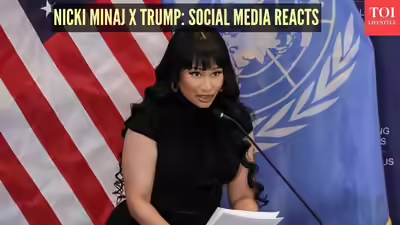
When Nicki Minaj appeared at the United Nations, social media exploded with applause, confusion, and a heavy dose of side-eye.
It raised questions that many in the Black community — especially younger viewers — weren’t afraid to ask:
- Why her?
- Why now?
- And why this message?
In a world where global institutions struggle with legitimacy, public trust, and impact on marginalized populations, inviting a celebrity with massive global influence is a calculated move.
It creates:
- Instant attention
- Cultural credibility
- A feeling of connection, even if no lasting policy change follows
That’s where the Malcolm X warnings return.
Not because Nicki did anything wrong — but because the stage she stood on has historically used the bodies, voices, and charisma of Black entertainers while ignoring the systemic issues impacting Black people around the globe.
How the Digital Age Makes Celebrity Influence Even More Powerful (and Risky)
Malcolm X spoke in an era where celebrity influence was powerful, but limited by radio, newspapers, and television gatekeepers. Today?
Influence travels at the speed of WiFi.
Celebrities can shift public opinion, shape narratives, and even distort facts before political organizers have a chance to respond.
Young people often look to familiar voices, not political institutions, for clarity. That blurring of entertainment and reality creates a perfect storm:
- Celebrities become “accidental activists” with little political grounding.
- Complex issues get flattened into soundbites.
- Global organizations use fandom instead of transparency.
This is why Gen Z and young millennials responded so sharply to the UN moment — many sensed the performance but questioned the purpose.
The Youth Perspective: “We Know When We’re Being Played With”
Younger generations aren’t as easily impressed by symbolic gestures.
They’ve seen:
- Corporations post Black squares
- Politicians dance for votes
- Influencers get paid to push government talking points
- Celebrity speeches overshadow community organizers actually doing the work
So when they saw Nicki Minaj at the UN, they didn’t just celebrate; they scrutinized.
Young Black Americans, Caribbeans, and Africans in the diaspora are politically sharper than they’re often given credit for. They understand the difference between:
Representation that empowers vs.
Representation that distracts
And they’re asking tougher questions:
- Who is actually benefiting from celebrity partnerships with global institutions?
- What policies follow these photo ops?
- Why aren’t grassroots Black organizations being invited to the same platforms?
In other words: They’re listening to Malcolm X, even if they weren’t alive to hear him.
The Long Game: Celebrity Voices vs. Community Power
Short-term impact of celebrity involvement:
- Increased visibility
- Media coverage
- Temporary public interest
Long-term impact:
- Communities become conditioned to equate fame with leadership
- Systemic issues lose focus
- Policy debates get overshadowed by entertainment-driven narratives
This is the long-term risk Malcolm X pointed out:
When external institutions determine who speaks for Black people, the community loses control over its voice.
And in 2025, the stakes are higher because the problems are bigger:
- Climate displacement
- Mass surveillance
- Global Black migration
- Economic inequality
- AI bias
- Policing and incarceration
If celebrities become the face of these issues without the necessary expertise, we risk replacing real movement-building with curated moments of visibility.
Are Celebrities Responsible? Or Are We?
We can’t ignore this part.
Communities sometimes elevate celebrities beyond their roles.
We cheer louder for entertainment than for policy change.
We share celebrity interviews more than mutual aid efforts.
But young people are shifting this trend.
They’re creating:
- DIY political education
- Decentralized activist networks
- Community-led media platforms
- Data-driven advocacy circles
They’re elevating organizers, not just entertainers.
So maybe the question isn’t whether celebrities are responsible — it’s whether the community is prepared to separate entertainment influence from political leadership.
A New Era: Toward Authentic Black Autonomy in Global Spaces

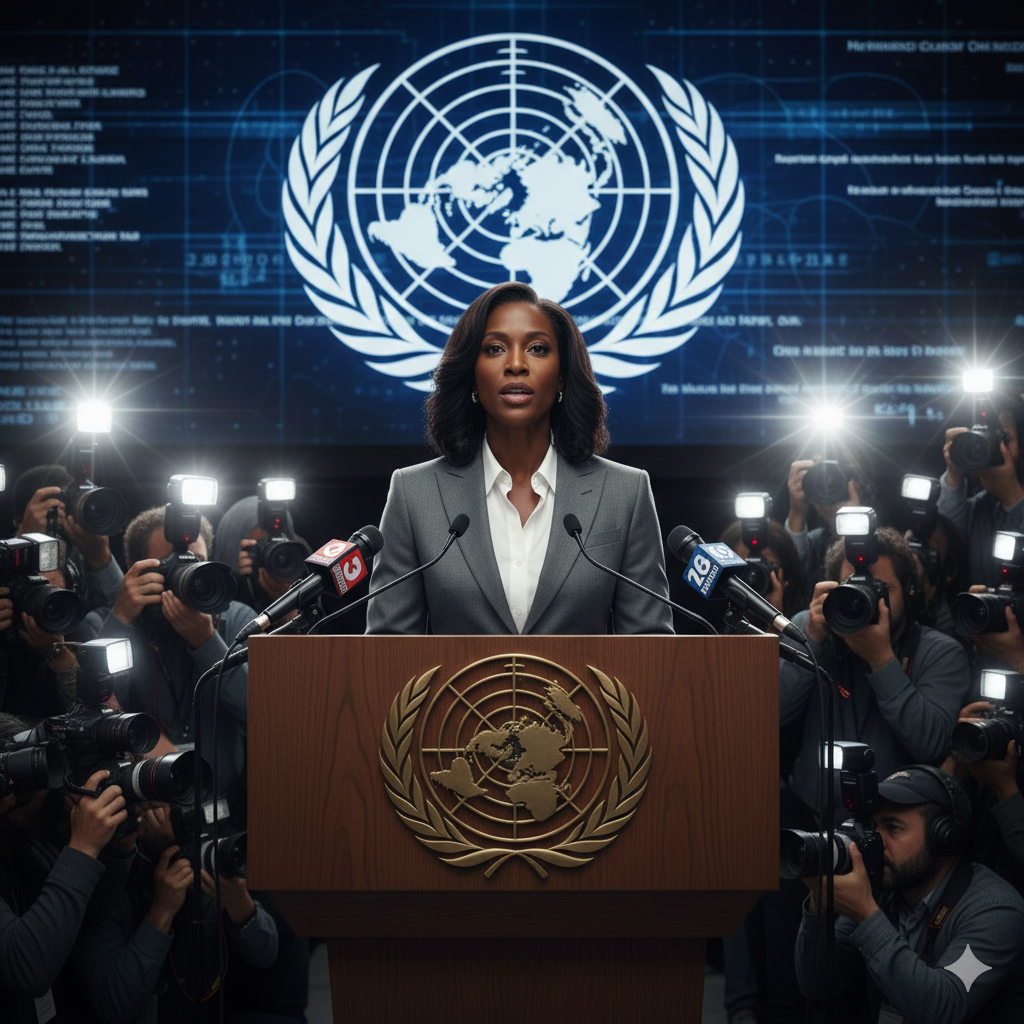
Here’s the future worth building:
- Black diplomats speaking for themselves
- Black scholars presenting complex global strategies
- Black organizers invited to global stages
- Black media platforms setting the narrative
- Black youth shaping political movements, not just reacting to them
Celebrity moments can matter — but they cannot replace the depth, leadership, and experience of those who live the struggle and do the work.
That’s what Malcolm X warned.
That’s what Nicki Minaj unintentionally brought back into the spotlight.
And that’s what the community must wrestle with today.
Key Takeaways
- Malcolm X warnings about the use of Black celebrities remain relevant in 2025.
- Institutions often use celebrity appearances to signal inclusion without delivering policy change.
- Young Black audiences are increasingly skeptical of symbolic representation.
- Celebrities can amplify messages, but they should not replace trained political voices.
- True community power comes from informed organizing, not entertainment-driven narratives.
What Comes Next: Reclaiming Who Speaks for Us
If the community wants genuine influence, we must:
- Support Black policy experts, not just entertainers
- Build platforms like HFYC that tell our stories from our vantage point
- Hold institutions accountable when they choose symbolism over substance
- Educate young people to recognize narrative manipulation
- Separate celebrity admiration from political decision-making
Because at the end of the day, Malcolm X wasn’t warning us about celebrities.
He was warning us about control.
And control is something the community must take back — intentionally, collectively, and unapologetically.
HfYC Poll of the Day
Do you think Malcolm X warnings were right — are Black celebrities being used today to steer our political opinions?
Alternate Perspectives:
- Is global leadership genuinely listening to Black communities, or just using our celebrities for optics?
- When celebrities speak for us on world stages, does it amplify our voice or replace it?
- Are we mistaking representation for power every time a Black celebrity is put in front of the world?
Related HfYC Content
- The Enduring Foundation: How New Jersey’s Black Churches Fueled a Movement and What That Means for Us Today
- How Africans Hijacked Essence Festival
- Newark’s 1967Black Brooklyn History: The Ultimate Guide to a Legacy of Resilience
- Rebellion and Today’s Struggle for Minority Rights
Other Related Content
- “Malcolm X: The Man and His Warnings About Media Control”
- “The United Nations and Celebrity Diplomacy”
References
- History.com Editors. (2021). Malcolm X. History. https://www.history.com/topics/black-history/malcolm-x
- Cooper, A. F. (2008). Celebrity diplomacy. Routledge.
- United Nations. (2024). Celebrity engagement and global communication strategy. UN Publications.