Jesse Jackson Legacy Honored 2026: Capitol Snub Sparks Debate
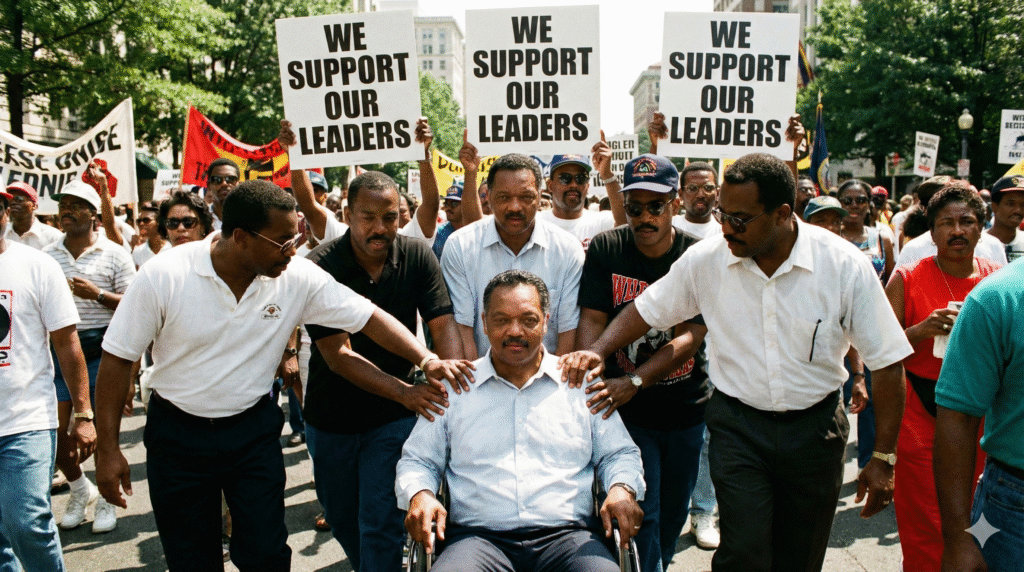
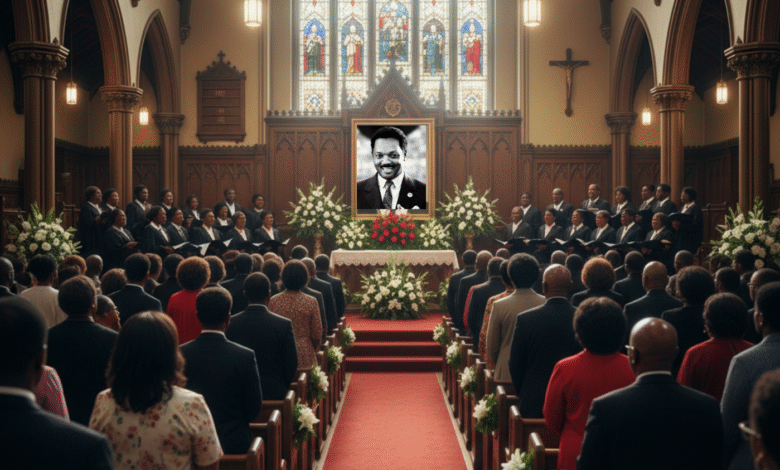
The phrase Jesse Jackson Legacy Honored 2026 should have marked a quiet moment of national reflection. Instead, it has opened a louder question about who gets remembered—and how. As final services for Jesse Jackson unfold, debate surrounding the denial of a request for him to lie in state at the U.S. Capitol has added a layer of civic tension to what many hoped would be a sacred Homegoing. For a generation shaped by his voice, this is not just about ceremony—it is about historical memory.
The Capitol Decision and Its Symbolism
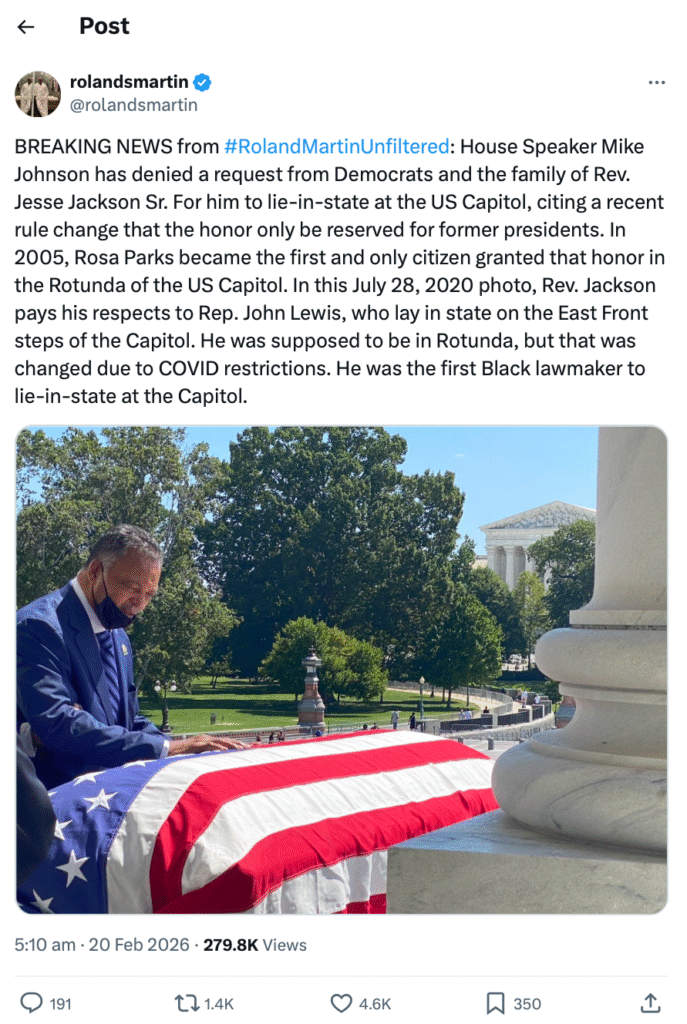

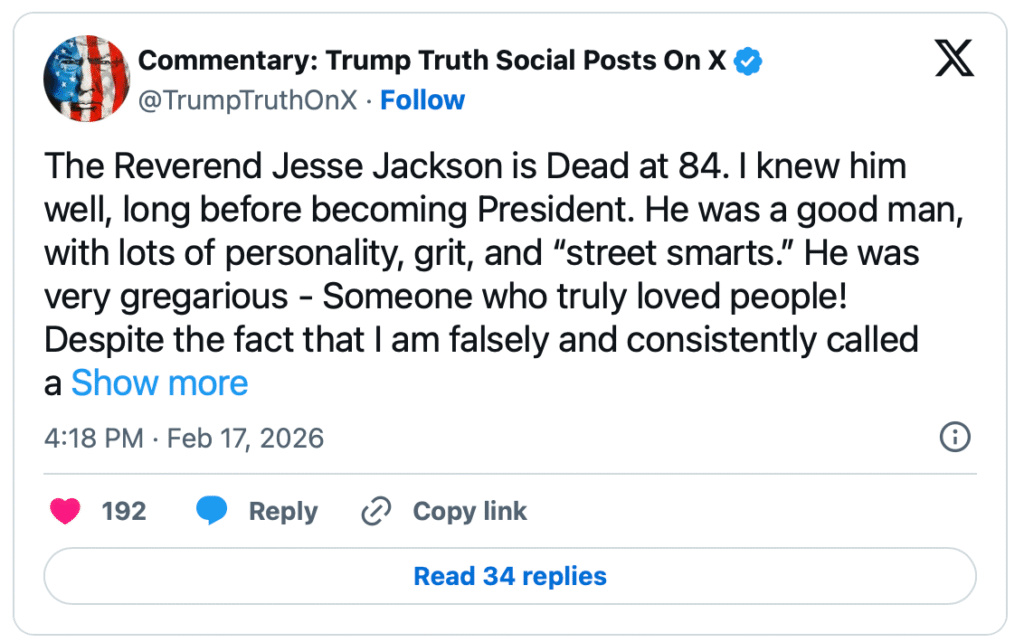
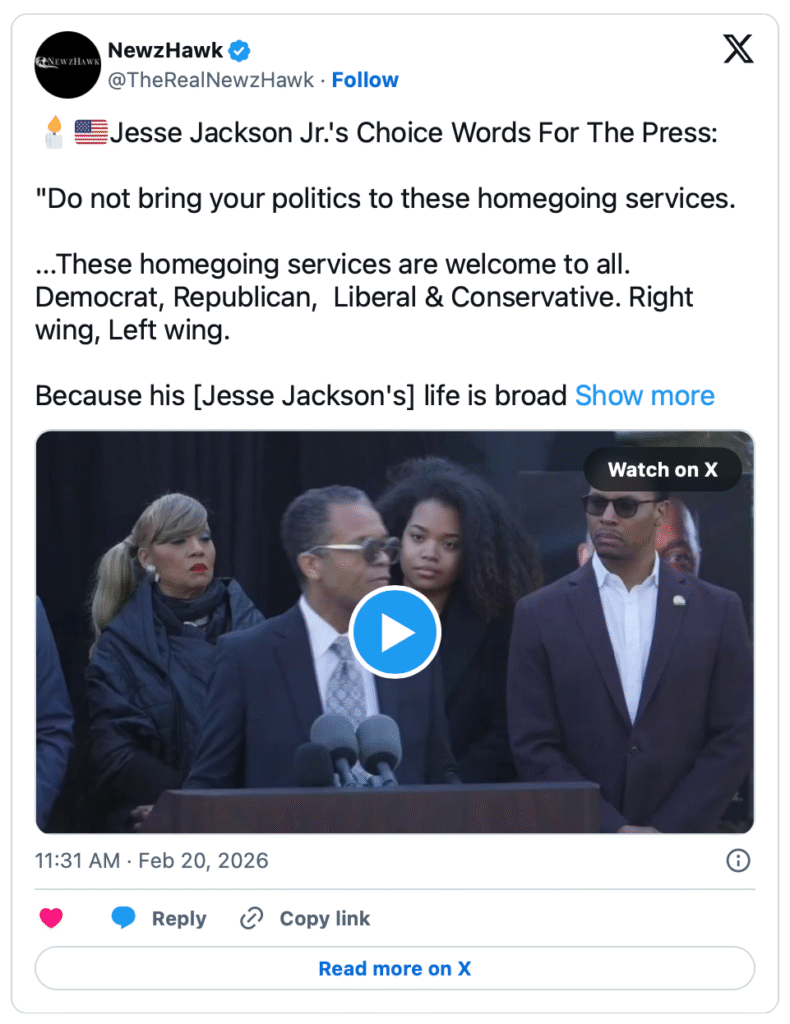
Public reporting confirms that House leadership declined the request for Jackson to lie in state, citing internal procedural standards. The decision has drawn comparisons to past honorees such as Rosa Parks and John Lewis, both of whom were granted that distinction.
While lying in state is not automatic for civil rights leaders, the symbolism matters. It represents national acknowledgment—not just of a life lived, but of a movement advanced. Jackson’s decades-long advocacy—spanning voting rights, economic justice, and international diplomacy—placed him in direct lineage with the moral architecture of the modern Civil Rights era.
Whether procedural or political, the optics have sparked a familiar question: when Black leadership reshapes America, does America formally enshrine that contribution—or quietly narrow the doorway?
Sovereign Celebration: Honoring on Our Own Terms
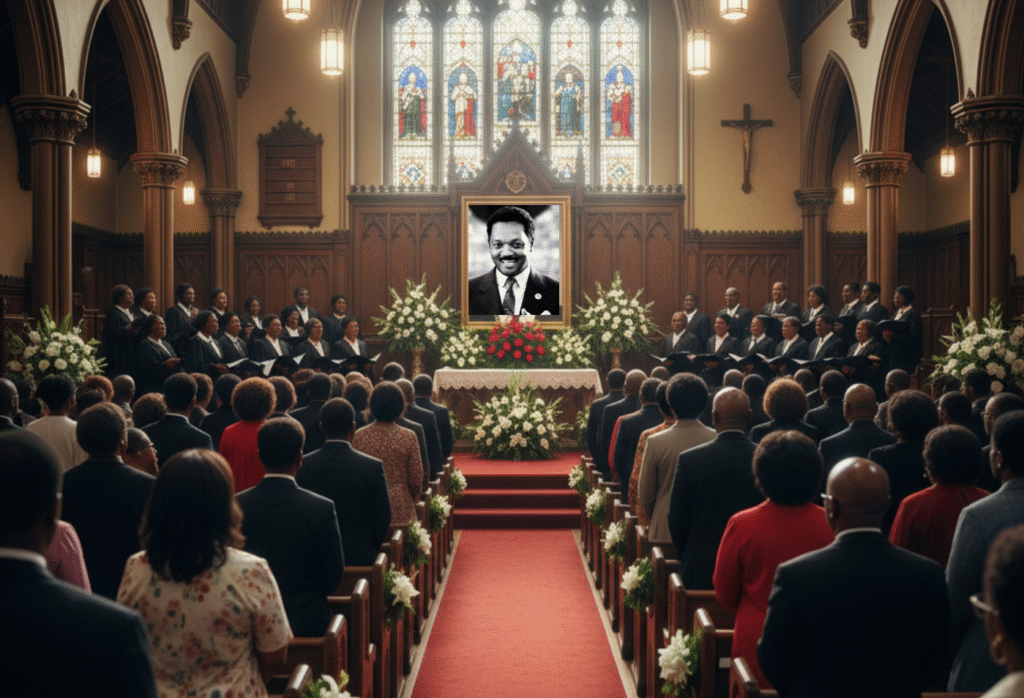
In response, Jackson’s family expanded memorial observances to locations deeply rooted in his story—Chicago, South Carolina, and Washington, D.C.—ensuring the celebration reflects community grounding rather than federal validation.
This approach mirrors a long-standing Black tradition: when institutions hesitate, the community builds its own altar.
Homegoing services within the Black church are not political theater. They are theological declarations. They proclaim that legacy is not determined by marble halls but by lived impact. Jackson’s lifelong message—that we are “somebody”—echoes in sanctuaries more powerfully than it ever could in congressional chambers.
A Larger Pattern of Memory Tension
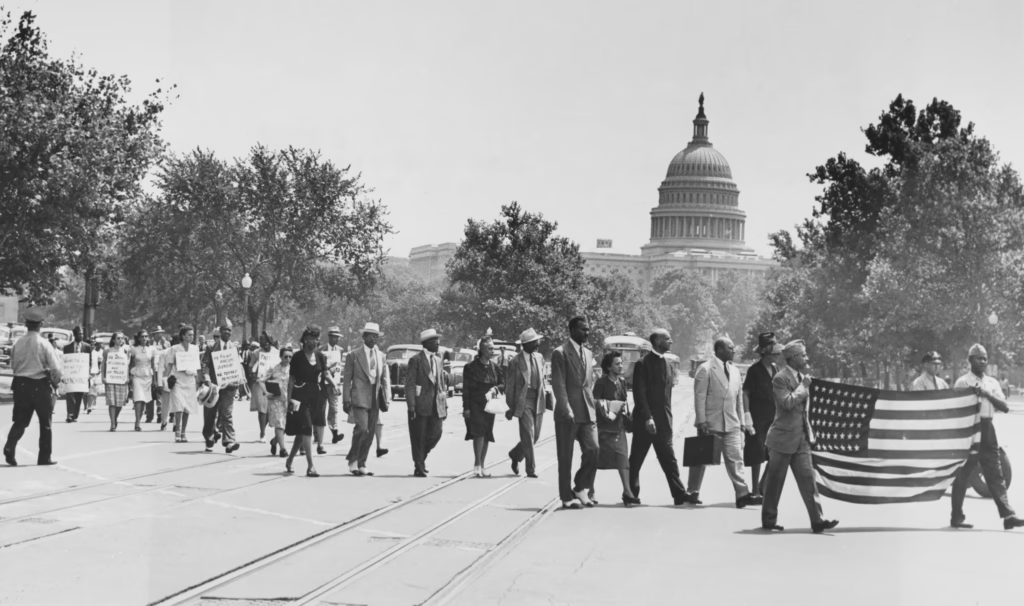
For many observers, this moment does not feel isolated. Across the country, debates over how history is taught, preserved, or reframed have intensified. Exhibits, curriculum disputes, and public rhetoric about “divisive history” continue to shape how communities interpret institutional choices.
To be clear: debates about public honors are not new. Nor are disagreements about who qualifies. But for communities whose historical contributions have often been minimized, every decision carries amplified weight.
The real tension may not be about a single ceremony. It may be about stewardship. If institutions shift, who ensures continuity? If recognition narrows, who archives truth?
Families do. Churches do. Community media does.
Beyond Ceremony: Federal Posture Toward Black Leadership and Memory

The tension surrounding Jesse Jackson Legacy Honored 2026 does not exist in a vacuum. It lands within a broader national debate over how Black leadership, Black history, and Black institutions are treated in federal spaces.
Over the past several years, political rhetoric and policy battles have intensified around diversity programming, race-conscious education, and public memory. Public disputes over how slavery is taught, how race is discussed in classrooms, and how museums frame American history have shaped the climate in which decisions about recognition now occur.
Public Rhetoric and Symbolic Targeting
Former President Barack Obama remains one of the most visible Black leaders in modern history. In recent years, commentary about him has often resurfaced not as policy debate, but as symbolic contestation—over legitimacy, identity, and national belonging.
When public officials or political figures use dismissive or dehumanizing language toward past Black leadership, it shifts the tone of civic memory. Even when those comments are not tied to formal policy, they contribute to a cultural atmosphere in which recognition feels conditional.
For many in the African Diaspora, this creates a pattern: praise in moments of convenience, distance in moments of institutional honor.
Museums, Education, and the Battle Over Narrative
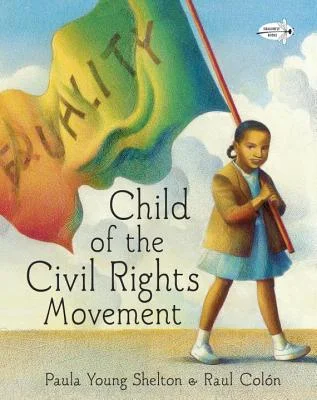
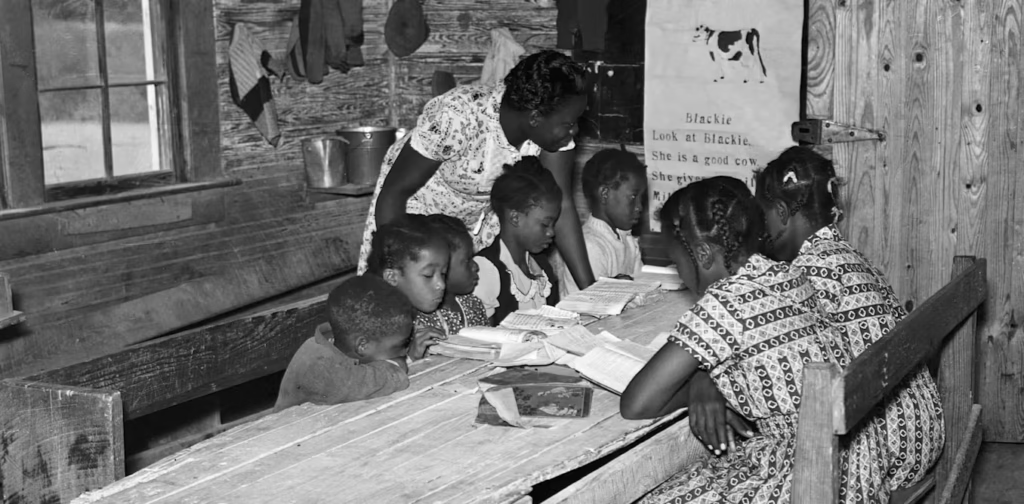

Institutions like the Smithsonian Institution and the National Museum of African American History and Culturerepresent federal acknowledgment that Black history is foundational to American history. Yet even these institutions have not been immune from political pressure.
Debates over funding priorities, exhibit framing, and educational programming have surfaced repeatedly. Across multiple states, curriculum battles over race and history have led to restrictions, removals, or rewording of lessons related to slavery, systemic discrimination, and civil rights.
These disputes are often framed as debates about “balance” or “divisiveness.” But for communities whose history has long been under-documented, even subtle shifts can feel like contraction.
When federal or state institutions narrow how race is discussed, it indirectly narrows how Black leadership is contextualized. If the struggle is minimized, the leadership born from that struggle becomes easier to sideline.
Why Independent Monuments Matter
This is not an argument against federal inclusion. Public institutions shape national identity, and access to them matters.
But history shows that community-built memory is often more durable.
The Black church preserved narratives during Reconstruction when textbooks erased them. HBCUs archived scholarship when mainstream institutions excluded it. Fraternal organizations and grassroots archives safeguarded photographs, speeches, and oral histories long before digitization.
Independent halls of honor, private archives, endowed museums, and cultural institutions do more than celebrate—they stabilize legacy against political fluctuation.
If federal recognition expands, community institutions amplify it.
If federal recognition contracts, community institutions preserve continuity.
That dual strategy may be the most realistic posture in this moment.
The Strategic Question
The debate is no longer simply whether the Capitol honors a leader.
It is whether Black communities will rely exclusively on federal validation—or build parallel structures powerful enough to stand regardless of political cycles.
Protecting the crown is not reactive anger. It is strategic foresight.
And if Jesse Jackson Legacy Honored 2026 becomes a catalyst for renewed investment in our own monuments, archives, and leadership institutions, then this moment—however contentious—may ultimately strengthen the architecture of our memory.
What This Moment Reveals
Jackson’s legacy—rooted in faith, coalition-building, and unapologetic advocacy—has always been larger than federal ceremony. Yet public symbols matter because they signal whose stories are considered foundational to the nation.
The phrase Jesse Jackson Legacy Honored 2026 now carries dual meaning. It signals both remembrance and resistance. It reminds us that honoring is not passive—it is active work.
Protecting the crown means documenting, teaching, and celebrating with intentionality. It means refusing to allow cultural memory to become conditional.
And it means asking ourselves: are we building durable institutions of remembrance that cannot be undone by procedural shifts?
Key Takeaways
- Public honors carry symbolic weight, especially for civil rights leaders whose work reshaped national identity.
- The debate surrounding Jackson’s Capitol recognition reflects broader tensions over historical memory.
- Black church Homegoing traditions center spiritual legacy over institutional validation.
- Community-led remembrance functions as cultural protection in moments of civic uncertainty.
- Stewardship of history increasingly depends on community documentation and intergenerational teaching.
HfYC Poll of the Day
Follow us and respond on social media, drop some comments on the article, or write your own perspective!
In light of recent federal recognition debates, should Black communities prioritize building independent halls of honor and cultural archives?
Poll Question Perspectives
- Should we invest more in our own national monuments and private institutions of remembrance?
- Is demanding space within federal institutions still necessary for protecting the public record?
- Can both strategies—internal institution-building and public advocacy—coexist effectively?
Related HfYC Content
- Rev. Jesse Jackson Hospitalized – What Black America Owes Its Civil-Rights Elders
- Nicki Minaj, Trump, and Black Women Political Weaponization
- Newark, New York, and the New Frontlines: How Black Leaders Are Confronting ICE and Federal Power
- The Enduring Foundation: How New Jersey’s Black Churches Fueled a Movement and What That Means for Us Today
Other Related Content – Links
- Library of Congress — Oral Histories of the Civil Rights Movement:
A collection of firsthand interviews and memories from participants in the freedom struggle.
🔗 https://www.loc.gov/exhibitions/treasures-from-the-library-of-congress/about-this-exhibition/collected-stories-collective-experience/oral-histories-of-the-civil-rights-movement/ - Library of Congress — Civil Rights Movement Classroom Materials:
An accessible overview of movement history and primary sources.
🔗 https://www.loc.gov/classroom-materials/united-states-history-primary-source-timeline/post-war-united-states-1945-1968/civil-rights-movement/ - National Archives — Civil Rights Research Resource:
A curated portal for primary documents, photos, exhibits, and research tools on civil rights history.
🔗 https://www.archives.gov/research/civil-rights - Civil Rights Movement Archive (CRMA):
An extensive nonprofit archive of documents, stories, photos, and movement materials created by participants in the Freedom Movement.
🔗 https://www.crmvet.org/ - Library of Congress — Digital Civil Rights Collections:
A guide to digital primary sources on civil rights in America, including photographs and oral histories.
🔗 https://guides.loc.gov/civil-rights-in-america/digital-collections
References – Links
- Oral History Project — Library of Congress:
Background on the Civil Rights History Project and its mission to preserve firsthand accounts.
🔗 https://www.loc.gov/collections/civil-rights-history-project/about-this-collection/ - “Lying in State” (Wikipedia entry on U.S. Capitol tradition):
Explains the difference between lying in state vs. lying in honor, protocols, and notable instances.
🔗 https://en.wikipedia.org/wiki/Lying_in_state - Statue of Rosa Parks in U.S. Capitol:
Details the bronze sculpture of Rosa Parks in the National Statuary Hall—her unique place in Capitol history.
🔗 https://en.wikipedia.org/wiki/Statue_of_Rosa_Parks_(U.S._Capitol) - U.S. House History – Civil Rights Act of 1964:
Historical overview of passage of this landmark legislation.
🔗 https://history.house.gov/HistoricalHighlight/Detail/37133?current_search_qs=