What Congress’s Big Transparency Vote Really Means for Us
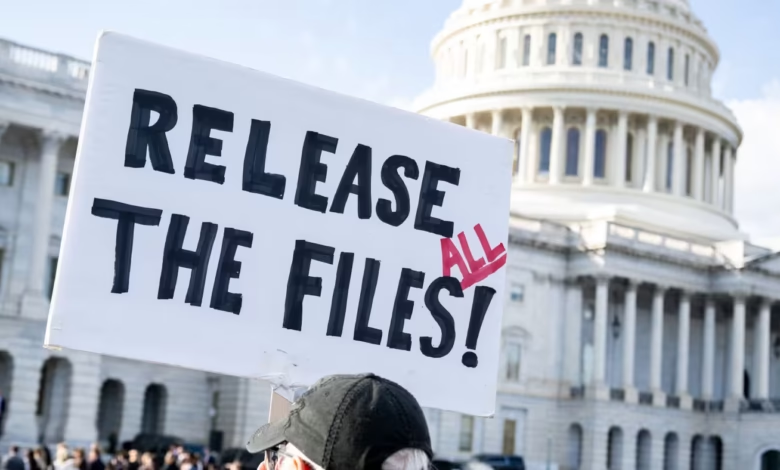
On November 18, 2025, the Epstein files release stopped being just a hashtag and became actual lawmaking. The U.S. House of Representatives voted 427–1 to force the Department of Justice to release investigative records related to Jeffrey Epstein and Ghislaine Maxwell, and the Senate followed with a unanimous consent vote the same day. President Donald Trump, who had previously tried to block the effort and called it a “Democrat hoax,” has now said he will sign the bill.
For survivors, advocates, and communities who’ve watched this case get buried, revived, and politicized for years, this moment is about more than curiosity. It’s about whether the government will finally treat child sexual abuse and trafficking like the national emergency it is—especially for girls of color and vulnerable youth who rarely get headlines or justice.
This piece breaks down what exactly Congress just voted on, how the Epstein files release process will work, who tried to slow it down, what survivors are demanding, and why this transparency fight matters deeply for Black communities watching how power protects itself.
How We Got Here: From Campaign Promises to a Congressional Showdown

Jeffrey Epstein’s name has hovered over American politics for years—linked to famous billionaires, politicians, and global elites. For a long time, survivors and advocates have pushed to see what the federal government actually knows: flight logs, interview notes, internal memos, and any evidence of who helped, who looked away, and who benefited.
During the 2024 campaign, Trump repeatedly promised to release the Epstein files if re-elected. After he returned to the White House in 2025, his own attorney general said the “client list” was on her desk, and conservative influencers began flashing binders labeled “Epstein Files: Phase 1” as proof that something big was coming. Wikipedia
But when Rep. Ro Khanna introduced the Epstein Files Transparency Act in July 2025, it stalled in committee. It took a rare move—a discharge petition started by libertarian Republican Rep. Thomas Massie and signed by more than 200 Democrats and a small group of Republicans—to force House leadership to bring the bill to the floor over their objections.
Survivors traveled to Washington, held press conferences, and called out both parties and Trump directly for turning their trauma into a political football. Their message was simple: stop playing games and vote. Good Morning America
Inside the Vote: 427–1 and the Politics Behind It
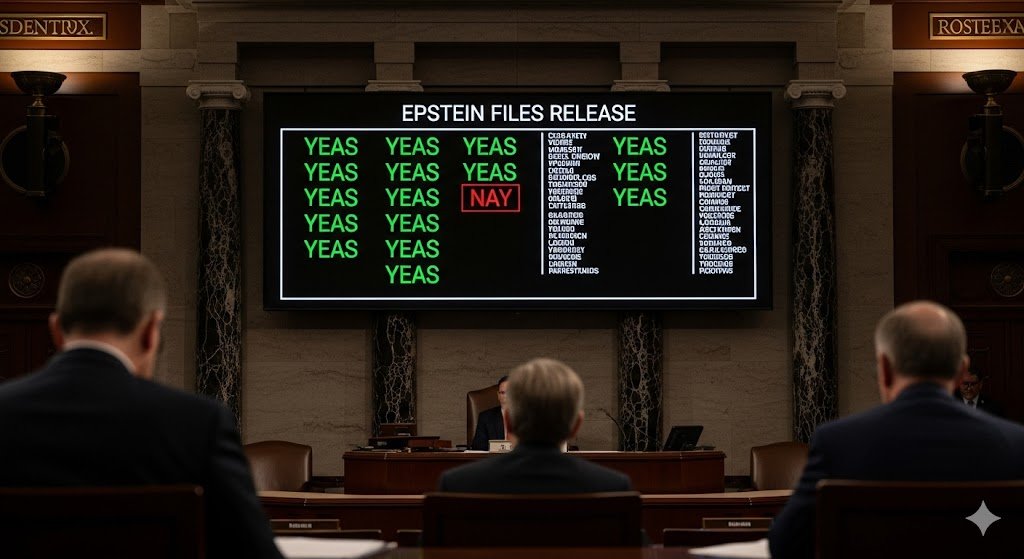
When the House finally voted on November 18, it wasn’t close:
- Yea: 427
- Nay: 1 – Rep. Clay Higgins (R–LA)
- Not voting: 5 members
Higgins said he opposed the bill because he feared innocent people—witnesses, family members, and others mentioned in investigative files—could be harmed if their names appeared in public records. He argued that the release process risks “destroying lives” of people who were never charged. AP News
The rest of the House—progressives, moderates, MAGA loyalists, and establishment Republicans—lined up together to vote yes. That unity did not happen magically:
- Trump’s team reportedly pressured Republicans for weeks not to support the discharge petition or the bill.
- Survivors and advocates publicly called out that pressure and tied it to a longer history of institutions protecting powerful men over abused children.
- Once it became clear that over 100 Republicans were likely to break ranks, Trump reversed himself and announced he would support the Epstein files release and sign the bill.
House Speaker Mike Johnson ultimately voted for the bill but spent months slow-walking it, including delaying the swearing-in of Democrat Adelita Grijalva—the 218th signature needed on the discharge petition—during the government shutdown. Critics argued that this was about avoiding a vote on the Epstein files; Johnson denied that and said he was following normal scheduling practices. Axios
What the Epstein Files Transparency Act Actually Does
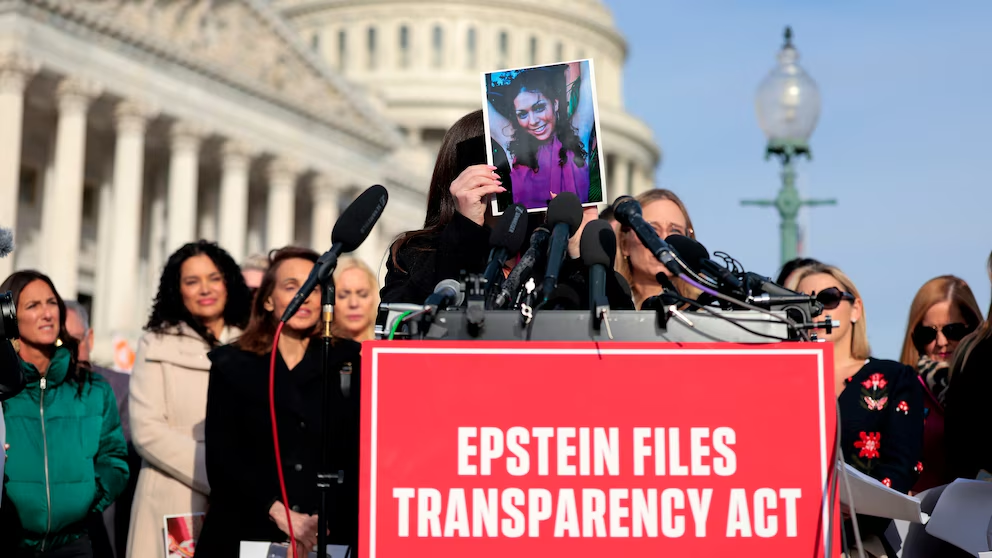
The law doesn’t just say “release the files” and walk away. It sets timelines and rules that matter. Under the act, the Department of Justice must:
- Release all unclassified DOJ records related to Epstein and Maxwell—including investigative files, communications, flight logs, and travel records—within 30 days of enactment, in a searchable, downloadable format.
- Provide an unredacted list to the House and Senate Judiciary Committees of all “government officials and politically exposed persons” named in those records.
- Explain what they withheld. Within 15 days after the public release, DOJ has to send Congress a report describing what categories of information were released, what was redacted, and why.
At the same time, the act allows certain redactions:
- Victim protection: Names and personal information of victims and survivors can be withheld.
- Ongoing investigations and national security: Information that would compromise active cases or properly classified intelligence can be redacted.
What DOJ cannot do is hide information just because it’s embarrassing, politically sensitive, or damaging to the reputation of powerful people. The statute explicitly bans redactions based solely on avoiding “embarrassment” or “political harm.”
What Happens Next: From Congress to the DOJ Servers
Even though both the House and Senate have now approved the bill, the process isn’t over.
- The President’s Signature
- Trump has said he will sign the Epstein files release bill. Once he does, the 30-day clock starts ticking.
- If he changed his mind and vetoed it, Congress could still override with a two-thirds vote. Given the 427–1 House outcome and unanimous consent in the Senate, an override would be very likely.
- DOJ Implementation and Possible Slow-Rolling
- DOJ lawyers and investigators will review tens of thousands of pages to decide what must be redacted for victim privacy or ongoing investigations.
- Survivors and advocates are already warning against “weaponized redactions”—legally narrow but used aggressively to protect institutions. The Guardian
- The Files We See vs. The Files Congress Sees
- The public will get a redacted dump of records.
- Congress will get an unredacted list of government officials and politically exposed persons mentioned in those files.
- Lawmakers could hold hearings, call witnesses, or propose further reforms based on what they learn.
- Legal and Political Challenges
- Individuals named in the documents might sue, claiming privacy violations or misuse of investigative material.
- Some in Congress already talk about using “oversight” and follow-on legislation either to expand disclosure—or to clamp down if they think the act went too far.
In other words, the vote is the beginning of the Epstein files release, not the end of the story.
Survivors at the Center: “Choose the Children, Not the Politics”
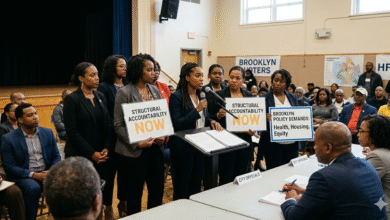
In the middle of all this legal language and political maneuvering are real people whose lives were shattered. Survivors stood outside the Capitol holding photos of themselves as teenagers, telling reporters and lawmakers exactly what this fight feels like.
Some of what they’ve been saying:
- One survivor described this moment as a “human issue,” not a partisan stunt, and told Trump directly that his shifting positions and delays had caused them more stress after decades of trauma.
- Another, Jena-Lisa Jones, who once voted for Trump, called his earlier attempts to block the bill a “national embarrassment” and begged him to stop using the case as a political weapon.
- Others talked about “institutional betrayal”—how the same systems that were supposed to protect children instead protected predators, money, and reputations.
Survivors have been very clear:
They don’t expect the Epstein files release to magically fix everything. But they do see it as a test of whether this country is willing to name who was involved, who looked the other way, and how deep the networks of protection really run.
Privacy, Redactions, and the Fight Over “How Much Is Too Much?”

The lone “no” vote, Clay Higgins, has framed his opposition as a defense of privacy and due process. He argues that raw investigative files can include names of people who were interviewed but never charged, including potential witnesses, family members, or people falsely accused.
Speaker Mike Johnson took a softer version of that line. He ended up voting yes, but has repeatedly voiced concerns that without tighter language, victims or innocent third parties could be exposed. At one point he encouraged the Senate to amend the bill to add more protections, but the Senate went ahead and passed it without changes. TIME
The act itself tries to walk this tightrope by:
- Requiring redactions for victim-identifying information.
- Allowing redactions for real national security or ongoing investigations.
- Forbidding redactions just to avoid embarrassment or political fallout.
Still, how that balance plays out is going to be a human decision made by lawyers, prosecutors, and possibly judges—people who sit inside institutions that have already failed these survivors once.
Why the Epstein Files Release Matters for Black Communities
On paper, the Epstein story is about a wealthy financier, private islands, and global elites. But zoom out and it hits a lot of themes that Black communities know too well:
- Selective justice. We’ve watched poor Black folks get locked up on flimsy evidence while powerful people skate, settle quietly, or disappear behind sealed documents. A serious Epstein files release is a test of whether that double standard is still the rule.
- Child sexual abuse and trafficking. Black girls, queer Black youth, and kids in the foster or juvenile systems are statistically at higher risk of exploitation, but their stories rarely become national moral emergencies. If the country can mobilize this hard around white and international victims, we should be asking: Where is this energy when the victims are our kids?
- Institutional trust. From COINTELPRO to police brutality cover-ups, Black communities have long memories of government secrecy used to protect power. Transparency around the Epstein files won’t erase that history—but it might show whether this era is any different.
There’s also a political angle. While some right-wing influencers have tried to frame the Epstein files release as a weapon strictly against “Democrat elites,” survivors themselves keep pushing back. They’re saying what many Black folks already believe: this is about systems, not just one party or one president.
Key Takeaways and What We Do Next
If we strip away the noise, a few points stand out:
- This is a huge transparency win—but only step one.
Congress has ordered an Epstein files release with real teeth. Whether DOJ follows the spirit or just the bare minimum of the law is the next fight. - Survivors forced this moment.
The discharge petition, the press conferences, the public shaming—none of this happens without survivors refusing to be quiet props in someone else’s political script. - Privacy concerns are real, but so is the risk of weaponized secrecy.
Protecting victims does not require protecting powerful enablers. The redaction process needs public scrutiny, not blind trust. - For Black communities, the lesson is old but urgent: build power, not just outrage.
If we want full transparency on Epstein, police violence, environmental racism, and beyond, we need our own media, legal advocates, and organizers ready to push, sue, and stay on these stories long after the headlines move on.
Call to Action
- Stay informed. When the files drop, look for outlets that center survivor voices and do real analysis—not just clickbait name-lists.
- Support survivor-led organizations. Follow and fund the groups that have been in this fight for years, especially those supporting Black and brown youth impacted by trafficking and abuse.
- Hold your representatives accountable. Every member who voted yes should be pressed to follow up with oversight hearings, real policy changes, and resources for victims—not just victory laps.
The Epstein files release is ultimately a test: can this system tell the truth about itself, or will it hide behind black ink and press conferences? Our job—especially in Black communities that have seen this movie before—is to watch closely, organize locally, and refuse to let this become just another scandal that fades without structural change.
HfYC Poll of the Day
When these Epstein files finally drop, what do you think we’re really about to see—justice at last, a heavily blacked-out cover story, or proof the system protects its own?
Other Perspectives:
- If Congress can force an Epstein files release after years of stall tactics, what scares you more—that we’ll see too many big names in there, or not nearly enough?
- Do you trust the government to release the Epstein files in a way that protects victims while still telling the full truth, or are you expecting major redactions and spin?
- If the Epstein files show up looking like a stack of black highlighters with a few commas left, what are you doing first—laughing, raging, or scrolling straight to the “famous names” pages?
Related HfYC Content
- Diddy Files – Part 1/3 – Power, Perception, and Punishment: The Trial of Diddy and the Question of Justice for Black Moguls
- Diddy Files – Part 2/3 – Cultural Dynamics & the “Hip Hop House”
- Diddy Files – Part 3/3 – The Media & The Mob
- Attacks on Christians in Nigeria – Hidden Truths & Political Lies
- The New Political Landscape — November 2025 Elections Impact
- The Silent Crisis: Economic and Social Impact of 300,000 Job Losses Among Black Women
Other Related Content
- House and Senate Move to Force Release of Epstein Files in Landmark Transparency Vote – The Guardian
- House Passes Epstein Files Transparency Act as Johnson Raises Privacy Concerns – TIME – TIME
- Who Is the Only House Member to Vote Against Releasing the Epstein Files? – AP / People – AP News
- Epstein Survivors Speak Out Ahead of House Vote on Files Release – ABC News / GMA – Good Morning America
- All Info – H.R.4405: Epstein Files Transparency Act – Congress.gov – Congress.gov
References (APA Style)
- Congress.gov. (2025). H.R.4405 – Epstein Files Transparency Act, 119th Congress (2025–2026). U.S. Congress. https://www.congress.gov/bill/119th-congress/house-bill/4405/all-info
- Feinberg, A. (2025, November 18). Trump says he’ll sign bill to release Epstein files but claims all Epstein’s friends were Democrats. The Hill.
- Hutzler, A., & Pecorin, A. (2025, November 18). Epstein survivors speak out ahead of House vote, take aim at Trump.ABC News / Good Morning America.
- Karni, A., Barrett, D., & Gold, M. (2025, November 12). Trump summons GOP allies as he pushes to block House vote on Epstein files. The New York Times.
- Mazza, E. (2025, September 29). ‘Not suicidal’: Marjorie Taylor Greene posts ominous message amid Epstein bill push.HuffPost.
- People / Associated Press. (2025, November 18). Who is the only House member to vote against releasing the Epstein files?
- The Guardian. (2025, November 18). Senate agrees to pass Epstein files bill after near-unanimous House vote.
- TIME. (2025, November 18). House votes to release Epstein files—but Speaker Johnson signals delay to ‘protect victims’.
- Watson Coleman, B. (2025, November 18). Watson Coleman votes for Epstein Files Transparency Act. Office of Rep. Bonnie Watson Coleman. https://watsoncoleman.house.gov/newsroom/press-releases/watson-coleman-votes-for-epstein-files-transparency-actWatson Coleman