
Brooklyn’s Enduring Soul: A Journey Through Black History, Culture, and Resilience
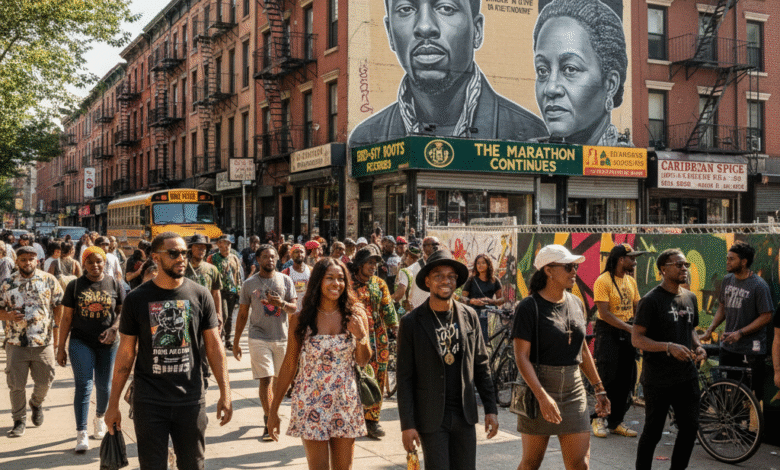
There’s a rhythm to Brooklyn. You can hear it in the sizzle of jerk chicken on a grill in Flatbush, feel it in the bass of a classic Biggie track bumping from a car in Bed-Stuy, and see it in the proud, steady gaze of a family sitting on their brownstone stoop. It’s a rhythm of resilience, a beat that has pulsed through generations. To understand Brooklyn is to understand a pivotal chapter of the Black American story, a journey of profound struggle, radical self-determination, and world-changing creativity. This is more than a borough; it’s a legacy, and its story is one of the most important in the ongoing narrative of Black Brooklyn history.
Brooklyn’s story is one of deep paradox. It was once known as the “slaveholding capital” of New York State, a place where the economy was built on the backs of enslaved Africans. Yet, from that same contested soil rose Weeksville, the second-largest independent community of free Black people in pre-Civil War America. Today, Brooklyn is home to the largest African American community in the United States and a global hub for the vibrant cultures of the Caribbean diaspora. But this legacy is under pressure. A tide of gentrification has led to a sharp, painful decline in the Black population, making the work of remembering, celebrating, and preserving this history more urgent than ever. This is the story of Black Brooklyn—its foundations of freedom, its cultural zenith, and its determined fight for the future.
Forging Freedom on Contested Ground
To walk the streets of modern Brooklyn is to walk over layers of a complex and often painful history. In the early 19th century, long before it became a global brand, Kings County was an agricultural region deeply dependent on the labor of enslaved people. In 1790, about 30% of the county’s residents were of African descent, the vast majority of them enslaved. The institution was so entrenched that even today, the legacy of the slave-holding families who built their wealth here remains etched into the landscape, with some historians noting that as many as 82 streets are still named after them.
Yet, even in this landscape of oppression, a powerful counter-narrative of freedom was taking root. Following the final abolition of slavery in New York State in 1827, a new vision for Black life began to emerge. This vision was given a name and a home in 1838, when a free Black stevedore named James Weeks purchased a plot of land in what is now Crown Heights. This act of intentional community-building was the birth of Weeksville.
Weeksville was more than just a settlement; it was a statement. At a time when the right to vote for Black men was tied to property ownership—a deliberate barrier to political power—the act of buying land was a revolutionary strategy. By creating a community of landowners, the founders of Weeksville were building a base of economic self-sufficiency and political self-determination. By the 1850s, it had blossomed into a thriving, self-sufficient community of over 500 people, including doctors, entrepreneurs, and activists who had come from both the North and the South, some born free and others having escaped bondage. It was a hub of Black institutional power, boasting its own churches, an orphanage, a cemetery, a baseball team, one of the nation’s first Black newspapers (The Freedman’s Torchlight), and Colored School No. 2, one of the first schools in the country to integrate both its students and staff.
In a nation where Black lives were constantly under threat, Weeksville became a sanctuary. Its relative seclusion offered protection from the Fugitive Slave Act of 1850, and during the horrific New York Draft Riots of 1863, it served as a safe haven for Black families fleeing violence in Manhattan.
But as Brooklyn urbanized, the city’s expanding street grid, new developments, and the construction of Eastern Parkway literally paved over the community, and its memory was largely lost. The “forgetting” of Weeksville was an active process of erasure through development, a historical prelude to the cultural erasure happening today. It wasn’t until 1968, when a local historian named James Hurley rediscovered the last remaining homes along an old lane called Hunterfly Road, that a powerful grassroots preservation movement, led by community champions like Dr. Joan Maynard, began the work of reclaiming this vital piece of history. As Zulmilena Then, preservation manager at the modern-day Weeksville Heritage Center, reflects, “Growing up in Brooklyn, I didn’t know about Weeksville until I was an adult… These buildings are an anchor to our people and connection to … our past”. Today, the center stands as a testament to that fight for memory, a physical reminder that the struggle to hold onto Black history in the face of displacement is not new.
The Neighborhoods That Raised Us
The 20th century saw the rise of the neighborhoods that would become the heartlands of Black Brooklyn, each with its own unique story of migration, culture, and identity. These communities were not formed by accident; their very existence was shaped by city-wide infrastructure projects and national policies, proving how large-scale decisions create the intimate realities of our daily lives.
Bedford-Stuyvesant: “Brooklyn’s Little Harlem”
Long before it was the home of Biggie and Jay-Z, Bedford-Stuyvesant was a predominantly white neighborhood. The turning point came in 1936 with the construction of the A train’s Fulton Street Line. This new artery created a direct link to Harlem, allowing thousands of Black families to leave the overcrowded neighborhood in search of more space and better housing in Brooklyn. By 1940, Bed-Stuy was home to more than 65,000 Black residents, and by 1960, it had become the largest Black neighborhood in New York City, a vibrant cultural center known for its stunning brownstone architecture and its powerful political voice—it was the community that elected Shirley Chisholm, the first Black woman to serve in the U.S. Congress.
Crown Heights: A Kaleidoscope of Cultures
The story of modern Crown Heights is a story of dramatic demographic change. The neighborhood, which sits on the land where Weeksville once stood, transformed in a single decade. Between 1960 and 1970, a wave of “white flight” to the suburbs combined with a large influx of immigrants from the Caribbean, shifting the neighborhood from 70% white to 70% Black. This rapid change created a vibrant, multicultural community but also led to tensions. The Crown Heights Riots of 1991, which erupted following the tragic death of a 7-year-old Guyanese American boy named Gavin Cato, exposed deep-seated conflicts between the neighborhood’s Black and Hasidic Jewish communities. The event remains a painful but important chapter in the borough’s history, highlighting the complex challenges of life in a densely populated, diverse urban space.
Flatbush: The Heart of “Little Caribbean”
While Bed-Stuy was shaped by the Great Migration, Flatbush was transformed by a different wave. The Hart-Celler Immigration Act of 1965 opened the doors to a new generation of immigrants, and thousands from Jamaica, Trinidad, Haiti, Barbados, and across the Caribbean made their home in Flatbush and East Flatbush. They brought with them the flavors, sounds, and traditions of their home countries, turning the area into a bustling hub of Caribbean life. Today, the neighborhood is officially recognized as “Little Caribbean” and “Little Haiti,” where nearly half the residents are foreign-born. Cultural institutions like the new Flatbush Central Caribbean Marketplace serve as vital centers for commerce and community, anchoring the culture for generations to come.
The Soundtrack of a Revolution
If Brooklyn has a soul, you can hear it in its music. The borough’s cultural output has not only defined its own identity but has shaped global culture, serving as a form of narrative resistance that broadcasted the realities of Black urban life to the world.
The Birthplace of Hip-Hop Royalty
Brooklyn is, without question, a titan of hip-hop. The streets of these neighborhoods were the training grounds for some of the most legendary artists in music history. The lineage is iconic, from the pioneering lyrical skill of Bed-Stuy’s Big Daddy Kane in hip-hop’s golden age to the cinematic storytelling of The Notorious B.I.G., who painted vivid pictures of life on the corner of Fulton Street and St. James Place. Then came Marcy Projects’ own Jay-Z, who transformed his experiences into a global business empire. These artists, along with other Brooklyn legends like Mos Def, Talib Kweli, Lil’ Kim, and Foxy Brown, did more than make music; they were journalists of the block, documenting the grit, ambition, and complexities of their world and, in doing so, created a powerful, humanizing narrative that countered the mainstream media’s often-negative portrayal of their communities.
The Caribbean Flavor
Woven into the fabric of Brooklyn’s culture is the undeniable influence of the Caribbean diaspora. This flavor is everywhere:
- The Food: The air in neighborhoods like Flatbush and Crown Heights is rich with the aroma of jerk chicken, savory oxtail, curry goat, and freshly baked Jamaican patties. These dishes, once specific to island nations, are now quintessential Brooklyn food.
- The Music: The soundscape of central Brooklyn is a fusion of reggae, dancehall, soca, and calypso, a constant rhythm that provides the heartbeat for the community.
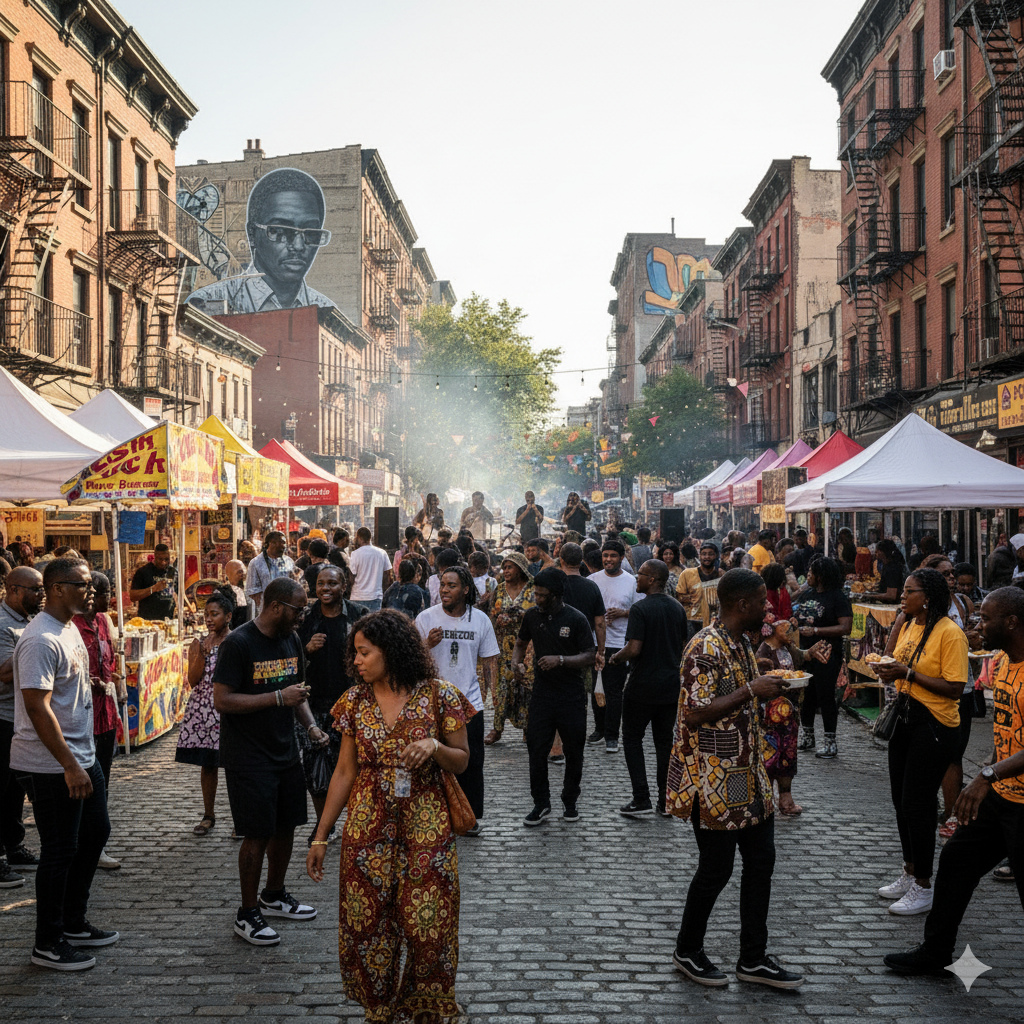
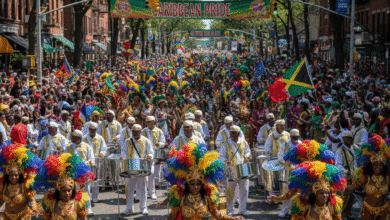
- The Celebration: Every Labor Day, this culture explodes onto Eastern Parkway for the West Indian Day Parade. It is the largest celebration of Caribbean culture in North America, a dazzling spectacle of feathered costumes, massive sound systems, and pure, infectious joy that draws millions to celebrate the heritage that has so profoundly shaped the borough.
The New Battle for Brooklyn: A Community Under Pressure
For all its cultural richness and historical weight, Black Brooklyn is facing an existential threat. The forces of gentrification are reshaping the borough at an alarming rate, leading to the displacement of the very people and culture that made it iconic. This isn’t just an economic shift; it’s the unraveling of communities built over generations as a response to previous forms of racism and segregation.
The numbers tell a stark story. Between 2010 and 2020, Brooklyn’s Black population experienced the sharpest decline of any borough in New York City. This demographic earthquake is felt most acutely in historically Black neighborhoods. In Bed-Stuy, for example, the white population surged by 30,000 during that decade, while the Black population fell by 22,000.
| Year | Total Brooklyn Population | Black Population (Number) | Black Population (Percentage) |
| 2000 | 2,465,326 | 848,583 | 34.4% |
| 2010 | 2,504,700 | 799,066 | 31.9% |
| 2020 | 2,736,074 | 729,696 | 26.7% |
| Source: U.S. Census Bureau data |
This process began decades ago with policies of redlining and disinvestment that systematically devalued these neighborhoods, leaving them vulnerable to speculative real estate investment. Now, as the median price for a home in Brooklyn soars to $900,000, longtime residents are being pushed out. Renters face impossible rent hikes, Black-owned small businesses are replaced by corporate chains, and even homeowners who have been in their homes for generations are losing their grasp due to skyrocketing property taxes.
Behind these statistics are deeply personal stories of loss and alienation. Clifford Martin Ouedraigo, a Black homeowner in Bed-Stuy, described the painful experience of feeling like a stranger in his own community, navigating suspicion from both his new white neighbors and some of his longtime Black neighbors who see his professional status as a sign of the changing times. “When I get out of my house,” he shared, “it’s a different story because some people will always remind me, through their looks, ‘What are you doing here?’”. Yvonne, another longtime Bed-Stuy resident, put it simply: “Bed-Stuy is changing and we look for change, but don’t kick me out of it. A lot of us are being forced out of our homes because we can’t afford this rent”.
This pressure is felt acutely by the younger generation as well. Even in the borough’s most competitive schools, Black students often feel isolated. The viral hashtag #blackinbrooklyntech brought to light stories of daily microaggressions and racism. As one student, Karelyn Mayers, shared, “Since my first day at Tech, I’ve been continually reminded of my skin color”. For many young people, finding safe spaces like a Black Student Union becomes a critical tool for survival and for building community in a rapidly changing landscape.
The People’s Power: Voices of Resistance and Renewal
While the challenges are immense, the story of Black Brooklyn has always been one of resilience. Today, a powerful and sophisticated network of community organizers, non-profits, and cultural guardians are fighting to protect their neighborhoods and build a sustainable future. Their strategies are a modern-day echo of the self-reliance and institution-building that gave birth to Weeksville nearly two centuries ago.
On the front lines of the fight against displacement is Equality for Flatbush (E4F), a Black Lives Matter organization that provides rapid response support for tenants facing harassment, organizes campaigns to hold predatory developers accountable, and advocates for the abolition of systems that harm the community. They lead coalitions like the Brooklyn Anti-Gentrification Network (BAN), mobilizing residents to fight for their right to remain.
Another innovative approach comes from Growhouse NYC, a community land trust that is actively reclaiming land to take it off the speculative market and ensure it serves the community in perpetuity. Their work, including the creation of a “Black History Corridor” and the fight to preserve the Flatbush African Burial Ground, directly links the preservation of physical space with the preservation of cultural memory.
This work is bolstered by pillar institutions dedicated to uplifting the community from within. United for Brownsvillefocuses on creating a flourishing environment for the neighborhood’s predominantly Black and Brown children and families by improving access to housing, healthcare, and education. Meanwhile, Children of Promise, NYC provides critical support for one of the community’s most vulnerable populations: children impacted by mass incarceration. Through after-school programs, mentoring, and therapeutic services, they work to heal trauma and dismantle the stigma that plagues so many families.
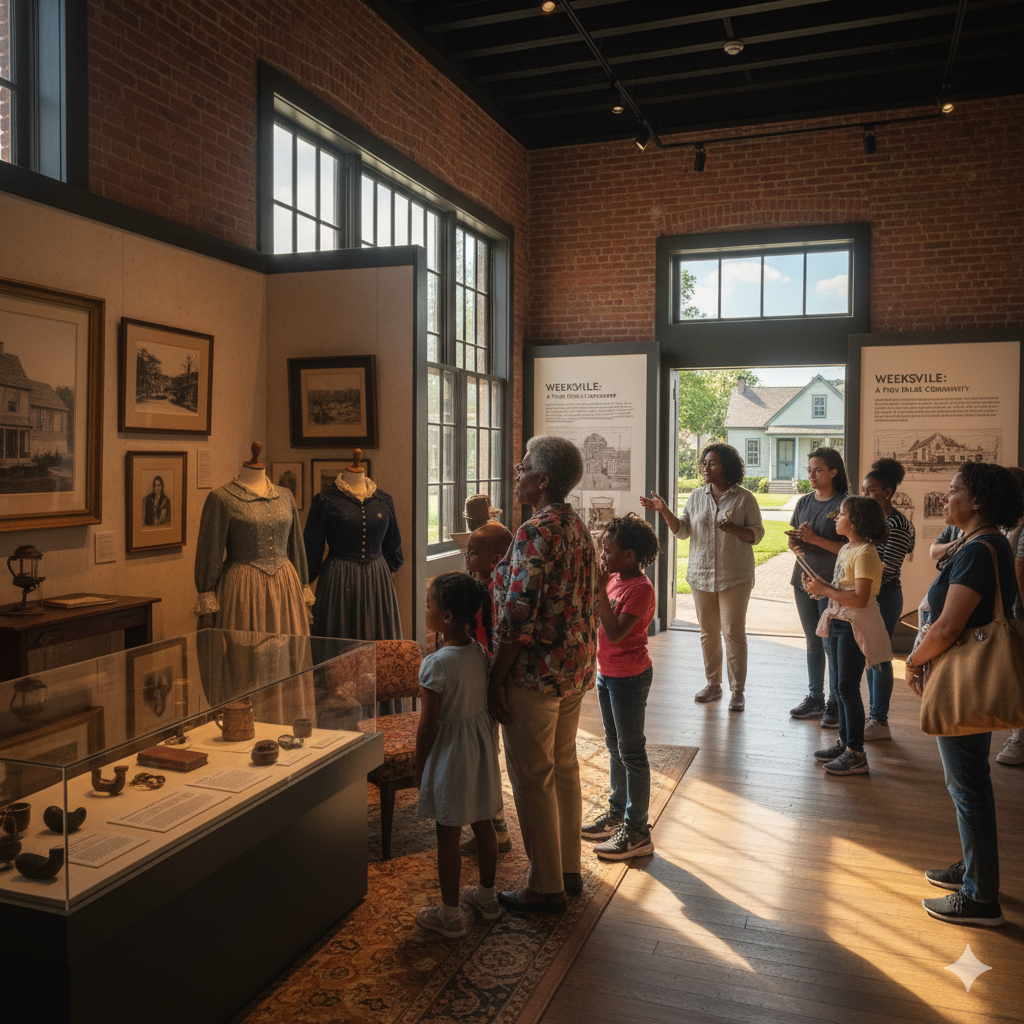
At the heart of this ecosystem of resistance is the Weeksville Heritage Center. No longer just a relic of the past, it serves as a vibrant cultural hub for the present. Through its annual Juneteenth Food Festival, farmers markets, educational workshops, and artistic residencies, it actively connects the founding principles of Weeksville—empowerment, self-determination, and creativity—to the ongoing struggles and triumphs of Black Brooklyn today.
From the Stoop to the State House: Black Leadership in Brooklyn
The grassroots power of Black Brooklyn has long translated into formal political power, producing leaders who have shaped the city, state, and nation. This tradition of leadership began with trailblazers like Bed-Stuy’s own Shirley Chisholm, the first Black woman ever elected to the U.S. Congress, whose unbought and unbossed spirit continues to inspire.
Today, that legacy is carried on by a new generation of leaders who reflect the borough’s dynamic fusion of African American and Caribbean identities.
- Hakeem Jeffries, who represents a district anchored in Brooklyn, has risen to become the House Minority Leader, one of the most powerful political positions in the country.
- Yvette Clarke, the daughter of Jamaican immigrants, represents the heart of Caribbean Brooklyn in Congress. As the Chair of the Congressional Black Caucus and co-chair of the Congressional Caribbean Caucus, she is a powerful voice for the communities that raised her.
- New York City Mayor Eric Adams also has deep Brooklyn roots, having been born in Brownsville and serving as the borough’s first Black Borough President before leading the entire city.
- At the local level, leaders like Assemblymember Rodneyse Bichotte Hermelyn, the first Black woman to chair the Kings County Democratic Party, wield significant influence in shaping the borough’s political direction.
To get involved and stay informed about the decisions affecting your neighborhood, you can connect with the Office of the Brooklyn Borough President and find your New York City Council Member online.
Our Brooklyn, Our Future
The story of Black Brooklyn is a testament to the enduring power of community, culture, and resistance. From a small settlement of free Black people who dared to build a world of their own, to the global cultural force it is today, this borough has always been a place of radical hope and relentless creativity. As we face the challenges of a new century, the lessons of the past provide a clear path forward.
Key Takeaways
- History is Power: Understanding the legacy of communities like Weeksville provides an anchor and a blueprint for modern struggles for self-determination. Our history is not just in the past; it is a living resource for the future.
- Culture is Resistance: Brooklyn’s artistic output, from hip-hop to Carnival, is more than entertainment. It is a powerful assertion of identity and a narrative of Black life that has shaped the world.
- The Fight for Place is a Fight for Justice: Gentrification is the critical civil rights issue of our time in Brooklyn, threatening to erase generations of history and culture. The fight to stay is a fight for the soul of the borough.
- Community is the Solution: The most effective responses to these challenges are coming from the ground up—from grassroots organizers, non-profits, and everyday residents building power together.
The Path Forward: How You Can Help
Preserving the soul of Black Brooklyn requires all of us. Here’s how you can be a part of the movement:
- Support Black-Owned Brooklyn: Make a conscious choice to spend your money at the businesses that are the backbone of our communities. Discover new favorites through platforms like Black-Owned Brooklyn and frequent local gems like Happy Cork (wine and spirits), Cafe con Libros (a feminist bookstore and coffee shop), and Peace & Riot (home goods).
- Engage with the Culture: Immerse yourself in the story. Visit the Weeksville Heritage Center, the Museum of Contemporary African Diasporan Arts (MoCADA), and the Center for Brooklyn History. Show up and celebrate at the West Indian Day Parade.
- Amplify Community Organizers: The people on the front lines need our support. Follow, donate to, or volunteer with organizations like Equality for Flatbush and Growhouse NYC that are doing the daily work of protecting our communities.
- Get Civically Involved: Power is not just in protest; it’s in policy. Find out who represents you on your local Community Board and in the City Council. Advocate for policies that protect tenants, preserve affordable housing, and support community-led development.
Image Prompts
Feature Image
- Prompt Template: “A cinematic, photo-realistic image of a multi-generational Black family sitting on the stoop of a classic Brooklyn brownstone in Bed-Stuy. The scene should feel warm and vibrant, with details like a young person listening to music on headphones, an elder sharing a story, and plants on the steps. Composition: medium shot. Lighting: warm, late afternoon sunlight. Quality: ultra HD, detailed textures.”
- Filename: black-brooklyn-history-brownstone-family.jpg
- Alt Text: “A multi-generational Black family enjoying a moment together on the stoop of their brownstone, representing the enduring legacy of Black Brooklyn history.”
Supporting Image 1 (History)
- Prompt Template: “An editorial photography style image depicting a split-scene. On the left, a historical reenactment of a 19th-century Black family standing proudly in front of one of the Hunterfly Road Houses in Weeksville. On the right, a modern-day Black family visiting the Weeksville Heritage Center. The scene should feel nostalgic and empowering, with details like 19th-century clothing on the left and modern, stylish clothing on the right. Composition: split-scene. Lighting: natural, bright sunlight. Quality: high-resolution, cinematic.”
- Filename: weeksville-heritage-black-brooklyn-history.jpg
- Alt Text: “A split image showing the past and present of Weeksville, a key site in Black Brooklyn history, with a historical family on one side and a modern family on the other.”
Supporting Image 2 (Culture/Activism)
- Prompt Template: “A vibrant, wide-shot street photography image capturing the energy of the West Indian Day Parade on Eastern Parkway. The scene should feel festive and celebratory, with details like colorful feathered costumes, people dancing to soca music, and street food vendors in the background. Composition: wide shot. Lighting: bright, dynamic daylight. Quality: high-resolution, editorial.”
- Filename: west-indian-day-parade-brooklyn-culture.jpg
- Alt Text: “A colorful and energetic scene from the West Indian Day Parade, showcasing the rich Caribbean culture that is a vital part of Black Brooklyn history.”
Related HfYC Content
-
The Hustle and the Heartbeat: Why Black Entrepreneurship in Brooklyn is Their Unbreakable Soul
-
The Housing Crossroads: Brooklyn’s Fight for a Place to Live
-
The Frontlines: Navigating Systemic Challenges in Black Brooklyn
Other Related Content
- Black-Owned Brooklyn – A publication and guide to discovering local Black-owned businesses and culture.
- Weeksville Heritage Center – Learn more about the historic free Black community and their current programs.
References
- Kanakamedala, P. (2024). Brooklynites: The remarkable story of the free Black communities that shaped a borough. NYU Press.
- Moss, J. (2018). Vanishing New York: How a great city lost its soul. Dey Street Books.
- New York City Department of City Planning. (2021). 2020 Census Results. NYC.gov.
- Sutton, S. (2015, January 15). What we don’t understand about gentrification [Video]. TEDx Talks. YouTube.
- The New York Times. (2022, October 12). Why black families are leaving New York, and what it means for the city.



One Comment