

The Real Story Behind Black Friday — And How to Take Advantage in 2025
Every year, conversations about the Black Friday economic impact flood the internet. However, these discussions rarely provide the full truth about where the day actually originated or why retailers engineered it. They also fail to explore how the Black community can shift from simply spending to benefiting economically from the season.
This article traces the real origins of Black Friday and its evolution into a powerful retail strategy. It examines the pricing tactics that quietly shape consumer wallets. Most importantly, it explores how Black families, communities, and small businesses can leverage the season to build long-term economic power
Viral Misinformation – Black Friday & Slave Auctions
In recent years, a persistent and dark rumor has circulated online, particularly on social media, claiming the term “Black Friday” originated from a day when slave traders would supposedly sell enslaved people at a discount after Thanksgiving.
This claim, however, is a modern internet hoax that has been thoroughly and definitively disproved by historians, etymologists, and fact-checkers.
Timeline of the Misinformation
- c. 2013-2014: The myth began to gain significant traction online, spreading rapidly through viral posts on social media platforms like Twitter and Facebook.
- c. 2018-2019: The hoax resurfaced with renewed intensity. One particularly viral post featured a “1904 photo” claiming to show “African slaves in America” as “proof”.
How the Myth Was Disproved
Fact-checkers and historians investigated the claim and found it to be completely false, dismantling it with two key points:
- Lack of Historical Evidence: There is zero historical evidence—no diaries, newspaper advertisements, or public records—from the 19th century or any other period that links the term “Black Friday” to slave auctions. Historians specializing in department store history and the period have confirmed they have never encountered any such connotation.
- Contradictory Timelines: The claim is chronologically impossible.
- The Photo: The “1904 photo” used as “proof” in viral posts was debunked. It does not show enslaved people in America; it actually depicts Aboriginal prisoners in Wyndham, Australia, taken between 1898-1906.
- The Date: Slavery was abolished in the United States in 1865. The “1904” date on the fraudulent photo is nearly 50 years after abolition.
- The Term’s Real Origins: The actual, documented origins of the term “Black Friday” (the 1869 financial crash and the 1950s/1960s Philadelphia police usage) are entirely unrelated to slavery and occurred long after it was abolished.
The “slave auction” myth is a powerful piece of misinformation because it taps into the very real and brutal history of American slavery. However, the historical record is clear: this specific connection is a modern invention, disproved by the clear timeline of the term’s true etymology.
Before the Doorbusters — Where Black Friday Really Came From
Most people hear “Black Friday” and picture midnight lines, chaotic crowds, and discount TVs. But the term’s roots run deeper — and the story is more complicated than mainstream marketing suggests.
The Philadelphia Origins — A Day Police Dreaded
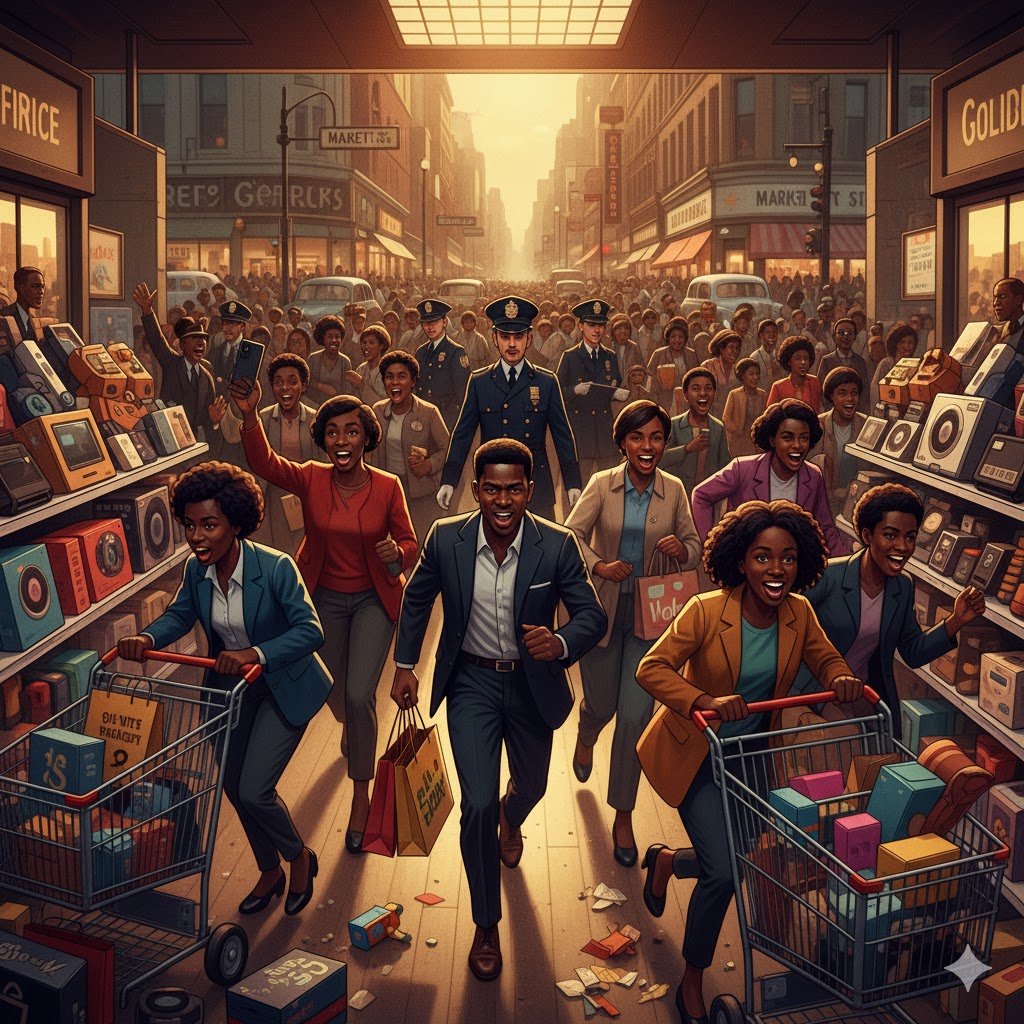
The earliest known use of the term “Black Friday” dates back to 1950s Philadelphia. Local police coined it to describe the overwhelming surge of traffic and chaos as suburban shoppers flooded the city the day after Thanksgiving. Officers dreaded the overtime, gridlock, and shoplifting spikes — so “Black Friday” began as a warning, not a celebration.
Retailers Spin the Story
By the 1980s, retailers decided they didn’t love the negative vibe. So they rebranded the term with a new explanation: the day stores go “from red to black” — meaning profitable.
This wasn’t historically true, but it became the dominant narrative because it served the retail industry’s interests. This shift turned a chaotic civic headache into the biggest annual driver of consumer spending.
The Economic Story Began Long Before the Sales
Over time, retailers discovered that:
- High-traffic days allowed aggressive inventory clearance
- Shoppers confused scarcity with value
- Competition between stores pushed spending higher
That set the stage for the modern Black Friday economic impact — a structured, data-driven system built to maximize profit.
How Black Friday Became a Billion-Dollar Engine
Black Friday is no longer just a single day — it’s an economic machine powering the entire fourth quarter. Retailers don’t simply drop prices. They deploy psychological tools, pricing models, machine-learning predictions, and scarcity tactics.
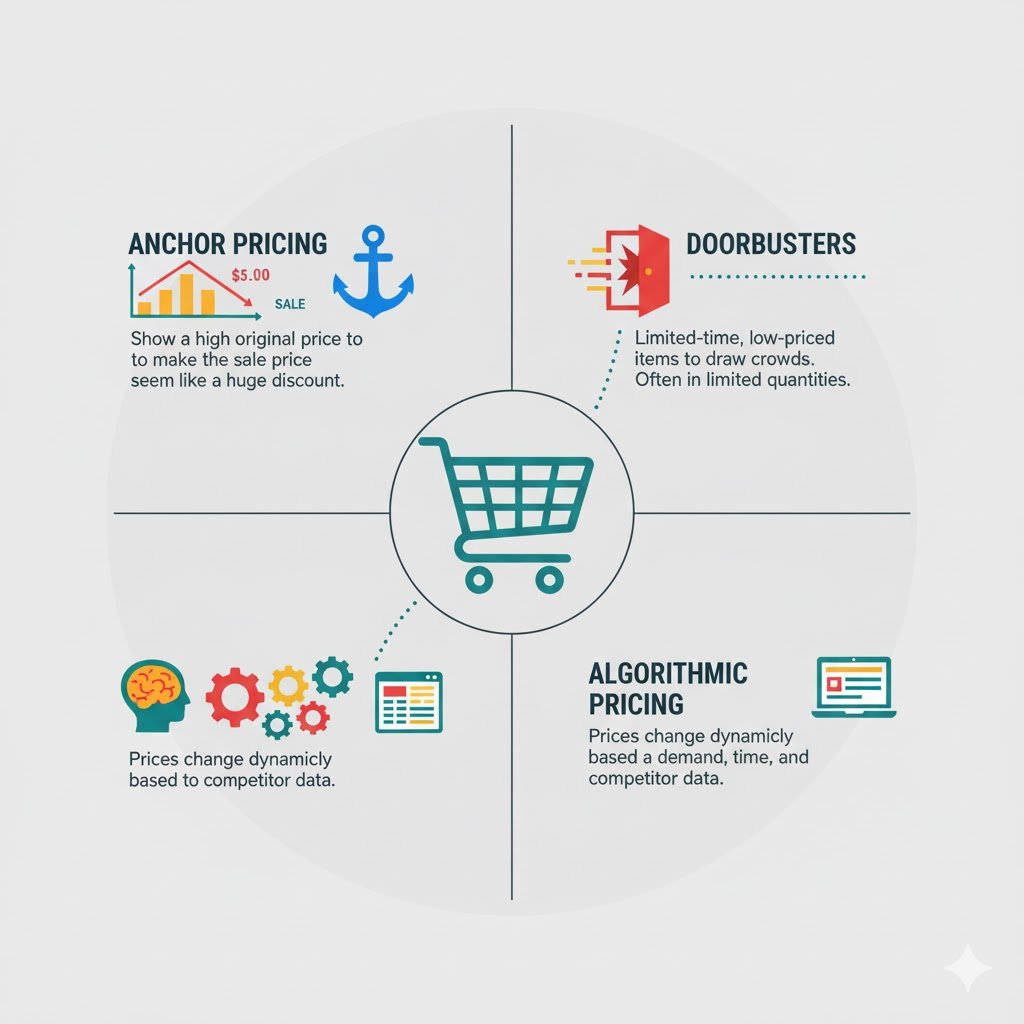
“Anchor Pricing” — The Invisible Sticker Trick
Ever noticed a product “marked down” from an oddly high original price?
That’s anchor pricing: stores raise the original (or “list”) price to make discounts look bigger.
Shoppers think they’re winning. Retailers quietly keep profit margins intact.
Doorbusters — Loss Leaders with a Hidden Purpose
When stores sell a few items at an extreme loss, they’re not being generous.
They’re:
- Building store traffic
- Creating urgency
- Increasing the chance shoppers buy profitable items while there
The doorbuster is bait — the real margin is made after you walk in.
Algorithmic Pricing — The New Frontier
Modern retailers use algorithms that track:
- Consumer browsing behavior
- Real-time supply
- Competitor pricing
- Seasonal demand patterns
Then they adjust prices — sometimes hourly — to extract maximum revenue.
Black Friday isn’t spontaneous. It’s strategic.
Extended “Seasons” — A Revenue Expansion Strategy
Retailers realized one day couldn’t hold all the profits.
Now we have:
- Early Black Friday
- Cyber Monday
- “Holiday Week”
- “Cyber Month”
This isn’t accidental — it’s engineered to increase volume and normalize nonstop spending.
The Black Friday Economic Impact on Black Communities
Now we reach the truth big brands rarely say out loud:
Black communities are often among the most influential consumer groups during holiday seasons — yet benefit the least from the economic upside.
Black Spending Power vs. Black Wealth
Black spending power in the U.S. has surpassed $1.7 trillion, yet this has not translated into long-term wealth. Why?
Because:
- Most dollars exit Black communities immediately
- Few Black-owned retailers benefit from major holiday seasons
- Marketing disproportionately targets Black consumers
- Credit-based holiday spending increases debt
Black Friday becomes an economic drain instead of an economic opportunity.
Retailers Target Black Consumers Strategically
Marketing analysts know that:
- Black consumers are brand loyal
- Black families support seasonal traditions
- Black shoppers over-index in holiday gifting and apparel
So holiday campaigns often target Black communities aggressively — even when the companies lack Black representation in ownership, executive leadership, or community investment.
Flipping the Script — How Black Communities Can Benefit
The most important section isn’t about where Black Friday came from. It’s about what Black communities can do next.
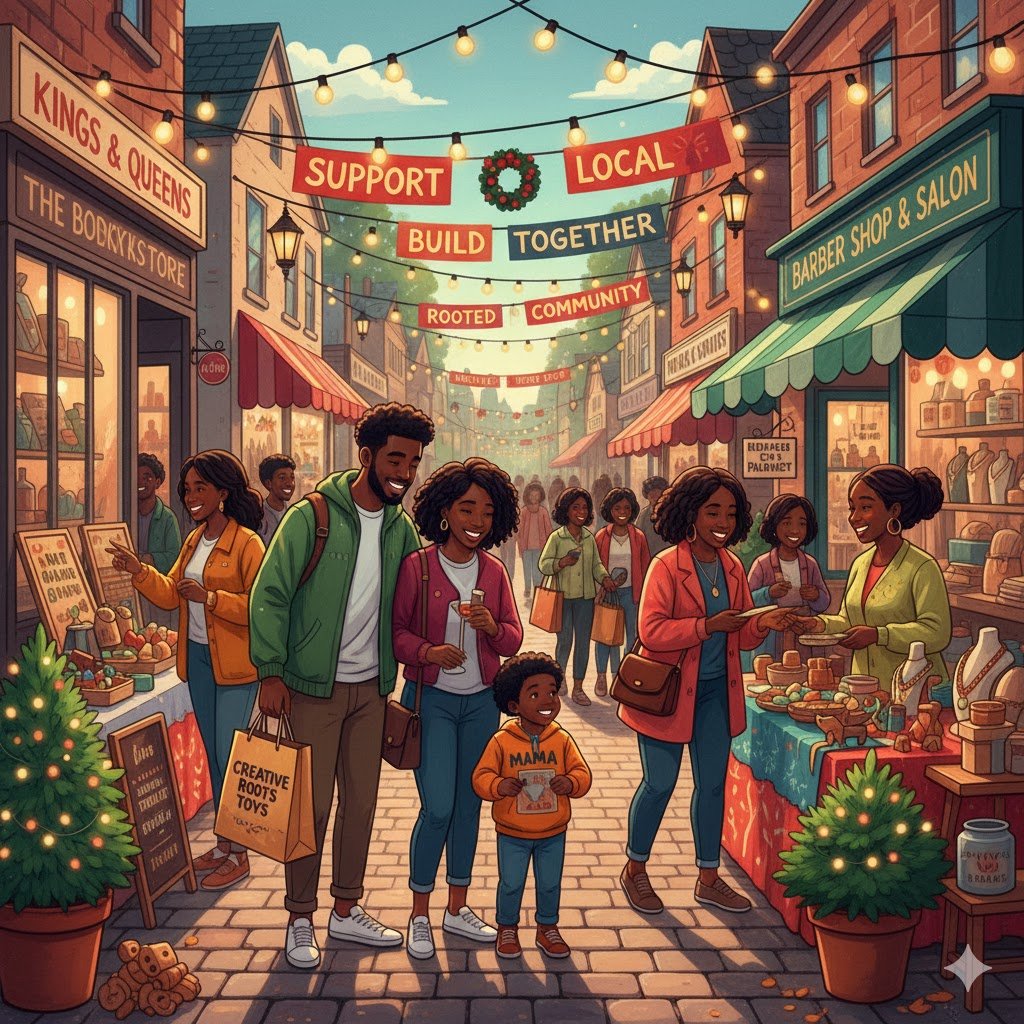
1. Buy From Black-Owned Businesses First
If even 25% of Black holiday spending stayed inside Black communities:
- Thousands of jobs could be created
- Local wealth could grow
- Black-owned brands could scale faster
- Neighborhood economies could strengthen
During Black Friday season, intentionally shifting spending — even slightly — can change long-term trajectories.
Use Deal Season for Wealth Building
Instead of simply buying more items on sale, Black families can:
- Purchase discounted technology for learning
- Use seasonal sales to acquire business equipment
- Leverage sales to reduce household costs
- Buy investment tools (printers, laptops, cameras, etc.)
Black Friday can be a season of empowerment, not just consumption.
3. Support Black-Owned E-commerce Stores
Many Black-owned brands run their biggest sales in November to compete with major retailers. Supporting them during this time helps:
- Reduce disparities in online visibility
- Strengthen supply chains
- Increase repeat-customer data
- Boost their ranking on shopping platforms
4. Protect Your Finances — Don’t Let the System Win
Retailers use psychological triggers. You can counter them with:
- Pre-set budgets
- Price comparison tools
- Wish lists that prevent impulse purchases
- Tracking long-term value, not short-term discounts
Black Friday deals aren’t all scams — but they are all strategic.
Why This Matters for Younger Generations
Younger Black consumers, especially Gen Z and Millennials, experience holiday spending differently:
- More exposure to targeted digital ads
- Higher debt-to-income ratios
- Greater interest in entrepreneurship
- Faster adoption of online shopping
Teaching the history and economics of Black Friday equips younger generations to navigate the system with awareness and intentionality.
Looking Ahead — A More Empowered Black Friday
The future of Black Friday economic impact can shift if communities:
- Reclaim the season as a wealth strategy
- Redirect spending toward Black entrepreneurs
- Educate families about pricing tactics
- Promote financial literacy
- Build collective buying power
Retailers may shape the season, but communities shape the future.
Key Takeaways
- Black Friday began as a Philadelphia problem — not a retail holiday.
- Retailers rebranded it to boost profits, inventing narratives along the way.
- Pricing strategies today are scientific, psychological, and intentional.
- Black communities carry huge consumer power but receive little economic return.
- With strategic spending, the season can shift from exploitation to empowerment.
What’s Next — A Community Call to Action
- Support local and Black-owned retailers this season.
- Share financial literacy tools with friends and family.
- Approach holiday deals like an investor, not a passive consumer.
- Teach young people the real story of Black Friday.
- Use discounts to strengthen your household or your business — not drain it.
A season engineered for profit can become a season of power.
Related HfYC Content (Internal Links)
- Plainfield Vintage Hunt: 7 Thrift Stores You Can’t Miss
- Boss Moves: How Black Gen Z Is Building a New Business Blueprint in New Jersey
- 5 New Jersey Designers Redefining Streetwear
- From Street Corners to Storefronts: Black Entrepreneurs and New Jersey’s Legal Green Rush
Other Related Content (External Links)
- History.com – The Evolution of Black Friday — https://www.history.com
- Brookings Institute – Black Spending Power and Wealth Disparities — https://www.brookings.edu
References (APA Style)
History.com Editors. (2023). Black Friday: History and Facts. History.com.
Brookings Institution. (2022). The Black-white wealth gap remains wide despite gains in Black income. Brookings.edu.





It’s interesting to learn more about the origins of Black Friday; I found some related historical context while browsing https://tinyfun.io/game/doras-candy-land. Hopefully, retailers will consider the community impact more in the future.
You and me both!