
Shedeur Sanders Finally Gets His Shot — What His NFL Debut Really Means
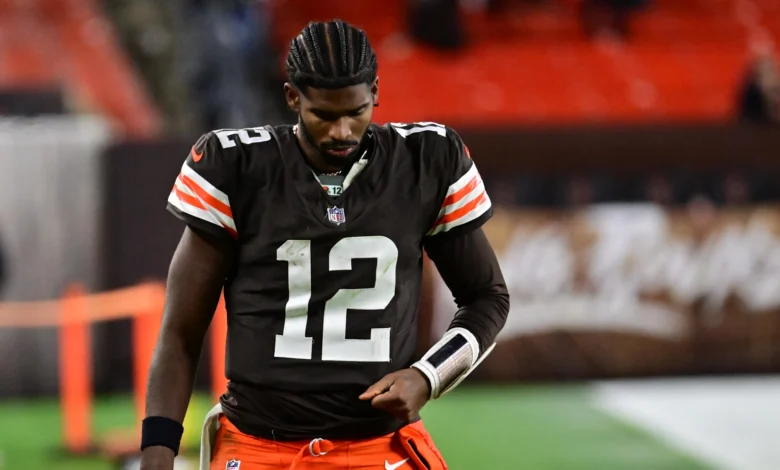
When Shedeur Sanders’ NFL debut finally came in mid-November 2025, it didn’t look like the Hollywood script a lot of us had in our heads. No prime-time announcement, no weeks of hype. Instead, the Cleveland Browns’ rookie quarterback was thrown into the game after fellow rookie Dillon Gabriel left with a concussion against the Baltimore Ravens.
Shedeur went 4-for-16 for 47 yards with one interception, and the Browns blew a fourth-quarter lead, losing 23–16. New York Post
On paper, that stat line is rough. On social media, it was open season. But for Black fans watching, this wasn’t just about one bad box score. It was about draft politics, race, Deion Sanders, and the long shadow hanging over every Black quarterback who dares to be confident on and off the field.
In other words: Shedeur didn’t just walk into his NFL debut. He walked into a story that started long before that first snap.
From Jackson State to Draft-Day Free Fall
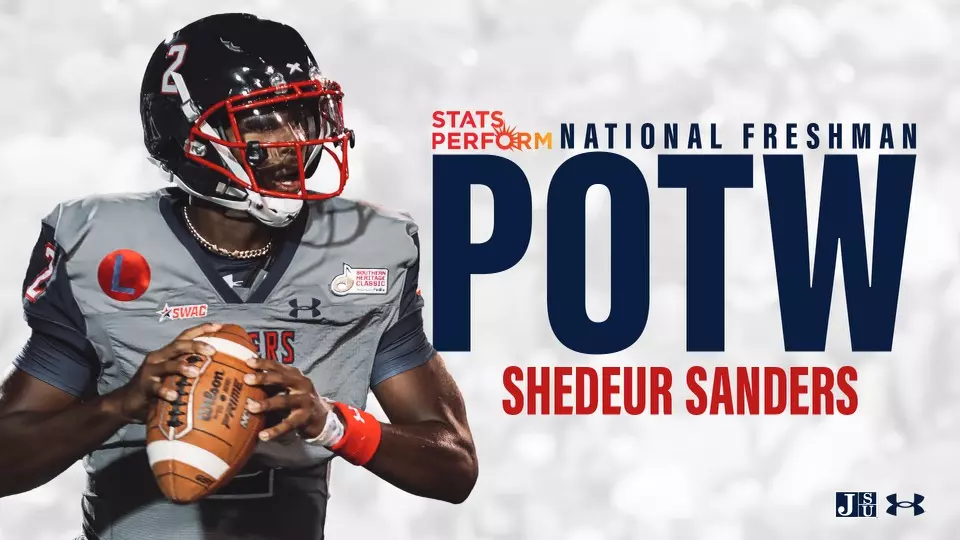
Before the NFL debut, Shedeur Sanders had already lived an entire football lifetime in public.
He started at Jackson State under his father, Deion “Coach Prime” Sanders, becoming the highest-rated signee in school history, leading JSU to a SWAC championship, and putting HBCU football back into national headlines. Dallas News
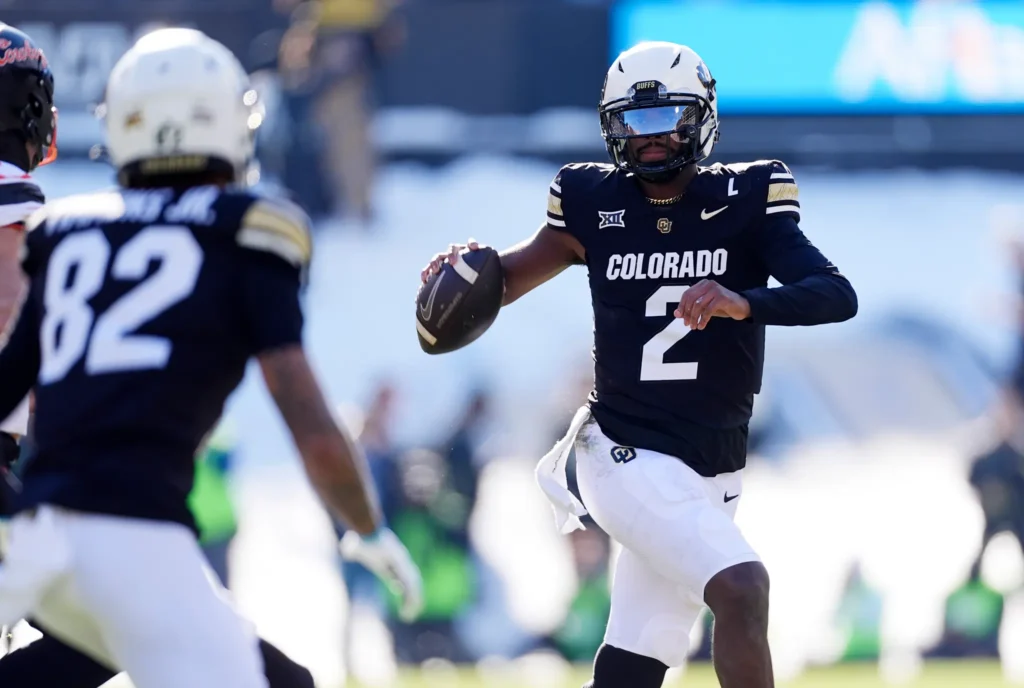
When Deion left for Colorado, Shedeur followed and lit up Power Five defenses. Across his college career, he completed about 70% of his passes for more than 14,000 yards, 134 touchdowns, and 27 interceptions. clevelandbrowns.com
In 2024 alone, he threw for 4,134 yards with 37 touchdowns and 10 interceptions, earning Big 12 Offensive Player of the Year and second-team All-American honors.
Draft analysts had him mocked as a first-round pick – sometimes even top-10. Yet when draft weekend came, we watched him slide. Night one passed. Night two passed. Cameras caught the tension at the Sanders family’s flashy draft party. Black Twitter clocked every skipped pick in real time.
Finally, on day three, the Cleveland Browns traded up to take him 144th overall in the fifth round, after already drafting Dillon Gabriel in the third. NFL
He still signed a four-year, $4.6 million rookie deal, but the league had made something very clear: for all his numbers and notoriety, Shedeur was going to have to crawl in through the side door, not walk down the red carpet. Reuters
Was the Draft Slide Just Football — or a Message?
On paper, teams can say they passed on Shedeur Sanders for “football reasons”:
- Concerns about him taking too many sacks behind Colorado’s bad offensive line.
- Questions about timing and pocket presence.
- Worry that his game wouldn’t translate cleanly to the league.
But then you read some of the language used about him by anonymous scouts and coaches, and it hits a nerve. One longtime assistant reportedly called Shedeur “entitled,” said he “takes unnecessary sacks,” has “horrible body language,” and called his interview “the worst” he’d ever done. Wikipedia
Now layer that on top of the public persona:
- Deion promising at one point to “orchestrate” where his sons would land and joking “It’s going to be an Eli,” meaning they’d refuse to play for certain cities.
- A high-profile NIL life, designer fits, luxury cars, cameras always rolling.
- Colorado retiring his jersey quickly and catching flak for it.
For a lot of Black fans, what this felt like was less “honest film study” and more punishment for audacity — for a Black father and son operating with the kind of unapologetic agency usually reserved for white football royalty.
Is that provable in a courtroom? No.
Is it recognizable if you’ve ever watched a Black kid get labeled “attitude problem” for the same confidence that gets a white kid labeled “leader”? Absolutely.
The draft slide becomes part football, part culture war, part America being uncomfortable with Black people who insist on controlling their own narrative.
The NFL Debut — Bad Numbers, Bigger Context
Fast-forward to November 16, 2025. The Browns are in a tight game against the Ravens. Their other rookie QB, Dillon Gabriel, leaves with a concussion early in the second half. Suddenly, it’s Shedeur time. New York Post
The result:
- 4 completions on 16 attempts
- 47 passing yards
- 1 interception
- 0 points led
- A blown six-point lead and a 23–16 loss
No way to sugarcoat it: that’s ugly. The ball placement was off. Timing with receivers clearly wasn’t there. The Ravens defense smelled blood and brought pressure.
But here’s the part the box score doesn’t show:
- He came in cold, with limited first-team practice reps.
- The Ravens are built to feast on inexperienced QBs.
- The Browns’ offense already had protection and rhythm issues before he entered the game.
None of that excuses the performance. But it does matter when you’re talking about a player whose every snap is already loaded with extra meaning.
For some national commentators, it was instant confirmation:
“See? This is why he fell to the fifth.”
For a lot of Black fans, it raised a different question:
“Is this kid going to get space to grow, or is he on a shorter leash because of who his father is and how loud the brand is?”
What One Bad Game Doesn’t Prove
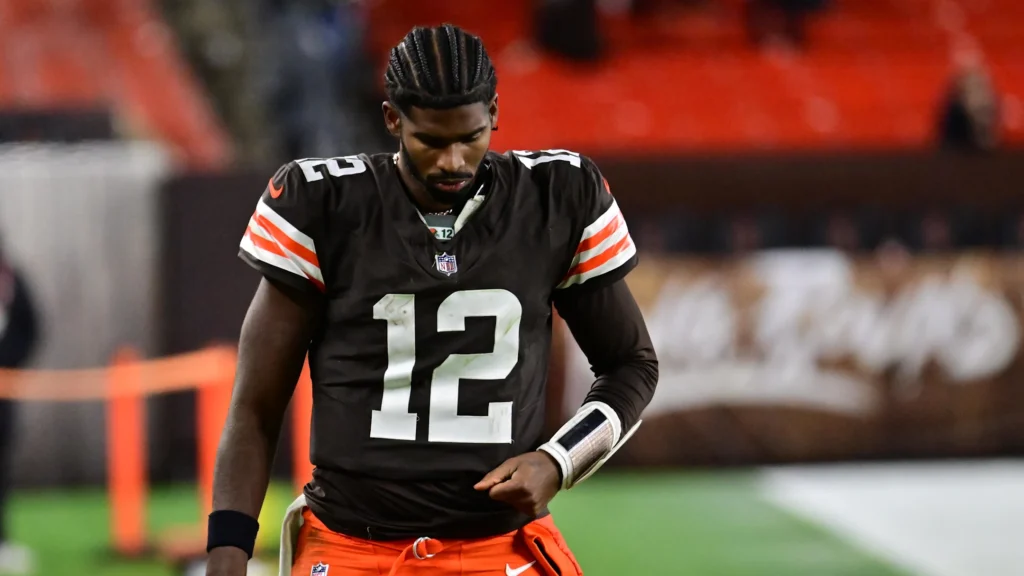
One ugly NFL debut doesn’t erase:
- A historic college résumé with FBS-record-level completion percentages.
- Proven ability to adapt and thrive at each new level he’s touched.
It does, however, shape the story he’ll be fighting from now on.
There’s a long history of Black quarterbacks needing to be great just to be treated as good, while some white QBs are allowed multiple seasons of mediocrity under the banner of “development.” Shedeur now sits right inside that tension: one more Black passer who will have to outplay not just defenses, but narratives.
Black Quarterbacks and the Moving Goalposts
Shedeur Sanders’ path is part of a bigger arc:
- Doug Williams had to literally win a Super Bowl MVP to crack open the door.
- Donovan McNabb, Cam Newton, Lamar Jackson, Jalen Hurts — all have had their leadership, intelligence, or “style of play” questioned in ways that often sounded less like X’s and O’s and more like code.
In Shedeur’s case, the critiques aren’t just about arm strength or scheme fit. They’re about:
- His family being “too much” (translation: too visible, too proud, too Black on their own terms).
- His NIL wealth being framed as “distraction” instead of evidence of business savvy.
- His confidence during interviews being labeled “entitled” instead of competitive.
For younger Black fans, especially those grinding in sports, content, or entrepreneurship, this hits close to home. You’re told to “build your brand” and “bet on yourself,” right up until your brand and self-belief make gatekeepers uncomfortable.
What His Debut Means for the Culture, Not Just the Browns
For the Browns organization, Shedeur’s first NFL action is a question mark on the depth chart.
For Black communities, it’s something else: a public test of whether a high-profile Black quarterback with money, media visibility, and a famous, disruptive father can still be allowed to succeed without being dragged back down to size.
Youth see:
- How quickly the jokes start.
- How fast a “golden boy” becomes “overrated” when he’s Black and loud.
- How fragile opportunity is if your support system is seen as “too extra.”
Older generations see:
- Another example of talent having to work twice as hard to escape pre-written stories.
- The familiar pattern of institutions trying to humble outspoken Black leadership — whether that’s a coach like Deion or a QB like Shedeur.
None of this means criticism of his play is off-limits. It does mean we should be honest about the extra layers wrapped around that criticism.
Short-Term Stakes vs. Long-Term Legacy
Short-term, for Shedeur Sanders:
- He has to stack competence: better practice reports, cleaner preseason work next year, and a steadier showing the next time he touches the field.
- One strong relief game or spot start can flip the narrative from “bust in waiting” to “rookie who just needed time.”
Short-term, for the Browns:
- They have to decide whether they’re truly investing in his development or just parking him behind Gabriel and whoever else cycles through the QB room.
- Their quarterback politics will tell us a lot about how seriously they take Black talent beyond the marketing value.
Long-term, for the culture:
- If Shedeur succeeds, it strengthens the case that Black QBs can build their own media ecosystems and win on the field.
- If he flames out, a lot of lazy takes will use him as “proof” that NIL, social media, and a loud Black family are distractions instead of assets.
Reality is more complicated. But nuance rarely trends.
Key Takeaways — Beyond the Hot Takes
1. One game is not a career.
We’ve watched plenty of quarterbacks — especially white ones — get years of patience after rocky starts. Shedeur deserves the same runway to grow, fail, adjust, and improve.
2. Language around Black quarterbacks still matters.
Words like “entitled,” “arrogant,” or “not a leader” have a long racial history. When anonymous scouts lean on that language, we should interrogate it, not just repeat it.
3. Visibility cuts both ways.
The Sanders brand built unprecedented attention and NIL wealth — and also layered on expectations and resentment. That’s the cost of being visible, but it shouldn’t be a reason to quietly root for someone’s failure.
4. Our job isn’t to baby him — it’s to frame the story fairly.
We can acknowledge a bad NFL debut and still push back when criticism spills into coded territory or becomes an excuse to dismiss what he’s already accomplished.
What We Can Do Next
For readers, fans, and especially young athletes, a few moves that actually matter:
- Practice media literacy. Don’t just absorb talking-head narratives about Shedeur or any Black quarterback. Ask who’s talking, who they work for, and what assumptions they’re making.
- Support independent Black sports media. Platforms that center Black voices can cover these stories with nuance instead of treating them as soap opera fodder.
- Teach the whole game — on and off the field. If you’re mentoring young athletes, talk about film study and footwork and finances, branding, mental health, and how to navigate being misunderstood.
- Hold the league accountable. When teams and the NFL talk about “diversity” and “inclusion,” that has to extend to how Black QBs are scouted, developed, and discussed.
Shedeur Sanders’ story is still being written. The question is whether we’re going to let lazy narratives hold the pen — or insist on something more honest, more complex, and more worthy of the talent on the field.
HfYC Poll of the Day
When you look at Shedeur Sanders’ NFL debut, do you see a mid-round QB who just played badly, or a Black quarterback getting graded on a harsher curve because of his name and his shine?
- Other Perspectives
If Shedeur Sanders was quiet, nameless, and didn’t come with Deion, do you think he’d be getting this much heat off one bad NFL game, or would folks be calling it “a learning experience”? - Do you think Shedeur Sanders’ rocky NFL debut tells us more about his current level of play, or about how the NFL and media handle high-profile Black quarterbacks?
- If your homie just had an NFL debut like Shedeur’s, are you sending him film study clips, “you got this” messages, or straight memes in the group chat first?
Related HfYC Content
- HBCU Relevance Today: Are We Still Building for Us?
- Black NYU Students Respond to Racism w/ Activism
- Black Greek Life and Faith: Are Fraternities and Sororities at Odds with Christianity?
- Celebrating 50 Years of Sisterhood: Delta Sigma Theta’s Impact on New Jersey and Beyond
- Black NYU Students Respond to Racism w/ Activism
- Digital Eyes, Enduring Bias: How Surveillance Tech Threatens New Jersey’s Black Community
Other Related Content
- Browns Select QB Shedeur Sanders with the No. 144 Pick in the 2025 NFL Draft
- Shedeur Sanders Selected by Cleveland Browns After Falling to Fifth Round of NFL Draft
- Shedeur Sanders Makes NFL Debut After Browns’ Dillon Gabriel Gets Concussion — It Did Not Go Well
References (APA Style)
- CNBC. (2025, April 26). Shedeur Sanders selected by Cleveland Browns after falling to fifth round of NFL draft.https://www.cnbc.com/2025/04/26/shedeur-sanders-selected-by-cleveland-browns-after-falling-to-fifth-round-of-nfl-draft.html CNBC
- Cleveland Browns. (2025, April 26). Browns select QB Shedeur Sanders with the No. 144 pick in the 2025 NFL Draft.https://www.clevelandbrowns.com/news/browns-select-qb-shedeur-sanders-with-the-no-144-pick-in-the-2025-nfl-draftclevelandbrowns.com
- New York Post. (2025, November 17). Shedeur Sanders makes NFL debut after Browns’ Dillon Gabriel gets concussion – it did not go well. https://nypost.com/2025/11/16/sports/shedeur-sanders-makes-nfl-debut-as-dillon-gabriel-gets-concussion/ New York Post
- Reuters. (2025, May 19). Browns QB Shedeur Sanders signs 4-year, $4.6M rookie deal. Reuters
- Wikipedia contributors. (2025). Shedeur Sanders. In Wikipedia, The Free Encyclopedia.https://en.wikipedia.org/wiki/Shedeur_Sanders Wikipedia
- Yahoo Sports. (2025). NFL Draft 2025: Everything you need to know about Shedeur Sanders, Cleveland Browns’ fifth-round draft pick. https://sports.yahoo.com/nfl/article/nfl-draft-2025-everything-you-need-to-know-about-shedeur-sanders-cleveland-browns-fifth-round-draft-pick-174335586.html Yahoo Sports
- Sports Illustrated. (2025, April 26). Cleveland Browns mercifully end Shedeur Sanders’ NFL draft slide in fifth round.https://www.si.com/college/colorado/football/cleveland-browns-end-shedeur-sanders-nfl-draft-slide-fifth-round-pick-deion-sanders-colorado-buffaloes SI




2 Comments