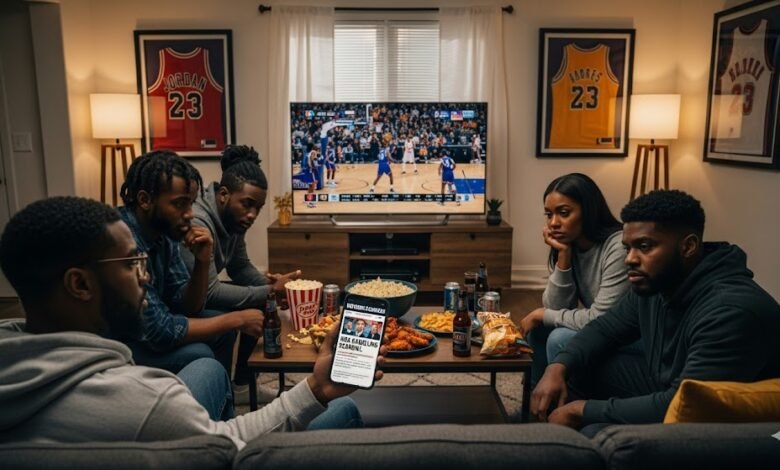
Gambling, the Mob, and the FBI: Inside the 2025 NBA Scandal
When the NBA gambling scandal broke in late October 2025, it didn’t feel like a quirky side story about a few bad bets. It felt like a crack in the floorboards of a league that has spent years embracing sports betting money while telling fans, “Trust us, the game is still pure.”
Federal indictments, mob families, rigged poker games, an NBA head coach, an active player, a former player/coach, and more than 30 people arrested — this is the stuff of a crime drama, not a box score. At the center are Portland Trail Blazers coach Chauncey Billups, Miami Heat guard Terry Rozier, and former player/coach Damon Jones, all swept up in overlapping schemes that prosecutors say stretched from New York to Las Vegas, from underground poker rooms to NBA locker rooms.
For Black fans and players who’ve watched the NBA become a global stage for our culture, this NBA gambling scandal hits different. It raises hard questions about integrity, pressure, fast money, and what happens when financial literacy and a moral compass don’t keep up with opportunity.
Two Cases, One Crisis — How the Scandal Broke Open
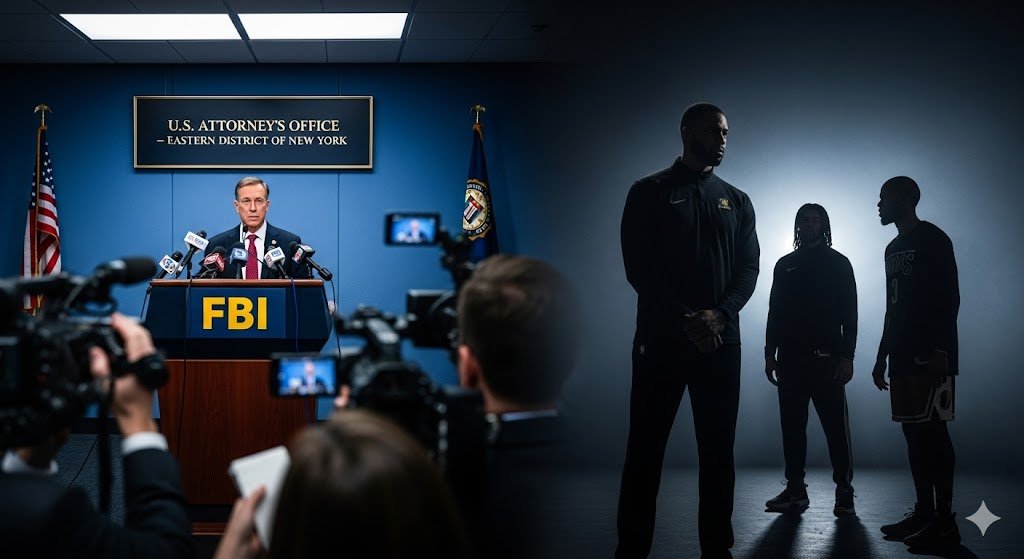
The FBI and the U.S. Attorney’s Office in Brooklyn didn’t just stumble onto one bad bet. They rolled out two separate but related federal cases:
- One focused on illegal sports betting and insider information tied to NBA games.
- The other exposed a rigged high-stakes poker network allegedly backed by New York Mafia families.
Together, those cases produced 31 indictments and a wave of arrests across 11 states. At a press conference in Brooklyn, FBI Director Kash Patel called it “the insider trading saga for the NBA,” making the stakes plain: this wasn’t just players gambling; it was people allegedly weaponizing inside access to the game itself.
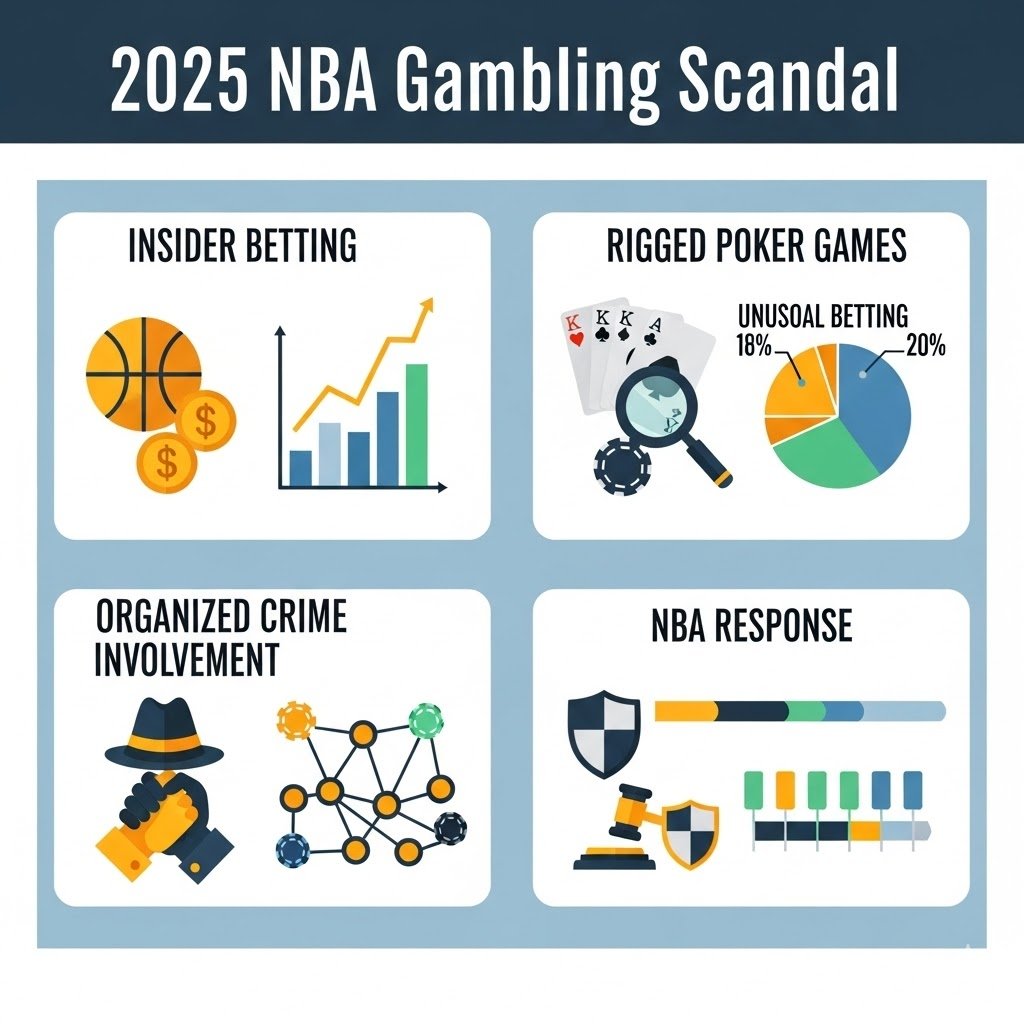
The Insider Game — Terry Rozier, Damon Jones, and Betting the Spread
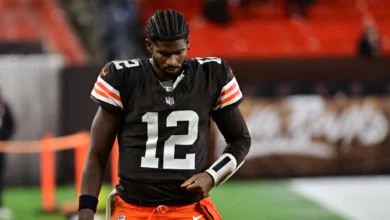
In one indictment, prosecutors say Terry Rozier turned his own body into a betting tool. According to filings and news reports, Rozier allegedly told associates before a February 2023 game — when he was still with the Charlotte Hornets — that he would leave early with a “foot injury.” Bettors then reportedly dropped more than $200,000 on prop bets that he would fall short of his expected stats. Rozier exited the game after just a few minutes, and those bets cashed.
Rozier has pleaded not guilty. His lawyer argues that prosecutors are leaning on unreliable cooperators and that the NBA had previously reviewed the same game and cleared him of rule violations. Still, the league placed him on leave after the arrest — and, according to reporting, he’s currently not receiving his $26.6 million salary while the case plays out.
Former player and assistant coach Damon Jones was also charged, accused of sharing inside injury information about players before at least two Los Angeles Lakers games in 2023 and 2024 and helping others profit from those tips.
If the allegations are proven, this isn’t “somebody made a parlay they shouldn’t have.” It’s more like real-time insider trading — using non-public information about who’s healthy, who’s sitting, and who’s about to check out early, then feeding that into a betting ecosystem that now runs parallel to every game we watch.
The House Was Rigged — Chauncey Billups, Damon Jones, and the Mob’s Poker Machine
The second case sounds like a movie script that got out of hand. According to a sweeping federal indictment, members and associates of the Bonanno, Gambino, and Genovese crime families allegedly ran a network of rigged high-stakes poker games from around 2019 onward.
Here’s how prosecutors say it worked:
- Organizers hosted illegal Texas Hold ’em games at private locations in Manhattan, East Hampton, Las Vegas, Miami, and other cities.
- They used high-tech cheating tools: modified shuffling machines that could read the deck, chip trays with hidden cameras, X-ray tables, and even special contact lenses and glasses that could read marked cards.
- The machines relayed who would have the winning hand to an offsite operator, who then texted that info back to a designated player at the table — the “Quarterback” — who signaled co-conspirators so they could play perfectly against unsuspecting victims.
The role of Chauncey Billups and Damon Jones, according to the DOJ, was to serve as “Face Cards” — recognizable former NBA stars whose presence made the games look glamorous and legit, drawing in wealthy players. Prosecutors say those “Face Cards” were not just window dressing; they were part of cheating teams that collectively helped the mob-connected operation steal at least $7 million from victims, with debts enforced through intimidation, threats, and occasionally violence.
Billups, now 49 and in his fifth year as head coach of the Blazers, has pleaded not guilty and was released on bond. He’s been placed on leave by the NBA, and his salary is reportedly being held by the team pending the outcome of the case.
For fans, especially Black fans who grew up watching Billups as a Finals MVP and respected leader, the allegations cut deep. The player once known as “Mr. Big Shot” is now, at least in federal paperwork, part of a story about big money, rigged games, and old-school organized crime.
A League Married to Gambling Meets Its Worst Nightmare
The NBA gambling scandal didn’t come out of nowhere. Over the past decade, the league has:
- Signed major partnerships with sportsbooks,
- Filled broadcasts with live betting odds and in-game prop lines,
- And leaned into gambling as a revenue and engagement engine.
At the same time, players were quietly warned: you can’t bet — especially not on NBA games.
The problem, as this scandal shows, is that once betting is woven into the fabric of the game, the lines get blurry. This isn’t the first warning shot. In 2024, Toronto Raptors big man Jontay Porter was banned for life after admitting he deliberately left games early to help associates win bets on his stat lines.
Now, seeing Rozier and Billups indicted, the league is scrambling. The NBA has:
- Placed both men on immediate leave without pay.
- Asked betting partners to limit certain player prop bets that are easy to manipulate.
- Sent memos to all 30 teams about the “dire risks” gambling poses to the integrity of the game.
In other words, the league is trying to reassure fans that the product they’re watching — the shot, the substitution, the injury — is still real.
Trump, Hot Takes, and the Politics Around the Scandal
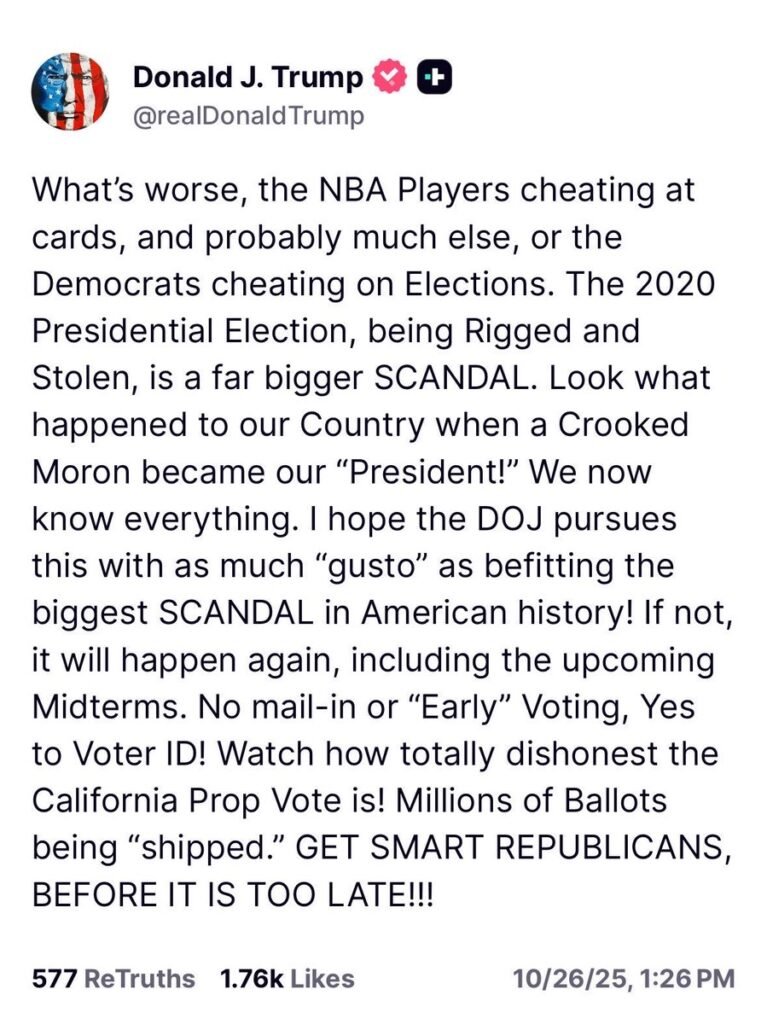
Because we live in 2025, it didn’t take long for this NBA gambling scandal to get political.
On Air Force One, President Donald Trump was asked about the FBI arrests. He reportedly called the whole thing “very bad” and “terrible,” framing it as yet another example of “what’s wrong” with modern sports and hinting that leagues have gotten too cozy with gambling and political activism.
On the media side, ESPN’s Stephen A. Smith went viral after suggesting that Trump’s Justice Department might be using the scandal as payback against leagues that crossed him, warning on his show that “Trump is coming” for the NBA and even the WNBA. FBI Director Kash Patel blasted that idea on Fox News, calling it “the single dumbest thing” he’d ever heard and insisting that arrests were based on evidence, not vendettas.
For Black audiences, this swirl of commentary hits layered nerves:
- On one hand, we know state power has absolutely been used in targeted ways before — from COINTELPRO to selective prosecutions.
- On the other, not every scandal is a secret op, and sometimes powerful people just…really did the thing they’re accused of.
The challenge is staying sharp enough to question motives and grounded enough not to let every issue get swallowed by partisan theater.
Why This Matters for Black Fans, Players, and Communities
Black culture is the NBA. From the style to the slang to the soundtrack to the way players use their platforms, our fingerprints are everywhere. That’s exactly why this NBA gambling scandal hits so hard.
For younger fans, especially, there’s already tension between loving the game and side-eyeing the business:
- Ticket prices and League Pass fees are sky-high.
- Teams move in and out of Black-majority cities based on billionaire math.
- Betting apps target the same neighborhoods already hit hardest by predatory financial products.
When players and coaches — some of whom have been held up as examples of “making it out” — are accused of risking everything for side money, it raises deeper questions:
- What kind of “money education” are young athletes actually getting?
- Who’s helping them build generational wealth without shortcuts?
- How do we teach that “the bag” is not just what you land, but what you keep?
And beyond the league, it sends a signal to Black kids watching: even at the top, if your moral compass and financial literacy aren’t solid, the wrong shortcuts can cost you your freedom, your reputation, and your legacy.
Short-Term Fallout and the Long Game for the League
Right now, the immediate fallout looks like this:
- Rozier and Billups are off the court and off the sidelines, with paychecks frozen while their cases move through the system.
- The NBA is under pressure from lawmakers and fans to tighten injury reporting, clamp down on prop bets, and show that the league isn’t looking the other way.
- Sportsbooks, already edgy after the Jontay Porter case, are scrutinizing unusual betting patterns even more aggressively.
Long-term, the league faces a deeper question:
Can you be in bed with the betting industry and still convince people the game is clean? And if not, what gives — the gambling money, or the public’s trust?
When the Mic Goes Silent — Lost Media Careers and the Cost of a Broken Brand

There’s another layer to this NBA gambling scandal that isn’t getting enough airtime:
the collapse of lucrative post-NBA media careers.
Because in 2025, being a former NBA star isn’t just about broadcasting games — it’s about brand deals, podcasts, motivational speaking, coaching pipelines, sports network contracts, and being a recognizable face in the world’s most media-savvy league. The moment an athlete’s final season ends, the real long-term work begins. And for many, the second act can be more financially defining than the first.
That’s why these arrests feel especially tragic. For years, Chauncey Billups, Terry Rozier, and Damon Jones were positioned as media-friendly personalities — charismatic, camera-comfortable, packaged by the league as ambassadors of “NBA culture.” They had recurring appearances on TNT, ESPN radio hits, Barstool segments, sneaker sponsorships, charity events, business ventures, youth basketball camps, and guest analyst roles during the playoffs. Billups, in particular, was a staple voice in NBA storytelling, seen as a mentor figure with a calm, deliberate presence that TV producers loved.
But when your name becomes synonymous with federal indictment, the media world doesn’t wait for a verdict — it pulls the plug immediately.
Billups: From ‘Mr. Big Shot’ to Media Blackout
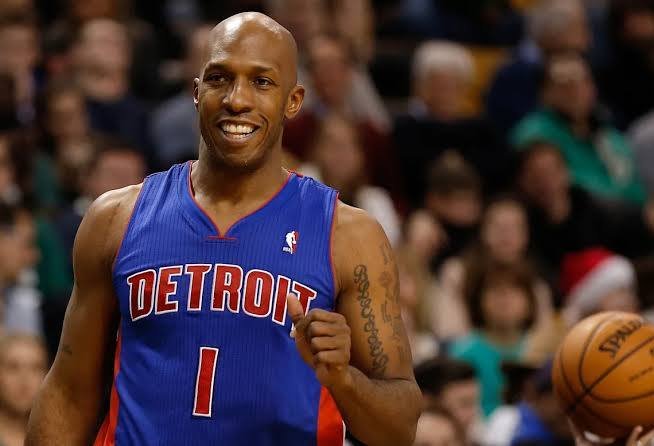
Before the scandal, Billups was building a long runway toward being one of the NBA’s most respected “post-career voices.” He was already in conversations for additional analyst work, podcast expansions, and leadership roles in NBA-sponsored programs centered on youth mentorship and wellness — roles that require unimpeachable integrity.
That’s all frozen now. Networks that once saw him as a stable voice can’t risk putting an indicted coach on primetime. Even if he is eventually cleared, the stain of the moment is already coded into the public memory.
Rozier: The Brand That Could Have Been
Terry Rozier had carved out a niche as a personality player — funny, outspoken, embraced by younger fans, and active in lifestyle and fashion circles. He had been approached for content partnerships and apparel collaborations, and was considered a likely future podcast host or influencer-analyst hybrid in the Draymond Green mold.
But brands don’t gamble on uncertainty. When the headlines hit, endorsement deals evaporated quietly.
No company wants its logo next to “federal indictment” and “illegal betting ring.”
Jones: A Career Pivot Cut Short
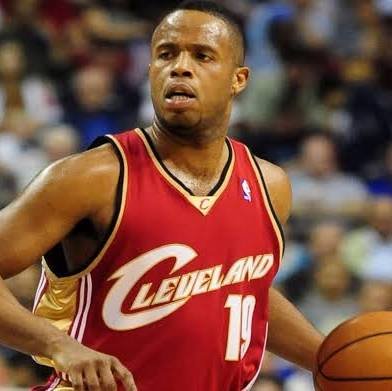
Damon Jones was already evolving into a basketball media figure in the making — jumping between coaching, commentary, and player development work. He had the personality and comedic timing that often translate into long-form media success.
All of that evaporates when the FBI names you in a rigged poker scheme tied to organized crime.
Networks don’t issue formal statements; they just stop calling.
This Isn’t Just Bad Press — It’s Wealth Lost
For many retired or retiring players, the post-career media phase is where long-term stability comes from:
- Multi-year analyst contracts
- Studio show appearances
- Brand partnerships
- Guest hosting slots
- Motivational speaking
- Youth camp sponsorships
- Podcast and YouTube studio deals
- Advisory roles on league committees
When athletes lose their media value, they aren’t just losing fame — they’re losing an entire economic ecosystem built on trust, relatability, and public goodwill.
And when you’ve lost that?
You’re not just suspended from the league; you’re suspended from future earning power.
That’s the part not on the indictment sheet but felt the most.
For young Black athletes watching, the message is sobering:
Sustaining wealth isn’t about the size of your contract — it’s about the integrity that keeps opportunities open after the jersey comes off.
Key Takeaways — What We Can Learn from the NBA Gambling Scandal
This NBA gambling scandal isn’t just a story about a few men in suits and jerseys. It’s a mirror. A few lessons worth holding onto:
- Integrity is an asset, not a slogan.
When a league’s credibility wobbles, everything else — TV deals, sponsorships, fan loyalty — is suddenly in play. The same is true for individuals. Once people don’t trust your word, your talent alone can’t save you. - Legal doesn’t equal harmless.
Yes, sports betting is legal in more places than ever. That doesn’t make it neutral. When betting is layered on top of a sport built on Black labor and Black brilliance, the risks hit our communities in particular ways — from problem gambling to the exploitation of players’ inside access. - Financial literacy and a moral compass are non-negotiable.
It’s one thing to learn how to invest, save, and build assets. It’s another to learn how to say no when someone offers a shortcut that sounds like “just a little side money” in a gray zone. Without both, “opportunity” becomes a trap. - We need our own institutions and narratives.
As long as the loudest voices explaining these scandals don’t center Black perspectives, we’ll keep getting reduced to side characters in stories where we are actually the backbone. That’s why platforms like Here For You Central matter — to tell the full story, not just the clickbait version.
Closing Thoughts — Protecting the Bag Without Losing Your Soul
At the end of the day, this is about choices.
Players and coaches in this scandal were already in the top fraction of earners in global sports. Still, if the allegations hold, access to wealth without a grounded financial strategy and moral framework left them open to “opportunities” that could cost them everything — careers, reputations, and in some cases, freedom.
That same dynamic plays out on a smaller scale every day: in side hustles that blur into scams, “crypto plays” with no receipts, or “get rich quick” affiliate deals that prey on our communities.
The deeper lesson is this:
Financial literacy and a moral compass are foundational to sustainable wealth. Without both, you end up in rooms, deals, and decisions that can cost you your name, your freedom, and your future.
For Black communities that have fought for centuries just to get a piece of the pie, we can’t afford to fumble it chasing rigged games — on or off the court.
HfYC Daily Poll Question
- If millionaires with generational wealth are still risking it for rigged games and prop bets, what do you think that says about how we teach money and ethics in our community?
- Do you think the NBA gambling scandal is mostly about individual bad choices, or a broken system that made it way too easy to turn insider info into quick cash?
- If your friend with a max contract hit you with “Yo, I got a little side play with some ‘friends of friends’ in a poker room,” are you giving advice, snitching, or changing the Wi-Fi password?
Related HfYC Content
- The Diddy Trials – Part 1/3 – Power, Perception, and Punishment: The Trial of Diddy and the Question of Justice for Black Moguls
- The Diddy Trials – Part 2/3 – Cultural Dynamics & the “Hip Hop House”
- The Diddy Trials – Part 3/3 – The Media & The Mob
- Digital Eyes, Enduring Bias: How Surveillance Tech Threatens New Jersey’s Black Community
- How Newark Is Using Tech to Rethink Public Safety
Other Related Content
- 31 Defendants, Including Members and Associates of Organized Crime Families and National Basketball Association Coach Chauncey Billups, Charged in Schemes to Rig Illegal Poker Games – U.S. Department of Justice
- NBA’s Chauncey Billups, Terry Rozier Arrested in Mafia Betting Schemes Probe – Reuters via GVWire
- NBA-Related Arrests Rise Above 30 in FBI Crackdown on Illegal Gambling – Al Jazeera
- 2025 NBA Illegal Gambling Prosecution – Wikipedia
- Betting Scandals That Have Rocked North American Professional Sports – Reuters
References (APA Style)
- United States Department of Justice. (2025, October 23). 31 defendants, including members and associates of organized crime families and National Basketball Association coach Chauncey Billups, charged in schemes to rig illegal poker games. https://www.justice.gov/usao-edny/pr/31-defendants-including-members-and-associates-organized-crime-families-and-national
- Ax, J., Tsvetkova, M., Harte, J., Queen, J., & Tennery, A. (2025, October 23). NBA’s Chauncey Billups, Terry Rozier arrested in Mafia betting schemes probe. Reuters.
- The Journal of Blacks in Higher Education. (2025). 2025 NBA illegal gambling prosecution.https://en.wikipedia.org/wiki/2025_NBA_illegal_gambling_prosecution
- Reuters. (2025, October 23). Betting scandals that have rocked North American professional sports.
- Al Jazeera. (2025, October 23). NBA-related arrests rise above 30 in FBI crackdown on illegal gambling.
- Associated Press. (2025, October 30). Rozier and Billups will not receive NBA salaries while on leave in gambling cases, AP sources say.
- Forbes Breaking News. (2025, October 25). “It’s very bad. I think it’s terrible”: Trump reacts to NBA gambling scandal[Video]. YouTube.
- New York Post. (2025, October 24). Kash Patel skewers Stephen A. Smith for suggesting Trump was behind NBA gambling ring arrests.