
Maybe Gen Z Isn’t Quitting—They’re Just Not Joining Your Fiction
One of the jarring mental images from the Great Depression era was CEOs literally jumping off of buildings due to the shame of their company failing and pain families losing their means of survival en masse.
Today the CEOs we celebrate use “fun terms” like Right-Size and Restructuring to soften the blow of eviscerating the livelihoods of those who the business used to drive profits and dividends. At what point did we start celebrating Darth Vader throwing wave after wave of Storm Troopers at light sabers for the good of the Empire? And can we truly be surprised at the eventual rise of the Jedi?
But let’s be fair… Many of the current leaders built their careers clocking 80 hour weeks for years. They sacrificed friendship, family, and work-life balance at the altar of success. They started as unpaid interns surviving on sheer will and hope, only to now see glimpses of a chance to actually reap the benefits of almost two decades of indentured servitude. Only to hear Aiden calling in to work on the busiest day due to a mental health emergency because his pet ferret died. The Boomers, Gen Xers and Millennials see this horde of unkempt, oat milk mocha latte (light ice) guzzling snowflakes bouncing around their offices reeking of entitlement, self-adulation and arrogance and wonder what actually happened.
But let’s unpack this because the truth is, Gen Z doesn’t actually care about your job, your goals, or your success and I, for one, kind of get it.
The End of an Era: From Lifelong Loyalty to Gig Economy

For much of the 20th century, a “good job” meant a 50-year career with a pension and a retirement party. Workers often stayed with one company for decades, assured that dedication would be rewarded with security. In 1975, about 44% of private-sector employees were enrolled in a traditional pension plan; by 2004, that number plummeted to just 17%. This stark decline signals how fast the ground shifted.
That story repeated across America. Starting in the 1980s and accelerating through the 1990s, many companies aggressively cut costs and restructured in the name of efficiency and shareholder value. The idea of the corporation as a family, taking care of employees through thick and thin, gave way to a harsher reality. Layoffs went from a last-resort rarity to a common business strategy – often dressed up in sugar-coated language. Job cuts became “downsizing,” then “right-sizing,” or “restructuring.” These “fun” euphemisms tried to soften the blow, but they only magnified the sense of betrayal. As one business reference notes, the very term “right-sizing” emerged as a euphemism for mass layoffs – essentially a linguistic pat on management’s back for cutting jobs.
Meanwhile, the gig economy arose as both a symptom and a cause of this shift. With stable careers less available, many workers (older and younger) turned to freelance gigs, short-term contracts, or side hustles to make ends meet. Gone are the days when a company man (or woman) could expect a gold watch and a comfortable pension at 65. Today’s young workers watched their parents weather layoffs, downsizings, and corporate scandals. A 24-year-old entering the workforce in 2025 is thinking why invest your entire identity in a company that might cut you tomorrow to “meet the numbers” for Q3?
This breach of trust has had a snowball effect. The initial social contract of loyalty was broken by employers, not employees, and younger generations responded accordingly. In effect, Gen Z is saying: “We’ll take care of ourselves, since the company won’t take care of us.”
When Work Culture Turned Cold and Transactional

Hand-in-hand with these economic shifts came a cultural shift in leadership. Gen X and older Millennial leaders came of age in an era that prized shareholder value, quarterly performance, and lean operations. Many grew up professionally during the Wall Street-driven 1980s or the tech-boom 1990s, when corporate raiders and CEOs like “Neutron Jack” Welch famously prioritized stock price above all else.
Over time, a colder, more transactional work culture took hold. Instead of mentor-figures who knew employees by name and life story, many companies got leaders who managed by spreadsheet and performance metrics alone. Employee appreciation days were replaced with data dashboards; individual development conversations gave way to automated performance reviews. The human element of leadership eroded as companies scaled up and focused on efficiency. Empathy was often seen as a frill, and “tough” leadership – making hard cuts, demanding more with less – was celebrated. After all, if investors were happy, wasn’t that success?
But there was a heavy cost. The community and camaraderie once fostered in American workplaces began to fade. Think of the difference between a mid-century factory town and a modern tech campus. In that factory town, the plant manager lived in the same community as the line workers, their kids went to the same school, and the company sponsored the local little league. There was a sense of “we’re in this together.”
This erosion of empathy in leadership has real consequences. Workplace trust and morale are at historic lows. Only 21% of U.S. employees now strongly agree that they trust their organization’s leadership. That means nearly four in five workers don’t fully trust the people at the helm of their company. It’s a stunning indictment of leadership in modern times. When trust evaporates, so does engagement – and indeed, Gallup has tracked a concurrent decline in employee engagement alongside faltering trust. People become disenchanted and disengaged when they feel like just another cog in a profit machine. They withdraw loyalty, do the bare minimum (cue the “quiet quitting” phenomenon), or simply walk out the door in search of something better.
The Gen Z Perspective
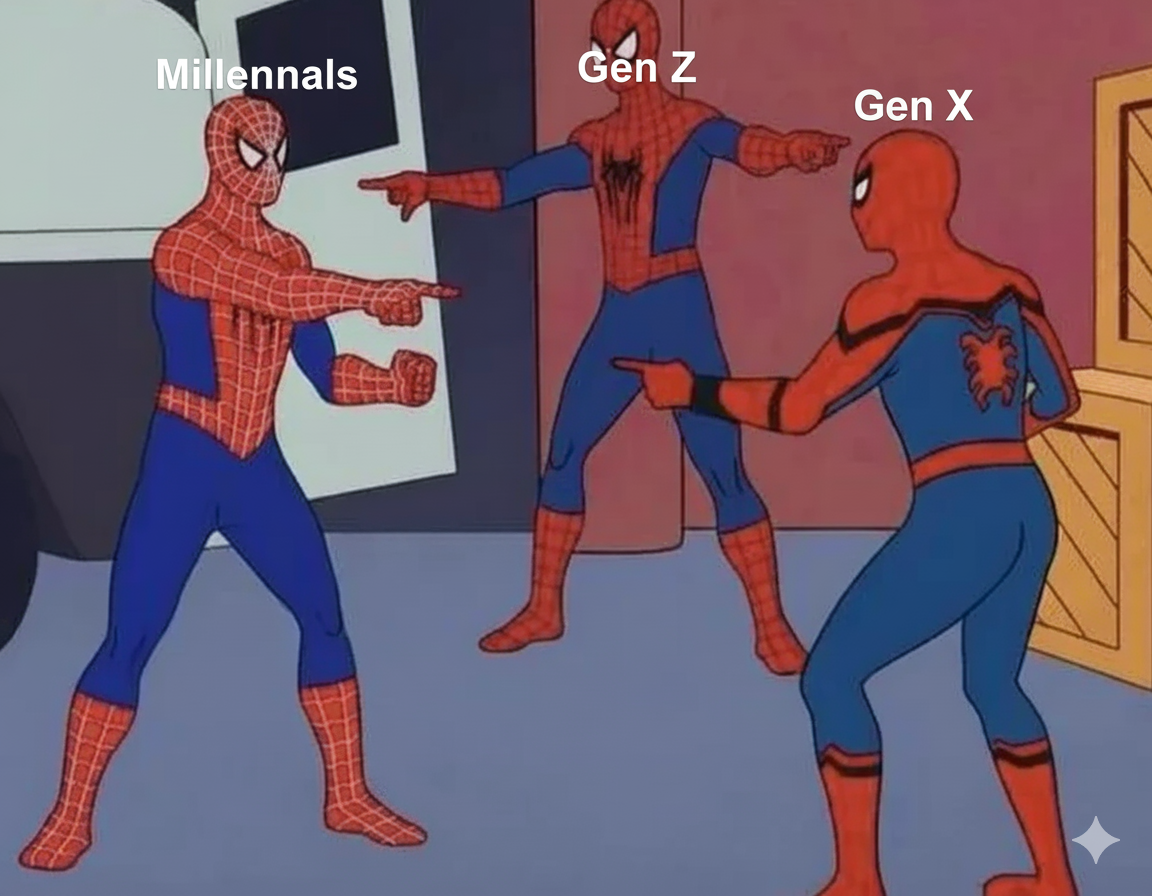
Now into this climate steps Generation Z – roughly those born between the late 1990s and early 2010s, the newest entrants to the workforce. Gen Z grew up watching the turmoil we’ve described. They saw parents lose jobs to recessions and outsourcing. They came of age amid the Great Recession of 2008 and then graduated into the pandemic economy. Change and uncertainty are their norms. No wonder they approach employment very differently than previous generations did.
Firstly, Gen Z doesn’t take promises at face value. They’ve seen corporate promises broken too often. When older bosses ask for loyalty or overtime “for the company,” Gen Z is inclined to ask: “What’s the company doing for us?” They are, by necessity, pragmatic and self-advocating. In fact, many Gen Zers are entrepreneurial in spirit – if this job doesn’t work out, maybe they’ll start their own business or pick up gig work to bridge the gap (YouTubers go Brrrrrr).
The traditional corporate ladder holds less allure, partly because they doubt the ladder will hold their weight. A Deloitte global survey found that only 6% of Gen Z say their primary career goal is to reach a leadership position. Climbing to the C-suite is not the draw it once was. Instead, young people prioritize work-life balance, learning opportunities, and meaning in their work.
Authenticity is another keyword for Gen Z. Having watched polished corporate communications and “spin” from a young age, they prize leaders who are genuine and transparent. “Authenticity is about trust… words and actions need to match,” notes one Stanford study on Gen Z. Young workers are quick to detect (and call out) hypocrisy. If a company preaches “we’re a family” but then turns around and fires hundreds via form letter, trust evaporates instantly. By contrast, leaders who admit mistakes, communicate honestly, and show vulnerability can earn Gen Z’s respect. This generation values open communication and consensus-driven leadership. They prefer leaders who act as coaches or collaborators rather than distant authority figures.
Flexibility is non-negotiable for many young professionals as well. Having seen the toll of always-on, 24/7 work cultures on mental health, Gen Z is unapologetic about seeking flexible schedules and remote work options when possible. They understand work is part of life, not all of life. In their ideal workplace, taking a mental health day isn’t stigmatized, and leaving at a reasonable hour is normal, not a dereliction of duty. Interestingly, they also crave community – just on their own terms. Surveys indicate Gen Z likes collaboration and teamwork. They aren’t the isolated “lone wolves” some might imagine. In fact, they flourish in supportive teams and often seek mentors (even if they don’t define the relationships formally). But the community Gen Z wants is authentic and inclusive. They will rebel against toxic positivity or team-building theater that rings hollow. Real community, to them, means open dialogue, inclusion of diverse voices, and leaders who actually listen.
Crucially, Gen Z’s attitudes are not just about themselves – they care about the bigger picture. This generation is often characterized as idealistic and socially conscious. They want workplaces that reflect their values on issues like diversity, equity, and sustainability. Purpose matters: nearly 90% of Gen Z say that a sense of purpose is important to their job satisfaction. They’re more likely to question decisions that put profit above people or planet, and they expect their employers to have a stance (or at least a plan) on societal challenges. This can put them at odds with older leaders who grew up in an era when companies studiously avoided political or social “stances.” But for Gen Z, silence or neutrality on key values is a stance – and usually not one they respect.
In short, Gen Z is redefining what good leadership looks like from the ground up. They want leaders who are empathetic, accountable, and human. That might sound lofty, but remember: this generation has seen plenty of the opposite. It makes sense they’re hungry for a change. As one consulting CEO observed, “Layoffs can be the right thing to do… but trust is built in drops and lost in buckets. Layoffs reset you” in your employees’ eyes. Gen Z intuitively understands this and expects leaders to also grasp the human stakes of their decisions. When they don’t, Gen Z won’t hesitate to leave for an employer (or an entrepreneurial path) that aligns better with their worldview.
So What Now?
The truth is, we must first take accountability. For older generations we must realize this is the talent we have and they grew up watching us. We can both create the monster, train the monster and then blame the monster for “monstering.” That evolution begins with a realization that many of the Boomers, Gen Xers and Millennials are suffering from Stockholm Syndrome. For many of us, the foundational currency of meaningful work was exchanged for crypto-success and we got rug pulled.
TV, Radio, and then the internet dominated our lives and replaced family, talking, community and we missed the values and the meaning of building up people. We saw our parents work hard blue collar jobs and we said nah… We started building companies for The Empire and became its Darth Vader, and in exchange for seeds and series raises we towed the line. We invested in tech companies, real estate and the stock market and started day trading with the soul of our country not realizing we also had to give up some of our own essence to the spirit bomb meant for us. We bought into that which we commiserate over. We started protecting and replicating the system that used and abused us. Even worse, we reframed the wanton disregard for our lives and livelihood as success. And now Gen Z can’t be bothered with the hypocrisy.
There’s an opportunity here for cross-generational understanding. Instead of clinging to “in my day we just sucked it up” attitudes, older leaders can acknowledge that their formative experiences were in a very different economy and culture – one that frankly no longer exists. Likewise, Gen Z can recognize that not every Gen X or Boomer boss is a callous capitalist caricature; many are trying to do the right thing but may be trapped in outdated paradigms or pressure from above. We all share in the need to restore humanity and empathy in leadership for the long run. After all, when leadership fails, everyone pays a price: employees, companies, and communities.
Encouragingly, some leaders and organizations are taking this call to heart. There’s growing dialogue around concepts like “servant leadership,” inclusive leadership, and trauma-informed leadership – all aiming to put people back at the center of decision-making. Forward-thinking companies are investing in operational clarity and transparency, so employees aren’t left in the dark about changes. Trust can only flourish when there’s clarity about where the ship is headed and why. In fact, clear communication from leaders is one of the key factors that drive alignment and trust. After years of corporate doublespeak, a bit of plain speaking and follow-through from leadership can go a long way to rebuilding credibility.
Burrowes Enterprises (BE), the parent company behind this conversation, offers a timely example as well. BE has explicitly built its values around people-centered systems, operational clarity, and building bridges between communities. Instead of pursuing growth at any cost, BE emphasizes aligning with the right partners and clients – even if that means turning some business away. (See Why BE Turned Down More Clients in 2025 Than in the Past Decade for a behind-the-scenes look at how sticking to one’s values can trump short-term profit.) These choices by BE’s leadership are a direct rebuke to the old-school mindset that says only the quarterly numbers matter. We show that another way is possible – one where success is measured in sustainable growth and community impact, not just investor applause. Because to be honest, if I had to choose to continue the cycle, I’d rather jump.
At BE, we start with Vision: BurrowesEnterprises.com/Vision2Victory