Epstein Files, Power Games & Public Trust: Why the Latest Revelations Matter for Black America
America is holding its breath. For years, the world has whispered, speculated, and theorized about the Epstein Files — the sealed records tied to one of the most powerful sex trafficking networks of the modern era. But now, thanks to the Epstein Files Transparency Act, the government has been forced to crack those vaults open.
This is not just a story about one man, one woman, or one ring of elites. It is a national reckoning — a test of whether the United States can confront its own ugliest truths without bending to the gravity of wealth, influence, and political convenience.
And in Black communities across the country, the anticipation is layered with something sharper: skepticism. Because institutional transparency in America has always had fine print, loopholes, and selective enforcement. We’ve seen receipts disappear. We’ve seen narratives manipulated. We’ve seen accountability stop at the gates of power.
Time will tell if Black America’s current mosaic of defiant unbotheredness, scathing side eyes, and crippling sarcastic jabs will persist into 2026. However, let the black community be very vigilant and compare the ferocity of their pursuit of black deviants and determine if they are applying an even hand to those that get exposed in what is to come. R. Kelly, for all intents and purposes, is the black community’s Elvis. While Kells, the subject of the dirty secret we tap our toes to, rots in prison, Elvis has an amusement park…
As the December 19 release deadline looms, this feature breaks down:
- how the Transparency Act came to be
- which political actors are shaping the outcome
- what the judiciary is preparing to do
- and what the likely fallout looks like
And most importantly: What happens if these files drop… and nothing happens at all?
Because that is the fear hidden behind the collective anticipation — that outrage will trend, hashtags will peak, and then the country will move on. Again.
How the Transparency Act Was Born: A Timeline of Pressure, Politics & Public Outrage
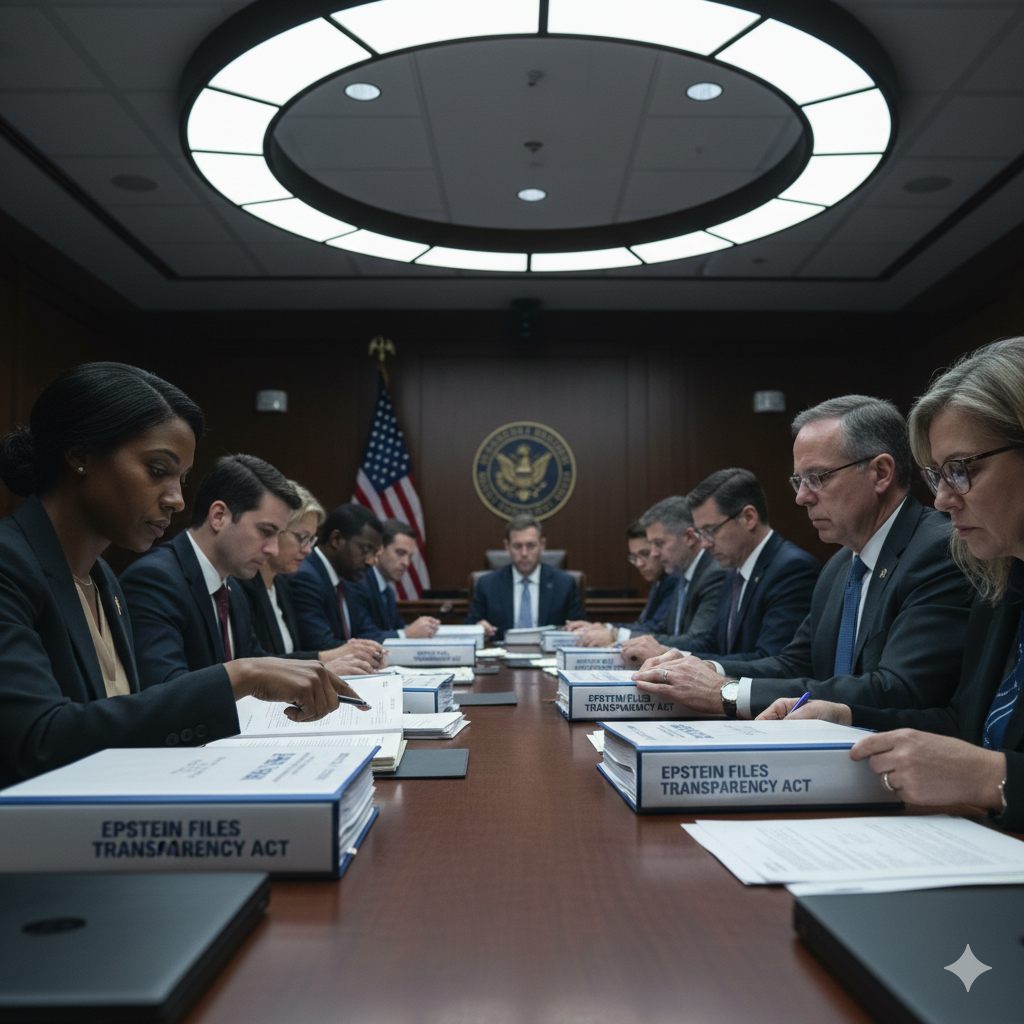
For years, the calls for transparency swelled. Survivors, journalists, activists, and ordinary people demanded access to sealed materials from:
- Epstein’s 2007 sweetheart plea deal
- The 2019 federal case
- Ghislaine Maxwell’s 2021 conviction
- Civil suits connected to the trafficking network
- Financial and travel records that identified Epstein’s associates
But the turning point came when the public — exhausted from years of redacted transcripts and vague denials — forced lawmakers to confront the issue.
The House Movement
The Transparency Act began as a bipartisan bill introduced in the House Judiciary Committee.
Key supporters included:
- House Democrats demanding justice for survivors
- House Republicans eager to project toughness on elite corruption
- Members motivated by consistent pressure from constituents
According to committee staff memos and summaries, early sessions included heated exchanges over:
- survivor protection
- national security exceptions
- which agencies would be compelled to release files
- whether Congress would retain oversight power
A senior House member was quoted in a press briefing:
“Sunlight is overdue, and the American public should not have to beg for the truth.”
Senate Debates & Amendments
The Senate presented more resistance — not to the concept of disclosure, but to its scope.
Some Senators argued:
- Some names should remain sealed to protect “innocent reputations”
- National security exceptions should be broad
- Certain financial documents should be excluded
- The release could “undermine ongoing intelligence partnerships”
But public momentum changed everything. After multiple high-visibility editorials and survivor interviews, the Senate Judiciary Committee scheduled expedited hearings.
A senator who pushed for the bill’s passage paraphrased in a public statement:
“If the justice system cannot tell the truth about this case, it cannot claim legitimacy anywhere.”
Opponents, however, cautioned in committee:
“We must prevent witch hunts and vigilante justice fueled by speculation.”
Negotiations resulted in new amendments:
- All survivor identities must be protected
- DOJ must publish documents in a searchable database
- Courts maintain the power to issue protective orders
- Names can only be redacted with written judicial justification
The Vote
Ultimately, the bipartisan push worked.
The final vote breakdown:
House: Passed with overwhelming support
Senate: Passed after a contentious floor debate
President: Signed into law under public pressure
This was one of the rare moments where both political parties agreed — not out of unity, but out of necessity.
What the DOJ Is Doing Now: The Machinery Behind the Release
After the bill became law, the Department of Justice moved quickly — partly out of legal obligation, partly out of political pressure.
Their tasks include:
- Reviewing hundreds of thousands of pages
- Categorizing materials by type: warrants, interviews, financials
- Assigning teams to evaluate redactions
- Protecting survivor identities
- Coordinating with the courts to unseal documents
- Preparing a public database
- Ensuring compliance with privacy and victim-protection statutes
A DOJ official, speaking to reporters under background conditions, noted:
“The volume is massive, and the sensitivity is unprecedented.”
But behind the procedural language is a quiet urgency — because the DOJ understands the stakes. Any hint of manipulation or concealment will ignite public backlash.
The Judiciary’s Role: Judges as the Final Gatekeepers
The judiciary now sits at the center of this storm.
Federal judges are responsible for:
- Reviewing DOJ unsealing requests
- Deciding which materials remain redacted
- Determining what meets privacy or national security exemptions
- Managing protective orders sought by individuals named in files
- Overseeing challenges from media organizations
- Responding to motions from attorneys seeking to block release
Some judicial voices have already warned that public expectations must be realistic. One judge, paraphrased from a public hearing, stated:
“The public has a right to know, but that right is not absolute.”
This tension — transparency vs. procedure — defines the upcoming weeks.
Because no matter what Congress voted for, judges ultimately decide what the public sees.
Congress & Senate Are Not Done: Oversight Battles Are Coming
Passing the bill was step one.
Now Congress and the Senate are preparing for the next phase: oversight.
Committees expected to hold hearings:
- House Judiciary
- Senate Homeland Security
- Senate Judiciary
- House Oversight and Accountability
- Senate Permanent Subcommittee on Investigations
Possible future actions include:
- Subpoenas to DOJ officials
- Testimony from FBI investigators
- Hearings with federal judges
- Public questioning of named individuals
- Demands for a special independent counsel
- Legislative proposals tightening sex trafficking laws
There is talk in several offices — especially among younger lawmakers — about establishing:
- A public commission on elite sexual exploitation
- A task force to examine federal plea deals for powerful offenders
- A review of child exploitation statutes across all 50 states
If the Epstein Files reveal systemic failures, Congress will be politically forced to respond.
Or at least… pretend to.
Rumors, Redactions & The Public: What People Fear Is Happening Behind Closed Doors

Even with bipartisan action, mistrust remains high.
Across social media, group chats, and barbershop conversations, three major rumors dominate:
1. Names Are Being Redacted or Replaced
Some believe high-profile individuals have successfully:
- petitioned courts for special redactions
- negotiated anonymity
- had their references replaced by initials
This rumor reflects historical patterns, not paranoia.
2. Consent Law Loopholes Are Being Strategically Adjusted
There is viral speculation that certain states are:
- shifting statutory consent definitions
- altering retroactivity rules
- reclassifying older crimes
The fear: powerful individuals could escape accountability through legal technicalities.
3. Political Deals Are Being Made
Some theorize that:
- certain names will be sacrificed
- others will be protected because of political alliances
- media narratives are being shaped in advance
And again — none of this is irrational.
We have seen systems protect the elite in plain sight.
The Trump-Epstein-Maxwell Triangle: New Questions & Uncomfortable Silence
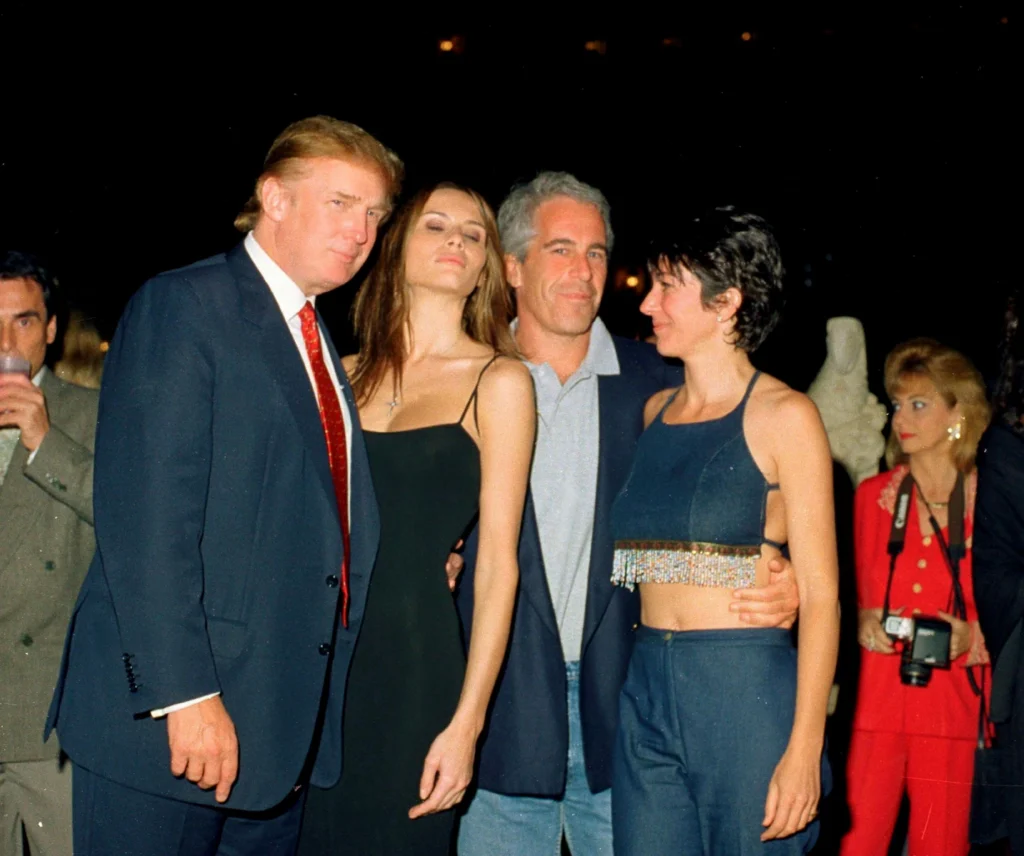
While the public focus has often been on a wide net of elites, a specific, tangled web involving Donald Trump, Jeffrey Epstein, and Ghislaine Maxwell is generating fresh scrutiny. A recent deep-dive by The Daily Show has amplified uncomfortable questions that go beyond mere association, pointing to a pattern of special treatment and unexplained financial ties that demand answers.
1. The “Concierge” Prison Experience
Perhaps the most glaring anomaly is Ghislaine Maxwell’s current reality. While serving a 20-year sentence for sex trafficking, reports indicate Maxwell is receiving treatment that looks nothing like standard federal incarceration.
- VIP Isolation: Instead of the typical hard time, Maxwell has reportedly been granted “alone time” for workouts and specialized diets.
- Staff Access: Sources cite her having special access to staff spaces and private meetings with visitors scheduled directly by the warden—privileges almost unheard of for high-profile inmates.
- The Silence Strategy: In interviews, analysts have noted a peculiar pattern: Maxwell seemingly refuses to bring up Donald Trump’s name voluntarily. It is only when specifically prompted or pressed by interviewers that she addresses him, a disciplined silence that critics argue signals an ongoing, tacit agreement of protection.
2. The “Birthday Book” & The 2003 Letter
New evidence from Epstein’s personal archives—specifically a “Birthday Book” compiled for his 50th birthday—has produced physical receipts that contradict years of denial.
- The “Wonderful Secret” Note: A birthday card allegedly from Trump to Epstein contains a handwritten message ending with the cryptic and chilling phrase: “May every day be another wonderful secret.”
- The Signature: Handwriting experts and former colleagues have pointed out that the signature on this card matches Trump’s distinct, jagged style from that era, before he adopted his modern “sawtooth” autograph.
- The Nude Sketch: The note was accompanied by a sketch of a nude woman, further cementing the personal and “locker room” nature of their bond.
3. The $22,500 Check for a “Fully Depreciated” Woman
One of the most disturbing items to surface is a photo of a novelty check in the birthday book that speaks volumes about how these men viewed women.
- The Transaction: The photo shows Epstein holding an oversized check for $22,500, bearing an imitation of Trump’s signature.
- The Note: The handwritten caption underneath describes the payment as being for a “fully depreciated” woman—dehumanizing accounting terminology used to describe an asset that has lost its value. Whether the check was a prop or real, the language explicitly treats a human being as a used commodity.
4. Director Patel’s Non-Answer
Adding to the suspicion is the behavior of current officials. In recent hearings, Kash Patel (who has been involved in reviewing the files) was asked a simple, direct question: How many times does Donald Trump’s name appear in the Epstein documents?
- The Refusal: Instead of providing a number, Patel dodged the question entirely, offering vague bureaucratic responses rather than a clear “yes,” “no,” or “count.”
- The Implication: For a transparency official to refuse a basic factual count suggests that the answer is either politically damaging or numerically significant.
5. “The Dog That Didn’t Bark”
Newly released emails between Epstein and Maxwell show them discussing Trump in code. In one exchange, Epstein refers to Trump as “the dog that hasn’t barked,” implying that Trump’s silence was strategic. In another email to author Michael Wolff, Epstein stated matter-of-factly that “of course [Trump] knew about the girls,” directly contradicting the former President’s claims of ignorance.
6. The Wolff Tapes & The Melania Connection
Beyond the financial records, audio recordings released by author Michael Wolff reveal even deeper claims:
- “Closest Friend”: Epstein is heard on tape claiming he was Trump’s “closest friend” for ten years, describing in graphic detail how Trump would seduce the wives of his friends.
- The Introduction: In those same tapes, Epstein allegedly claimed that he was the one who introduced Melania to Trump and that the former President first slept with her on Epstein’s private plane. This claim has led to aggressive legal threats from Melania Trump’s team, signaling just how sensitive this specific connection remains.
This is not just about old friendships; it is about current protection. If the former President is receiving special shielding—from redacted names to silent prison arrangements—it confirms the Black community’s oldest suspicion: Justice is a commodity, and some people can still afford to buy their way out of it.
Why the Epstein Files Matter for the Black Community — Beyond the Headlines

This isn’t just a scandal for Black America; it is a reflection of long-standing power imbalances.
1. Accountability Has Never Been Equally Distributed
Black survivors of sexual violence face:
- higher disbelief
- harsher judgment
- slower investigations
- more frequent dismissal
The Epstein case exposes the reverse dynamic: white male wealth insulated from scrutiny.
2. Elite Networks Shape Policy
Epstein’s social circle included:
- philanthropists
- lobbyists
- political donors
- Ivy League administrators
- tech giants
- global diplomats
Black communities often suffer the downstream impact of policies shaped by these same circles.
3. Younger Black Voters Demand Receipts
They are tired of:
- selective outrage
- institutional secrecy
- “elite rules” vs “regular rules”
- performative justice
This moment represents a generational shift in expectations.
The Short-Term Impact: Media Frenzy, Disinformation & Weaponized Narratives
When the files drop, expect chaos:
- Hashtags
- Leaks
- Anonymous tips
- Deep-dive YouTube analyses
- PR responses
- “No comment” statements
- Politicians distancing themselves
- Out-of-context screenshots
- Real documents mixed with fake ones
- Disinformation campaigns targeting vulnerable groups
Every political faction will try to weaponize the revelations.
The Long-Term Impact: Can America Survive the Truth?
The release could lead to:
- high-profile resignations
- new indictments
- congressional investigations
- diplomatic fallout
- public mistrust
- enhanced survivor protection laws
- major institutional reform (if pushed hard enough)
But it could also lead to… nothing.
And that is where things get dangerous.
When the Receipts Drop and Nothing Happens: Outrage, Apathy & America’s Short Memory

This is the part no one wants to say aloud.
The biggest threat to justice isn’t the elite.
It’s apathy.
Because America has a ritual:
- Outrage erupts.
- Memes trend.
- Comment sections explode.
- TikTok “experts” give 60-second explainer videos.
- Journalists report for a week.
- Politicians feign shock.
- Attorneys “review statements.”
- Influencers weigh in.
- Think pieces go viral.
- And then…
- Everyone moves on.
We’ve seen this cycle with:
- police brutality cases
- political corruption
- corporate scandals
- celebrity predators
- intelligence agency abuses
- Wall Street crimes
The fear is not that the files will be empty.
The fear is that the public will be.
Because if the names drop — and no consequences follow — it sends a message to survivors, to the poor, to the working class, and especially to Black communities:
“Accountability was never designed for everyone.”
And the elites know this. They rely on public exhaustion.
They rely on attention spans.
They rely on social media performing outrage instead of sustaining it.
The question is not whether the files will be released.
The question is whether anyone will still care long enough for change to happen.
Key Takeaways
- The Epstein Files Transparency Act passed after intense public and political pressure.
- Congress, the Senate, DOJ, and judiciary each play unique roles in the unsealing process.
- Rumors reflect historical mistrust in elite accountability.
- The release could dramatically shift political, legal, and cultural landscapes.
- But public apathy — especially after the initial media storm — risks neutralizing the impact.
- The Black community sees this as a test of whether justice can reach the highest levels of power.
Call to Action — Don’t Let the Story Die
If the public wants real accountability:
- We must read the documents ourselves.
- We must demand media follow-up.
- We must pressure lawmakers for hearings.
- We must call out selective transparency.
- We must sustain engagement — not just online, but offline.
- We must uplift survivor voices.
The system is counting on us to forget.
We cannot.
HfYC Poll of the Day
Do you think the Epstein Files will lead to real accountability — or just another wave of outrage that fades away?
Alternate Perspectives:
- When the files drop, will anything change — or will the powerful walk away untouched?
- Are you expecting justice or another news cycle that people forget in a week?
- Will the Epstein Files spark real action, or will public apathy protect the elite again?
Related HfYC Content
- Congress Voted on the Epstein Files, Now What?
- The New Political Landscape — November 2025 Elections Impact
- Charlie Kirk Got Shot: Whoopty-Do or Much Ado?
- Dubai Porta Potty – Securing the Bag or Sex Trafficking Crisis?
- Bros Gone Wild — Passport Bros vs the FBA
- Part 1/3 – Power, Perception, and Punishment: The Trial of Diddy and the Question of Justice for Black Moguls
Other Related Content
- “Explainer: What the Epstein Files Could Reveal” – https://www.bbc.com/news
- “The DOJ, Redactions, and Public Access: How It Works” – https://www.nytimes.com
REFERENCES
BBC News. (2024). Ghislaine Maxwell case timeline. https://www.bbc.com/news
The New York Times. (2024). How the Epstein network operated and why it matters. https://www.nytimes.com
U.S. Congress. (2024). Epstein Files Transparency Act. https://www.congress.gov