Bros Gone Wild — Passport Bros vs the FBA: Global Dating, Online Controversy, and the New Relationship Divide
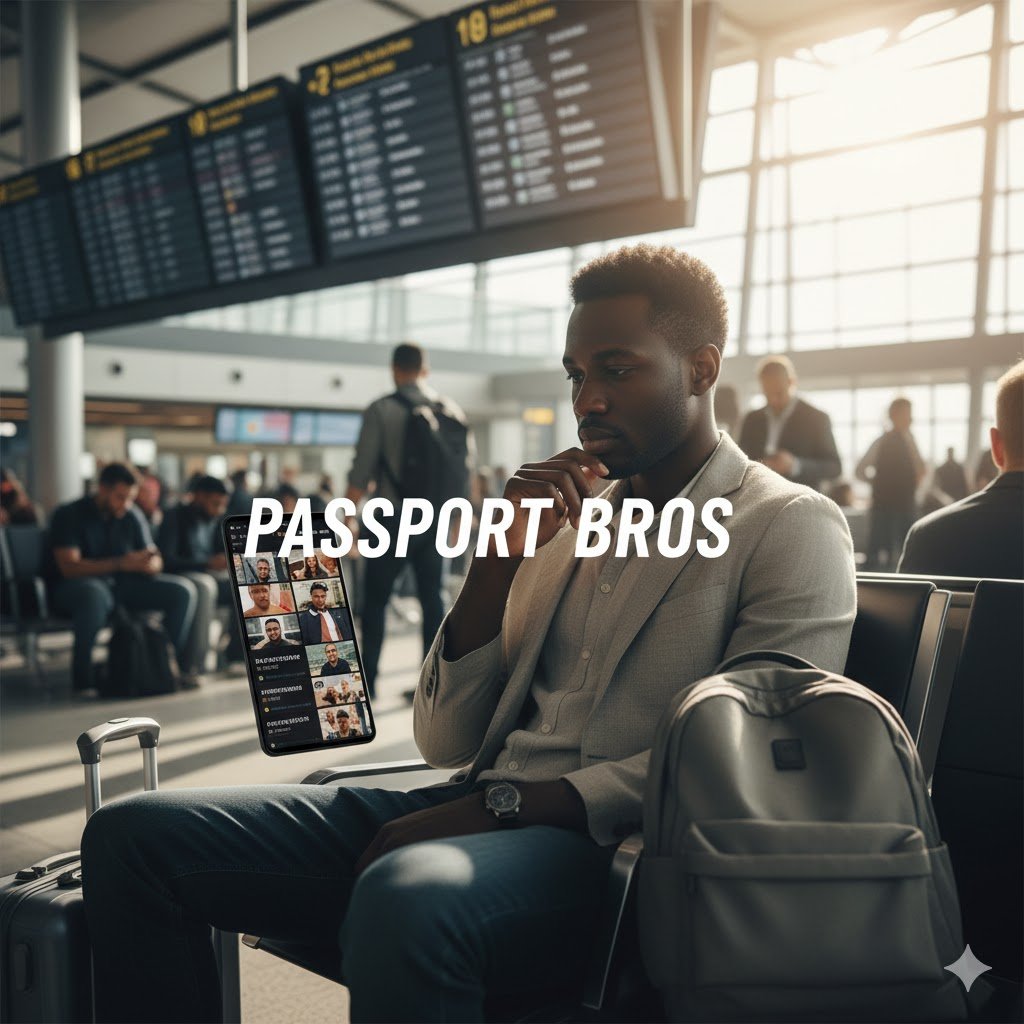
The rise of the passport bros movement has become one of the most polarizing cultural conversations within Black America. What began as quiet frustrations about modern dating has now evolved into a globalized lifestyle shift — one powered by social media, economic flexibility, cultural exploration, and shifting relationship expectations. At the same time, critics from the Foundational Black American (FBA) community are loudly questioning the movement’s motives, integrity, and long-term implications for Black love and community unity.
The controversy surrounding U.S. creator J Rello in Kenya only intensified the conversation, revealing deeper sociological tensions around global travel, masculinity, accountability, and the ethics of content creation. Meanwhile, influential voices like Oshay “Duke” Jackson continue to offer alternative viewpoints shaped by their experiences living on the continent and witnessing these dynamics firsthand.
To understand what is happening — and why it matters — we need to explore the cultural forces behind passport bros, the global dating patterns emerging from the movement, the backlash building against it, and the broader implications for younger generations navigating modern relationships.
How We Got Here — Why the Passport Bros Movement Exists
At its core, the passport bros movement emerged from a sense of disillusionment with the U.S. dating environment. Many men — particularly Black men — describe modern dating as overly transactional, emotionally draining, or misaligned with their desires for partnership. The rapid rise of globalization, cheap travel options, dating apps, and remote work opportunities made the idea of meeting romantic partners abroad more accessible than ever. Combined with the visibility of global travel vlogs and lifestyle influencers, the trend has transformed into a recognizable movement.
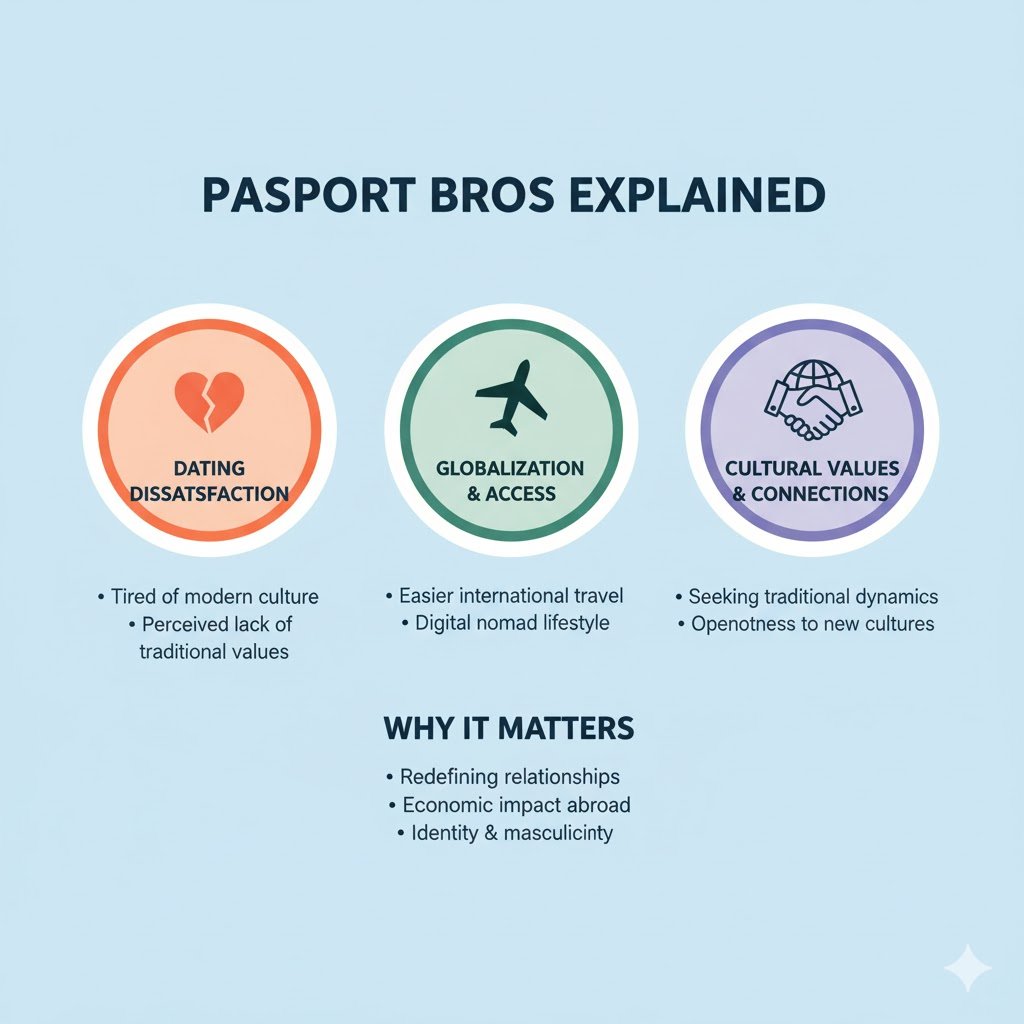
A significant element driving the movement is the tension between traditional and modern values. Some men feel that American dating culture emphasizes independence, self-interest, and financial expectation in ways that leave them feeling undervalued or outpaced. They often contrast this with international cultures where, in their perception, partnership, family roles, and relational interdependence are emphasized differently. On the other hand, Black women — especially those identifying with FBA ideology — argue that the movement oversimplifies complex social issues and unfairly targets Black women as the scapegoat for broader social and economic frustrations.
The truth is more nuanced. The passport bros movement is not simply a rejection of Black women, nor is it merely a quest for romantic escape. It sits at the intersection of gender politics, socioeconomic anxiety, globalization, and the psychology of modern masculinity.
Mapping the Movement — Where Passport Bros Tend to Go
Though passport bros travel worldwide, certain cities have become hotspots due to social reputation, affordability, nightlife, and what travelers describe as “friendlier romantic culture.” In Latin America, cities like Medellín, Cartagena, Rio de Janeiro, Santo Domingo, and Sosúa frequently appear in videos and discussion threads. These destinations are often portrayed as places where social interaction feels easier, and dating dynamics feel more relaxed.
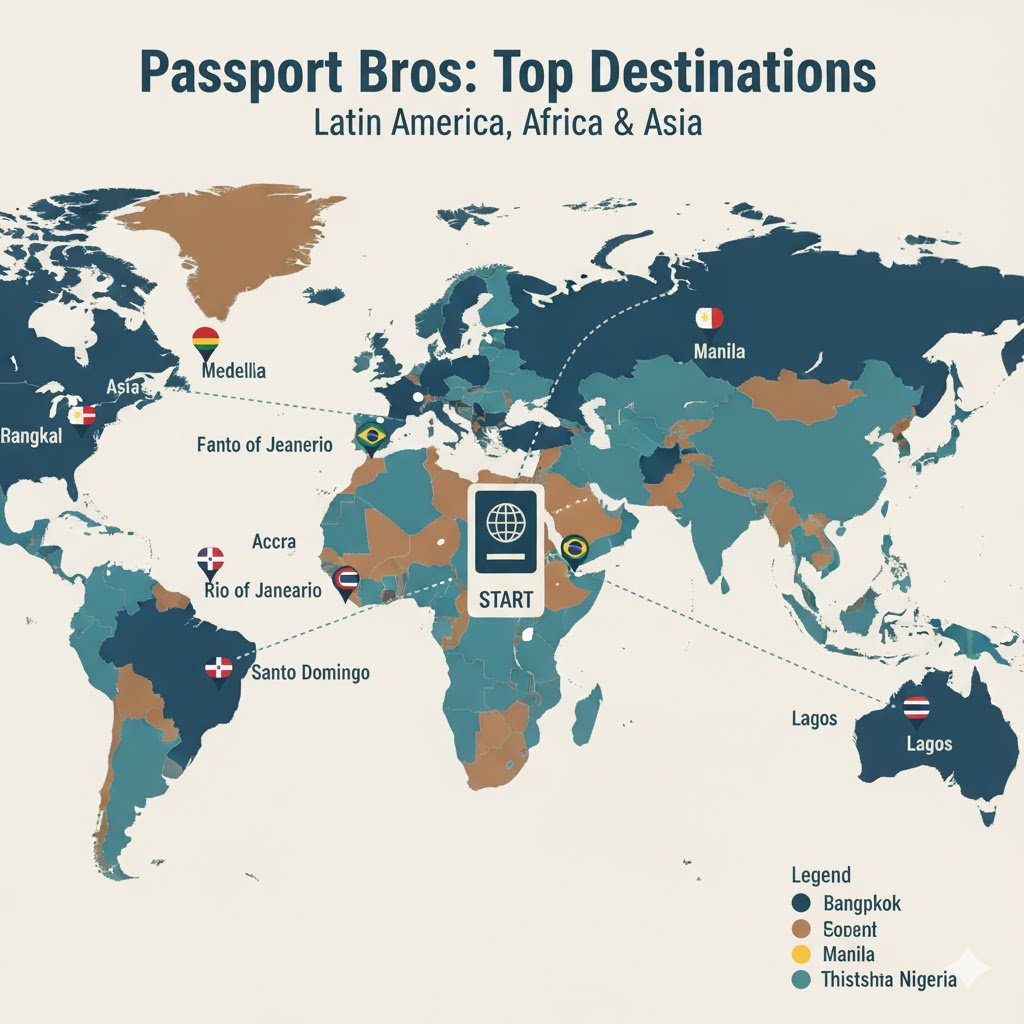
In Africa, Nairobi, Cape Town, Accra, and Addis Ababa have become common destinations. They offer cultural familiarity mixed with the novelty of exploring the diaspora. Asia, too, has emerged as a central hub, with Bangkok, Pattaya, Manila, Cebu, Saigon, and Kuala Lumpur offering completely different social landscapes shaped by linguistic, cultural, and economic factors.
Each city carries its own story. Some are shaped by tourism and nightlife economies, others by diaspora connections, and still others by cultural traditions that frame dating differently than in the U.S. Understanding these contexts is key to understanding why the movement resonates with some men and raises red flags for others.
The J Rello Scandal — When Passport Bros Go Too Far


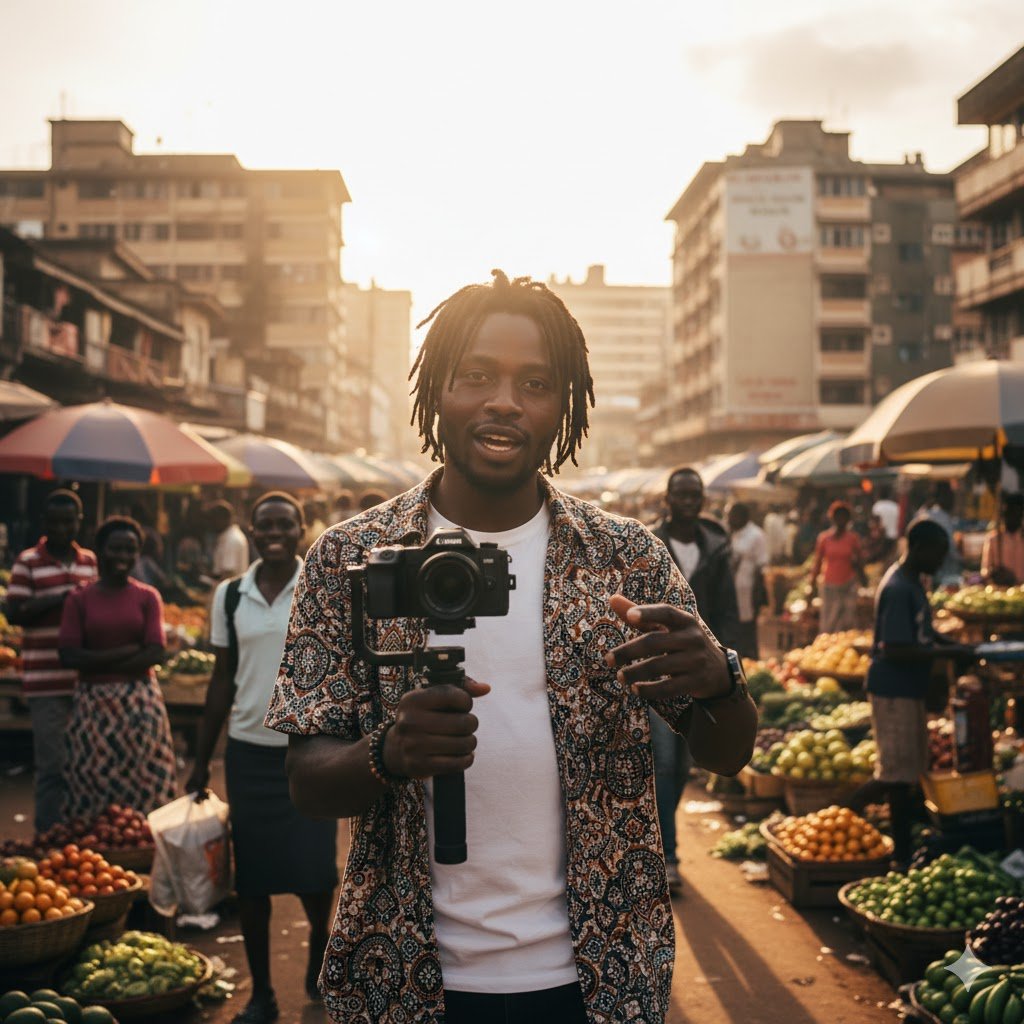
No figure embodies the dangers and criticisms of the passport bros movement more than J Rello, who became the center of international outrage after his actions in Kenya. His behavior — which included publicly referring to Kenya as “poverty-stricken,” insulting the appearances of Kenyan women, filming content with local women under questionable consent, and allegedly becoming aggressive during a recorded altercation — ignited a firestorm across East African social media.
Rello claimed he hired the women to create provocative content, but the situation escalated when compensation disputes arose. One woman was heard crying for her phone, while another attempted to de-escalate the conflict. As the incident spread online, locals demanded his removal. Soon, his Airbnb host shut off power and Wi-Fi, and he was asked to vacate the property. Kenyan users mass-reported his channels, leading to their suspension.
The scandal became an international cautionary tale about digital exploitation, cultural disrespect, and the imbalance of power between foreign men seeking adventure and local women who may be vulnerable to manipulation. It also reignited debate within Black America about whether the passport bros movement is empowering — or exploitative.
Oshay “Duke” Jackson — The Diaspora Voice Offering Balance and Accountability


In contrast to content creators like J Rello, Oshay Duke Jackson represents a much more grounded, respectful, and culturally aware approach to global dating, travel, and diaspora engagement. Based in Kampala, Uganda, he has become one of the most influential voices discussing masculinity, relationships, and African diaspora unity.
Oshay often reminds his viewers that travel does not absolve men of responsibility. He emphasizes that personal integrity, discipline, and respect must travel with you. He frequently states that “Africa is not a playground,” criticizing foreigners who arrive expecting to exploit local women or treat cultural communities as props for monetized content.
He has been outspoken about African women deserving respect from both local and foreign men. At the same time, he critiques elements of the FBA movement that speak negatively about Africa or disregard the shared cultural struggles between Black Americans and Africans.
Oshay’s viewpoint bridges the divide between Black Americans at home and those exploring life abroad. He acknowledges why certain men feel drawn to international partnership while insisting that those choices must be rooted in maturity, cultural sensitivity, and genuine human connection. His work highlights the difference between intentional lifestyle migration and the reckless “bros gone wild” ideology associated with viral passport bros debates.
Passport Bros vs FBA — A Cultural Rift and What It Reveals About Black Relationships
The tension between passport bros and the FBA community often reflects deeper issues that go beyond dating. For FBA women and cultural advocates, the movement is sometimes seen as dismissive or disrespectful — a rejection of Black American women in favor of women from other cultures. They argue that this dynamic ignores historical oppression, economic inequality, and generational trauma that shape relationship experiences in the U.S.
Passport bros counter that they are simply choosing environments where they feel valued, respected, or better aligned with their relational expectations. They often argue that American dating culture — for all genders — has become adversarial, and seeking partnership abroad is neither betrayal nor deficiency, but rather preference shaped by lived experience.
The conversation is emotionally charged because it touches identity, gender politics, economic survival, internalized stereotypes, and the long-standing question of how Black love evolves in changing times. For younger generations, growing up in a world where dating advice is global and instant, the movement raises both curiosity and concern. Many see it as a warning sign about what is breaking down in U.S. dating culture, while others see it as a symptom of unresolved cultural divides.
Key Takeaways
The passport bros movement cannot be fully understood through stereotypes or viral TikTok debates. It is shaped by global economics, social expectations, emotional disconnection, cultural curiosity, and technological access. Cities across Latin America, Africa, and Asia have become hubs in this new dating landscape. J Rello’s scandal illustrates the potential for harm and exploitation when travelers approach these environments without ethics or cultural awareness. Meanwhile, figures like Oshay Duke Jackson show that there is space for responsible, respectful, and community-centered global engagement.
Most importantly, the movement reveals both the fractures and possibilities within Black relationships. It challenges us to rethink how dating, partnership, masculinity, and femininity evolve in an increasingly globalized world.
What Black Communities Can Do Moving Forward
Black communities can benefit from honest conversations about relationship expectations, gender roles, emotional labor, and the economic realities shaping modern dating. Encouraging men and women to hold space for each other’s experiences — without automatically defaulting to blame — is essential. Travel can be a powerful tool for transformation, but only when grounded in respect. Creators engaging abroad must be held to ethical standards, and young men in particular should be taught that global mobility comes with responsibility, not entitlement.
At the same time, the pressure should not fall solely on individuals. Community leaders, families, and educators all play a role in helping young people develop healthy relationship models rooted in trust, empathy, and accountability. Strengthening the emotional literacy of the next generation may do more to repair dating culture than any passport ever could.
Related HfYC Content
- Black Greek Life and Faith: Are Fraternities and Sororities at Odds with Christianity?
- Dating While Black and Christian: A Guide to Navigating Faith, Culture, and Love
- Is Your Mental Health Silently Sabotaging Your Success? (Part 1/5)
- Pride in the Hood: Being Young, Black, and Queer in New Jersey
References (APA Style)
BBC News. (2023). Global dating migration trends.
Reuters. (2024). Digital content controversies involving U.S. influencers.
Academic Press. (2022). Dating economies and global relationship shifts.
Poll Question
Are passport bros searching for better relationships — or running from accountability at home?
Alternative Perspectives:
- Is the passport bros movement a warning sign about modern dating, or just another internet trend?
- Would the movement exist if Black men and women felt equally valued in the U.S.?
- Are passport bros expanding options — or exposing deeper cultural divides?