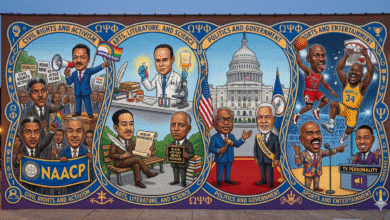
Divine Nine Leadership in Action: How Black Greek Organizations Are Shaping Service, Policy, and Creative Power in 2025
Why the Divine Nine Still Matters — Especially Right Now
As 2025 approaches its close, one thing is becoming increasingly clear: the Divine Nine is not in retreat. It is recalibrating.
Across the country, National Pan-Hellenic Council (NPHC) organizations are quietly but powerfully reaffirming their original purpose — not as social clubs or nostalgia-driven institutions, but as active engines of service, policy engagement, and leadership development in Black communities. In a time marked by political instability, economic pressure, and cultural fragmentation, the Divine Nine is showing what it looks like to lead with intention rather than spectacle.
This moment matters, particularly for younger generations who often encounter Black Greek life through viral stroll videos or homecoming clips. What’s happening beneath the surface tells a deeper story — one rooted in legacy, responsibility, and the long view.
Service as Strategy, Not Charity

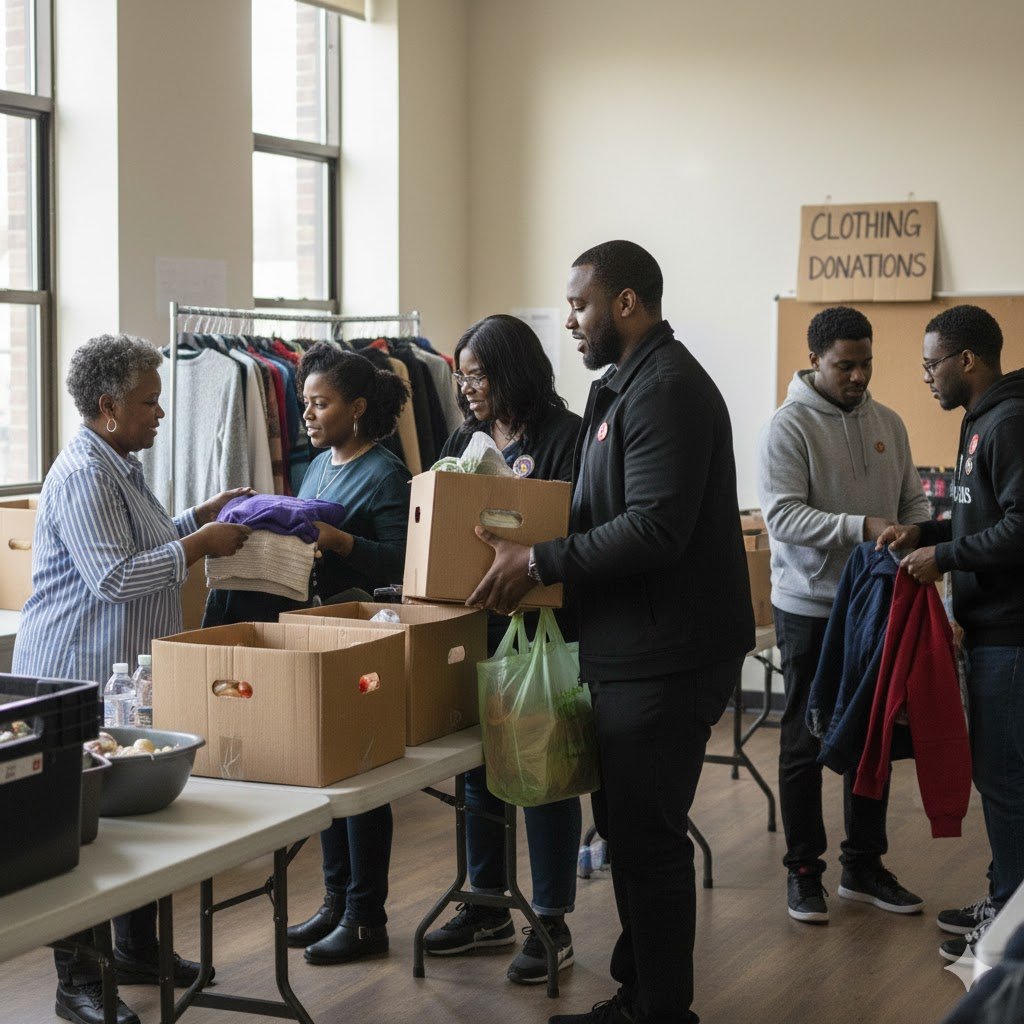
Service has always been central to the Divine Nine, but recent initiatives reflect a sharper understanding of structural need, not just symbolic outreach.
In North Carolina, Wake County Social Services partnered with local Divine Nine chapters for the “Step in the Gap for Foster Youth” initiative. The program wasn’t framed as a one-day volunteer opportunity, but as a sustained call to action — inviting members to mentor, volunteer, and seriously consider foster parenting. The underlying message was clear: if Black children are disproportionately impacted by the foster care system, Black institutions must be part of the solution.
This approach reflects a shift from episodic service to relational commitment. It recognizes that mentorship, consistency, and presence matter more than visibility.
Dignity Is a Form of Justice: The Meaning Behind “Laundry Love”
In New Mexico, multiple Divine Nine organizations — Alpha Kappa Alpha, Omega Psi Phi, Delta Sigma Theta, Sigma Gamma Rho, and Alpha Phi Alpha — came together alongside the United Way for the “Laundry Love” initiative. On its face, the program provides free laundry services to families experiencing financial hardship. In practice, it does something deeper.
It restores dignity.
Clean clothes are often overlooked in conversations about poverty, yet they shape everything from school attendance to job prospects to self-worth. By addressing a practical, everyday need, Divine Nine members affirmed a long-standing truth: justice is not only about policy, it’s about lived experience.
This type of collaboration also signals something important for the future — a willingness among Divine Nine organizations to work collectively across letters when community need outweighs organizational silos.
Honoring Tradition Without Being Trapped by It
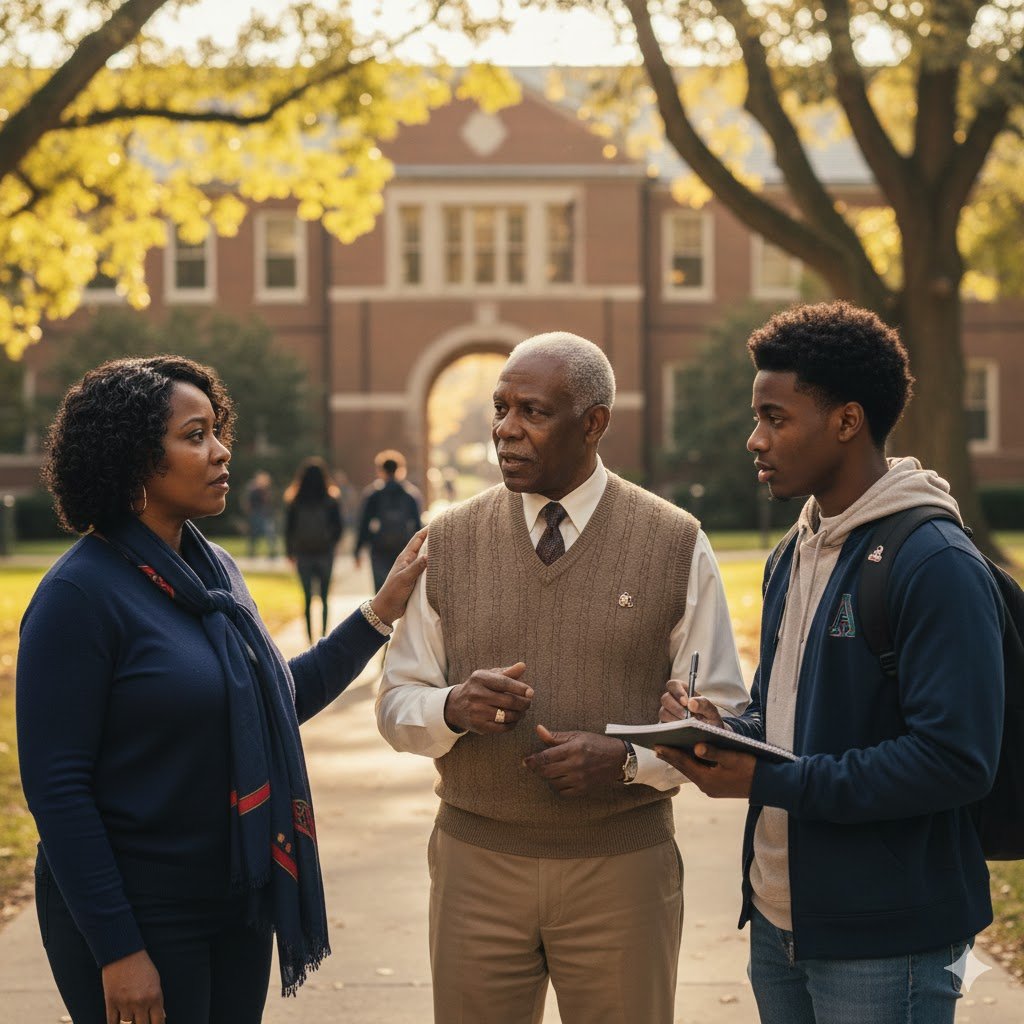
Thanksgiving initiatives led by Omega Psi Phi Fraternity, Inc. across various regions offered another reminder of how tradition can remain relevant when it’s anchored in purpose. Food drives, elder outreach, and community meals weren’t treated as seasonal obligations, but as extensions of the fraternity’s core principles: manhood, scholarship, perseverance, and uplift.
For older generations, this continuity reinforces trust. For younger audiences, it offers a counter-narrative to the idea that legacy institutions are outdated. Instead, it shows how values, when consistently applied, can adapt to new realities without losing their soul.
A City-by-City Look: How the Divine Nine Is Showing Up Locally
One of the most overlooked truths about the Divine Nine is that its power isn’t centralized — it’s local. While national initiatives provide structure and vision, the real impact often happens chapter by chapter, city by city, shaped by the needs of the communities members actually live in.
In Raleigh and Wake County, North Carolina, Divine Nine chapters have leaned deeply into child welfare and family stability through partnerships like Step in the Gap for Foster Youth. Members aren’t just volunteering for events; they’re stepping into long-term mentorship roles, attending county briefings, and encouraging fellow Greeks to consider foster parenting. In a system where Black children are overrepresented and Black foster parents are underrepresented, this kind of engagement moves beyond charity and into advocacy.
Further west, Albuquerque and surrounding New Mexico communities have become a quiet example of what cross-organizational collaboration can look like when ego takes a back seat. Chapters of Alpha Kappa Alpha, Omega Psi Phi, Delta Sigma Theta, Sigma Gamma Rho, and Alpha Phi Alpha have come together through the Laundry Love partnership with United Way, offering families free access to laundry services, winter clothing, and basic necessities. The choice to work collectively across letters — rather than duplicating efforts — reflects a maturity that younger audiences, in particular, are hungry to see.
In parts of the Midwest and South, Omega Psi Phi chapters have continued their tradition of holiday-centered service, particularly around Thanksgiving, but with a broader lens. Rather than limiting outreach to food drives alone, some chapters have incorporated voter education, health screenings, and senior check-ins into their seasonal programming. The result is a model that honors tradition while responding to modern realities.
Meanwhile, in urban hubs across the Northeast, Divine Nine alumni chapters are increasingly focused on professional mentorship and creative leadership. From resume clinics and financial literacy workshops to panels on storytelling, organizing, and media production, these chapters are expanding the definition of what leadership preparation looks like in 2025. The emphasis isn’t just on who gets access — it’s on whether that access translates into long-term opportunity.
What ties these cities together isn’t uniform programming, but a shared philosophy: service should be responsive, not recycled. The Divine Nine’s relevance today lies in its ability to adapt national values to local realities — whether that reality is foster care reform, economic hardship, elder care, or youth leadership development.
Why This Local Lens Matters
For Here For You Central, this city-level work is the story.
It’s easy to critique institutions from a distance. It’s harder — and more useful — to pay attention to how they actually show up on the ground. These local efforts demonstrate that the Divine Nine isn’t operating on autopilot. It’s listening, adjusting, and in many cases, filling gaps left by under-resourced public systems.
For younger readers especially, this kind of visibility matters. It reframes Black Greek life not as an exclusive club, but as a distributed network of people doing tangible work in familiar neighborhoods. That recognition can be the bridge between skepticism and engagement.
Why Younger Generations Are Watching More Closely Than You Think


For Gen Z and younger millennials, the Divine Nine can feel distant — not because they don’t respect it, but because they are navigating a world shaped by algorithms, decentralization, and skepticism toward institutions.
What resonates with them now isn’t pageantry. It’s impact.
Programs like foster youth mentorship and “Laundry Love” align with values younger audiences care deeply about: mutual aid, mental health, equity, and sustainability. When Divine Nine organizations demonstrate relevance through action rather than branding, they bridge a generational gap without forcing assimilation.
The lesson here is simple but powerful: legacy earns loyalty when it proves usefulness.
Short-Term Impact: Stabilizing Communities in Unstable Times
In the short term, these initiatives provide tangible relief. Families save money. Youth gain mentors. Elders feel remembered. Communities see familiar faces showing up consistently, not just during election cycles or crises.
Equally important, these efforts rebuild trust in Black-led institutions at a time when many people feel disillusioned by systems that promise much and deliver little.
Long-Term Implications: Training the Next Generation of Black Leadership

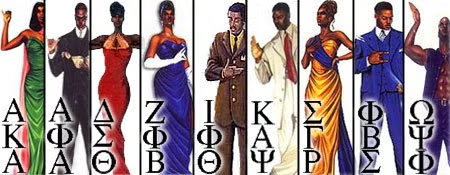
The long-term impact may be even more significant. By grounding service in policy awareness and leadership development, the Divine Nine continues to function as an informal leadership pipeline.
Historically, these organizations have produced educators, judges, activists, artists, and policymakers. What we’re seeing now is an evolution — one that integrates creative leadership alongside civic engagement. Storytelling, organizing, and cultural production are increasingly recognized as legitimate tools of power.
In other words, leadership no longer looks one way — and the Divine Nine is adjusting accordingly.
What the Community Can Learn From This Moment
There’s a lesson here that extends beyond Greek life.
The Divine Nine’s current trajectory reminds us that sustainable change doesn’t come from viral moments alone. It comes from structures that outlive attention cycles. It comes from institutions willing to do unglamorous work, build coalitions, and stay accountable to the people they serve.
In a media environment obsessed with disruption, the Divine Nine is quietly modeling endurance.
Looking Ahead: What Comes Next
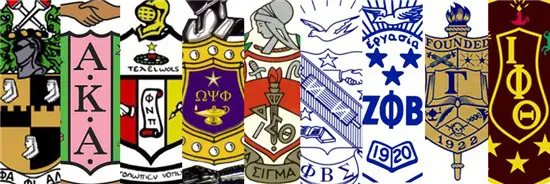
As 2025 turns into 2026, the question isn’t whether the Divine Nine will remain relevant. It’s how the rest of us choose to engage with institutions that have proven they can evolve without abandoning their roots.
For communities, the invitation is to collaborate rather than critique from a distance. For younger generations, it’s an opportunity to reimagine Greek life as a platform for creativity, service, and systemic impact. And for the Divine Nine itself, it’s a moment to continue opening doors — not just for membership, but for partnership and innovation.
Legacy, after all, is not something you inherit. It’s something you maintain.
HrYC Community Poll of the Day
Do Black legacy institutions like the Divine Nine still shape real change — or do we underestimate their impact because it doesn’t always go viral? Follow us and respond on social media, drop some comments on the article, or write your own perspective!
Alternative Perspectives:
- Is the Divine Nine doing more work than we give them credit for?
- Do younger generations really know what Black Greek organizations actually do?
- When service isn’t flashy, do we miss the power behind it?
Related HfYC Content
- Celebrating 50 Years of Sisterhood: Delta Sigma Theta’s Impact on New Jersey and Beyond
- Black NYU Students Respond to Racism w/ Activism
- HBCU Relevance Today: Are We Still Building for Us?
- Black Greek Life and Faith: Are Fraternities and Sororities at Odds with Christianity?
- Dubai Porta Potty – Securing the Bag or Sex Trafficking Crisis?
- Bros Gone Wild — Passport Bros vs the FBA
- Shedeur Sanders Fumbles His Big Chance
Other Related Content
- National Pan-Hellenic Council Official Site – https://www.nphchq.com
- United Way Community Partnerships – https://www.unitedway.org
References (APA Style)
- National Pan-Hellenic Council. (2024). Community service initiatives and partnerships.
- United Way. (2024). Laundry Love and dignity-centered aid programs.