
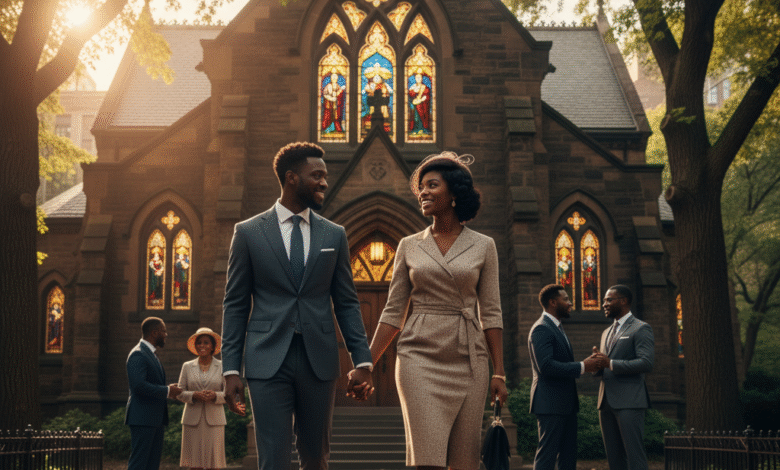
Dating While Black & Christian: A Guide to Navigating Faith, Culture, and Love
Let’s talk about Brianna. She’s sitting in that coffee shop we all know—the one with the good Wi-Fi and even better lattes—doing the modern-day dance of the single and saved. She’s scrolling through a dating app, her thumb swiping left with a rhythm that’s become second nature. Too much club, not enough church. Vague bio. Shirtless mirror pic? Absolutely not.Then, she pauses. A promising profile: he loves Jesus, volunteers on weekends, and has a smile that feels like sunshine. But just as she’s about to swipe right, the questions start flooding in, a silent chorus of community expectations. Is he “equally yoked” enough? What would my mom think? What would the church mothers say? In that single moment of hesitation, Brianna is living out the beautiful, complicated, and deeply personal journey of dating while Black and Christian.
For so many of us in the Black community, faith isn’t just a box to check on a dating profile; it’s the entire blueprint. It’s the foundation upon which we build our lives, our values, and, most importantly, our love. Navigating the dating world with this blueprint in hand is a unique experience, a delicate balance of swiping right with Scripture in mind. It’s a path filled with profound joys, specific challenges, and a set of unwritten rules that seem to shift from one generation to the next. This conversation is for every Brianna out there, for every brother trying to figure out if he’s “ready,” and for every elder who wants to understand the world their children and grandchildren are navigating. Together, let’s explore the bedrock of faith that holds us, the hard truths we must confront, and the exciting new ways we’re learning to build a love that is blessed, Black, and beautifully whole.
More Than a Sunday Kind of Love: The Church as Our Foundation
Before we get into the complexities, let’s start with a foundational truth: for Black couples, faith is often a superpower. In a world that throws everything from systemic racism to economic stress our way, a shared spiritual core isn’t just a nice-to-have; it’s a powerful anchor that provides resilience, purpose, and a deep sense of connection.
The Spiritual Anchor in a Stormy World
There’s a reason why the phrase “the couple that prays together, stays together” resonates so deeply in our community. It’s not just a saying; it’s backed by research. Studies from institutions like the University of Virginia and the University of Texas at Austin have found that African-American couples who share core religious beliefs and practice in-home devotional activities—like praying or studying scripture together—report higher levels of relationship satisfaction. This phenomenon is so significant that scholars have called it the “African-American religion-marriage paradox.” Essentially, the profound religious connection common in our community acts as a powerful buffer, helping to offset the negative impacts of socioeconomic stressors and narrowing the racial divide in relationship quality in America.
This spiritual foundation provides a shared moral compass and a set of tools for navigating life’s inevitable storms. When disagreements arise, couples can lean on shared values like forgiveness and grace. When facing external pressures, faith provides a sense of hope and a belief in a divine purpose for their union—the feeling that their relationship is “ordained by God”. This transforms the partnership from a simple romantic contract into a sacred covenant, a triad with God at the center, which brings the couple closer to each other as they draw closer to Him.
A Community of Support
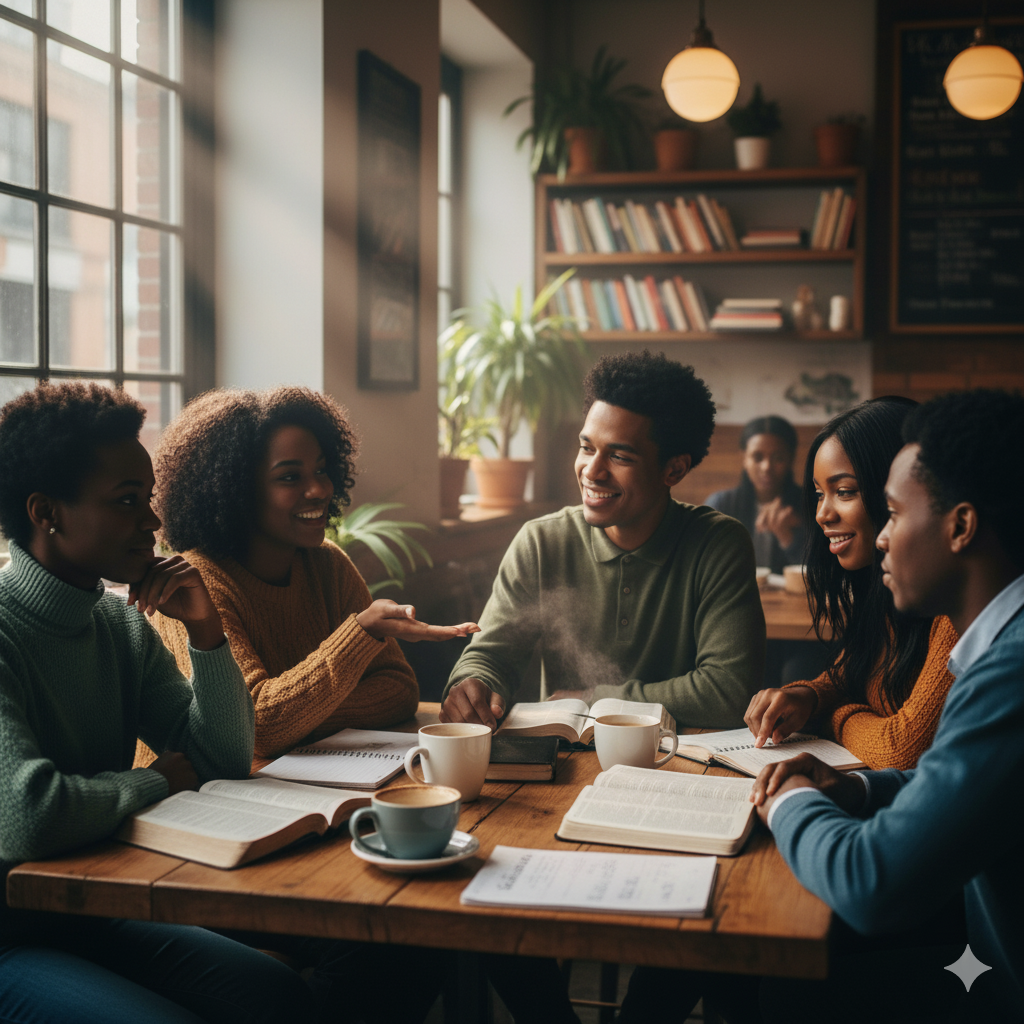
The Black church has always been more than a place of worship; it’s the heart of our community. Historically, it has been the epicenter of social movements, a provider of resources, and a sanctuary of healing and resilience. This communal support system extends directly to relationships. When a couple is rooted in a church family, they are surrounded by a “village” invested in their success. This village offers:
- Mentorship: Access to seasoned married couples who can offer wisdom and guidance.
- Support Networks: Family-centered social circles that provide both formal and informal support for the daily demands of life.
- Accountability: A community that promotes ethical behavior and encourages couples to handle conflict constructively.
This built-in support network is a powerful antidote to the isolation that can plague modern relationships. It reminds couples that they are not on this journey alone.
What’s truly fascinating is that the practices most beneficial to Black relationships—such as praying together and studying scripture at home—are not confined to the church building. While the church is often where these disciplines are taught and encouraged, their power is unleashed in the private, intimate moments a couple shares. This suggests something profound for the future. As data from the Pew Research Center shows younger generations like Millennials and Gen Z are becoming less formally affiliated with religious institutions, they may still carry these portable spiritual practices with them. The culture of faith in relationships can endure even if weekly church attendance wanes. This means the definition of dating while Black and Christian is evolving; it may become less about belonging to the same church and more about sharing a personal, deeply-held spiritual connection.
The Unspoken Rules: Decoding “God’s Will” in Your DMs
For anyone who grew up in the church, you know the “rules.” They are the theological and cultural guardrails meant to guide you toward a godly partnership. But in today’s world of DMs and dating apps, these long-held principles can feel more like a complex maze than a clear path forward. This is where the real tension of modern Christian dating lies—in the space between doctrine and daily life.
The “Equally Yoked” Mandate
At the top of the rulebook is the principle of being “equally yoked,” drawn from 2 Corinthians 6:14, which warns against being partnered with an unbeliever. For many devout Christians, this is the number one non-negotiable. The logic is that a shared foundation in Christ is essential for true partnership, preventing inevitable conflicts over core values, morality, and how to raise children.
However, for many young Black singles, this mandate feels less like a safeguard and more like a stumbling block. In online forums and candid conversations, young women especially voice their frustrations. After disappointing or even harmful experiences with men who claim the “Christian” title but lack character, some have found more kindness, respect, and genuine compatibility with partners outside the faith. This leads to a critical question that many are wrestling with: should a person’s religious label automatically outweigh their demonstrated character? The strict application of the “equally yoked” rule can drastically shrink the dating pool, leading to loneliness and the feeling that one is missing out on connections with genuinely good people.
Purity Culture and the Pressure of Abstinence
Alongside being equally yoked, the call to sexual purity—abstinence from sex before marriage—is a central tenet of Christian dating. This teaching is often amplified in circles targeting young Black women, with some popular ministries promoting a “radical holiness doctrine” that extends beyond sex to include no kissing, cuddling, or being alone with a dating partner. The message, explicit or not, is that a woman’s purity is a key part of her value and a prerequisite for attracting a godly husband.
While the intention is to honor God and protect individuals from emotional and physical harm, the impact can be complicated. For many young people, this culture fosters a deep sense of shame and anxiety around their natural sexuality. One young woman on Reddit described feeling “SUPER ashamed” of her body and desires because of her strict evangelical upbringing. The pressure can be immense, turning dating into a high-stakes performance of piety rather than a genuine exploration of connection. The short-term effect is often guilt and a disconnect from one’s own body. In the long term, it can lead to a rejection of the church altogether, as young people find the rules to be unrealistic, unforgiving, and out of touch with their lived realities.
The “Waiting for Boaz” Narrative
For Black Christian women, the dating journey is often framed by the “Waiting for Boaz” narrative. This script, based on the biblical story of Ruth and Boaz, encourages women to cultivate their character, remain faithful, and wait patiently for a strong, godly man to recognize their worth and pursue them.
On the surface, it’s an empowering message that promotes high standards and self-worth. However, it can also cultivate a culture of passivity. It can lead to women feeling like they must simply “sit at home, waiting to be discovered,” placing all the agency and responsibility for initiation on men. This dynamic is further complicated by the immense pressure on Black men to achieve a certain level of financial and emotional readiness before pursuing a serious relationship. The result is a frustrating cycle: women are told to wait for men, while men feel they are not yet prepared enough to step up. This can lead to prolonged singlehood, anxiety, and a feeling of unworthiness if “Boaz” doesn’t arrive on a culturally prescribed timeline.
When you combine these three pillars of traditional Christian dating—the narrowed pool from being “equally yoked,” the high-pressure environment of purity culture, and the passive stance of “waiting for Boaz”—you get a dating landscape that can feel defined by scarcity, anxiety, and a lack of personal agency. Every interaction is loaded with marital potential, and a simple breakup can feel like a spiritual failure. In this context, it becomes clear why the secular dating world, with its emphasis on experience, personal choice, and lower stakes, can seem like a breath of fresh air. The very rules designed to guide and protect young Black Christians can inadvertently make the outside world look far more liberating, helping to explain the stories of those who found healthier, happier relationships only after “deconstructing” or stepping away from these rigid expectations.
When “Preference” Isn’t Just Preference: Confronting Colorism and Other Hard Truths
As if navigating theological rules and cultural scripts weren’t enough, dating while Black and Christian also means confronting painful challenges that exist within our own community. These aren’t issues of doctrine; they are deeply ingrained biases that can make the search for love feel like navigating a minefield. To build a love that truly honors God, we must be honest about the ways we sometimes fail to honor each other.
The Shadow of Colorism
Let’s call it what it is: colorism is the ugly secret hiding in plain sight in our dating world. It’s a toxic legacy of white supremacy that has created a hierarchy of beauty and desirability within our own community, and it is frequently dismissed with the casual, damaging phrase, “it’s just a preference”. This “preference” almost always favors lighter skin and proximity to Eurocentric features. We see it celebrated in the media and reinforced in our social circles, where “Black love” is often represented by a dark-skinned man with a light-skinned woman. Some analyses have even suggested that a staggering 80% of married Black men are with light-skinned women, a statistic that, whether perfectly accurate or not, reflects a painful and widely felt reality.
The impact of this is devastating, particularly for dark-skinned Black women. It’s hearing a man on a dating app say, “I hate dark-skin females… bt U kinda cute tho,” a backhanded compliment that centers his bias before acknowledging her beauty. It’s going on a date and being told your body is not the “usual type,” making you feel like an exotic other rather than a desired equal. This isn’t just about romantic rejection; it’s a systemic denial of dignity, empathy, and worth that inflicts deep emotional wounds and forces dark-skinned women to constantly fight for their right to be seen as beautiful and worthy of love. At the same time, light-skinned women can feel objectified, pursued as a “trophy” or for an aesthetic rather than for their whole personhood. This internal hierarchy divides us and perpetuates generational trauma, directly contradicting the biblical truth that we are all fearfully and wonderfully made.
Interracial Dating: Navigating Scripture, Family, and Society
The conversation around interracial dating within the Black Christian community is layered with theological debate, generational divides, and societal pressures. Theologically, the Bible is clear: there is no prohibition against marrying someone of a different race. Often-misused passages, like Deuteronomy 7, were commands against marrying people of different faiths—those who worshipped false gods—not different ethnicities. The New Testament message of unity in Christ, where there is “neither Jew nor Gentile,” further supports this.
Despite this biblical clarity, the most significant hurdles often come from within our own families. For older generations, who lived through more overt and hostile forms of racism, their opposition often stems from a place of protection and worry. They fear their children and grandchildren will face discrimination and hardship. For others, it can be rooted in their own prejudices or a sense of cultural preservation. This creates a painful conflict for young people, who may find themselves torn between honoring their parents and pursuing a relationship they believe is God-ordained. Even within Christian dating circles and on apps, young Black people report being explicitly rejected because of their race, a stark reminder that the church is not always the sanctuary from racism it is called to be.
The LGBTQ+ Experience: A Crisis of Belonging
Perhaps the most painful internal conflict is the church’s widespread failure to embrace its LGBTQ+ members. The Black church, historically a haven for the marginalized, has too often become a source of deep pain and exclusion for its queer family. The common pastoral approach of “love the sinner, hate the sin” does little to soften the blow of sermons that condemn homosexuality, creating an environment of mere tolerance, not true acceptance.
For young, queer Black Christians, this creates an impossible choice between their faith, their identity, and their community. They are forced to hide who they are to avoid gossip, shame, and the risk of being ostracized by the very people who are supposed to love them unconditionally. Many who choose to leave these non-affirming spaces may find relief from internalized homonegativity, but it comes at the devastating cost of losing their spiritual home, their family ties, and their community support system.
This failure to practice the radical inclusivity of Jesus represents a profound crisis of integrity for the church. The institution preaches a gospel of universal, unconditional agape love, yet its actions—or inaction—on issues like colorism and homophobia create hierarchies of worthiness. This gap between what the church says and what the community experiences is not lost on younger generations. For Millennials and Gen Z, who are deeply committed to social justice and authenticity, this hypocrisy is a major barrier to belief. They see the church failing to live out its most fundamental teachings, which erodes trust not just in its guidance on dating, but in its moral authority as a whole. The church’s inability to clean its own house is, in fact, pushing away the very people it needs to secure its future.
From Situationships to Covenant: How a New Generation is Forging Its Own Path
Despite the challenges, a new generation of Black Christians is not giving up on love. Instead, they are redefining the journey on their own terms. They are questioning old rules, creating new resources, and demanding a more authentic and holistic approach to relationships. This is a generation that is moving with intention, seeking connection that is both spiritually grounded and emotionally healthy.
The New Dating Lexicon: “Situationships” and Intentionality
If there’s one word that defines the modern dating landscape, it’s “situationship”—that frustrating, undefined gray area between a casual hookup and a committed relationship. This lack of clarity is a major source of anxiety for young daters.In response, a new wave of Christian leaders and influencers is pushing back, advocating for a return to intentionality. They are contrasting the ambiguity of situationships with the principles of “courtship,” reframed for a modern context. This new courtship isn’t about rigid, old-fashioned rules; it’s about clarity, singular focus, and honest communication from the start. While wary of rushing into marriage after witnessing the struggles of previous generations, today’s youth are craving authenticity and are tired of the games. They want to know where they stand.
IRL > URL: The Shift Back to In-Person Connection
After years of swipe fatigue and digital burnout, the pendulum is swinging back. A 2024 report from Eventbrite revealed that a majority of Black Gen Z and Millennials—60%—now prefer dating in person because it feels more genuine and real. They’re looking for love not just on their screens, but in the real world. And they’re not just hanging out at bars; they’re seeking connections at places that reflect their passions, such as:
- Music festivals
- Social clubs
- Coffee shops
- Outdoor activities like hiking
- Volunteer events
This shift away from the often superficial nature of online dating is driven by a desire for authentic connection built on shared interests and real-world chemistry. It’s also a response to safety concerns that are prevalent in online dating. This trend presents a massive opportunity for the church. If congregations can create low-pressure, interest-based social environments, they can become natural hubs for the very IRL connections this generation is seeking.
The Rise of Para-Church Resources: Podcasts, Influencers, and Therapy
When the institution falls short, the people create their own solutions. Today, a vibrant ecosystem of support exists outside the traditional church walls, providing the nuanced, practical advice that young Black Christians are hungry for. Podcasts like Young Black Married Christian and Black Marriage Therapy are offering candid conversations about everything from financial intimacy to healing from infidelity. On YouTube and Instagram, a new generation of pastors and thought leaders are tackling the realities of modern dating with humor and wisdom.
Crucially, this generation is also slowly but surely destigmatizing therapy. While the “just pray about it” mentality still exists, there is a growing recognition that faith and therapy are not mutually exclusive. Culturally competent Christian counseling is increasingly seen as a vital tool for healing the generational trauma and emotional wounds that can sabotage relationships. Young people are building a holistic toolkit for relational health that includes both prayer and professional guidance.
Rethinking Marriage and Partnership
The very definition of marriage is evolving. For many younger Black Americans, marriage is no longer seen as an automatic life requirement or a social obligation, but as a conscious choice. This shift is influenced by economic pressures and a clear-eyed view of the high divorce rates they’ve witnessed. The goal is not just to get married, but to build a healthy, equitable, and sustainable partnership. This includes a strong expectation for egalitarian roles, where both partners share financial and parenting responsibilities—a departure from the more traditional gender roles emphasized in some older church communities. The “happily ever after” fantasy is being replaced by a commitment to the real, everyday work of building a life together as a team.
This evolution in dating norms represents a significant generational shift. The table below captures some of the key differences in how Black Christians across generations have approached the journey to finding love.
| Factor | Baby Boomer / Silent Generation | Millennial / Gen X | Gen Z |
| View on Marriage | Often seen as a primary life goal and social expectation. | A significant goal, but with more caution; partnership and personal fulfillment are key. | A possibility, but not a necessity; strong skepticism and focus on personal stability first. |
| Primary Dating Method | Church functions, community introductions, formal courtship. | Mix of in-person and early online dating (dating sites). | Dating apps (“swipe culture”), social media (DMs), but with a growing desire for IRL connection. |
| Primary Source of Guidance | Pastor, church elders, family. | Mix of church leaders, Christian books, and early online influencers/blogs. | Podcasts, social media influencers, therapy, peer groups, deconstruction communities. |
| Key Challenges | Navigating family approval, strict doctrinal rules on courtship and interracial dating. | Balancing career ambitions with relationship timelines, financial pressures, “purity culture” backlash. | “Situationships,” ghosting, mental health, navigating inclusivity (LGBTQ+), and authenticity in a digital world. |
Export to Sheets
Building a Love That’s Blessed, Black, and Whole

The journey of dating while Black and Christian is complex, but it is far from hopeless. It is a sacred, dynamic, and deeply personal process of weaving together our faith, our culture, and our hearts. As we look toward the future, the path forward requires honesty, grace, and intentional action from both individuals and the community as a whole. Here are the key lessons to carry with you and the steps we can take to build the healthy, thriving relationships we all deserve.
Key Takeaways: The Main Points to Remember
- Faith is Our Superpower. Never forget that our shared faith is a proven source of resilience, strength, and deep intimacy in relationships. Lean into the spiritual disciplines that bind you together, like praying for and with your partner. These are not just religious duties; they are powerful tools for building a love that can endure.
- Question the “Rules,” Pursue the Principle. Many of the “rules” we’re taught about dating in church are cultural traditions, not necessarily biblical mandates. The underlying principle is always wisdom. Instead of getting caught up in a checklist, focus on the heart of the matter: seek a partner whose character reflects the fruit of the Spirit, who respects you, and whose core values align with yours.
- Heal Thyself, Heal Our Community. We cannot build healthy relationships on a foundation of unhealed wounds. This means doing the internal work to become the person you hope to attract. It also means doing the communal work of confronting our own biases, especially the poison of colorism. A love that truly honors God must also honor the full, beautiful spectrum of Blackness.
- Your Journey is Valid. There is no one-size-fits-all formula for finding a godly partner. Whether you are holding fast to tradition, questioning the rules, or rebuilding your faith from the ground up, your journey is valid. Give yourself and others the grace to navigate this path imperfectly.
Next Steps: What We Can Do Moving Forward
This is a collective effort. We all have a role to play in fostering a healthier dating culture.
For Individuals:
- Expand Your Toolkit. Your pastor is a source of wisdom, but they don’t have to be your only one. Dive into the wealth of resources created for us, by us. Listen to podcasts, read books by Black Christian authors, and don’t be afraid to seek out a culturally competent, faith-informed therapist to help you heal and grow.
- Date with Intention and Authenticity. Be clear with yourself and potential partners about your values, boundaries, and intentions. Let’s be the generation that ends the “situationship” by choosing clarity over ambiguity, whether we’re connecting online or in real life.
- Be the Change You Want to See. Actively challenge colorism when you see it. Affirm the beauty in all shades of Blackness. Create safe and loving spaces for your friends, especially those in the LGBTQ+ community who have been pushed to the margins by the church. Your actions help shape the culture.
For the Church Community:
- Bridge the Generational Gap. Pastors and church leaders, it’s time for real talk. Create intentional spaces for honest, non-judgmental conversations about dating across generations. Let the elders share their wisdom and let the youth share their reality. We need each other.
- Move from Preaching to Equipping. Sermons on abstinence are not enough. Our young people need practical tools. Host workshops on healthy communication, financial planning for couples, mental wellness in relationships, and navigating digital dating with integrity.
- Become a Hub for Real Connection. Acknowledge the deep desire for in-person community. Go beyond the Sunday service and singles’ ministry mixer. Organize low-pressure social events around shared interests—hiking groups, book clubs, volunteer days, game nights—where people can build authentic friendships from which romantic relationships can organically grow.
Ultimately, dating while Black and Christian is not a problem to be solved, but a journey to be honored. It is a testament to our enduring hope, our deep faith, and our unwavering belief in a love that is powerful enough to reflect the divine. By walking this path with honesty, wisdom, and grace, we can and will build the loving, lasting, and blessed relationships that will strengthen our families and our community for generations to come.
Related HfYC Content
-
Celebrating Black Joy in New Jersey’s Faith & Culture Spaces (Churches)
-
Weekly Prayers, Weekly Pain: Families Gather Outside Delaney Hall in Search of Hope
Other Related Content
References
- Ellison, C. G., & Wilcox, W. B. (2017). The Couple That Prays Together: A Review of the Literature. National Marriage Project.
- Pew Research Center. (2021, February 16). Faith Among Black Americans. Pew Research Center’s Religion & Public Life Project.
- Signorelli, M. (n.d.). Biblical Dating Advice: What I Told My Daughter About Gen Z Relationships. Mike Signorelli Ministries.
- Wasser, J. (2025, July 18). The way colorism shows up in dating within the Black community is real, and it’s so often dismissed. Medium.
- Williams, M. (2024). Report: 60% Of Black Gen Z And Millennials Opt For Face-To-Face Dating, As It Feels More Real. Black Enterprise.




2 Comments