Glenmore Manor: How a “By Us, For Us” Blueprint Is Reshaping Brownsville
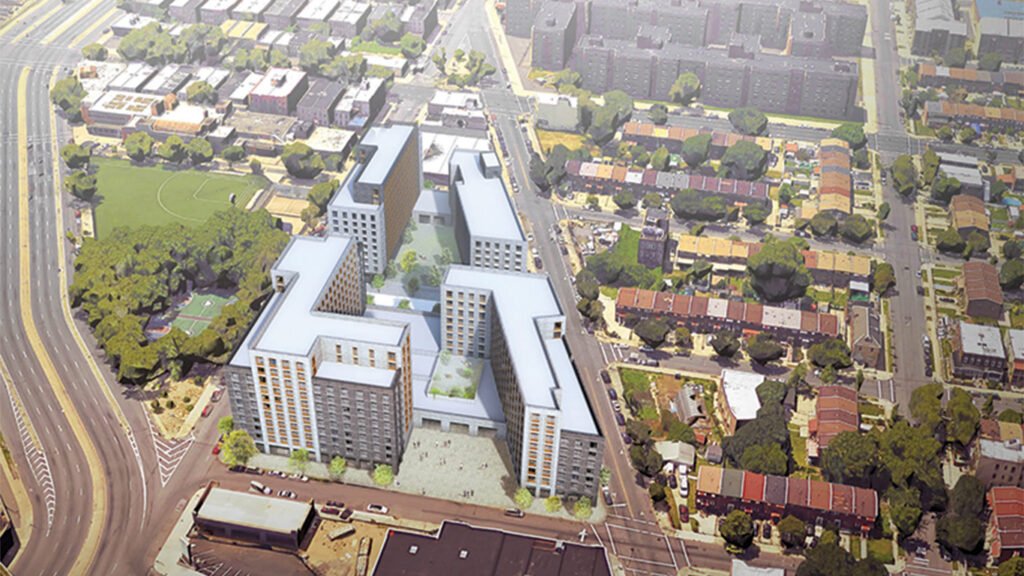
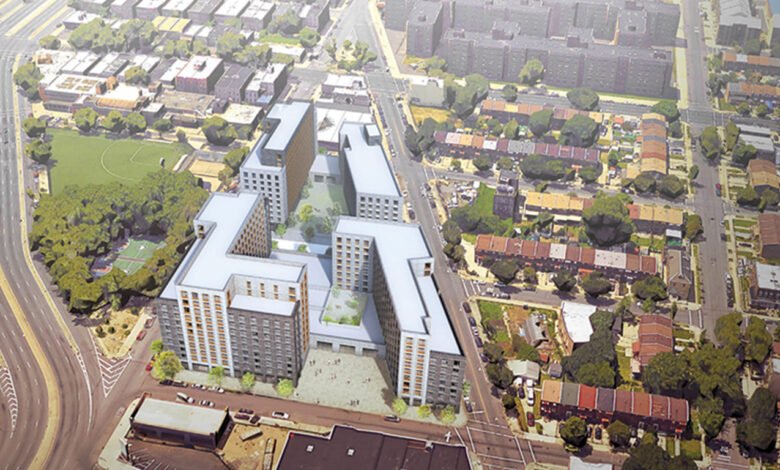
In Brownsville, where development has too often arrived without protection for the people already living there, a new 11-story building rising on Christopher Avenue is prompting a different kind of conversation. The launch of the Glenmore Manor housing lottery isn’t just about apartments becoming available—it’s about whether communities long shut out of ownership and decision-making can finally shape what investment looks like on their own terms.
Located at 76 Christopher Avenue, Glenmore Manor brings 150 lottery apartments online as part of a larger, community-anchored development led by Brisa Builders, a Black-owned firm, in partnership with the African American Planning Commission (AAPCI). For many Brownsville residents, the project represents more than new housing—it’s a test case for what “By Us, For Us” development actually delivers when policy access, land control, and community intent align.
A Community Plan Put to the Test
Glenmore Manor emerged from the Brownsville Plan, a resident-informed framework created to ensure that reinvestment in the neighborhood wouldn’t repeat the displacement patterns seen across Brooklyn. The project secured the Site B designation, signaling city support for a development model that prioritized community presence over outside speculation.
Rather than focusing solely on unit count, the plan emphasized permanence: housing tied to services, jobs, and infrastructure that Brownsville residents already rely on—or have long been denied.

More Than Housing: What Glenmore Manor Includes
Glenmore Manor’s design reflects a broader understanding of affordability—one that extends beyond monthly rent.
The building includes a 20,000-square-foot entrepreneurial and community space known as the B’Ville Hub, intended to anchor local economic activity rather than displace it. Planned ground-floor tenants include Brooklyn Cooperative Federal Credit Union and a sit-down restaurant, bringing financial access and everyday gathering space directly into the residential footprint.
Environmental considerations also play a role. The building incorporates green roofs and solar panels, an important signal in a neighborhood that has historically borne disproportionate environmental burdens.
Inside the apartments, every unit is wired with free, in-unit broadband service up to 100 Mbps. In a borough where digital access increasingly determines educational and economic opportunity, this feature treats internet connectivity as a basic utility—not a luxury upgrade.
None of these elements are accidental. Each reflects a deliberate choice to design housing around how people actually live, work, and stay rooted in Brownsville.
Who the Lottery Is For—and How It’s Structured
The Glenmore Manor housing lottery, open through March 16, 2026, serves households earning between 30% and 80% of Area Median Income (AMI). Rents range from approximately $560 for senior studios to $3,065 for three-bedroom units at the highest income tier.
Sixteen apartments are set aside specifically for seniors aged 62 and older, addressing a growing need for stable housing among Brownsville’s aging population.
While the current lottery covers 150 apartments, Glenmore Manor is part of a broader 233-unit development that also includes supportive housing for formerly homeless individuals and families. That distinction matters: the project isn’t positioned as a single solution, but as one piece of a larger stabilization strategy in a neighborhood facing sustained housing pressure.
Policy Signals and the Question of Scale
Projects like Glenmore Manor are unfolding alongside shifts in city leadership and housing priorities. Under Mayor Zohran Mamdani, the city has signaled increased interest in steering public land and development opportunities toward nonprofit and Black-led builders—particularly as a counterweight to private-equity-driven housing.
Initiatives framed around “public land for public good” suggest a policy environment more open to long-term community stewardship. Still, for many Brownsville residents, the open question isn’t intent—it’s durability. Can projects like Glenmore Manor move from exception to norm? And can they scale without losing the very community control that makes them meaningful?


What Glenmore Manor Really Represents
For supporters, Glenmore Manor demonstrates that Black-led development is not only viable but capable of delivering complex, mixed-use projects that integrate housing, services, and technology. For skeptics, it raises harder questions about income thresholds, long-term affordability, and who ultimately benefits as neighborhoods continue to change.
What’s clear is that Glenmore Manor isn’t just a building—it’s a marker. It shows what becomes possible when development is shaped with, rather than imposed on, the communities expected to live with its consequences.
Key Takeaways
- Black-Led Development Matters: Brisa Builders and AAPCI show what’s possible when Black developers have access to land, capital, and policy support.
- Affordability Is More Than Rent: Integrated services, digital access, and community space shape long-term stability.
- Seniors and Stability: Dedicated senior units respond to a growing, often overlooked housing need in Brownsville.
- Policy Still Determines Scale: Projects like Glenmore Manor test whether current housing priorities can move from pilot to standard practice.
HfYC Poll of the Day
Follow us and respond on social media, drop some comments on the article, or write your own perspective!
What matters most in new affordable housing developments in Brooklyn today?
- Lower rents and broader income eligibility
- Black-led development teams
- On-site community and business spaces
- Free, reliable high-speed internet
Additional Poll Perspectives
- Is 80% AMI truly affordable for families already living in Brownsville—or does it still favor newcomers?
- Should city-funded housing require a minimum percentage of space for local Black-owned businesses?
- Is internet access now as essential as heat and hot water in modern housing?
Related HfYC Content
- Brooklyn’s Cost of Living Crisis – Who Gets to Stay, Who’s Being Pushed Out?
- The Housing Crossroads: Brooklyn’s Fight for a Place to Live
- The Frontlines: Navigating Systemic Challenges in Black Brooklyn
- What The Real Estate Moguls of NJ/NY Are Doing Right Under Your Nose