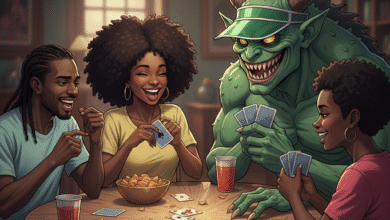
Bad Bunny Didn’t Play the Super Bowl—He Flipped It
It started with machetes in a cane field and ended with a football that redefined the word “America.” If you tuned into Super Bowl LX expecting a glossy reggaetón set and viral dance break, you might’ve missed what actually happened. Bad Bunny, the first solo Latino to headline the Super Bowl halftime show, turned the NFL’s biggest stage into a bold statement on colonialism, sovereignty, and Pan-American identity.
From the specific shade of a flag to a jersey number that screamed “erasure,” Benito Antonio Martínez Ocasio gave us 13 minutes of resistance under the nose of corporate America. This wasn’t just a performance—it was a reckoning.
The Fields: Sugar, Sweat, and Sovereignty

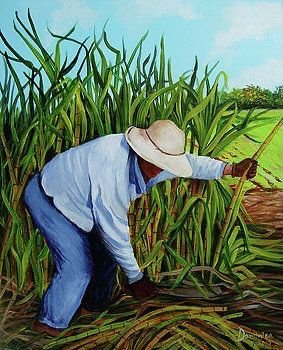
The show didn’t open with a party; it opened with work. Bad Bunny walked onto the stage through a stylized field of sugar cane (caña), surrounded by jíbaros—rural Puerto Rican farmers—wearing traditional pava hats and hacking at the stalks. The visuals were stunning, but this was no aesthetic flourish. It was political theater.
Sugar is not just a crop in Puerto Rico—it’s history. For centuries, the sugar industry operated as a colonial engine, first under Spanish rule, then more brutally under U.S. corporations in the 20th century. These corporations monopolized fertile land, displacing local farmers and fueling mass migration off the island. Entire communities were uprooted for profit.
By planting his performance in those fields—before the fireworks, before the beat drop—Bad Bunny located his global stardom within a long history of labor and exploitation. He didn’t enter as a superstar. He entered as a descendant of workers. That set the tone: before reggaetón conquered global charts, Puerto Rican sweat built empires that refused to feed them back. The show wasn’t just a stage. It was a field reclaimed.
The Flag: Why the Shade of Blue Matters

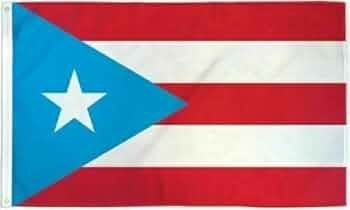
Midway through the performance, Bad Bunny held up the Puerto Rican flag. To many, it looked like any other flag. But those who know the Diaspora’s visual language saw the statement immediately: this wasn’t the “official” government flag. It was the resistance flag.
The difference is subtle but loaded. Since 1952, the government version has featured a navy blue triangle, mirroring the U.S. flag—a quiet alignment with statehood. The version Bad Bunny raised used a lighter, sky-blue triangle, historically associated with independence movements and anti-colonial resistance. This version has been banned in certain official spaces and excluded from public schools.

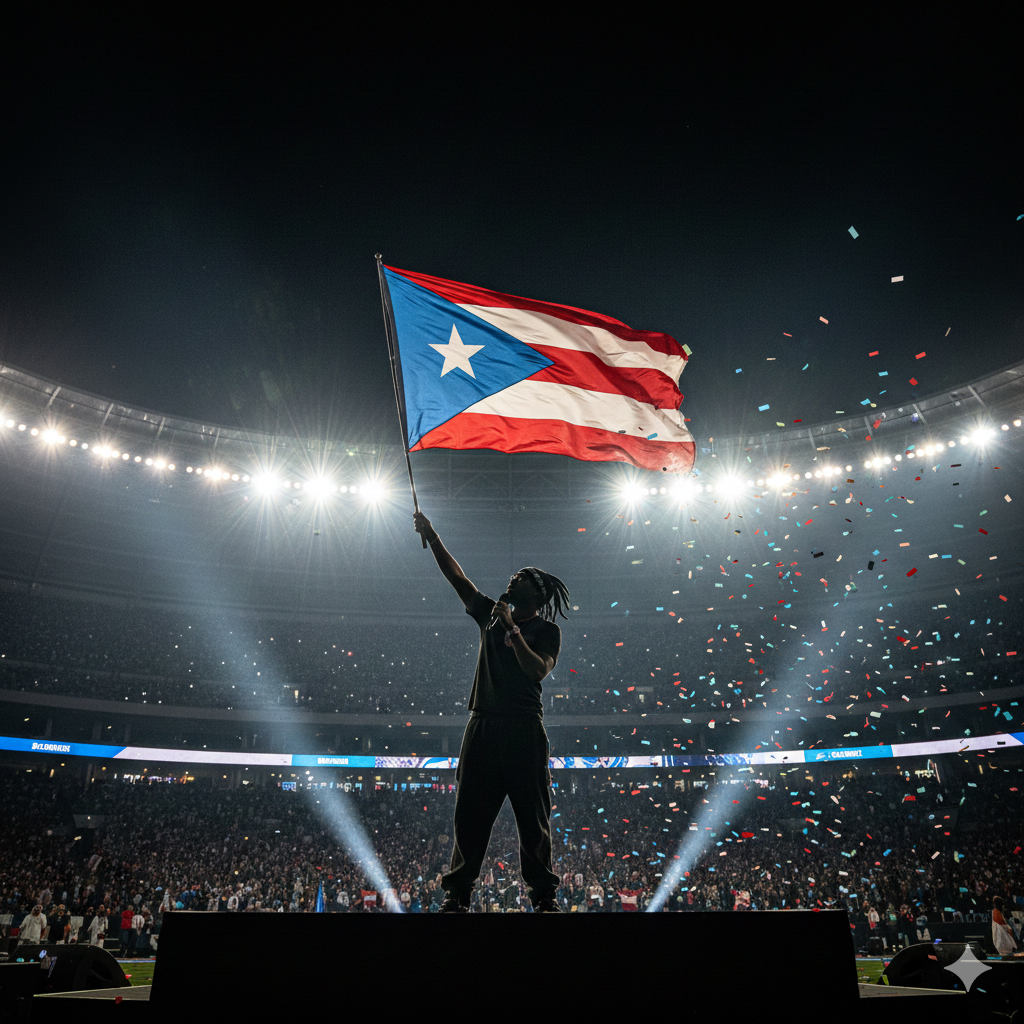
By choosing that exact hue, Benito signaled that this wasn’t just a halftime show—it was a sovereignty intervention. He didn’t ask for statehood recognition. He demanded respect for Puerto Rico as a nation, not a territory. It was a silent, deafening act of protest, and millions knew exactly what he meant.
“Ocasio 64” and the Politics of Death
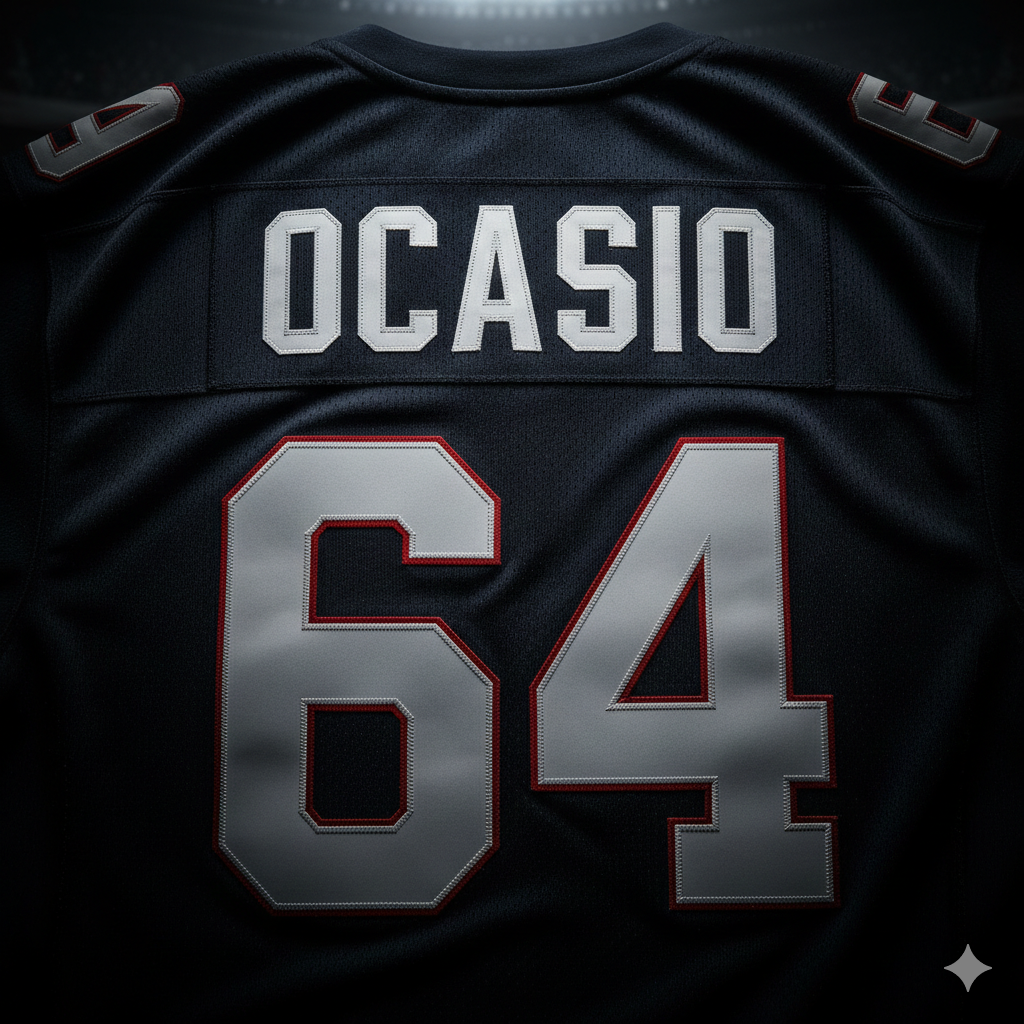
What number would you wear on your jersey in front of 135 million people? Bad Bunny wore “Ocasio 64.” It wasn’t random. It was a reference to the disgraceful initial death toll released by the Puerto Rican government after Hurricane Maria in 2017: 64 lives.
That number stood for months as bodies piled up in morgues, homes, and unmarked graves. The real number—later estimated to be nearly 3,000—was slow-walked by both the island’s leadership and federal officials. In some communities, families relied on GoFundMe to bury their dead while politicians stalled on spreadsheets.
By emblazoning “Ocasio 64” across his chest, Bad Bunny turned his body into a protest sign. He forced viewers to remember not just a tragedy—but a cover-up.
El Apagón: Dancing in the Dark
Then came the sparks.
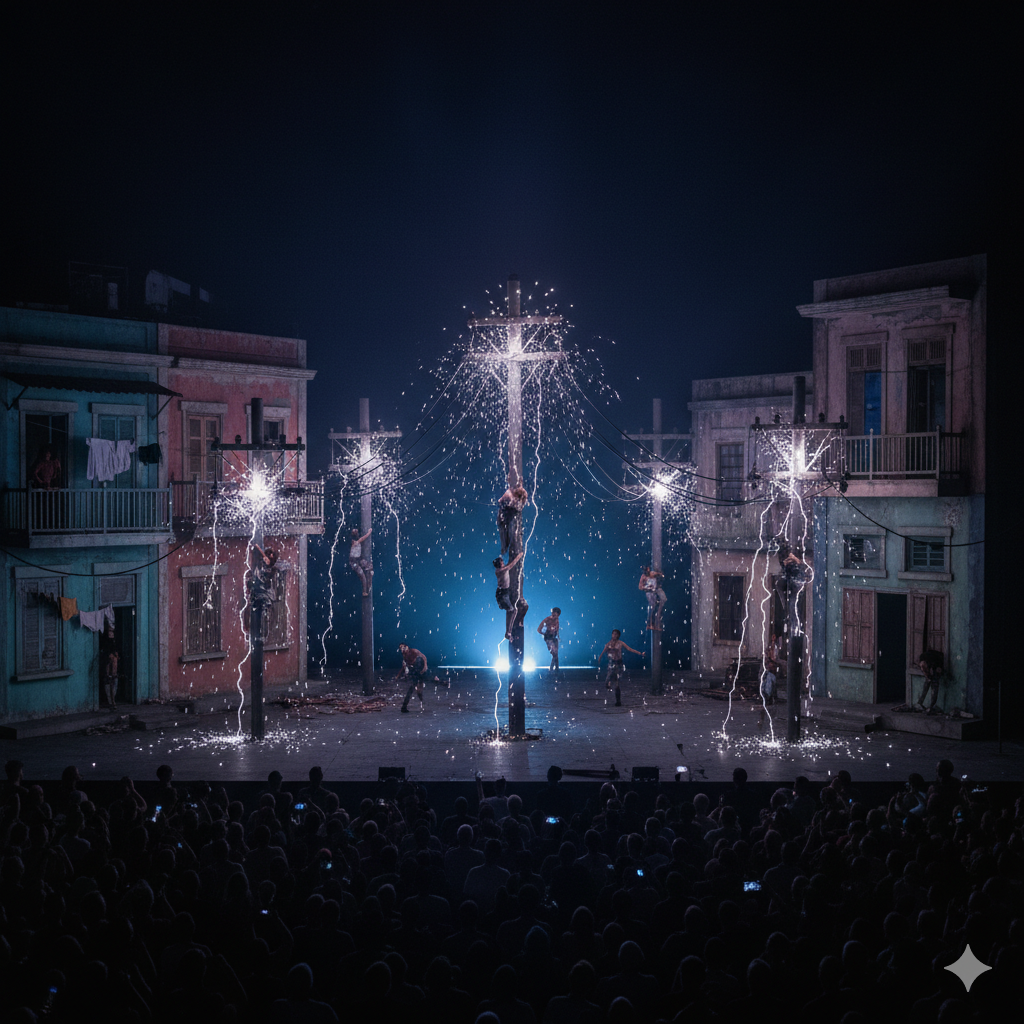
During “El Apagón” (“The Blackout”), dancers climbed staged power poles as sparks flew—an unmissable reference to Puerto Rico’s fragile electrical grid. Even today, blackouts across the island are frequent and prolonged. The privatization of PREPA, the island’s power utility, has been widely criticized for worsening service while raising prices.
This visual wasn’t abstract. It was the everyday reality of Puerto Rican households. It was also an indictment of what’s left behind when media attention fades. While much of the U.S. was watching football, parts of Puerto Rico were still watching the lights flicker. Benito made sure that wasn’t forgotten.
The ICE Cold War and Tour Cancellation
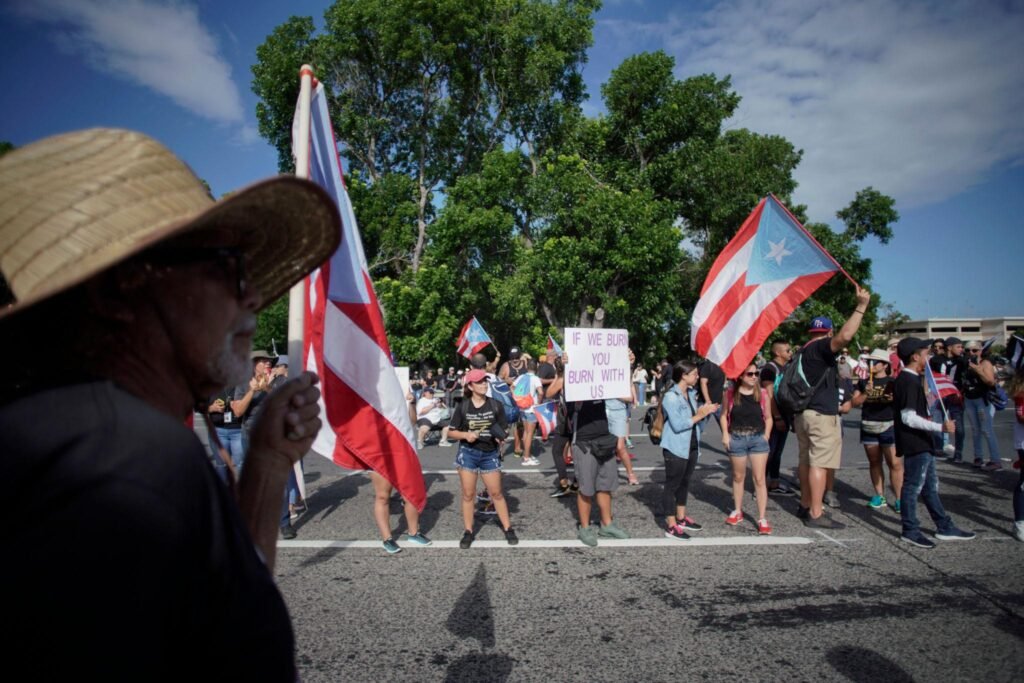
The tension between Bad Bunny and the U.S. government didn’t start at kickoff. It’s been brewing—and it’s the reason you can’t buy a ticket to see him live in New York or Newark right now.
In a move that stunned fans, Bad Bunny canceled all U.S. stops on his 2025–2026 “Debí Tirar Más Fotos” World Tour. He cited one specific reason: fear that Immigration and Customs Enforcement (ICE) would target his concerts to detain undocumented Latino fans.
That’s not paranoia. It’s precedent. Federal agents have used large events as enforcement opportunities before. Rather than risk turning his shows into sites of trauma, Benito withdrew.
Which is why his Super Bowl appearance wasn’t a sellout—it was a Trojan Horse. If ICE could keep fans out of the arena, he’d bring the arena to them. No checkpoints. No raids. Just truth, broadcast directly into 135 million living rooms.
The Culture War Collapses: TPUSA’s Patriotic Faceplant
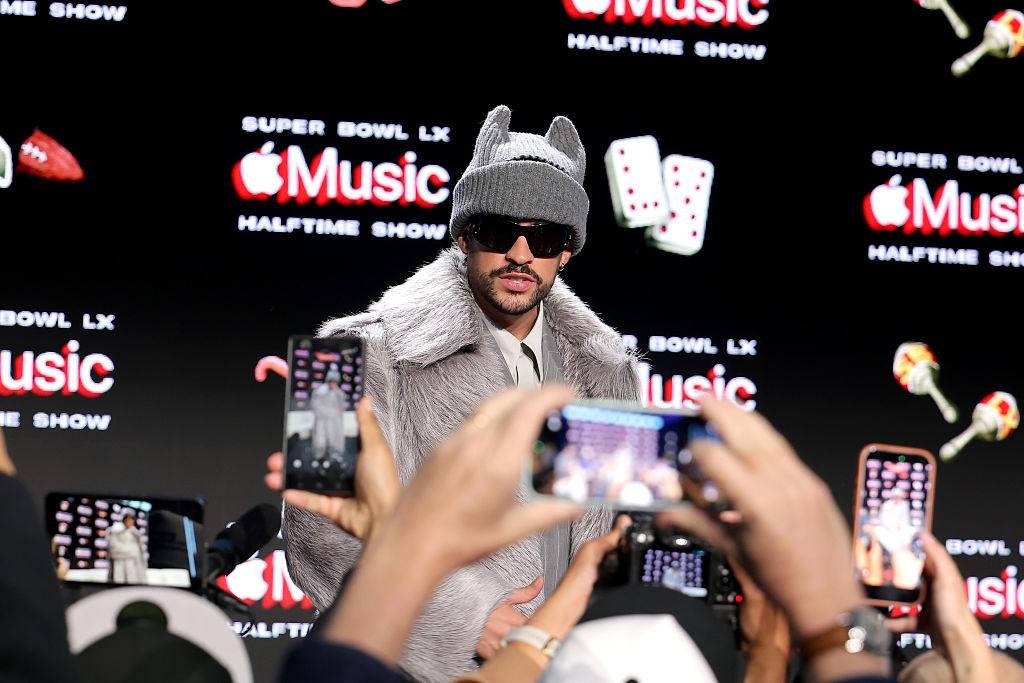
While Benito was staging a hemispheric protest in plain sight, conservative youth group Turning Point USA tried to counter-program him. Their plan? An “All-American Halftime Show” featuring Kid Rock, Brantley Gilbert, and Lee Brice—pitched as a “safe space” for viewers turned off by Bad Bunny’s politics.
But the real show was the meltdown behind the scenes. TPUSA failed to secure proper streaming rights and, hours before kickoff, announced they could not stream the show on X (formerly Twitter). A conservative “freedom fest” shut down by basic copyright law was irony made manifest.
Then came the viewership war. TPUSA claimed their show peaked at 6.1 million viewers. Candace Owens immediately called the numbers “mathematically impossible” and accused the group of inflating stats. Infighting among right-wing influencers overtook the show’s own message.
The contrast was sharp: Benito orchestrated a protest viewed around the globe, with layered meaning, original choreography, and cultural depth. TPUSA couldn’t keep their YouTube stream online.
Meghan McCain’s Curveball
In a culture war twist nobody saw coming, Meghan McCain took to social media to defend Bad Bunny. While Donald Trump railed on Truth Social that the performance was “un-American,” McCain blasted the backlash and questioned the “taste level” of anyone who didn’t enjoy the show.

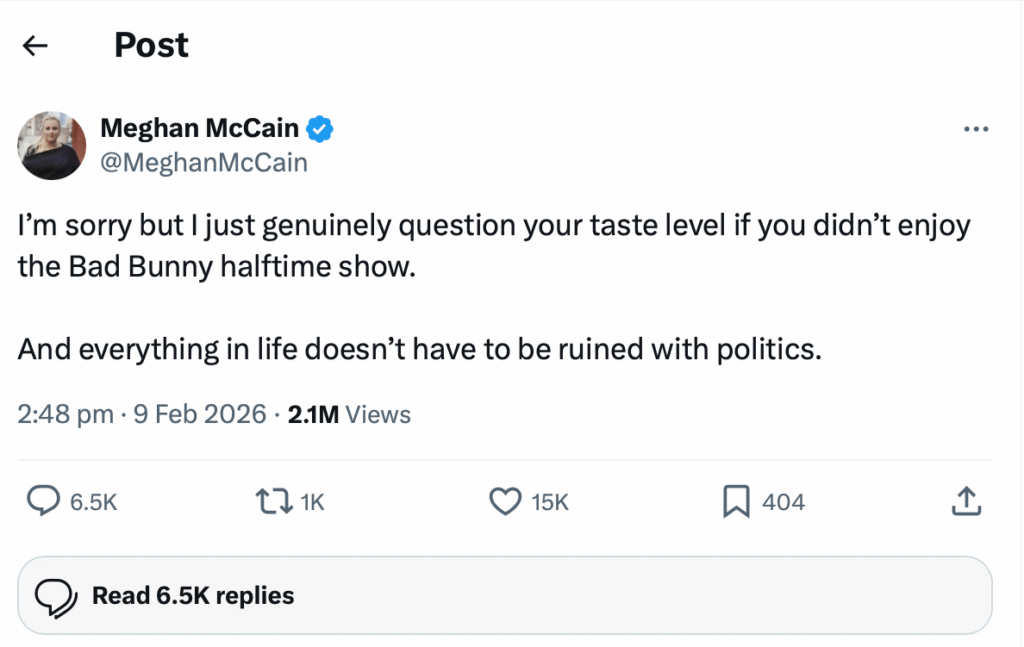
Her response revealed something deeper: the performance didn’t fit into easy partisan boxes. It was too honest to be co-opted, too layered to be dismissed. The usual conservative culture war script cracked—and authenticity won.
Compton to the Caribbean: Resistance Has a Rhythm

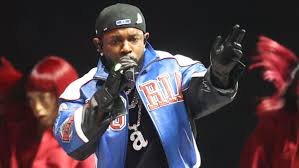
Comparisons to last year’s Super Bowl LIX halftime show were immediate. In 2025, Kendrick Lamar brought the Compton Swap Meet to the Super Bowl stage, using dense lyrics and military-inspired choreography to highlight state violence, incarceration, and Black excellence.
Bad Bunny picked up the baton, trading starkness for color, and brought the Caribbean cane field to the same stage. Where Kendrick summoned rage, Benito summoned reclamation. Both refused to translate their cultures for a white audience. Both made America listen in a language it’s never been fluent in—but should have learned long ago.
Together We Are… Who?

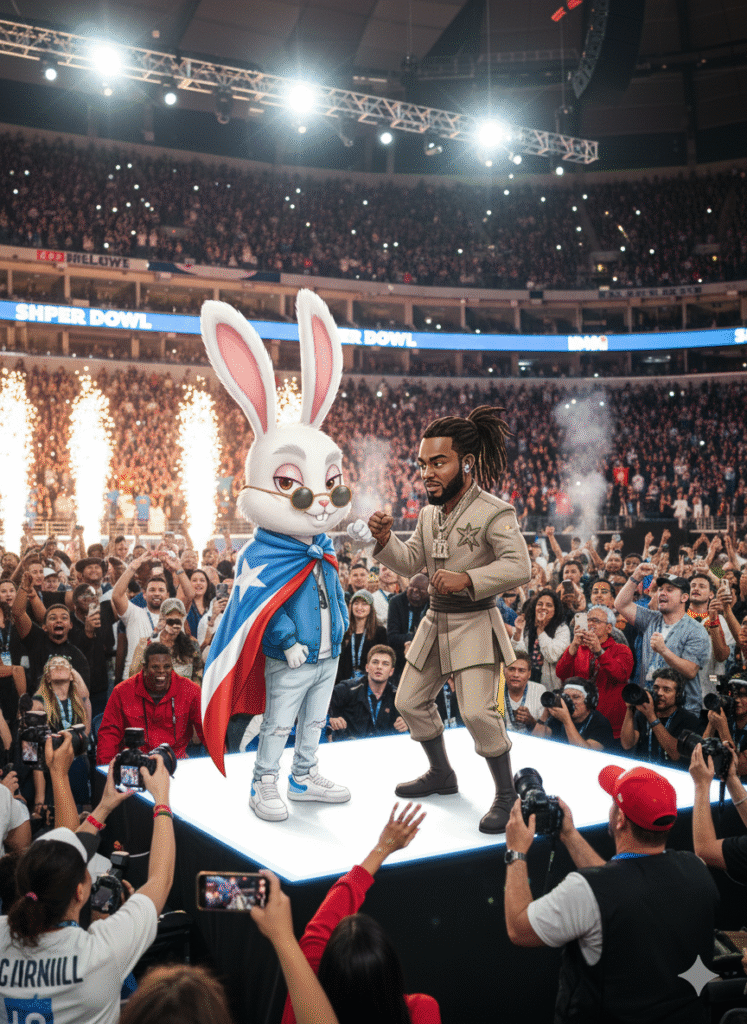
The show closed on one phrase: “Together We Are America.” It landed like thunder for Black and Brown viewers. Not because it asked for belonging—but because it redefined it.
This wasn’t the usual corporate diversity nod. It was a direct rejection of “America” as synonymous with English, whiteness, or statehood. Instead, it spoke of an entire hemisphere: Black America, Latin America, Indigenous America, Caribbean America. It was an Afro-Latino rebuke of cultural gatekeeping.
Benito wasn’t just waving a flag. He was drawing a line. And everyone had to decide what side of history they stood on.
HfYC Poll of the Day
Follow us and respond on social media, drop some comments on the article, or write your own perspective!
Primary Poll Question:
Do you see Bad Bunny’s halftime show as a cultural protest or just entertainment?
Alternative Poll Perspectives:
- Was Bad Bunny’s message lost on most viewers, or was it exactly the right audience?
- Should artists avoid politics during major national events—or is that exactly when it matters most?
Related HfYC Content
- Newark Policing Reform: The End of a Federal Era
- Nicki Minaj, Trump, and Black Women Political Weaponization
- Malcolm X Warnings & Nicki Minaj at the UN
- Charlie Kirk Got Shot: Whoopty-Do or Much Ado?
Other Related Content
- Bad Bunny’s Super Bowl Performance Was a Masterclass in Protest — The New York Times
- What the Light Blue Puerto Rican Flag Really Means — PR Flag Shop Blog
- Puerto Rico’s Power Crisis: Privatization and Precarity — NPR
- Why Bad Bunny Canceled His U.S. Tour: A Conversation About ICE, Safety, and Protest — Rolling Stone
- Inside TPUSA’s Failed Super Bowl Halftime Counterprogramming — The Verge
-
-
-
-