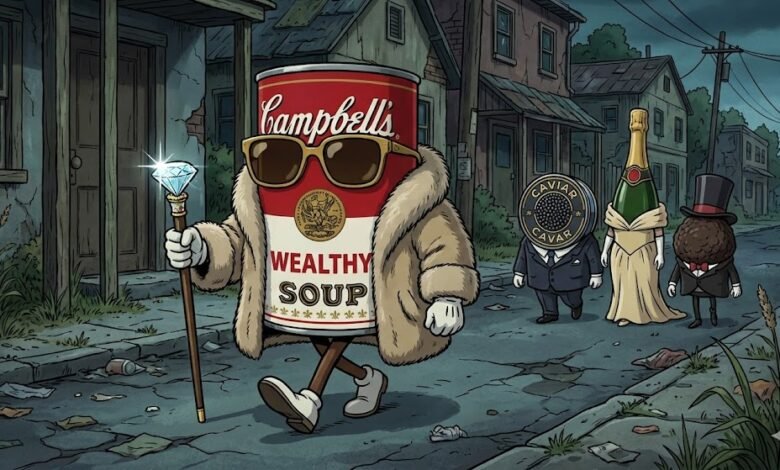
Campbell Soup Exec Tells Us How Big Business Really Feels
When a secretly recorded audio clip allegedly captures a top Campbell Soup executive saying, “We have s— for f—ing poor people,” you don’t need a degree in sociology to understand what’s going on. The mask slipped. And for a brief moment, the world heard the kind of corporate bias against poor communities that usually stays tucked behind boardroom doors, stockholder reports, and carefully polished PR statements.
The comments — attributed to Martin Bally, Campbell’s former Vice President of Information Technology — surfaced as part of a wrongful termination and racial discrimination lawsuit filed by cybersecurity analyst Robert Garza. The recording doesn’t just hint at bias. It reads like a corporate confession.
According to court filings, Bally allegedly described Campbell’s products as “highly processed food” for “poor people,” made disparaging remarks about Indian workers, and even joked that the company used “bioengineered meat” or “chicken that came from a 3D printer.”
Campbell’s dismissed the ingredient claims as “patently absurd,” placed the executive on leave, conducted an internal investigation, and confirmed he is no longer with the company. But the audio — and what it suggests — lingers.
Because this isn’t just one man’s bad day or one lawsuit’s drama.
This is about class, race, and how far too many corporations really view the people they profit from.
When Corporate Candor Accidentally Goes Public

Let’s be honest: no one thinks Fortune 500 executives are sitting around singing spiritual hymns about economic justice. But the raw disdain captured in this recording reveals something deeper — the quiet hierarchy that shapes American consumer markets.
The alleged remarks didn’t just insult Campbell’s consumers; they exposed a normalized culture of belittlement toward:
- Poor and working-class families
- Immigrant labor
- Employees of color
- The very communities that keep corporate America’s lights on
And while the statements came from one individual, the lawsuit forces us to question whether the sentiment is an isolated incident — or a symptom.
In an economy where entire product lines are built on who can afford what, this moment raises an unsettling but necessary question:
What do corporations actually think about the people they sell to?
Thousands of low-income families rely on affordable staple foods like canned soups, broths, and pantry basics. To hear a corporate leader reduce them to a punchline exposes the heartbeat of a broader problem — the persistent corporate bias against poor communities.
The Ingredients of Disrespect: Sarcasm, Classism, and “Bioengineered Chicken”
One of the most bizarre allegations in Garza’s lawsuit is that Bally joked about Campbell’s using “bioengineered meat” or “3D-printed chicken.”
Now — to be clear — there is zero evidence Campbell’s uses anything of the sort. The company swiftly denounced the claim.
But the joke itself reveals something important:
He didn’t think the consumers he insulted deserved better.
That’s the quiet logic behind many class-based assumptions:
“We serve poor people, so quality doesn’t matter. They won’t care. They won’t notice.”
Sarcasm is only funny when it punches up.
This punched down — hard.
What His Comments Reveal About Corporate Bias Against Poor Communities

Classism is often more socially acceptable than racism — because it’s easier to hide under jokes, “market segmentation,” or vague economic language.
Bally’s alleged remarks provide a case study in how it shows up inside corporations:
1. Poor consumers are seen as a captive market
When executives assume they can feed low-income families “anything,” it reflects a belief that these communities have no other options — or no power.
2. Workers of color face demeaning stereotypes
The lawsuit mentions derogatory comments about Indian employees, echoing the way racial bias is often disguised as workplace banter.
3. Quality becomes a luxury for the wealthy
This isn’t new. From food deserts to fast food zoning, the U.S. has a long history of creating two separate food systems:
one for the wealthy, and one for the communities corporations think won’t complain.
4. Poor communities are expected to stay silent
The alleged comments only surfaced because someone hit “record.”
It forces us to ask: how often does this happen when no one does?
Youth Reactions: “So They Said the Quiet Part Out Loud?”

Younger readers have been unusually quick to seize on the scandal — not because they are shocked, but because it confirms what they’ve suspected.
Across social media, reactions fall into three themes:
“We already knew corporations don’t respect poor people.”
For Gen Z, raised during recessions, student debt crises, and skyrocketing grocery prices, trust in corporate America is already thin.
“This is why ingredient labels matter.”
Younger consumers are more ingredient-conscious than any generation before them.
Hearing an exec mock the quality of his own product?
Yeah — they caught that.
“Is this how they talk about us when they’re off camera?”
This scandal aligns with broader concerns about representation, exploitation, and equity in the workforce.
Young people are not looking for perfection — they are looking for honesty.
And in this case, honesty came through the back door via a secret recording.
Shockwaves Through the Community: Why This Story Hits So Hard
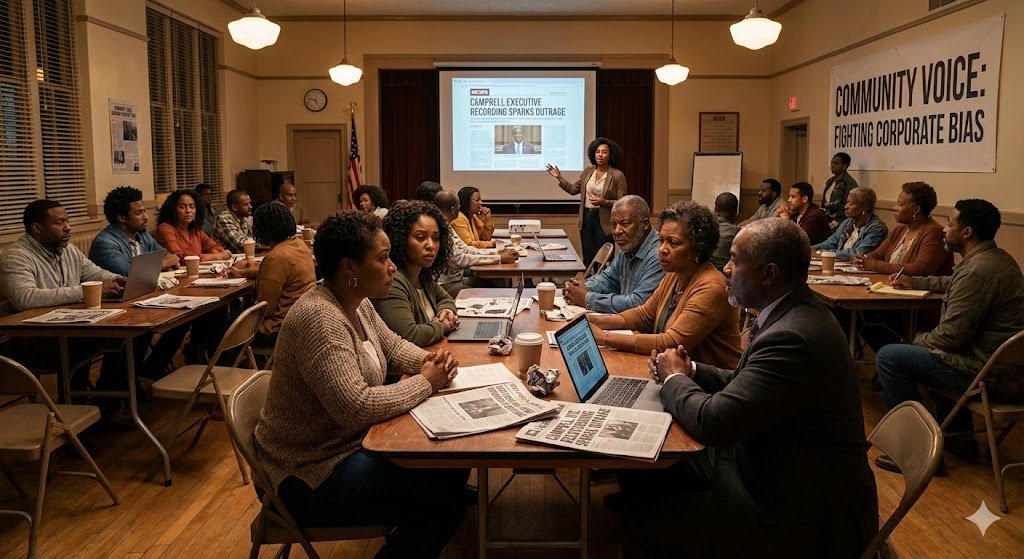
The comments matter because Campbell’s isn’t a niche gourmet brand — it’s a pantry staple for millions of Black, brown, immigrant, and low-income families.
Soup can be comfort on a sick day.
Soup can be warmth in winter.
Soup can be the only affordable meal some households have.
So when an executive mocks the people who rely on these products, it becomes personal — fast.
Short-term effects:
- Distrust in food corporations
- Increased skepticism about ingredients and transparency
- Worker fear about internal bias and discrimination
Long-term implications:
- Greater scrutiny of corporate culture
- Pressure on companies to prove ethical sourcing and equity
- Consumer shifts toward brands with authentic accountability
- Community-led calls for transparency and equity in pricing and production
This isn’t just a PR problem. It’s a reflection problem.
The Lawsuit Behind the Leak: Power, Retaliation, and Workplace Culture

The wrongful termination and racial discrimination lawsuit filed by Garza is as important as the audio itself.
His allegations paint a picture that extends far beyond off-color comments.
They raise concerns about:
- retaliation
- racial hostility
- lack of accountability
- systemic silence inside corporate structures
Campbell’s denies many of the claims and defends its values.
But lawsuits like this don’t emerge from thin air — they emerge from culture.
And culture doesn’t change with one executive’s exit.
When Public Trust Meets Corporate Reality
Campbell’s is hardly the first or last company to face a scandal rooted in classism or racism. But its response — quick, defensive, and distancing — highlights a familiar pattern:
- “This does not reflect our values.”
- “We take this very seriously.”
- “He is no longer with the company.”
- “Let’s move on now, please.”
Consumers aren’t buying it.
Communities aren’t buying it.
Workers definitely aren’t buying it.
Trust isn’t restored by removing one person — it’s restored by examining the culture that empowered him.
Key Takeaways: What We Should Remember From This Mess
- The leaked recording exposed more than a rude comment — it surfaced a corporate bias against poor communities that many families already feel in daily life.
- The allegations reflect both classism and racial bias within corporate culture.
- Poor and working-class families deserve respect, transparency, and dignity — not dismissive jokes.
- Communities are demanding accountability, not polished statements.
- Young readers see corporate hypocrisy clearly — and they’re not quiet about it.
Moving Forward: What Communities Can Do Next
Stay informed
Corporate culture shapes the products we consume. Knowing the truth empowers communities to make informed choices.
Support transparent brands
Reward companies that demonstrate public accountability, equitable policies, and honest ingredient sourcing.
Amplify community voices
Share stories, demand transparency, and elevate workers who speak out.
Push for structural change
Bias doesn’t disappear with one resignation — it disappears with systemic reforms.
HfYC Poll of the Day
Do scandals like Campbell’s make you think big corporations secretly look down on poor and working-class communities?
Other Perspectives:
- If this is what execs say when they think no one is listening, what do you think they say when the cameras are off?
- Has the Campbell’s controversy changed the way you view major food companies?
- So… is Campbell’s apologizing for the comments, or just apologizing for getting caught?
Related HfYC Content
- Thanksgiving Tea 2025: The Black Holiday Trending Stories Everyone Was Talking About
- Little White Lies: The History of the “Welfare Queen” Stereotype
- Plainfield Eats: 8 Spots for the Best Soul Food and Beyond
- Caribbean Fusion Restaurant Oula Brings Global Flavor to Carteret
- Jersey City Food Future: Night Market vs Wonder Food Hall
Other Related Content
References
- Garza v. Campbell Soup Company, No. ______ (U.S. District Court filing, 2024).
- Campbell Soup Company. (2024). Public statements regarding executive misconduct investigation.
- Reuters. (2024). Corporate scandals and executive accountability in the U.S.
- NPR. (2024). Workplace discrimination and corporate culture in America.