SNAP Benefits November 10th, 2025 Update — The Food Aid Political Battleground
The term SNAP benefits politics 2025 is more than a catchphrase—it describes a pivotal moment when the country’s largest food-aid programme, the Supplemental Nutrition Assistance Program (SNAP), became both a bargaining chip and a frontline for power struggles between Congress, the Senate, the Supreme Court and the Black American community. When the federal government shut down and benefits were frozen, what was once seen as a social-welfare programme transformed into a political weapon—and Black households, disproportionately reliant on SNAP, found themselves caught in the cross-hairs.
In this article, we unpack:
- How election outcomes and shifts in Congress and the Senate shaped SNAP policy.
- The role of the Supreme Court in deciding benefit flows mid-shutdown.
- Key quotes from Black legislators and advocates articulating the stakes.
- How the politicisation of SNAP affects Black communities now and going forward.
- What readers—especially youth in the diaspora—should know and do.
Congressional Maneuvering & the 2025 Elections’ Ripple on SNAP

House & Senate Fault Lines
In 2025, Congress entered contentious budget negotiations. The House, controlled by a Republican majority, advanced resolutions that included proposals to reshape, reduce or restructure SNAP, framing it as an “entitlement” to be curtailed. Meanwhile, the Senate, with narrow margins and cross-party tensions, attempted reconciliation bills that included both expansions and cuts to SNAP, depending on political allegiance.
Key actions included:
- A Senate budget reconciliation proposal passed July 1 2025 including major changes to SNAP operations and funding.
- In the House “One Big Beautiful Bill Act” (OBBBA) efforts, provisions sought to shift the administrative and benefit burden of SNAP to states.
- As the 2025 state/local elections shaped power dynamics, legislators retroactively tied SNAP funding decisions to electoral calculations—how safe are seats, how visible is crisis, how likely is backlash?
Election Outcomes & Their Relevance
While the major narrative of the 2025 elections has centered on governors, mayors and redistricting, their reverberations matter for SNAP in two ways:
- State-level power: Many SNAP administrative decisions are implemented by states. The elections impacted which parties control those agencies and thus how resilient programmes are under federal stress.
- Federal oversight and momentum: The election results set the tone for what Congress deems politically viable. With tighter margins, even a few swing votes matter—and SNAP became a visible test.
So for Black voters and communities, the message is clear: it’s not just about electing a governor or mayor—it’s about influence over food policy and relief.
The Supreme Court’s Intervention: When Food Aid Meets Judicial Power
What Happened
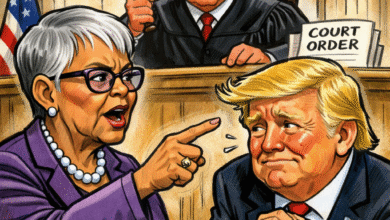
On November 7, 2025, during the ongoing shutdown, the U.S. Supreme Court intervened in the SNAP battle. A federal district judge had ordered the administration to fully fund November SNAP benefits for the roughly 42 million recipients—many of them Black households—arguing that withholding them would cause “irreparable harm”. The administration appealed. Then, Justice Ketanji Brown Jackson issued an administrative stay, pausing the order so the Appeals Court could act.
Why This Matters for SNAP Benefits Politics 2025
- The Court essentially signalled that even critical safety-net programmes like SNAP are subject to appropriations politics, not guaranteed by statute in the face of federal funding uncertainty.
- Because states began distributing benefits and then had to reverse course, recipients—especially in Black communities—faced confusion and risk of lost aid.
- The decision amplified the notion that SNAP is vulnerable to shutdowns, legal limbo and political calculus—not just welfare policy.
Voices from the Frontline: Black Legislators Speak Out
Rep. Ayanna Pressley (D-MA)
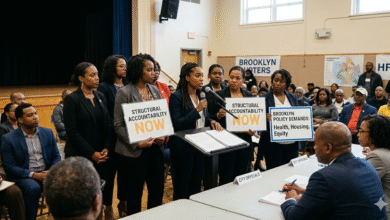
“The harm of this Republican shutdown and this administration’s policy choices is layered, and it’s going to reverberate throughout our schools and communities for years to come,” Pressley declared when demanding the release of contingency funds to keep SNAP flowing.
She also condemned proposals to add more “work requirements” for food-aid recipients—arguing they demonise the very people SNAP is meant to serve.
Sen. Raphael Warnock (D-GA)
In the midst of the shutdown, Warnock visited a community grocery in Atlanta and said:
“Food is a matter of life and death.”
Warnock and others called out the USDA for refusing to use contingency funds already available to ensure benefits flow.
The Political Framing
For both legislators, SNAP isn’t a charity—it’s a civil right to food security, especially for communities historically denied economic dignity. Their commentary helps frame the politics of SNAP not as budget items but as moral and racial justice issues.
How the Politicisation of SNAP Affects Black Communities

Immediate Effects
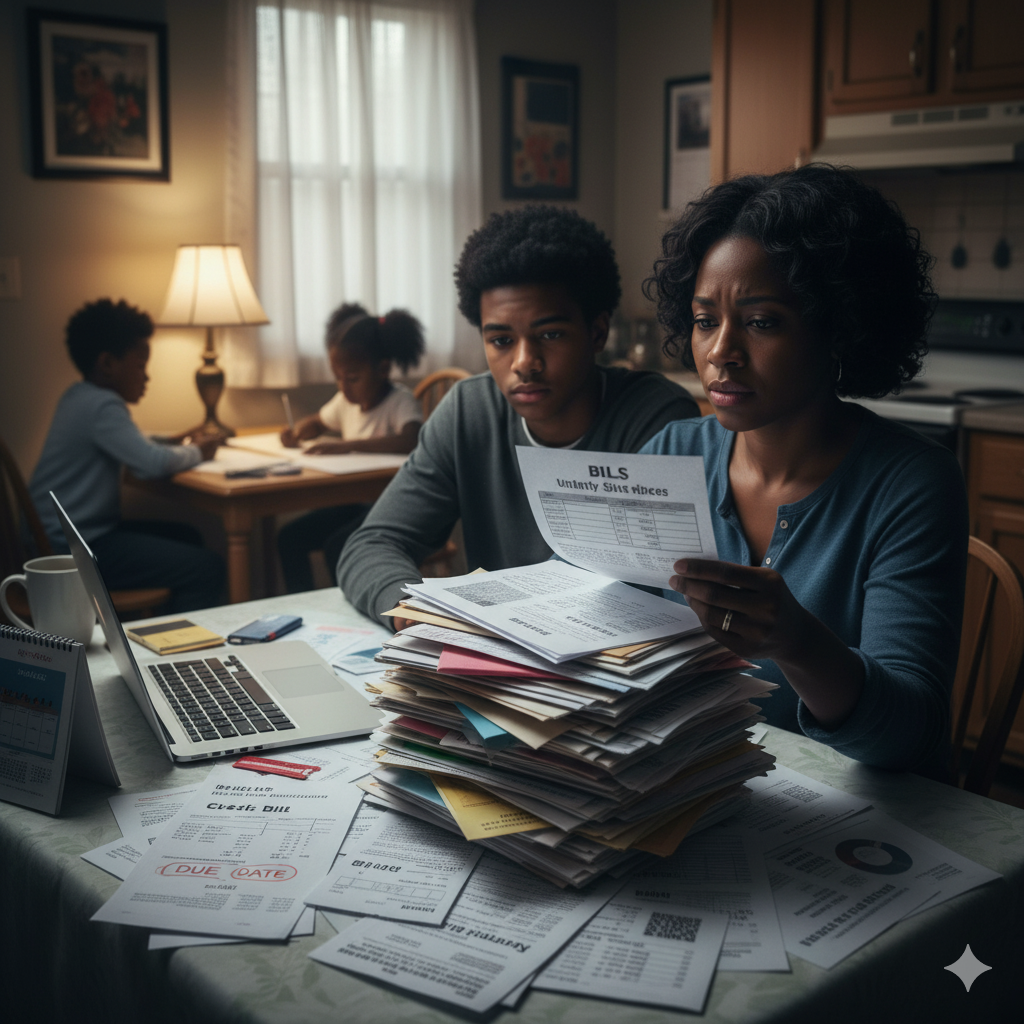
- Delay or reduction in benefits places Black households—who disproportionately participate in SNAP due to historic economic disparities—at higher risk of food insecurity, eviction and further poverty.
- Charities and food banks are stretched thin as they absorb the gap while policy-makers bicker.
- States with weaker administrations or misaligned politics may lag behind in distributing relief, exacerbating racial inequities.
Long-Term Implications
- If SNAP becomes more structurally tied to political bargaining, Black communities may face systemic volatility in food-aid access.
- Election outcomes at all levels thus matter for whether safety nets exist or fail.
- Structural changes (work requirements, state cost-shifts) embedded in bills like OBBBA risk long-term service reductions or barriers for Black families.
- Youth engagement matters—not just voting—but organising around local policy, state budgets and elections that shape food security.
Legal Foundations & Other Benefits Program Sidebar
Sidebar:
- Food and Nutrition Act of 2008 (amending the Food Stamp Act of 1977) — the statutory basis for SNAP.
- 2018 Farm Bill — last major reauthorisation of SNAP and related nutrition programmes.
- Continuing Appropriations / emergency fund provisions — within USDA and contingency accounts (e.g., “Section 32” funds) that states and courts now say must be tapped in shutdowns.
- Women, Infants, and Children (WIC) programme — though less affected in this round, serves millions of Black mothers and infants.
Key Takeaways for Black Americans & Youth
- SNAP benefits politics 2025 shows food aid is no longer “just welfare” but a site of political contestation.
- Legislative and judicial decisions—mirroring election outcomes—directly affect whether Black families keep a meal on the table.
- Representation matters: Black legislators are sounding alarms, but policy shifts also depend on which party controls key bodies and how state agencies respond.
- Youthers: this moment reminds you that engaging locally—state budgets, food-policy, school boards—matters just as much as national politics.
- Accountability: It’s not enough to elect officials; we must monitor whether those officials protect access to food, fight benefit reductions and hold systems accountable.
What You Can Do (Call-to-Action)

- Check your state’s SNAP distribution status this month. Are benefits delayed? Reduced?
- Contact your U.S. Senators and Representatives. Ask: “What will you do to protect full SNAP benefits during budget crises?”
- Join or support community organisations that fill gaps when aid is delayed. Strong local networks make a difference.
- Register and vote in local and state elections. These officials decide implementation of SNAP and how state agencies respond.
- Educate your peers: share what you learn about how food aid works (and can fail) in real time—on social media, at campus groups, in church.
- Hold officials accountable by monitoring outcomes: Did you get full benefits? Was there a delay? Are work requirements expanding? Use those data points to advocate.
Related HfYC Content
- Government Shutdown Impact on SNAP Benefits: Urgent for Black Community
- 2025 US State and Local Elections: A Turning Point for Black American Communities
- Little White Lies: The History of the “Welfare Queen” Stereotype
- How the One Big Beautiful Bill Impacts Black Communities Across America
Other Related Content
- Supreme Court temporarily blocks full SNAP food aid payments – PBS NewsHour – https://www.pbs.org/newshour/nation/supreme-court-issues-emergency-order-to-block-full-snap-food-aid-payments PBS
- How the Senate’s Budget Reconciliation SNAP Proposals Will Affect Families in Every US State – Urban Institute – https://www.urban.org/sites/default/files/2025-07/How-the-Senate-Budget-Reconciliation-SNAP-Proposals-Will-Affect-Families-in-Every-US-State.pdf Urban Institute
References
- Associated Press. (2025, Nov 6). Federal judge orders Trump administration to fully fund SNAP benefits for November. AP News.
- JURIST Staff. (2025, Nov 7). US Supreme Court blocks requiring full SNAP funding. JURIST.
- Ludden, J. (2025, Nov 7). Supreme Court temporarily blocks full SNAP benefits even as they’d started to go out. NPR News.
- Pressley, A. (2025, Oct 30). “WATCH: Pressley… Demand Trump Administration Unlock SNAP Funding.” Office of Rep. Ayanna Pressley.
- Senator So-And-So… (2025). Senator Warnock release on SNAP cuts. U.S. Senate.