Flatbush: Brooklyn’s Caribbean Crossroads and the Future of Diaspora Pride
It’s Saturday afternoon on Flatbush Avenue, and the street hums like a festival. The bass lines of reggae and soca pulse from passing cars, the scent of jerk chicken drifts from corner grills, and a man on Church Avenue waves a Jamaican flag while vendors chant out the prices of mangoes and sugarcane. This is Flatbush—a living, breathing heartbeat of the Caribbean diaspora. It’s more than a neighborhood; it’s an identity. For generations, the Flatbush Black community has cultivated a space where culture isn’t just remembered—it’s lived, celebrated, and constantly reimagined.
From its origins as Dutch farmland built on the backs of enslaved Africans to its modern-day status as a global hub for Caribbean life, Flatbush tells a powerful story of migration, resilience, and reinvention. Today, this vibrant crossroads is facing the intense pressures of gentrification, forcing a new generation to navigate the delicate balance between progress and preservation. This is the story of Flatbush—a testament to the enduring power of diaspora pride and the ongoing fight for the soul of a community.
From Farmland to “Little Caribbean”
The roots of Flatbush stretch deep into Brooklyn’s complex history. Originally inhabited by the Canarsee people, the area was established in the 1650s by Dutch settlers who called it Vlacke Bos (“flat woods”). For nearly two centuries, it remained a rural farming town, its economy heavily reliant on the labor of enslaved Africans. In 1790, over a third of the population of Flatbush was enslaved, a stark reminder of the borough’s painful legacy.
After slavery was abolished in New York in 1827, Flatbush began a slow transformation, but its most significant demographic shift occurred after World War II. As white ethnic families who had settled there in the 1920s and ’30s began moving to the suburbs, a new wave of residents arrived. Spurred by the passage of the Hart-Celler Immigration Act of 1965, thousands of immigrants from Jamaica, Trinidad and Tobago, Haiti, Barbados, and Guyana made Flatbush their home. They brought with them the rhythms, flavors, and traditions of their home countries, transforming the neighborhood into one of the most recognizable hubs of Black Caribbean culture in the world. By 1980, the neighborhood had shifted from being 89 percent white to 50 percent Black, cementing its new identity as a cornerstone of the African diaspora in New York City.
The People: A Melting Pot of the African Diaspora
Today, Flatbush is home to roughly 110,000 residents, with over 70% identifying as Black or Afro-Caribbean. The neighborhood boasts the highest concentration of Caribbean immigrants in New York City and is a vibrant tapestry of cultures from across the islands and beyond. Large communities of Jamaicans, Haitians, Trinidadians, Grenadians, and Barbadians live alongside newer immigrants from West Africa and Latin America, creating an unmatched cultural richness that spills out in accents, cuisine, and celebration.
For young people who have grown up in this environment, this blend of roots is a source of strength and identity. As Haitian-American artist Madjeen Isaac, who was raised in Brooklyn, reflects, she gravitates toward how people “merge and weave their knowledge and cultures from their native land within the Brooklyn landscape”. This sentiment is echoed by many young people in the neighborhood who see themselves not as representatives of a single island, but as carriers of the entire diaspora.
Streets That Sing: Everyday Life in Flatbush

To walk through Flatbush is to experience this cultural fusion firsthand. Its main arteries are alive with the energy of the community.
- Flatbush Avenue: The neighborhood’s central spine, filled with small businesses, bodegas, and food trucks serving everything from roti to callaloo.
- Church Avenue: A bustling social corridor where street vendors, dollar vans, and the sounds of soca and dancehall meet.
- Ditmas Park: A quieter, residential section known for its stunning, century-old Victorian houses, where West Indian bakeries now sit beside historic homes.
In 2017, the area was officially recognized by New York City as Little Caribbean, a designation that honors the profound influence of the community that shaped Brooklyn’s global identity. At the southern tip of East Flatbush, the city has also designated Little Haiti, even renaming a local subway station to reflect the deep roots of the Haitian community there.
Landmarks and Cultural Beacons
The culture of the Flatbush Black community is anchored in its landmark institutions, both historic and modern.
- Flatbush African Burial Ground: Located at the corner of Church and Bedford Avenues, this sacred space is a recently rediscovered burial ground for enslaved and free people of African descent dating back to the 17th century. A Black-led coalition is now working to protect the site from development and ensure it is properly memorialized.
- Kings Theatre: Once a grand 1920s movie palace, this opulent theater was beautifully restored and reopened in 2015. It now hosts world-class performers, from reggae icons to gospel choirs, serving as a cultural anchor for the community.
- Drummer’s Grove: Located in nearby Prospect Park, this area became an informal gathering spot for the Afro-Caribbean community in 1968. The Congo Square Drummers met here to celebrate their heritage, and it remains a vibrant hub for music and community on Sundays.
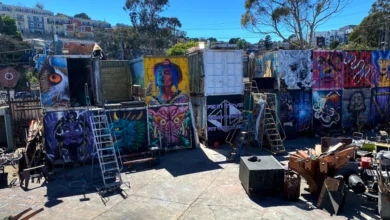
- caribBEING House: This bright, modern shipping container, often located near Prospect Park, has been transformed into a cultural hub that celebrates Caribbean creators, storytellers, and artisans from across the diaspora.
Business, Food, and Black Economic Power
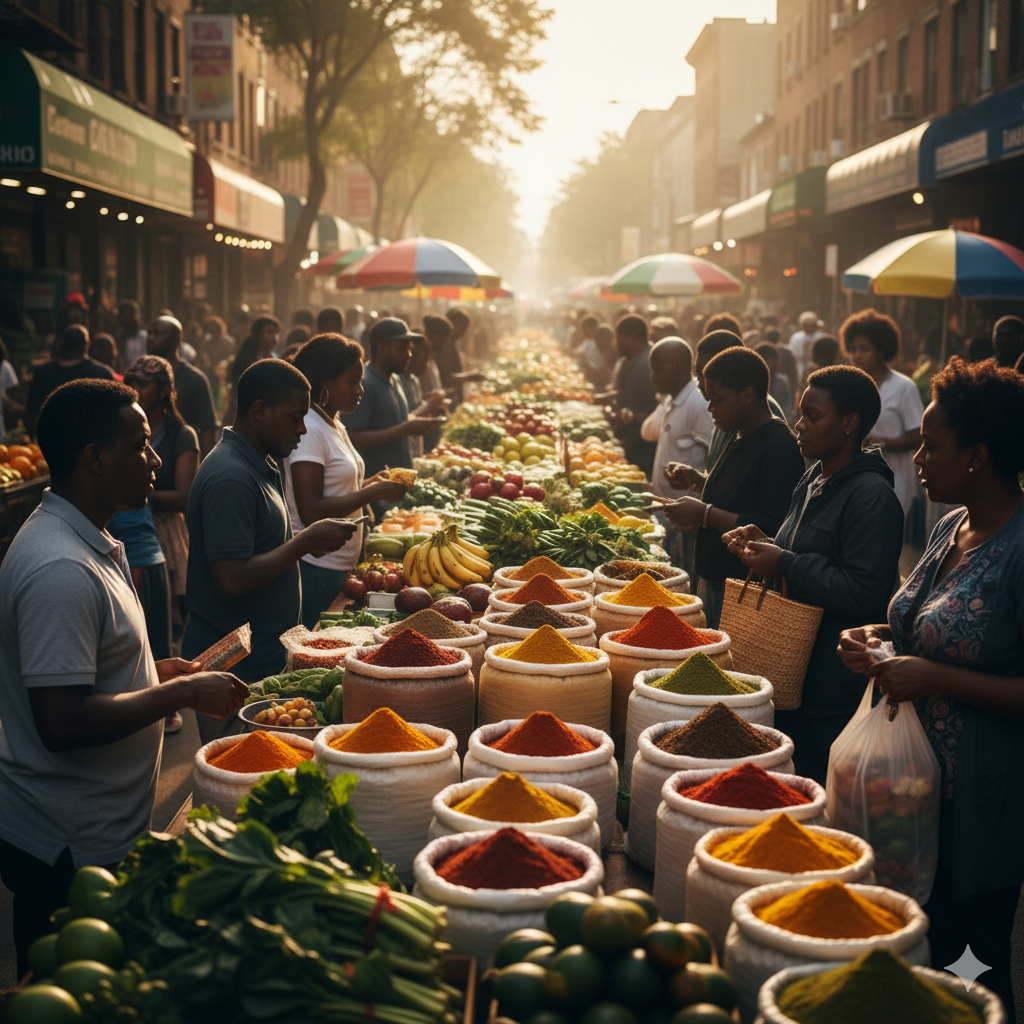
Flatbush thrives on entrepreneurship. Here, Black-owned businesses are not just economic engines—they are cultural sanctuaries that serve as vital community gathering spaces.
- Legacy Restaurants: Places like Peppa’s Jerk Chicken and Allan’s Bakery, a family-owned institution for over 60 years, are community landmarks where lines often stretch around the block.
- New Flavors: Newer spots like Aunts Et Uncles, a plant-based cafe, and Imani Caribbean Kitchen & Bar are bringing modern flair to traditional flavors, attracting a new generation of diners.
- Community Support: Non-profits like Diaspora Community Services and CAMBA provide essential services in healthcare, education, and housing, bridging the gap between tradition and tomorrow. The Caribbean Women’s Health Association and the Caribbean American Center of NY offer critical support for the immigrant community, from legal aid to youth programs.
The Soundtrack of a Neighborhood
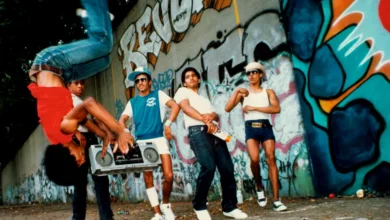
Music is the universal language of Flatbush. The air is a constant mix of reggae, soca, dancehall, hip-hop, and gospel. The neighborhood has produced its own musical legends, with artists like Busta Rhymes and the hip-hop trio Flatbush Zombies tracing their roots to this community, each carrying the neighborhood’s unique swagger onto the global stage. For the younger generation, this rich musical heritage is a source of inspiration, a foundation upon which they are creating new sounds that fuse the rhythms of the islands with the bass of Brooklyn.
Politics and Civic Engagement
The civic pride of the Flatbush Black community is reflected in its political leadership. The neighborhood is represented by trailblazers who share the heritage of the community they serve.
- City Council: Districts 40 and 45 are represented by Rita Joseph, a Haitian-born educator, and Farah Louis, a proud daughter of Caribbean immigrants.
- State Assembly: The 42nd District is represented by Rodneyse Bichotte Hermelyn, the first Haitian American woman elected in New York City.
Residents can stay informed and get involved through Brooklyn Community Board 14 and the Office of the Brooklyn Borough President.
Challenges and Change
While Flatbush’s vibrancy is undeniable, its residents face the growing pressure of gentrification. Between 2010 and 2020, the neighborhood saw its white population increase by over 75%, and skyrocketing housing costs are threatening to displace longtime residents and beloved small businesses. As one resident and activist, Nefertiti Macaulay, who was born and raised in Flatbush, shared, “We were not a community anymore—we were people living on top of people, brushing past each other, rushing nowhere fast”.
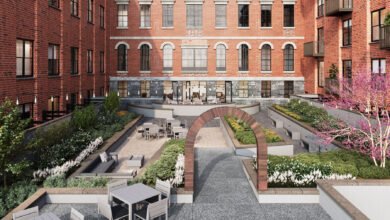
But the community is fighting back. Tenant unions like the Flatbush Tenants Coalition and grassroots organizations like Equality for Flatbush are organizing to protect residents, preserve affordable housing, and hold predatory developers accountable. Their message is clear: progress must honor the people who built the neighborhood.
Why Flatbush Matters
Flatbush is a testament to the global power of Black and Caribbean culture. It’s a place where reggae meets rap, where history meets hustle, and where every accent on the block tells a different story of belonging. For Brooklyn—and for the diaspora—Flatbush isn’t just a neighborhood. It’s a movement. As one mural on Flatbush Avenue proclaims, “We came here to survive. We stayed to thrive.”
Key Takeaways
- Flatbush is home to one of the largest and most diverse Caribbean diasporas in the United States, making it a global hub for Black culture.
- The neighborhood is a center of Black entrepreneurship, youth creativity, and civic pride, with a new generation building on the legacy of those who came before them.
- Gentrification poses a significant threat, but the community is actively organizing to balance growth with the preservation of its cultural identity.
- The strength of the Flatbush Black community lies in its unity, its deep connection to its heritage, and its capacity for reinvention.
Call to Action
Support the future of Flatbush by shopping at its local Black-owned businesses, celebrating at its vibrant cultural festivals, and sharing the stories that keep its culture alive. Visit its restaurants, attend community events, and invest in the organizations that are building a future of Black and Caribbean excellence in Brooklyn.
Related HfYC Content
- The Hustle and the Heartbeat: Why Black Entrepreneurship in Brooklyn is Their Unbreakable Soul
- The Housing Crossroads: Brooklyn’s Fight for a Place to Live
- The Frontlines: Navigating Systemic Challenges in Black Brooklyn
Other Related Content
- Little Caribbean NYC: A Movement to Preserve Brooklyn’s Island Soul – The New York Times(https://www.nytimes.com/)
- Flatbush Tenants Coalition: Fighting for Housing Equity – The City NYC (https://www.thecity.nyc/)
References (APA Style)
- Brooklyn Community Board 14. (n.d.). Projects. Retrieved from https://cb14brooklyn.com
- City of New York. (n.d.). Flatbush African Burial Ground Site History. Retrieved from https://www.nyc.gov/site/hpd/services-and-information/fabg-site-history.page
- Equality for Flatbush. (n.d.). About Us. Retrieved from https://www.equalityforflatbush.org/about/
- Flatbush Development Corporation. (n.d.). Home. Retrieved from https://www.fdconline.org/
- New York City Department of Small Business Services. (2022). Flatbush Commercial District Needs Assessment. Retrieved from https://www.nyc.gov/assets/sbs/downloads/pdf/neighborhoods/avenyc-cdna-flatbush.pdf
- New York State. (n.d.). Governor Cuomo Unveils Plans for New Affordable Housing Development in Flatbush As Part of $1.4 Billion Vital Brooklyn Initiative. Retrieved from https://hcr.ny.gov/governor-cuomo-unveils-plans-new-affordable-housing-development-flatbush-part-14-billion-vital
- NYC Tourism. (n.d.). Flatbush, Brooklyn. Retrieved from https://www.nyctourism.com/new-york/brooklyn/flatbush/
- Using Our Teacher Voice. (n.d.). From Flatbush to Brooklyn Heights. Retrieved from https://www.usingourteachervoice.org/stories/from-flatbush-to-brooklyn-heights