The Question Behind the Headlines
If you’ve felt the mood music change in U.S. politics, you’re not imagining it. On immigration, crime, foreign policy, and even budget talk, many observers argue the Democratic shift to the right is real—or at least that the party’s rhetoric is moving toward the center-right. The heart-check for our community is simple: Does this shift still align with Black values?

Black voters have never been a monolith. But across generations, our shared priorities show up consistently: economic stability, affordable housing and healthcare, safety without over-criminalization, voting rights, and dignity in public life. Those values are clear in major surveys of Black voters and Black-led research projects. They’re also echoed daily by young organizers, church mothers, small-business owners, students, and caregivers who ask politicians to deliver—not just perform.
This feature unpacks the history and momentum of that rightward tilt, weighs alignment with Black priorities, spotlights youth perspectives, and offers concrete next steps—so we can move with eyes open and power intact.
How We Got Here: From “Triangulation” to TikTok Politics
The Democratic Party’s periodic moves toward the center are not new. In tough electoral climates, Democrats often “triangulate”—adopting more moderate (sometimes conservative-leaning) positions to calm suburban worries and blunt GOP attacks. In the 1990s, that meant welfare reform and tough-on-crime posture. In the 2020s, it has meant stricter border language and enforcement proposals, sharper crime rhetoric, and more “fiscal guardrails” talk.
Recent flashpoints include support from some Democrats for tougher immigration legislation and enforcement-focused messaging, justified as political necessity in a cycle where immigration and inflation polled high. Whether you agree with the policy or not, the vibe shift is apparent—and it lands differently across Black communities, especially among those most affected by policing, detention, and economic precarity.
What Black Values Actually Look Like in Data (and in Daily Life)
Strip away the slogans. When researchers ask Black voters what most shapes our vote, you hear the same drumline:
- Economy & cost of living (wages, jobs, inflation relief)
- Healthcare & mental health access
- Affordable housing & renter protections
- Democracy protection (voting rights, fair maps, disinformation defense)
- Safety with accountability (community-based violence prevention, not blanket criminalization)
Multiple nonpartisan and Black-led research efforts reaffirm this pattern—on the economy, healthcare, democracy, and safety. They also show generational nuance: younger voters are more insistent on bold action (debt relief, climate jobs, fare-free or cheaper transit, and digital-era transparency), while elders often emphasize stability, prescription costs, and social security. The overlap: dignity and deliverables.
Where the Rightward Drift Aligns—and Where It Collides—with Black Values
1) Immigration & Public Safety: Complicated Overlap
- Potential alignment: Communities want safe neighborhoods and humane systems; they do want serious responses to trafficking, guns, and exploitation.
- Potential collision: Enforcement-first frames can spill into broader criminalization—sweeps, detention, and rhetoric that normalizes profiling. Black immigrants (Caribbean, African, Afro-Latinx) sit at that intersection and often bear the brunt of “toughness” politics.
2) The Economy: Moderation vs. Material Wins
- Potential alignment: Center-left budget caution can reassure markets and keep borrowing costs down—helpful for small Black businesses and homeowners.
- Potential collision: Pulling back from bold redistributive policies risks missing the mark on Black wealth, wages, student debt, and housing costs—areas where gaps are structural, not merely cyclical. Black-led agendas highlight minimum wage increases, stronger worker protections, paid leave, and renter power as nonnegotiables.
3) Crime & Safety: “Order” Without Overreach
- Potential alignment: Residents—especially elders and families—want visible responses to gun violence and theft.
- Potential collision: If “safety” becomes a proxy for punitive expansion rather than community-rooted prevention, mental health response, youth jobs, and accountability, it diverges from what many Black voters actually ask for in surveys and town halls.
4) Democracy & Disinformation: The Unseen Battle
- Potential alignment: Both “moderates” and “progressives” agree on safeguarding elections and combating online lies that target Black voters.
- Potential collision: When candidates chase viral fights over policy clarity, disinformation wins. Black voters consistently want clear plans on bread-and-butter issues, communicated in plain language.
Youth POV: Pragmatic, Online, and Outcome-Obsessed
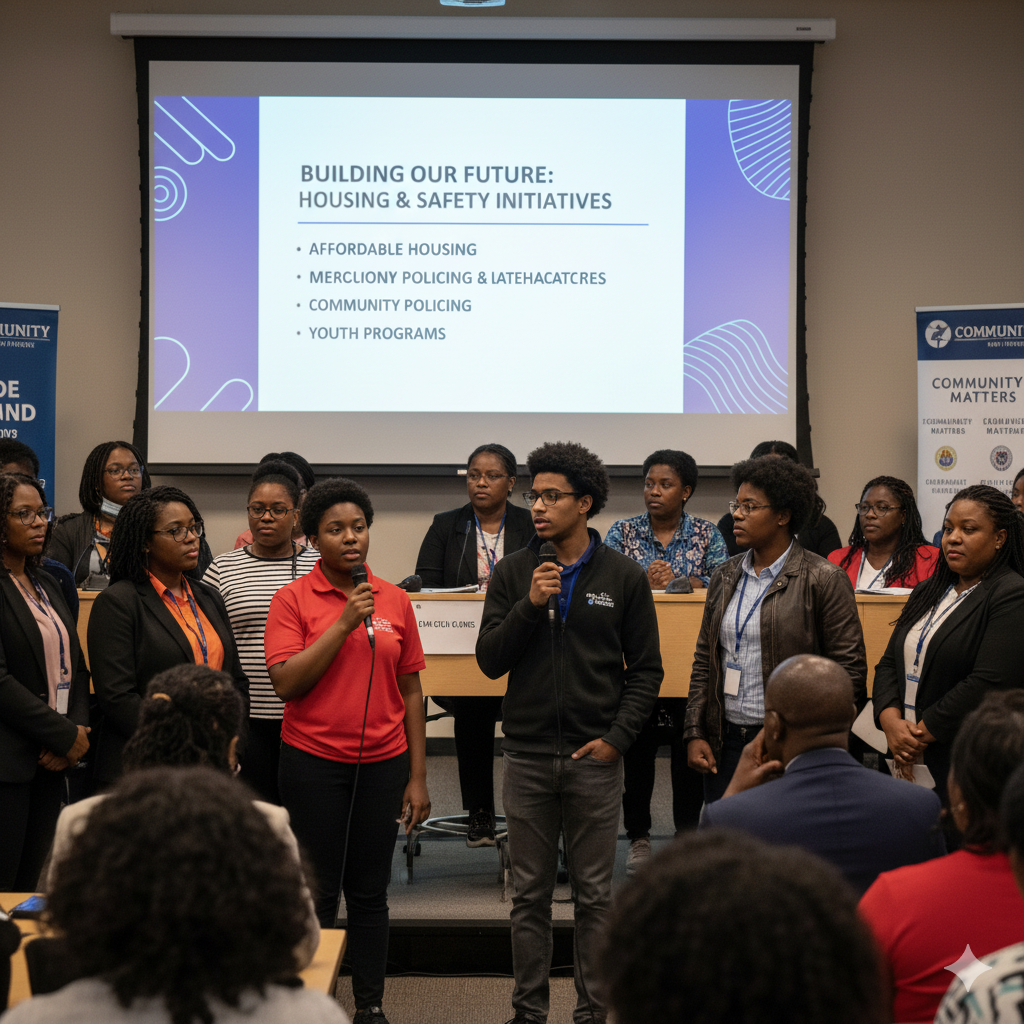
Young Black voters are allergic to “vibes-only” politics. They want government that works on contact: lower rent, cheaper transit, better schools, safer blocks without abusive policing, and digital services that respect their time. When they hear “Democratic shift to the right,” they’re asking: Does this mean fewer ambitious solutions on housing, debt, climate, and wages? Or just different messaging to win power—so you can pass the same solutions?
Two notes from the field:
- Substance travels when it’s scrollable. Policy explainers, budget receipts, and trackable timelines outperform slogans with under-35 voters.
- Coalitions win, not solo brands. Youth expect multiracial, cross-class coalitions that bring labor, faith, small biz, and students into the same tent.
Bottom line: Delivery beats delivery style. If the “shift” trades bold outcomes for talking points, young voters notice—and disengage. If it lands real wins, they’ll show up.
Short-Term vs. Long-Term Impacts on Black Communities
Short-Term
- Pros: Tactically centrist messaging can blunt fear-based attacks and protect slim governing majorities, unlocking incremental but real gains (e.g., targeted affordability measures, enforcement of existing civil-rights regs).
- Risks: Concessions on immigration and crime can harden punitive systems; budget caution can delay transformative investments in housing, care, and community safety.
Long-Term
- Pros: If centrism earns durable majorities, it could provide a stable runway for layered reforms (housing plus transit plus jobs).
- Risks: If centrism becomes a destination instead of strategy, it may calcify racial wealth gaps and depress turnout, especially among younger Black voters looking for proof of life in policy.
So…Is the Democratic Shift to the Right Aligned with Black Values?
It depends on what “shift” means in practice.
If it’s mostly messaging while the agenda still delivers on wages, housing, healthcare access, and voting rights, it can be compatible with core Black values. If it becomes punitive policy and austerity dressed as prudence, it’s out of step.
The assignment for all of us is to separate tone from outcomes and demand receipts: budgets, timelines, enforcement plans, and impact reports that show our communities tangibly better off.
Key Takeaways
- Black values are consistent: economic dignity, affordable living, real safety with accountability, and democracy protection.
- A Democratic shift to the right can be strategic—but not if it trades away material wins or normalizes criminalization.
- Young Black voters want proof, not posture: clear plans, timelines, and measurable results.
- Our power is leverage. We can shape platforms before elections and budgets after them—if we stay organized and specific.
Call to Action: Make the Platform Match the Porch Conversation
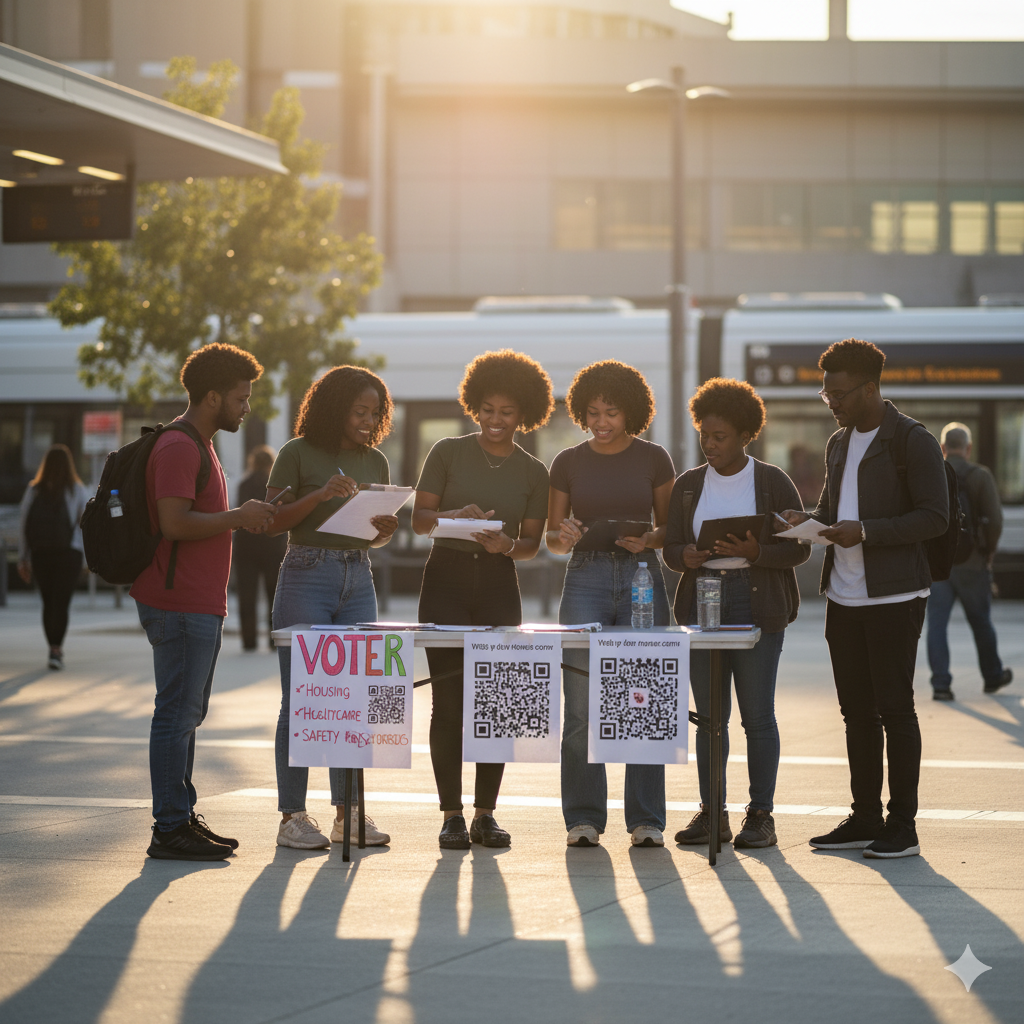
- Name your top three must-haves (e.g., rent relief & social housing; paid leave; community safety investments) and tell campaigns you won’t trade them for slogans.
- Demand budget receipts: How much, when, and who benefits first? (Put it in writing.)
- Join a local coalition—tenant union, church social-justice ministry, youth council, small-business alliance. Make your neighborhood’s priorities impossible to ignore.
- Fight disinformation by sharing verified resources and Black-led policy roadmaps that reflect lived experience.
Related HfYC Content
- The Stories Our Neighborhoods Deserve
- The ‘No Kings’ Protest Is Here. Are We Joining, or Are We Tired?
- The Government Shutdown Step-by-Step: A Story of Power, Politics and Community Impact
- How to Get Involved with Your City Council, School Board, and Local Causes
Other Related Content
- Pew Research: Issues and the 2024 Election – (Black voter priorities within broader trends)
- AP-NORC: What polling shows about Black voters’ views
- Black Futures Lab / Black to the Future: Black Economic Agenda
References (APA Style)
- American Immigration Council. (2024, May). What is the bipartisan border bill and how would it change the U.S. immigration system? https://www.americanimmigrationcouncil.org/blog/what-is-the-bipartisan-border-bill/americanimmigrationcouncil.org
- AP-NORC Center. (2024). Black voters’ views of presidential candidates and issues. https://apnorc.org/projects/black-voters-trust-kamala-harris-to-handle-the-issues-they-care-most-about/ AP-NORC
- Brookings Institution. (2024). What we know about the 2024 Democratic and Republican parties: An analysis of congressional candidates. https://www.brookings.edu/articles/what-we-know-about-the-2024-democratic-and-republican-parties-an-analysis-of-congressional-candidates/ Brookings
- Brookings Institution. (2024). How disinformation defined the 2024 election narrative.https://www.brookings.edu/articles/how-disinformation-defined-the-2024-election-narrative/ Brookings
- Pew Research Center. (2024, Sept. 9). Issues and the 2024 election.https://www.pewresearch.org/politics/2024/09/09/issues-and-the-2024-election/ Pew Research
- The Guardian. (2024, Aug. 9). Black US voters’ economic priorities revealed in new advocacy agenda.https://www.theguardian.com/world/article/2024/aug/09/black-voter-economic-priorities-future-report The Guardian
- The Wall Street Journal. (2025). GOP-Led House passes Laken Riley Act with Democrats’ help.https://www.wsj.com/politics/gop-led-house-passes-laken-riley-act-with-democrats-help-e731208aThe Wall Street Journal