Brooklyn’s Cost of Living Crisis: Who Gets to Stay, Who’s Being Pushed Out?
Brooklyn has always been more than a borough — it’s a whole vibe. From Bed-Stuy brownstones and Flatbush yard cookouts to East New York church basements and corner stores, Brooklyn is a global brand built on Black culture.
But right now, that culture is fighting for space to breathe. Skyrocketing rents, rising utility costs, foreclosure spikes, and record poverty rates have turned everyday life into a cost-of-living battle — especially for Black Brooklynites at the center of the Brooklyn cost of living crisis.
Citywide, 1 in 4 New Yorkers now lives in poverty, with over 2 million residents struggling to cover basics like housing, food, and utilities. Robin Hood In Brooklyn alone, about 19% of residents live below the poverty line, with Black residents facing higher rates of poverty than white residents. City-Data
For young people, working families, and long-time Black residents, the question isn’t just “How much is rent?” It’s “Will we still be here in five years — or will we be priced, pushed, or bought out?”
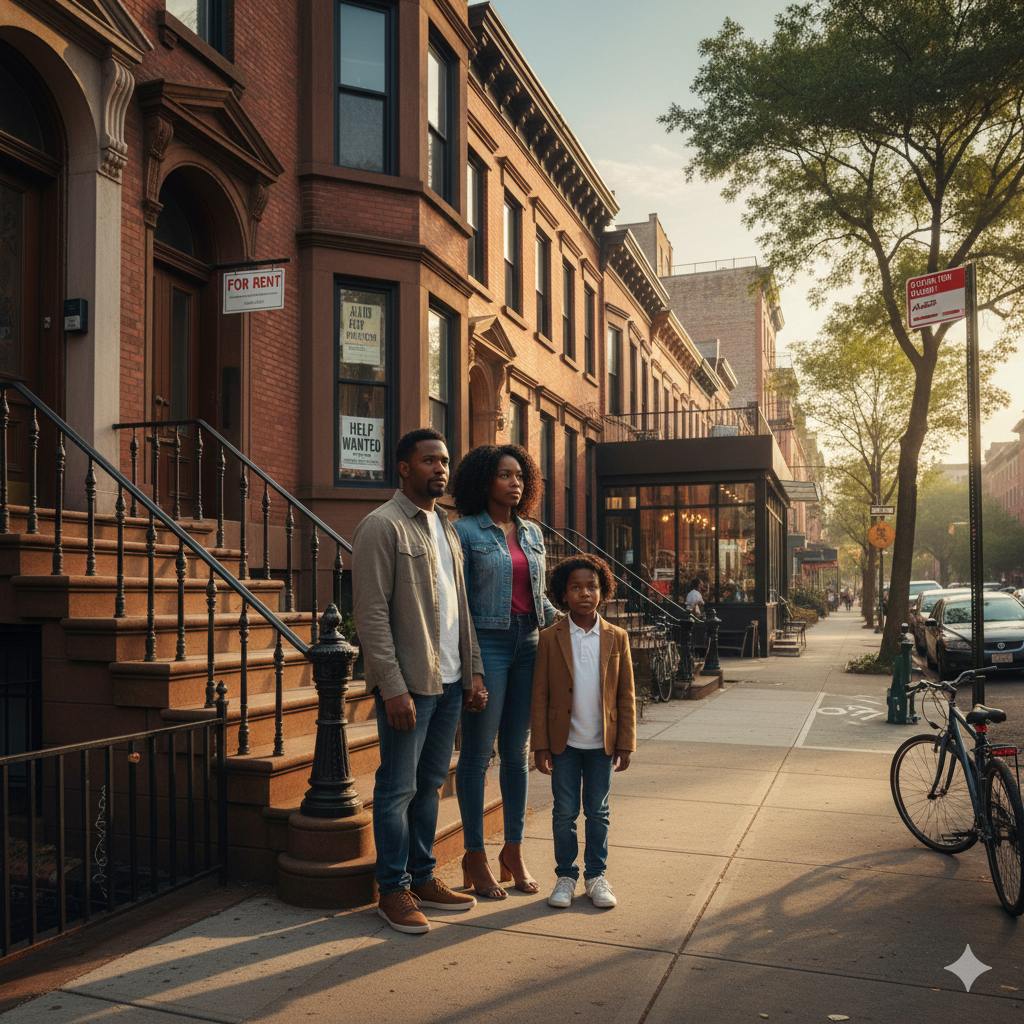
Where the Brooklyn Cost of Living Crisis Came From
The Brooklyn cost of living crisis didn’t come out of nowhere. It’s the product of overlapping pressures:
- Housing costs rising faster than wages
- The expiration of pandemic-era protections and aid
- Utility shutoffs, debt, and inflation hitting low-income families hardest
According to the Robin Hood Poverty Tracker, New York City’s poverty rate hit 25% in 2023, nearly double the national rate. Rising costs of housing, food, utilities, and internet pushed a renting family of four’s poverty threshold to around $47,000 a year — and even families making double that are still likely to experience “material hardship,” like struggling to pay rent or buy groceries.
In Brooklyn specifically:
- 19% of residents live below the poverty line.
- The poverty rate among Black residents is around 20.9%, higher than the borough’s white population.
- Children in Brooklyn experience poverty at about 26%, dramatically above the state average.
Those aren’t just numbers — they’re late fees, eviction notices, shutoff warnings, skipped doctor’s appointments, and dreams delayed.
Bed-Stuy, Flatbush, East New York: Black Brooklyn Under Pressure
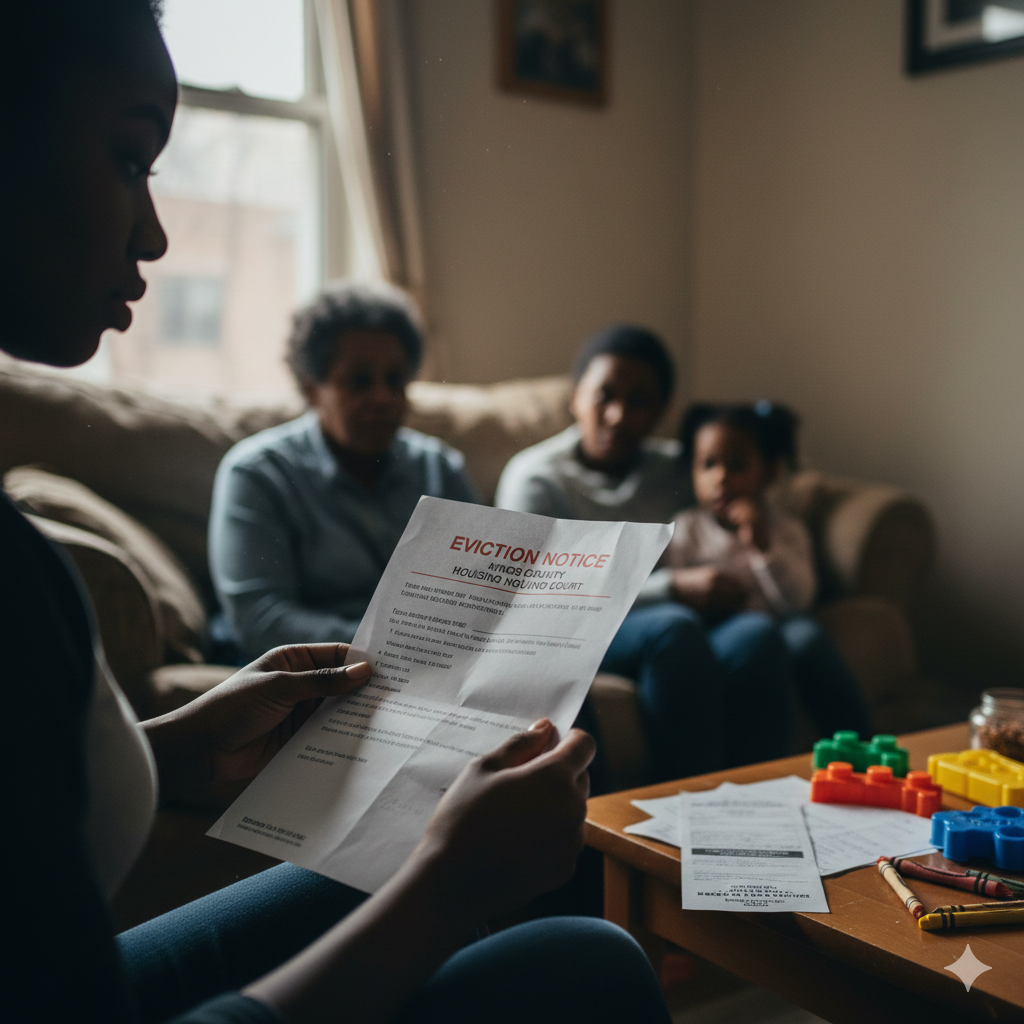
Bed-Stuy’s Vanishing Majority
Bedford-Stuyvesant used to be the shorthand for Black Brooklyn — a neighborhood where generations of Black families put down roots, bought homes, and built institutions.
In 2000, Black residents made up the overwhelming majority of Bed-Stuy’s population, with more than 110,000 Black residents out of roughly 144,000 total. A decade later, the Black population had dropped to around 98,780 while the white population increased by over 700%, from about 2,000 to more than 16,000 residents. Mic
That dramatic demographic flip wasn’t just about “diversity.” It came with:
- Steep rent hikes
- Speculative buying of brownstones
- Landlords pushing out long-term tenants for higher-paying newcomers
- Cultural erasure of Black-owned businesses, churches, and social spaces
And now, newer waves of co-living spaces — 19-bed shared complexes renting small rooms for up to $2,400 a month — are being marketed to young, often international professionals in Crown Heights, Bushwick, and Bed-Stuy. Community members are calling them “harbingers of gentrification” that replace cultural landmarks (like historic jazz clubs) with what feel like rotating hotels — high-profit, low-commitment housing that does nothing to stabilize Black families. The Guardian
East New York and Canarsie: Holding the Line at the Edges
In East New York, more than half of residents are Black, household incomes are far lower than the city average, and poverty rates hover above 20%. Brooklyn Communities
At the exact same time, Brooklyn has become NYC’s foreclosure hotspot. In the second quarter of 2025, Brooklyn recorded a 36% jump in foreclosure filings, with ZIP code 11236 (Canarsie and parts of East Flatbush) topping the list. New York Post
That means:
- Black homeowners who finally got a piece of the “American Dream” are now losing homes to debt and rising mortgage costs.
- Two-family homes — a classic Black wealth-building tool where one unit is rented out — are the most affected, making up about one-third of all filings.
For young Black Brooklynites, the message is mixed:
“Get property, build wealth” — but also “Good luck keeping it when the economy swings.”
Evictions, Shutoffs, and Everyday Crisis

If you want to understand the Brooklyn cost of living crisis, follow the paper trail: eviction notices, disconnect warnings, and court dates.
Citywide, marshals are now carrying out about 1,500 evictions a month, the highest rate since 2018, as housing courts work through the pandemic backlog. The Bronx is hardest hit, but Brooklyn isn’t far behind — especially in neighborhoods with large Black renter populations.
At the same time, Con Edison disconnected over 88,000 households in the first half of 2025 — almost 2.5% of its customer base — while requesting an 11% rate hike. Those shutoffs hit low-income communities and communities of color hardest.
So think about the stack:
- Rent’s due.
- The light bill’s overdue.
- Groceries cost more.
- Wages aren’t keeping up.
When you’re young, Black, and living in Brooklyn, it’s not just about being “broke” — it’s about navigating an economic system that treats your basic needs as premium subscriptions.
Policy Fights, Zoning Battles, and the Limits of “Reform”
At City Hall and in Albany, the cost of living conversation often shows up as:
- Rent stabilization debates
- Zoning changes and “upzoning” plans
- Arguments over tenant protections and right-to-counsel funding
Tenant right-to-counsel has been a crucial firewall against mass evictions, but legal aid organizations are overwhelmed and understaffed. Even with slightly lower eviction filings, completed evictions are rising as old cases finally clear court.
Meanwhile, zoning changes that promise more “housing supply” often unlock luxury or high-end rentals, not deeply affordable units for Black working-class families. Co-living developers and speculative landlords profit from scarcity, while residents face:
- Landlords weaponizing credit checks, income thresholds, and move-in fees
- “Renovictions” — pushing out tenants to upgrade units for higher-income renters
- Chronic fear: one job loss, one illness, one bad month away from losing everything
Plainly: “policy solutions” that don’t center Black renters, low-income families, and long-time residents will deepen, not ease, the Brooklyn cost of living crisis.
The Anti-Poverty Front Line: Brooklyn Organizing Back
The good news? Brooklyn has never just taken injustice lying down.
Faith, Organizing, and Building Homes
East Brooklyn Congregations, a faith-based organizing network founded in 1980, has spent decades building Nehemiah Homes — affordable housing developments in neighborhoods like East New York and Flatbush.
Instead of waiting for outside developers, Nehemiah projects:
- Created pathways to homeownership for first-time, mostly Black and Brown buyers
- Stabilized blocks that might have otherwise been swallowed by speculation
- Proved that community-led development can work at scale
CAMBA and the Fight to Keep People Housed
Brooklyn-based nonprofit CAMBA runs more than 160 program sites, serving about 45,000 New Yorkers annually with everything from housing and legal services to youth programs and healthcare support.Wikipedia
For families facing the cost-of-living crunch, that can look like:
- Help navigating rent arrears assistance
- Legal support in housing court
- Emergency shelter or placement when eviction can’t be stopped
- Job readiness, financial counseling, and youth development
These organizations aren’t just “social services.” They’re defensive lines keeping Black Brooklyn from being fully priced and pushed out.
Young, Black, and Brooklyn-Born: What This Moment Means
For younger Brooklynites — college students, service workers, creatives, gig workers — the Brooklyn cost of living crisis feels like a rigged game:
- You’re told to “network,” “grind,” and “build your brand,” but you’re spending half your paycheck on rent, MetroCards, and phone bills.
- You’re watching influencers buy brownstones, while your family is one rent hike away from leaving the borough.
- You’re told “New York is where dreams come true,” but you’re also seeing friends leave for Atlanta, Houston, or back to the South because it’s just cheaper to breathe there.
Yet, this generation is also leading:
- Tenant unions and rent strike campaigns
- Mutual aid networks sharing food, metro swipes, and cash assistance
- Social media education around financial literacy, budgeting, and tenant rights
- Arts and storytelling projects documenting gentrification and displacement in real time
Young Black Brooklyn is both the most squeezed and the most vocal about demanding a city where survival isn’t the entry cost.
From Surviving to Owning: Moving Beyond Crisis
The Brooklyn cost of living crisis is brutal — but it’s not inevitable. A different future requires:
Policy with Teeth
- Stronger rent protections and serious enforcement against illegal evictions
- Deeply affordable housing tied to real neighborhood incomes, not “Area Median Income” inflated by richer suburbs
- Fully funded right-to-counsel so no tenant faces court alone
Community Wealth, Not Just Individual Escape
- Support for community land trusts and limited-equity co-ops to keep land in community control
- Black-owned development, construction, and property management enterprises
- Financial literacy that goes beyond “get a credit card” — focusing on ownership, cooperative models, and long-term security
Centering Black Voices in the Narrative
Too often, national coverage talks about “Brooklyn” like it’s just coffee shops and co-working spaces. The real story is:
- The aunties on fixed incomes still anchoring entire blocks
- The Caribbean and African immigrant families balancing remittances with rising rent
- The young organizers and storytellers refusing to let Black Brooklyn be written out of its own story
Key Takeaways
- The Brooklyn cost of living crisis is a structural issue, not just “bad budgeting.”
- Black residents are disproportionately bearing the weight — in rent, foreclosures, poverty, and utility shutoffs.
- Community organizations and grassroots campaigns are already modeling solutions, but they need scale, funding, and political will.
- Long-term stability requires both policy change and community-owned pathways to housing and wealth.
Call to Action
If you’re in Brooklyn or connected to it:
- Get informed about your tenant rights and local housing organizations.
- Support Black-led anti-poverty and housing justice groups with time, money, and amplification.
- Push elected officials — from community boards to Congress — to treat housing as a human right, not just a market.
- Talk openly with friends and family about money, stability, and what it will take for Black Brooklyn to not just survive, but stay rooted and thriving.
HfYC Poll of the Day
When you look at Brooklyn’s cost of living crisis, what feels like the real problem — greedy landlords, weak policies, or a city that decided culture was profitable but Black residents were optional?
Alternative Perspectives:
- If Brooklyn keeps its brand but loses the Black families who built it, did the borough “make it” or just sell its soul for higher rent?
- Do you think Brooklyn’s cost of living crisis is mainly about individual choices, or about a housing and wage system that makes stability almost impossible for working Black families?
- If your landlord raised the rent again and said, “That’s just the Brooklyn market,” are you staying to fight, plotting your escape route, or sending them a Venmo request for emotional damages?
Related HfYC Content
- $600K New Jersey Racial Wealth Gap = Gentrification Today + Homelessness Tomorrow
- Is the U.S. Housing Crisis a Bubble About to Burst—or a Slow Reset?
- What The Real Estate Moguls of NJ/NY Are Doing Right Under Your Nose
- First-Time Black Homebuyer’s Guide to NJ & NY | Assistance & Grants
- Rent’s Due, Dreams on Hold: How Black Gen Z Is Fighting to Stay Home in Jersey
Other Related Content
- Poverty Rate in NYC Climbs to 25% – Robin Hood Poverty Tracker
- One in Four New Yorkers Lives in Poverty, Report Finds – Spectrum News NY1
- Tiny Co-Living Spaces Are Popping Up Across New York – The Guardian
- Monthly Evictions in NYC Reach Highest Rate Since 2018 – New York Post
References (APA Style)
- Robin Hood & Columbia University Center on Poverty and Social Policy. (2025, February 26). The state of poverty and disadvantage in New York City. Robin Hood. https://robinhood.org/news/robin-hood-annual-poverty-tracker-report-shows-25-overall-poverty-rate-in-new-york-city-climbing-beyond-record-highs-observed-in-2022/ Robin Hood
- Spectrum News NY1. (2025, February 26). One in four New Yorkers lives in poverty, report finds. Spectrum News. https://ny1.com/nyc/all-boroughs/news/2025/02/26/one-in-four-new-yorkers-lives-in-poverty–report-finds- ny1.com
- City-Data. (2025). Brooklyn, New York poverty rate data. https://www.city-data.com/poverty/poverty-Brooklyn-New-York.html City-Data
- Moore, D. (n.d.). The disregarded consequences of gentrification in this New York City neighborhood. Mic. https://www.mic.com/articles/126193/the-disregarded-consequences-of-gentrification-in-this-new-york-city-neighborhood Mic
- The Guardian. (2025, September 21). Tiny co-living spaces are popping up across New York. Local communities see them as “harbingers of gentrification”. https://www.theguardian.com/us-news/2025/sep/21/co-living-spaces-nyc-gentrification The Guardian
- New York Post. (2025, August 25). Monthly evictions in NYC have reached their highest rate since 2018. https://nypost.com/2025/08/25/real-estate/monthly-evictions-in-nyc-are-at-their-highest-rate-in-years/ New York Post
- New York Post. (2025, July 17). Foreclosures climb in this major city — and even the most elite ZIP codes aren’t spared. https://nypost.com/2025/07/17/real-estate/foreclosures-climb-in-this-major-cityand-even-the-most-elite-zip-codes-arent-spared/ New York Post
- The Guardian. (2025, August 8). New York energy company ramps up disconnections as it seeks 11% price hike. https://www.theguardian.com/us-news/2025/aug/08/new-york-con-edison-disconnections-climate-crisis The Guardian
- East Brooklyn Congregations. (2024). East Brooklyn Congregations and Nehemiah Homes. In IAF: 50 years organizing for change. Wikipedia
- CAMBA, Inc. (2024). About CAMBA. https://camba.orgWikipedia
-
-
-
-