Is the U.S. Housing Crisis a Bubble About to Burst—or a Slow Reset?
What We Mean by “Housing Crisis Bubble” (and Why It Matters Right Now)

Is today’s housing crisis bubble about to pop—or are we watching a long, uneven reset? Prices are still near record highs, mortgage rates only eased a bit, and yet we’re seeing empty apartments and offices in once-scorching markets alongside rising concessions for renters. At the same time, Black families face the sharpest affordability pressures and the widest path to wealth ever tied to homeownership. Understanding whether this is a bubble or a rebalancing isn’t just cocktail-party talk—it shapes decisions for homeowners, homebuyers, renters, contractors, mortgage brokers, and real estate agents across our communities.
Here’s the bottom line up front: the data points to pressure release, not a 2008-style crash—with pockets of acute stress (Sun Belt multifamily, office towers in core CBDs) and widening inequality in who gets to benefit from any “reset.”
The Mixed Signals: Prices Still High, Supply Surge in Some Places, “Ghost” Offices Elsewhere
For-Sale Market: Elevated but Sticky
Nationally, home prices remain historically high even as demand cooled under higher rates. Major banks and research shops describe 2025 as tight supply + affordability strain, not a broad collapse. Translation: pricing power softens at the margins, but forced selling remains limited.
Rental Market: Sun Belt Whiplash
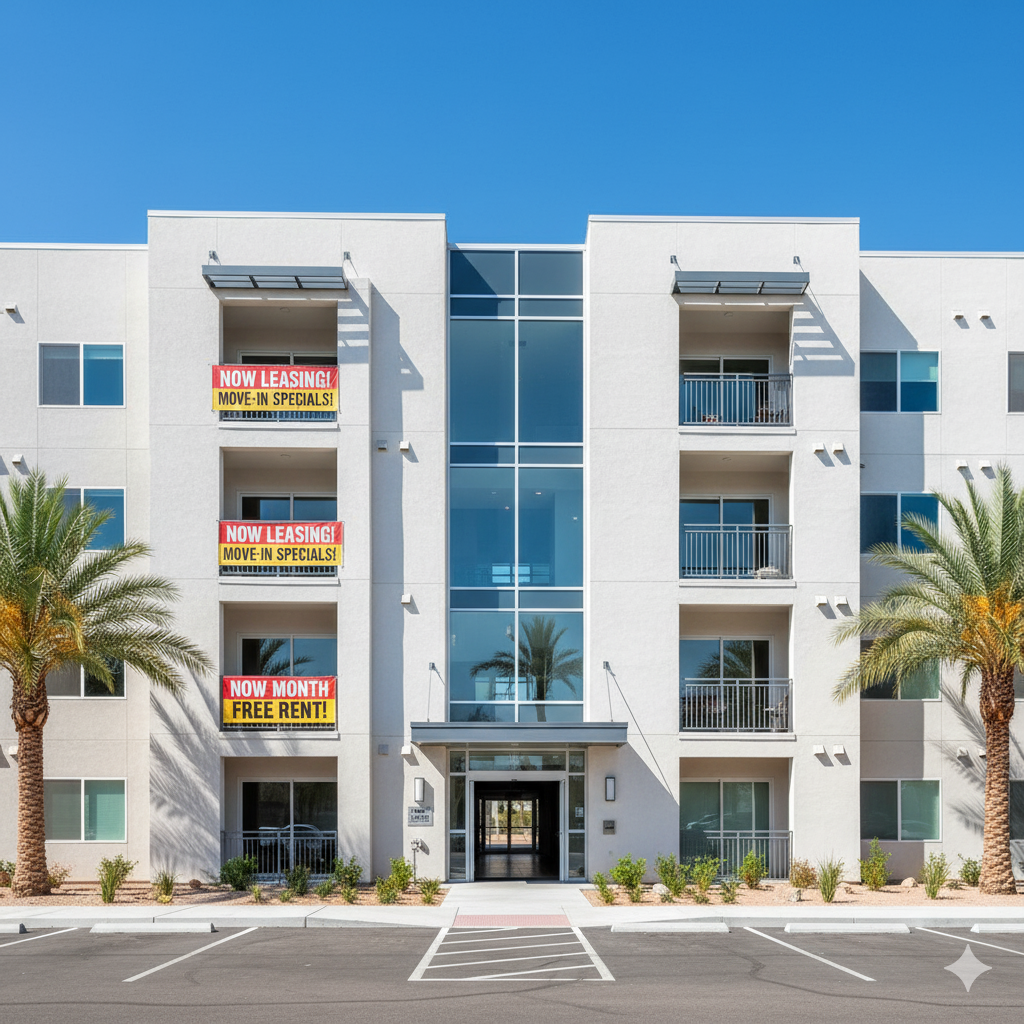
A pandemic-era construction boom flooded some metros with new apartments. That glut is now holding down rents—and in places like Austin, Phoenix, Dallas, Raleigh, Jacksonville, Charlotte, rents have slipped year over year as landlords add concessions to fill units. Meanwhile, supply-tight metros (North Jersey/Boston) still notch mild rent growth.
Vacancy Snapshot
- National rental vacancy: 7.0% (Q2 2025), up from 6.6% a year prior—evidence of cooling, not collapse.
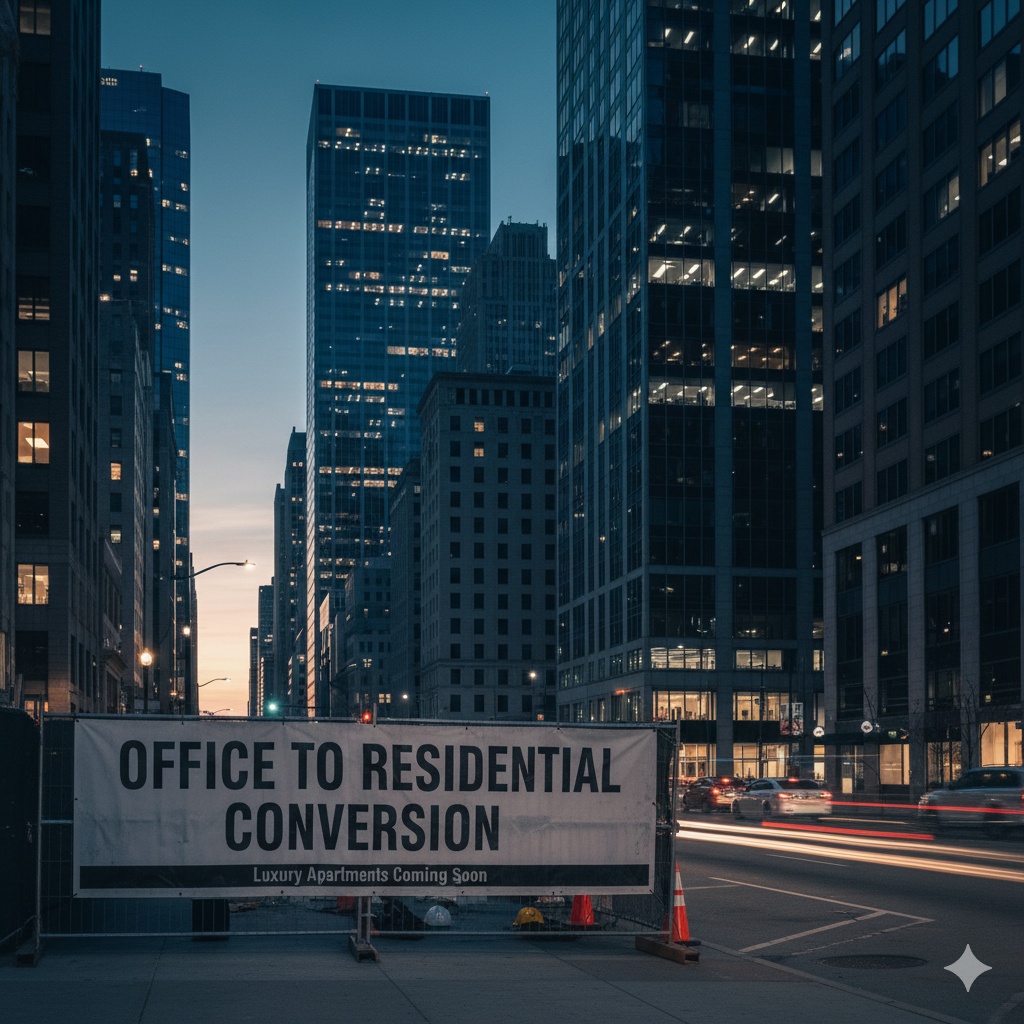
- Office vacancy: record ~20.6–20.7% in Q2 2025, a structural hit from hybrid work that’s stressing loans, values, and downtown ecosystems.
- City-level housing vacancy pockets: several metros exhibit high rental vacancy; media snapshots show elevated empties in parts of Tampa and Tucson, among others. (Local stories vary block to block.)
Affordability Reality Check
Even with flatlining rents in some markets, renter cost burdens are at or near records, and shelter costs are still elevated after the pandemic spike. Harvard’s JCHS reports rents up ~26% since early 2020 despite recent cooling; half of renters were cost-burdened in 2022.
Read the room: That’s not how bubbles usually behave. Classic bubbles pop with forced sales and cascading price crashes. What we have is a two-speed market: softening where supply surged and stubbornly expensive where supply is still constrained.
Is This a Bubble About to Burst? The Case For—and Against
The “Burst” Case
- Overbuilding in specific metros. Sun Belt cities absorbed massive multifamily deliveries; lease-ups lag, pushing rents and valuations down on new product.
- Commercial drag spilling over. Office distress at 20%+ vacancy dents tax bases and downtown retail, which could slow local economies and municipal services.
The “Reset” Case (More Convincing)
- Owner-occupied supply remains tight. Few distressed sellers + locked-in low-rate owners limit forced supply.
- Apartments are adjusting, not imploding. Concessions rise, rent growth cools or dips in high-supply metros; elsewhere, rents are flat-to-up.
- Macro supports a floor. Jobs and incomes recovered; national rental vacancy at 7.0% is notable, but far from a free fall.
Verdict: Nationally, we’re in a slow recalibration with localized pain (Sun Belt lease-ups, urban office cores). Not a universal bubble bursting.
Who’s Hurting, Who’s Holding, Who Can Win From Here
Markets that Exploded—and Now Feel the Chill
- Austin, Phoenix, Dallas, Raleigh, Jacksonville, Charlotte: negative rent growth and higher concessions after heavy supply.
- Core downtowns with heavy office exposure: values under stress; conversions and fiscal fixes will separate winners from laggards.
Markets Showing Resilience
- North New Jersey, Boston region: tighter supply, modest rent gains—less whiplash.
Black Wealth, Homeownership, and the Cost of Waiting
The housing “reset” hasn’t reset the racial wealth gap. Black homeownership lags; cost burdens run higher; and the coming “great wealth transfer” risks widening the gap because far less legacy wealth sits in Black families to fund down payments.
- Harvard JCHS: shelter costs remain historically elevated; burdens at record levels.
- Reuters (Census analysis): 56%+ of Black renters exceed 30% rent-to-income vs. ~47% of white renters.
- Urban Institute: despite recent upticks, Black households still hold a disproportionately low share of housing wealth.
Translation for our community: Waiting for a perfect “crash” could mean missing windows—in first-time buyer programs, rate dips, or local opportunities—while rent keeps siphoning wealth.
Stakeholder Playbooks: What To Do Next (Short, Medium, Long Term)
Homeowners
Short term (0–6 months):
- Stress-test your mortgage (escrow, insurance) and build a 6–9 month reserve.
- If you’re in a “soft” Sun Belt rental market, anticipate pressure on any adjoining rental income; price renewals wisely.
Medium (6–18 months):
- Consider HELOC only if cash flow is stable; avoid adjustable-rate exposure if rates trend sideways.
- If near urban office cores, watch city fiscal updates; property tax dynamics may shift with office valuations.
Long (18–36 months):
- Invest in efficiency upgrades that lower bills and boost resale (buyers increasingly value total monthly cost). Harvard notes costs, not just list prices, drive affordability.
Homebuyers (especially first-time & Black households)
Short term:
- Get pre-approved and stack down payment assistance; pair with FHA/VA/USDA where eligible.
- Target metros/submarkets with elevated new supply (Austin, Phoenix, etc.) for builder incentives.
Medium:
- Be flexible on product (condos, townhomes) and location (near transit; emerging corridors).
- Lock rate dips with float-down options when feasible.
Long:
- Plan for house-hack or ADU potential to offset payments; this is wealth-building 101 for first-gen buyers.
Renters
Short term:
- In soft Sun Belt markets, negotiate: ask for months free, parking, or upgrades. Landlords are dealing.
- Document rent burden; apply for local relief or voucher programs where eligible.
Medium:
- Build a buy box: monthly payment target, neighborhoods, property types.
- Strengthen credit + savings; join renter-to-owner pipelines run by CDFIs and local nonprofits.
Long:
- If buying isn’t near-term, pursue longer leases with caps and look for buildings adding concessions every renewal.
Contractors & Trades
Short term:
- Shift capacity toward value-add renovations (energy retrofits, smaller units) where owners are holding, not flipping.
Medium/Long: - Learn office-to-resi code and feasibility; cities will accelerate conversion pilots as office vacancies persist.
Mortgage Brokers & Lenders
Short term:
- Lead with education around buydowns, DPA stacking, and credit coaching for first-gen buyers (high ROI in communities of color).
Medium: - Build specialty products for small multifamily (house-hacks) and ADU financing.
Real Estate Agents
Short term:
- Work both ends: concession-heavy lease-ups (fast placements) and entry-level buy boxes where supply is returning.
Medium/Long: - Develop office-conversion intel and maintain landlord relationships for early resale inventory.
Youth POV: What Younger Black Households Need to Hear
You asked for receipts, not rah-rah. Here they are:
- Some Sun Belt rentals are truly negotiable. Take the deal; save the delta.
- The broader market isn’t crashing; it’s sorting. Use micro-dips and incentives—don’t wait for a mythical 50% off.
- Ownership remains the most reliable path to intergenerational wealth; the wealth transfer won’t close the gap for us unless we build equity directly.
Key Takeaways
- The housing crisis bubble narrative oversimplifies a localized reset: Sun Belt multifamily softness and chronic office vacancy vs. still-tight for-sale markets.
- Affordability remains rough; renter burdens are historically high, especially for Black households.
- For Black wealth, waiting on a crash risks lost time. Strategic entry—via incentives, house-hacks, and ADUs—beats perfect timing.
Call to Action: Make the Market Work for Us
- Create a Buy/Build Plan (3 neighborhoods, 2 property types, 1 financing path).
- Leverage Soft Spots (Sun Belt lease-ups, builder incentives).
- Join Local Coalitions fighting displacement and pushing for permitting reform and office-to-resi conversions.
- Measure the Monthly (payment + utilities + transit), not just the sticker price.
Related HfYC Content
- What The Real Estate Moguls of NJ/NY Are Doing Right Under Your Nose
- First-Time Black Homebuyer’s Guide to NJ & NY | Assistance & Grants
- Is the Housing Market for Black NJ Residents is Going Up in Smoke?
- The Silver Tsunami: How Boomers Are Winning the New Jersey Housing War
- A Playbook for Buying a House and Building a Fairer Future
- The Stories Our Neighborhoods Deserve
Other Related Content
- Harvard JCHS – The State of the Nation’s Housing 2024
- Moody’s CRE – The Office Sector’s Double Whammy (Q2 2025)
References (APA Style)
- Harvard Joint Center for Housing Studies. (2024). The state of the nation’s housing 2024. https://www.jchs.harvard.edu/state-nations-housing-2024 jchs.harvard.edu
- Harvard Joint Center for Housing Studies. (2024). America’s rental housing 2024. https://www.jchs.harvard.edu/americas-rental-housing-2024 jchs.harvard.edu
- J.P. Morgan Research. (2025, Feb. 10). The outlook for the US housing market in 2025. https://www.jpmorgan.com/insights/global-research/real-estate/us-housing-market-outlook JPMorgan
- Moody’s CRE. (2025). The office sector’s double whammy. https://www.moodyscre.com/insights/cre-trends/the-office-sectors-double-whammy/ moodyscre.com
- U.S. Census Bureau. (2025, July 28). Quarterly residential vacancies and homeownership, Q2 2025 (CB25-109). https://www.census.gov/housing/hvs/current/index.html Census.gov
- CoStar. (2024). U.S. apartment rents still held down by supply, report says. https://www.costar.com/article/1424543951/us-apartment-rents-still-held-down-by-supply-report-says costar.com
- The Real Deal. (2025). Supply glut drags down U.S. multifamily market. https://therealdeal.com/data/national/2025/supply-glut-drags-down-u-s-multifamily-market/ The Real Deal
- Reuters. (2024, Sept. 12). US household rent burden unchanged last year, varied by race. https://www.reuters.com/markets/us/us-household-rent-burden-unchanged-last-year-varied-by-race-census-says-2024-09-12/ Reuters
- Urban Institute. (2025, Feb. 18). Black housing wealth varies across local markets, despite recent improvement in the Black homeownership rate nationally. https://www.urban.org/urban-wire/black-housing-wealth-varies-across-local-markets-despite-recent-improvement-blackUrban Institute
-
-

-

-