
Part I: The Squeeze is Real: A Generational Crisis in Brick City
Opening Vignette: The Lease Renewal Email
The notification arrives without ceremony, a sterile email with a subject line that belies the panic it’s about to induce: “Your Lease Renewal Offer.” For a young Black graphic designer living in Newark’s Ironbound section, this email is a verdict. She clicks it open. The number staring back is jarring. Her rent for the one-bedroom apartment she loves, the one that’s her sanctuary and her creative space, is set to jump by over 12%. A quick calculation confirms her fear: the new monthly payment of $1,800 will devour nearly half of her pre-tax income.
The questions cascade. Can I even afford this? Do I need to find a roommate, subdividing a space that already feels just big enough for one? Do I need another side hustle on top of the freelance work I already do on weekends? The final, heaviest question hangs in the air: Do I have to leave? Leave the neighborhood she’s grown to love, with its vibrant culture and easy commute. Leave the city that is supposed to be her home, the place where she is building her career and her community. This single email encapsulates the daily reality for countless Black Gen Z and millennial renters across New Jersey. It’s not just a rent hike; it’s an eviction notice in slow motion, a quiet displacement fueled by forces far beyond a single landlord’s decision.
The Data Behind the Displacement
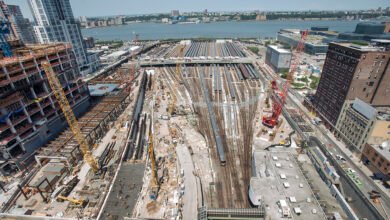
This designer’s story is not an anomaly; it is a data point in a city undergoing a painful and rapid transformation. The economic pressure is immense, particularly in neighborhoods targeted for development like the Ironbound and the Downtown Central Business District. To understand why this is happening, one must look past the shiny new construction and cranes dotting the skyline and examine the specific economic engine driving the change. A groundbreaking report from Rutgers Law School’s Center on Law, Inequality & Metropolitan Equity (CLiME), titled “The Other Cities,” provides the crucial vocabulary: Newark is in the grip of
“Jobless Gentrification”.
This isn’t the classic revitalization story where new investment brings a wave of high-paying jobs that could, in theory, lift the local economy. Instead, “Jobless Gentrification” describes a phenomenon where massive capital flows into building expensive, market-rate housing aimed at affluent newcomers—often those commuting to New York City—while failing to create corresponding career opportunities for the people who already live there. The result is a cruel paradox: the city’s aesthetic improves for outsiders while its affordability collapses for insiders. The very model of Newark’s “revitalization” is structured to benefit commuters and investors at the direct expense of incumbent residents, particularly young renters who lack the capital to own property. This isn’t an unfortunate side effect; it’s the core function of this specific economic process. For young Black residents, this doesn’t feel like a renewal; it feels like an erasure, a process happening
to them, not for them. This sentiment is echoed in viral TikTok videos that mourn the changing face of downtown Newark, with captions like, “What happened to our city staright gentrification before our own eyes”.
This modern crisis is built on a historical foundation of systemic inequality. After World War II, federal policies actively subsidized the growth of suburbs, making low-interest mortgages readily available to white families while simultaneously “redlining” urban neighborhoods, effectively trapping Black families in areas of disinvestment. This legacy of segregation and economic exclusion created the conditions that have made Newark’s Black communities acutely vulnerable to the predatory pressures of today’s housing market.
A Tale of Three Cities: The Regional Pressure Cooker
The crisis in Newark is not happening in a vacuum. It is part of a regional pattern of displacement that is squeezing Black and Brown working-class communities across North Jersey. The CLiME report frames this by comparing Newark to its neighbors, Jersey City and Paterson, each representing a different stage or type of this urban transformation.
Jersey City stands as a cautionary tale, a vision of Newark’s potential future. The report labels it the “Bedroom City,” a place now fully gentrified, where its proximity to New York City has driven rents to become some of the highest in the United States. This hyper-gentrification has come at a steep cost, displacing a significant number of long-term Black residents who can no longer afford to live in the city their families helped build. Personal stories from Jersey City echo this pain, with lifelong residents feeling like “foreigners” in their own hometown as family homes are replaced by soulless luxury units renting for over $3,000.
Paterson, meanwhile, is what the report calls a “Migrant Metro.” Its housing crisis is driven less by an influx of affluent professionals and more by sheer population density and a chronic shortage of affordable housing options. The outcome, however, is tragically similar: an astonishing 62.3% of households in Paterson are rent-burdened, meaning they spend more than a third of their income on housing.
Across all three cities, a stark and alarming trend emerges: the displacement of Black residents. While Newark has seen an influx of Black immigrants from the Caribbean and West Africa, the data suggests a simultaneous exodus of African Americans, raising critical questions about where these families are being forced to go. This regional view makes it clear that the housing crisis is not just an economic issue but a profound threat to the stability and future of Black communities throughout the state.
Part II: The Hustle and The Housemates: Everyday Survival
The Crowded Apartment: Roommates as a Necessity
For young Black professionals in New Jersey, the dream of living alone—a key marker of adulthood and independence—is increasingly a luxury they cannot afford. The traditional post-college phase of living with roommates has morphed into a long-term economic strategy for survival. The rental market itself reflects this new reality. A scan of listings in Newark reveals a thriving sub-market of single rooms for rent, with prices ranging from $850 to as high as $1,400 per month.Even a fraction of an apartment now costs what an entire unit might have a decade ago.
Behind these numbers are stories of compromised lives. Young adults are forced to navigate the complexities of shared finances, conflicting schedules, and a persistent lack of privacy. It’s a state of arrested development, where personal and professional growth is hampered by the inability to secure a stable, private living space. The psychological toll is significant—a constant feeling of being behind, of working harder than previous generations only to afford less. This isn’t just about sharing a bathroom; it’s about the erosion of autonomy and the indefinite postponement of life’s milestones.
The Side Hustle That Never Sleeps
To bridge the ever-widening gap between income and rent, the side hustle has become a non-negotiable part of life. The gig economy, once touted as a path to flexibility and entrepreneurial freedom, now functions as a mandatory second or third job for many young renters. Job boards are filled with listings for “side hustles” in New Jersey, from retail scanning and tutoring to delivery driving. While the language of these ads promises opportunity, the reality is often precarious work with low pay and no benefits.
The desperation for additional income has even pushed some toward high-risk ventures. Research on New Jersey’s most popular side hustles reveals that “arbitrage betting”—a form of high-volume sports gambling—is a top choice. This turn toward gambling as a means of making rent money is a stark indicator of the financial anxiety gripping this generation. They are not working multiple jobs to save for a down payment or to invest; they are hustling relentlessly, day and night, simply to keep a roof over their heads.
The Affordability Gap: A Generational Chasm
The math behind this constant hustle is unforgiving. When median incomes are juxtaposed with average housing costs, the depth of the crisis becomes starkly clear. This is not a matter of poor budgeting or frivolous spending; it is a structural affordability gap that disproportionately impacts the youngest members of the workforce.
In New Jersey, the median income for a Gen Z worker is approximately $52,624 annually. For millennials, that figure is higher, at around $106,274. Now, consider the average rent for a one-bedroom apartment in a gentrifying area like Newark’s Ironbound, which stands at $1,800 per month, or $21,600 per year. The disparity is laid bare in the following table.
| Metric | Gen Z | Millennial |
| Median Annual Income (NJ) | ~$52,624 | ~$106,274 |
| Average 1-BR Rent (Newark) | ~$21,600 ($1,800/mo) | ~$21,600 ($1,800/mo) |
| % of Pre-Tax Income on Rent | ~41% | ~20% |
| Rent Burden Status | Severely Rent-Burdened | Not Rent-Burdened |
The federal government defines being “rent-burdened” as spending 30% or more of one’s income on rent, and “severely rent-burdened” as spending 50% or more. While this table uses pre-tax income and is an approximation, it clearly shows that a typical Gen Z worker in New Jersey is forced to spend over 40% of their gross income just to rent a modest one-bedroom apartment in Newark. This is a state of profound and unsustainable economic distress.
This analysis reveals a hidden mechanism propping up the inflated rental market. The combination of multiple roommates and a patchwork of side hustles acts as a “shadow subsidy.” Landlords set rents based on a market rate that is disconnected from the economic reality of a single, entry-level worker. To meet this price, young renters are forced to pool their fragmented incomes and precarious gig work. In essence, the landlord is being paid not by one stable salary, but by the combined, relentless hustle of several individuals. This collective effort makes an unaffordable rent appear “affordable” on a lease application, thereby validating and perpetuating the high prices. This creates an incredibly fragile ecosystem. If one roommate loses their job, or a delivery app changes its pay structure, the entire household is immediately at risk of eviction. This is not a stable foundation for a life, a community, or a city. For Black households, who already face a staggering racial wealth gap, this crisis makes it nearly impossible to save, invest, or even dream of one day owning a home, ensuring that generational wealth remains perpetually out of reach.
Part III: Not Just a Hashtag: The New Wave of Activism
Debunking “Slacktivism”: From Clicks to Concrete Action
Faced with this systemic crisis, young Black New Jerseyans are not just passively accepting their fate. They are organizing, mobilizing, and fighting back, and their primary battlefield is the internet. For years, older generations have often dismissed online political engagement with the pejorative term “slacktivism”—the idea that liking a post or signing an online petition is a lazy substitute for “real” activism. However, for Gen Z, this critique is fundamentally obsolete.
Research from Tufts University’s CIRCLE and other academic institutions demonstrates a powerful and direct correlation between online engagement and offline political action among young people. Far from being a substitute, digital activism serves as an entry point and a powerful organizing tool that translates clicks into concrete results. One study found that the percentage of young people who attended a march or demonstration tripled from 5% in 2016 to 15% in 2018, an increase that tracked directly with their rising engagement in online political discourse. For this generation, the digital and physical worlds are not separate arenas; they are a fluid continuum of action where mobilization begins with a share, a hashtag, or a DM.
The Digital Picket Line: Jersey’s Gen Z Organizers
This new model of activism is on full display in New Jersey. At the forefront is Climate Revolution Action Network (CRAN), a Gen Z-led organization that has mastered the art of leveraging digital tools for political impact. Their methods are a case study in modern organizing. When advocating for the New Jersey Climate Superfund Act—a bill to make corporate polluters pay for climate-related damages—CRAN launched a digital campaign that was anything but “slack.” It generated over
1.2 million letters to elected officials, a deluge of constituent pressure that is impossible for lawmakers to ignore. This is not symbolic; it is a tangible, measurable application of political power.
This model is not limited to established organizations. Individual creators are also becoming powerful nodes of activism. When a proposed housing development threatened the Black Run Reserve, a beloved nature spot in South Jersey, fashion and lifestyle influencer Zoe Welsch took to her TikTok account to raise the alarm. Her posts helped galvanize a massive response, contributing to a campaign that sent over 100,000 letters to officials, the majority from people aged 18 to 28.This demonstrates how a single, trusted voice can activate an entire network of peers. These young activists are digitally fluent, using memes, viral video formats, and trending audio to break down complex policy issues and make them accessible and urgent for their audience.
The Activist’s Dilemma: The Mental Toll of the Timeline
This powerful new form of activism, however, comes at a significant personal cost. The very platforms that enable mobilization also serve as conduits for trauma and stress. For Black youth, the 24/7 news cycle on social media means constant exposure to content about racial injustice, from police brutality to gentrification and displacement. Research has directly linked this exposure to higher rates of anxiety, depression, and trauma-related symptoms.
Furthermore, when these young people step up to lead, they often become targets. Black activists frequently face a barrage of online harassment, racist comments, and threats of violence, which takes a severe toll on their mental health and their ability to sustain their work. This constant battle against entrenched systems, both online and off, can lead to profound burnout and a sense of hopelessness, as the emotional labor of fighting for one’s own humanity becomes overwhelming. The fight for justice is not just a political battle; it is a psychological one, and its young soldiers are on the front lines.
The strategies employed by these young activists reveal a sophisticated and replicable model for 21st-century social change. They have developed an “intersectional activism playbook” that is uniquely suited to the challenges of the modern world. First, their framework is inherently intersectional. Groups like CRAN do not see housing justice as separate from climate justice, or corporate accountability as separate from environmental racism; they understand these are all facets of the same struggle for a just and livable future. This broad, inclusive message allows them to build powerful coalitions that cut across single-issue silos. Second, they leverage digital platforms to achieve massive scale, as seen in the 1.2 million letters generated for the Superfund Act. Finally, they apply this immense digital pressure to hyper-local and state-level targets—a specific housing development, a municipal council meeting, a key legislative committee.This playbook—build an intersectional coalition, mobilize it at scale online, and focus its power on a vulnerable political pressure point—is a formidable new force in New Jersey politics, one that is agile, powerful, and poised to reshape the future of advocacy.
Part IV: From The Block to The Boardroom: Organizing for Power
Standing on Shoulders: The Legacy of Tenant Organizing
While the methods of Gen Z activists may be new, their fight is not. The current movement for housing justice in New Jersey is built upon a long and hard-fought history of tenant organizing. Groups like the New Jersey Tenants Organization (NJTO), the state’s oldest and largest tenant membership group, have been lobbying for renters’ rights and affordable housing for decades. In Newark, the
Greater Newark HUD Tenants Coalition has been organizing residents in government-assisted housing since 1987, empowering tenants and fighting for safe and healthy living conditions.
This legacy is steeped in direct action and radical resistance. In the 1960s and 70s, Newark tenants, facing neglectful absentee landlords and deplorable conditions described as “vast scrawls of Negro slums,” organized rent strikes to demand change. The longest rent strike in the history of U.S. public housing took place at Newark’s Stella Wright Homes from 1970 to 1974, a testament to the resilience and determination of the city’s residents. Today’s young activists are not starting from scratch; they are the inheritors of this powerful tradition, adapting its spirit of collective action to the tools and challenges of their time.
The Policy Fight: Rent Control and Beyond
The central policy battleground in this fight is rent control. Newark has one of the state’s more robust ordinances, which, after a 2017 amendment, caps annual rent increases at 4% for most rental units in the city. This law is a direct result of decades of tenant advocacy and provides a crucial layer of protection for many residents. However, powerful real estate interests have consistently pushed for loopholes. A significant one, rooted in state law, exempts newly constructed buildings from local rent control for 30 years.
This exemption became a primary engine of gentrification, as developers could build luxury towers and charge whatever the market would bear, driving up rents in surrounding neighborhoods. In response, activists and the city government engaged in a legislative cat-and-mouse game. In 2023, the Newark City Council passed a new ordinance specifically targeting these exempt buildings, limiting their annual rent increases to 5%. This constant struggle to close loopholes and adapt policies demonstrates the need for relentless vigilance and proactive organizing to ensure that tenant protections remain meaningful in a rapidly changing market.
Building Power, Building Homes: The Advocacy Ecosystem
The fight for housing justice is waged by a diverse ecosystem of organizations, each playing a critical role. While grassroots groups mobilize residents, sophisticated legal and policy organizations provide the muscle needed to challenge systemic inequality in the courts and the legislature.
At the forefront of this legal battle is the Fair Share Housing Center. Born out of the landmark 1975 Mount Laurel Idecision, which established that every municipality in New Jersey has a constitutional obligation to provide its “fair share” of affordable housing, the organization has a 98% success rate in enforcing this doctrine through legal action. Their work is deeply intersectional. A prime example is their “Ban the Box in Housing” campaign, which successfully led to the passage of the Fair Chance in Housing Act in 2021. This law prohibits most landlords from asking about a potential tenant’s criminal history on an initial application, directly linking the fight for housing justice with the movement for criminal justice reform and addressing the disproportionate impact of both systems on Black communities.
Complementing this legal advocacy are organizations working on the ground to create and preserve affordable housing. Monarch Housing Associates works with communities across the state to develop supportive housing and implement strategies to end homelessness, with a focus on racial equity. In Newark,
The Apostles’ House provides emergency shelter and comprehensive social services for families on the brink, offering a critical safety net in a city with a desperate need. Together, these groups—from the grassroots tenant union to the state-level legal powerhouse—form a multi-front movement for housing justice.
The central challenge in this fight is navigating New Jersey’s complex and often contradictory “policy patchwork.” The state has no overarching, statewide rent control law, instead deferring to “home rule” and allowing individual municipalities to enact their own ordinances. This has been a double-edged sword. On one hand, it has empowered strong, tenant-led movements in cities like Newark to pass some of the state’s most protective local laws. On the other hand, the state legislature, under pressure from powerful developer lobbies, has created critical loopholes, such as the exemption for new construction, that directly undermine those local protections. This creates a paradox where a city can have a tool to protect its existing affordable housing stock while the state simultaneously enables the very forces of gentrification that destabilize the entire market. The fight, therefore, cannot be won on a single front. It requires a sophisticated, multi-level strategy that combines hyper-local organizing, municipal policy battles, and statewide legal and legislative advocacy to address a fragmented and deeply challenging political landscape.
Part V: The Long Game: What’s Next for Jersey’s Youth?
The Stakes: More Than Just an Apartment
The housing crisis in New Jersey is about more than just the monthly rent. For young Black residents, what is at stake is the very soul of their communities. Unchecked gentrification threatens to erase the vibrant cultures, histories, and social fabrics that make cities like Newark unique. It is a slow, economic C-section that cuts the heart out of a neighborhood, replacing long-term residents and local businesses with a transient, affluent population that has little connection to the city’s legacy.
The long-term economic consequences are equally dire. The inability to find affordable, stable housing prevents an entire generation from building wealth. With homeownership rates in Newark already shockingly low—and the gap between renter incomes and home prices widening—the dream of buying a home is becoming an impossibility. This perpetuates the racial wealth gap, a chasm created by decades of discriminatory policies, ensuring that Black families remain locked out of the primary means of building generational wealth in America. The fight to stay in their apartments today is inextricably linked to the fight for their economic future tomorrow.
Key Takeaways & Next Steps
For those moved by this crisis and inspired by the resilience of New Jersey’s young activists, the path forward is not one of passive observation but active participation. The fight for housing justice requires an all-hands-on-deck approach.
For Renters:
- Know Your Rights: The first step is education. Contact the Newark Office of Rent Control to understand the specific laws that govern your building and your lease. Reach out to the New Jersey Tenants Organization (NJTO) for guidance and resources on your rights as a renter. Knowledge is power.
- Organize Your Building: You are not alone. Connect with your neighbors. Discuss your rent increases and building conditions. Consider forming a tenant association to build collective power. Organizations like the Greater Newark HUD Tenants Coalition have decades of experience in helping residents organize and can provide invaluable support and training.
For Allies:
- Amplify & Support: Follow, share, and uplift the work of youth-led organizations like Climate Revolution Action Network (CRAN) on social media. Their digital campaigns are a key part of their power. If you have the means, donate to housing advocacy groups like Fair Share Housing Center, which are fighting these battles in court every day.
- Show Up: Your presence matters. Participate in the digital letter-writing and petition campaigns that these groups organize. Attend your local municipal council meetings, both in person and virtually, to testify in support of pro-tenant, pro-affordable housing policies. Add your voice to the chorus demanding change.
Policy Demands:
- Strengthen and Expand Rent Control: Advocate for closing state-level loopholes and push for a statewide framework that protects all tenants from unconscionable rent hikes.
- Fund Truly Affordable Housing: Demand that public funds and subsidies go toward the creation of housing that is genuinely affordable for low- and moderate-income families, not just luxury developments that accelerate displacement.
- Dismantle Barriers to Housing: Support and advocate for policies like the Fair Chance in Housing Act that address the systemic discrimination that keeps people of color and those with past legal system involvement from securing a home.
Conclusion: The Future We’re Building — Together
Let us return to the young designer in the Ironbound, staring at that life-altering email. In a different story, this is where her connection to Newark might have ended. She would have packed her boxes, another casualty of “Jobless Gentrification.” But this is not that story.
Because of the work of generations of activists before her and the vibrant digital movement of her peers, she has other options. She now knows about the city’s rent control ordinance. She finds the local tenant union on Instagram. She joins a digital campaign to demand more affordable housing. She is no longer just a renter; she is an organizer. She is no longer a victim of circumstance; she is an agent of change.
The challenges facing young Black renters in New Jersey are immense, born of historical injustices and fueled by modern greed. But the resilience, creativity, and unwavering determination of this generation are even greater. They are armed with a deep understanding of intersectional justice, the digital fluency to mobilize millions, and the unshakeable belief that they have a right to not just survive in their cities, but to thrive in them. The future of New Jersey is not written in the developers’ blueprints or the landlords’ lease agreements. It is being written right now, in the DMs of organizers, in the comment sections of viral TikToks, in the chambers of city hall, and in the streets. It is the future they are building, together.