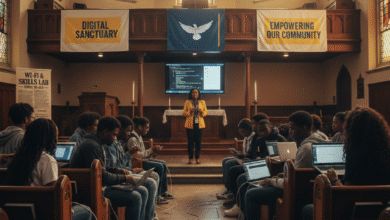
The Sound of Heaven: Why the Black Church Worship Experience is Unique
Step into a Sunday service anywhere from Newark to New Orleans and you’ll know it instantly—the Black church worship experience is its own universe. The sanctuary hums before the first chord, ushers move like a quiet drum line, and when the choir opens their mouths, it’s not just melody; it’s memory, theology, and community rising together. This isn’t performance. It’s a living archive where our ancestors’ prayers meet our today’s praise.
At its best, the Black church worship experience is a sacred conversation—between God and God’s people, between pew and pulpit, between yesterday’s struggle and tomorrow’s hope. It’s how a community that carried so much found a way to sing anyway.
“Lift Every Voice”: The People’s Liturgy of Call and Response
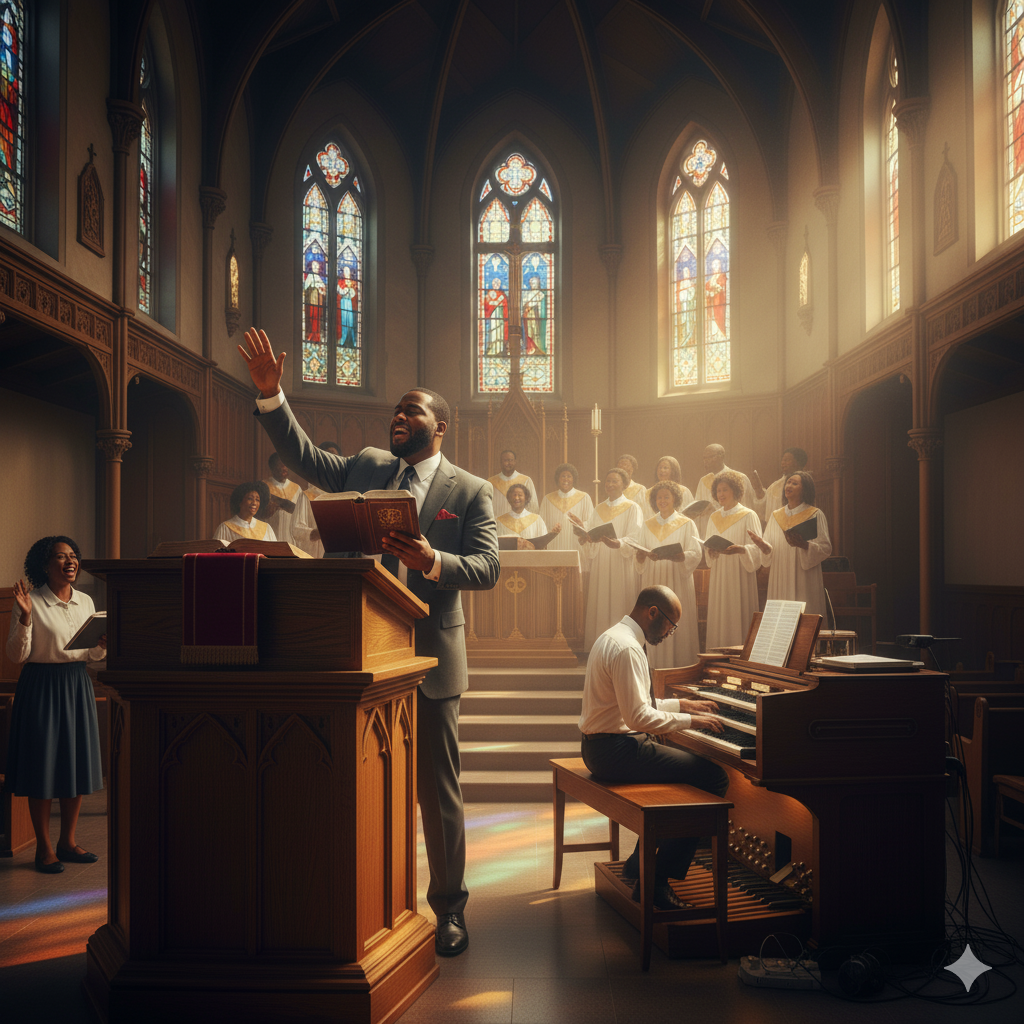
Call-and-response is the heartbeat. The preacher calls, the people answer. The soloist lifts a line, the choir—and then the congregation—lifts it higher. This is participatory theology, not passive listening. It democratizes the moment: truth doesn’t just live in the pulpit; it lives in the pews that shout “Amen,” “Say that,” and “Teach!”
Why it matters:
- It affirms that revelation is communal—we discern together.
- It keeps the room spiritually awake and emotionally connected, creating a feedback loop of shared energy.
- It trains young worshipers to “own” the service—voice, body, and spirit engaged.
For youth who grew up in digital dialogue, call-and-response feels native. It’s real-time feedback, sacred and social, giving them a way to belong in the liturgy.
The Choir as Community—Harmony, Heritage, and Holy Courage
From children’s choirs in pressed white shirts to mass choirs backed by a full band, the choir is more than music—it’s a ministry of memory and muscle. When altos and tenors lock in under a Hammond B-3’s warm growl, you hear history: spirituals born in bondage, hymns learned by lamplight, gospel birthed from grit and grace.
- Theological depth: Lyrics preach doctrine: God’s faithfulness, liberation, endurance, and joy.
- Social impact: Choirs have long been leadership pipelines, teaching discipline, teamwork, and public confidence to youth.
- Generational bridge: Grandmothers sing the hymn, Gen-Z arranges the vamp—same Spirit, fresh sound.
The “Whoop” and the Word—Preaching That Sings
The “whooping preacher” is a defining sound—a sermonic style where cadence turns the sermon into song. It’s kerygma(proclamation) scored with melody. As the preacher modulates, the organ echoes, the drummer accents, and the congregation rides the wave. Done with care, whooping is not theatrics; it’s a technique in service of truth, using Black oratorical genius to make the Word unforgettable.
Why it works:
- It encodes theology in sound—people remember the feel and the phrase.
- It mirrors our oral tradition: testimony, poetry, call-and-response, and jazz-like improvisation.
- It validates emotion, granting permission to shout, weep, or sit in holy silence.
Sacred Roots: Ring Shout, Revival, and Revolutionary Joy
Long before microphones, our ancestors worshiped with the ring shout—a circle dance with shuffling feet, polyrhythms, and chanted praise. Those practices never died; they evolved. Today’s praise breaks, hand claps, and syncopated runs are living descendants of West African aesthetics, Hush Harbors, and camp-meeting revivals. The Black church found a way to hide a drum in the voice, a dance in the pew, and a protest in the praise.
- Short-term impact: cathartic release, mental and emotional regulation, communal bonding.
- Long-term impact: cultural continuity, resilience training, and an embodied theology that says, “We were created to be free.”
Youth in the Aisles: Why the Sound Still Speaks
Talk to young worshipers and they’ll tell you: they crave authenticity. They love the choir runs and the praise breaks, but more than anything, they love when the culture meets the cause. That’s why you’ll see youth choirs mixing gospel with Afrobeats textures, spoken-word interludes alongside Scripture, and TikTok-style visual storytelling repurposed to elevate testimonies.
What youth value now:
- Participation: singing, drumming, dancing, media ministry, sound engineering.
- Relevance: sermons and songs that name mental health, justice, identity, college stress, and calling.
- Representation: leadership roles that don’t make them wait until they’re “older” to be taken seriously.
When churches invite youth to help produce the sound (arrangements, visuals, livestream direction), they don’t just retain them—they raise leaders.
The Band Is a Theologian Too—Hammond, Drums, and the Organ Talk Back
If you know, you know: that Hammond organ is a whole sermon. The keyboardist “answers” the preacher, the drummer paints punctuation, the bass player lays comfort under the congregation’s sighs. In the Black church worship experience, instruments don’t accompany worship; they interpret it. They hold the room during altar call, push the choir into flight, and whisper to a grieving mother, “You’re not alone.” Musicians often learn theory and theology at once—phrasing their faith in chords, not just creeds.
When Worship Heals: The Church as a Clinic for the Soul
Week after week, the sanctuary becomes a community clinic—no co-pay required. Music lowers defenses, preaching reframes despair, and prayer lines create triage for spirit and mind. Add practical supports (benevolence funds, counseling referrals, college care packages), and the worship experience moves from feeling better to living better.
- Short-term: stress relief, belonging, hope.
- Long-term: strengthened identity, intergenerational mentorship, civic courage.
Tradition Meets Tomorrow—Livestreams, Mashups, and Global Diaspora Flow
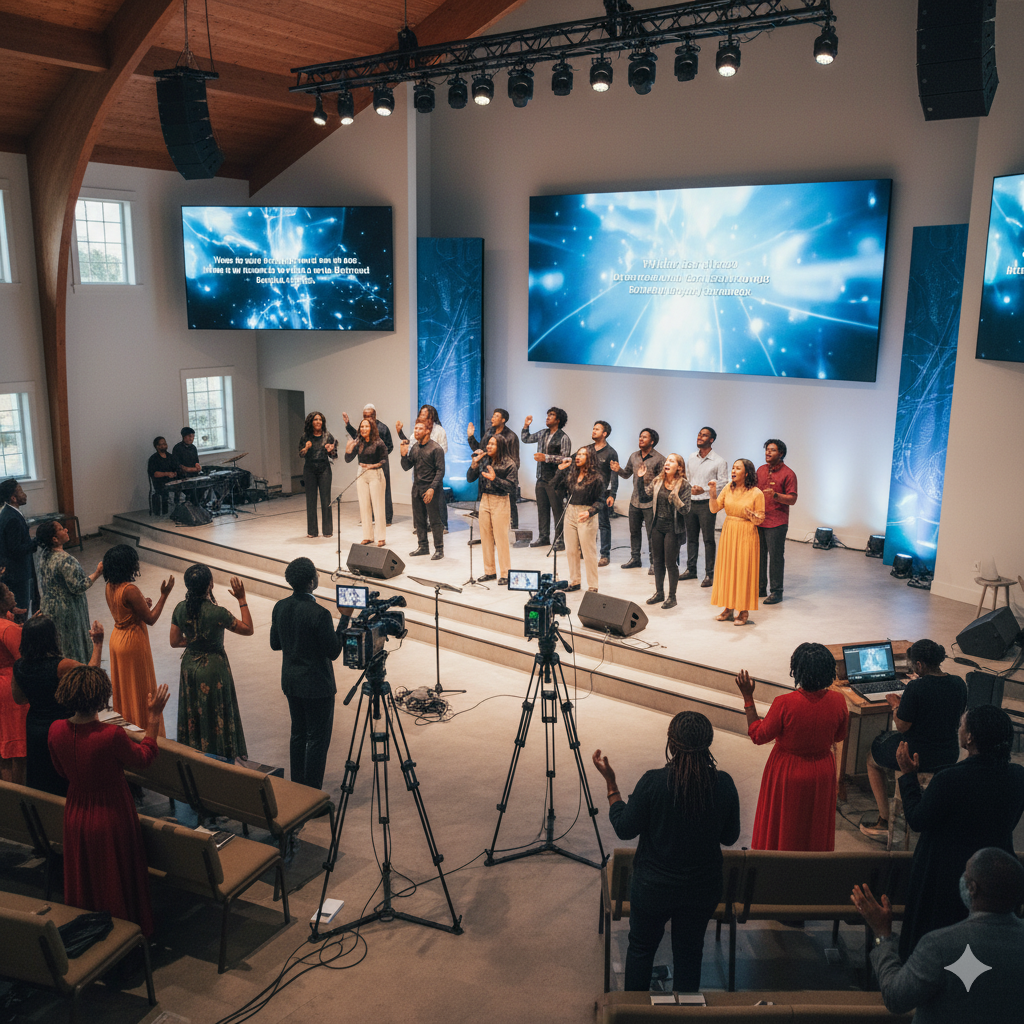
Post-2020, many churches kept hybrid worship. That meant the sound of heaven now travels through earbuds and living rooms. Youth turn clips into devotional reels; aunties replay praise breaks on Monday mornings. Choirs collaborate across states; diaspora congregations trade rhythms like love notes.
Key shifts to watch:
- Production as ministry: thoughtful audio mixing, captions, and camera direction that still honors the Spirit’s spontaneity.
- Repertoire growth: hymns + contemporary gospel + Afro-Caribbean and Afrobeat praise.
- Digital hospitality: online prayer requests, newcomer shoutouts, and QR codes to plug people into service.
Guardrails for the Glory—Keeping It Holy, Not Just Hype
Every gift needs guidance. Churches that thrive keep worship beautiful and biblical:
- Teach the why behind call-and-response, the choir’s role, and the preaching craft.
- Set a culture where excellence serves God and people, not ego.
- Give young artists formation—music theory, Scripture study, cultural history—so they carry the tradition with integrity.
When the room is right, the sound isn’t just loud—it’s true.
Key Takeaways
- The Black church worship experience is a communal conversation—pew and pulpit co-preaching.
- Choirs are leadership schools; music and memory shape theology and identity.
- Whooping, call-and-response, and the band’s “talk back” are not theatrics—they’re tools for teaching and healing.
- Youth remain engaged when they co-create the sound and see their real lives named in word and song.
- Healthy guardrails ensure worship stays Spirit-led, theologically sound, and people-centered.
What We Can Do Next (Call to Action)
- Invite youth to lead (music direction, media, hosting, poetry).
- Commission new arrangements that blend hymnody, gospel, and diaspora rhythms.
- Offer workshops on the history and theology of Black worship—from the ring shout to right now.
- Care for the whole person—pair praise with practical support and mental health resources.
- Tell your story—record testimonies, archive music, and share clips to encourage others.
When we steward this sound with love and wisdom, the sanctuary becomes what it’s always been: a rehearsal for freedom.
Related HfYC Content
-
Celebrating Black Joy in New Jersey’s Faith & Culture Spaces (Churches)
-
Weekly Prayers, Weekly Pain: Families Gather Outside Delaney Hall in Search of Hope
Other Related Content
References (APA Style)
- Cone, J. H. (1997). God of the oppressed. Orbis Books.
- Darden, R. (2014). Nothing but love in God’s water: Black sacred music from the Civil War to the Civil Rights Movement. Penn State Press.
- Lincoln, C. E., & Mamiya, L. H. (1990). The Black Church in the African American Experience. Duke University Press.
- Lovell, J. (2008). Black gospel music in a secular age. University Press of Mississippi.
- Townes, E. M. (2006). Womanist ethics and the cultural production of evil. Palgrave Macmillan.
-

-
-
-