

Has Social Media Changed Dating Forever? A Deep Dive Into Modern Love From the Men’s Perspective
There was a time when dating felt local, grounded, and rooted in everyday community life. You met people because your paths crossed naturally—your cousin introduced you, your friend hosted a cookout, someone’s auntie played matchmaker, or you bumped into each other at church or school. There was romance in living within the same city limits, seeing someone regularly, and slowly building familiarity. There was also a kind of privacy that allowed relationships to unfold—or dissolve—without a digital audience watching every move.
But those days are long gone.
In less than a generation, dating has undergone one of the biggest cultural transformations in modern history. The shift didn’t happen through changes in law, religion, or gender roles. It happened through social media and digital platforms—through apps, algorithms, curated profiles, and an endless stream of people in the palm of your hand.
This shift didn’t just rearrange who people date; it reshaped how people think about dating, what they expect, what they tolerate, and even how they view themselves. And for Black men especially, the difference between yesterday’s world and today’s is striking. Many describe feeling like they’re navigating a landscape where visibility is currency, confidence is performance, attention is fragmented, and the competition is now not just local—not just national—but global.
This is the story of how social media changed dating—and what that change feels like from the Millennial men who are trying to navigate it.
From Neighborhood Romance to Global Selection: The New Dating Reality
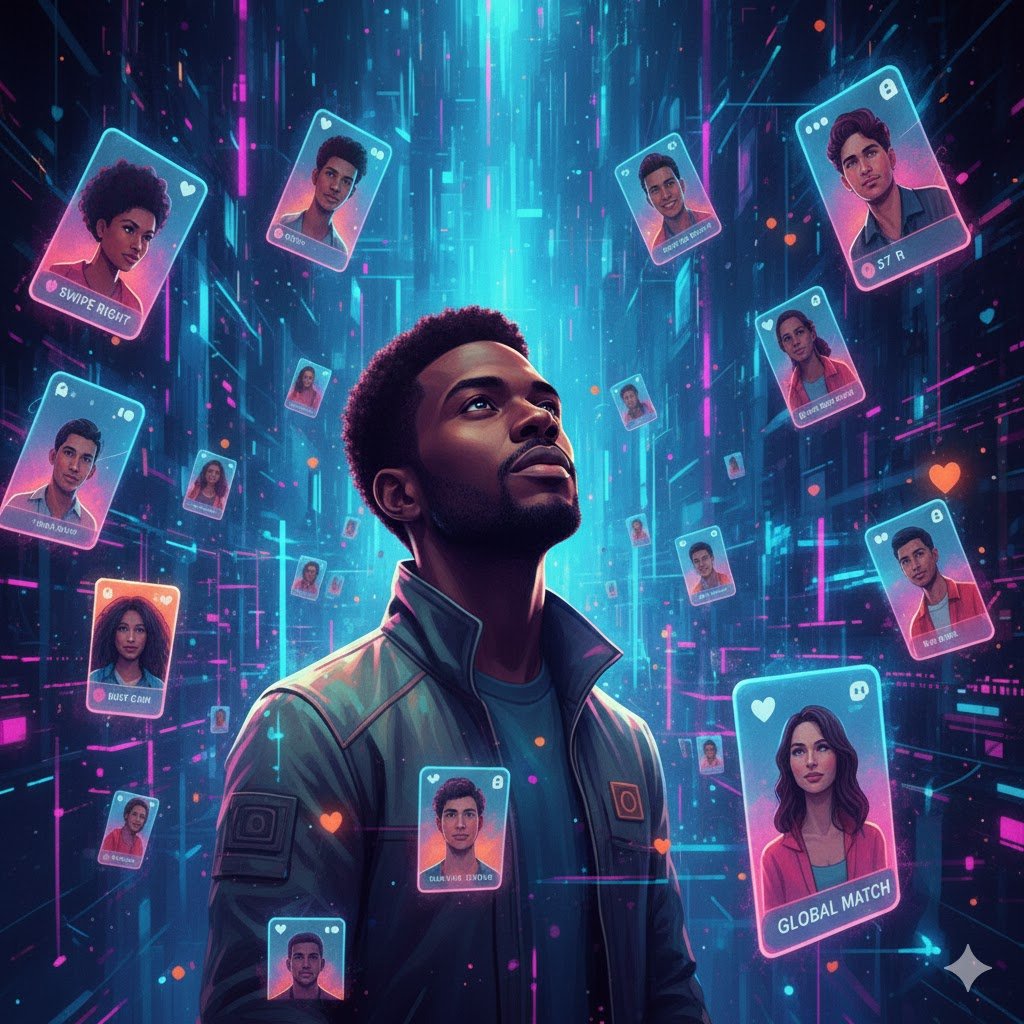
Before social media, your dating pool was shaped by geography, community, and shared life rhythms. If you lived in Newark, your dates usually lived within a few miles of you. If things ended, you might run into each other again—or you might not. Either way, the emotional landscape was manageable. Rejection hurt, but it wasn’t public. Interest grew slowly because people got to know each other organically.
Social media disrupted that entire framework. Suddenly, people could access partners across cities, states, and continents. A woman in Chicago could match with a man in Lagos. A man in Newark could flirt with someone in London. Proximity became irrelevant, and the “best option” no longer meant the best person in your area—it meant the best person out of thousands or millions.
For men, this expansion of the dating pool has been a double-edged sword. On one hand, it creates opportunities. On the other, it creates an overwhelming sense of competition. Many men describe this shift as going from “playing in the local league” to “competing in the world league” without notice, preparation, or the chance to opt out.
It is one thing to compete with the men in your neighborhood. It is another to compete with every attractive, charismatic, financially successful, or socially influential man on the internet. This new reality means online visibility, aesthetic presentation, and social status matter more than ever before—often overshadowing personality, character, or long-term compatibility.
The Rise of Hyper-Selectivity: When Swiping Replaces Human Connection
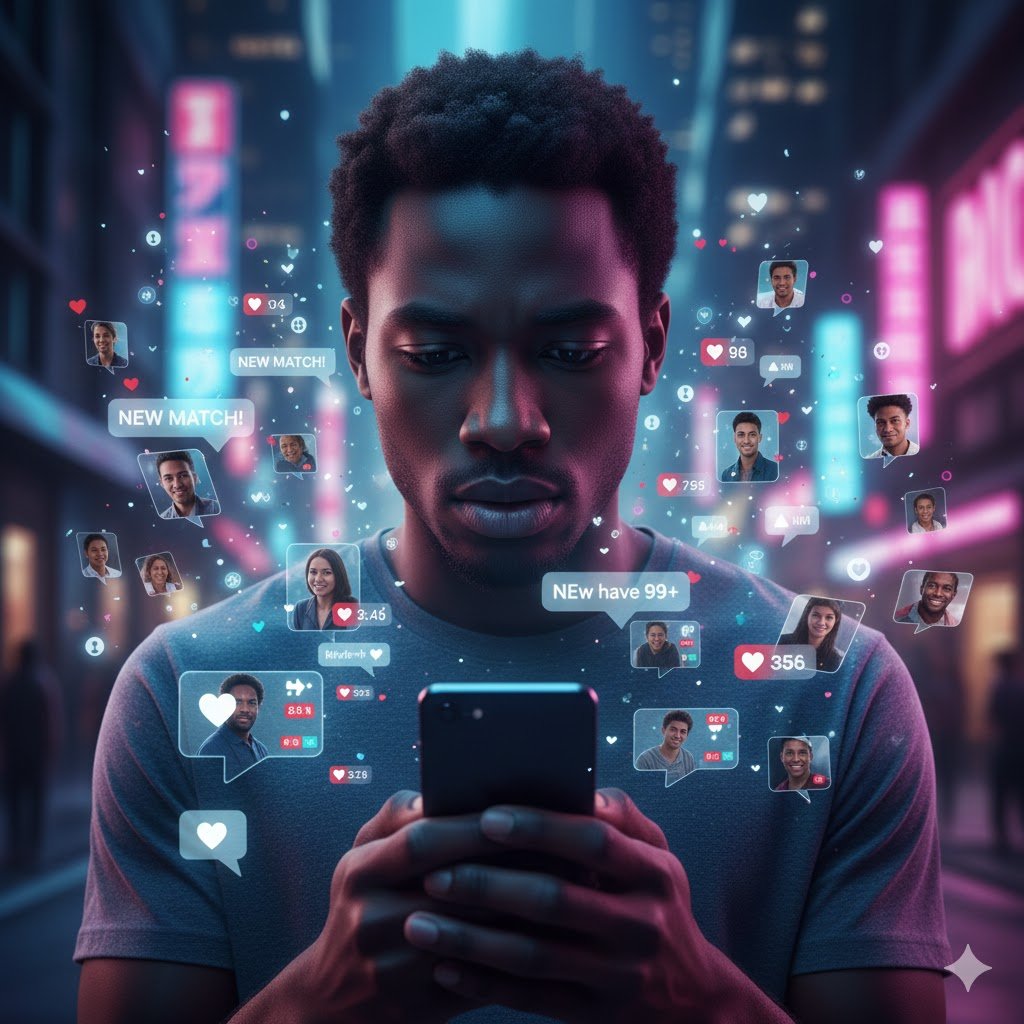
One of the most dramatic shifts in how social media changed dating is the normalization of quick, superficial decision-making. Dating apps designed for rapid swiping conditioned people to make instant judgments based on a handful of images and a short bio. Then Instagram, TikTok, and even LinkedIn brought similar behaviors into non-dating spaces.
What used to require conversation and time now happens in seconds. Someone’s entire romantic fate can be decided because their outfit isn’t trendy, their caption isn’t witty, or their photo doesn’t reflect a lifestyle full of travel and aesthetics. People are not just evaluating potential partners—they are comparing them to a curated feed of celebrities, influencers, content creators, fitness models, and high-status individuals whose lives are edited for attention.
For women, this abundance of options has created freedom and agency, but it has also increased pressure to weed out “unworthy matches” quickly. For men, the same abundance often leads to the feeling of being easily dismissed, overlooked, or filtered out long before personality has a chance to shine. The emotional impact is subtle but powerful: dating feels less like a two-way exploration and more like a competition for limited attention.
Many men describe modern dating this way:
“People don’t date each other—they date the idea of a better option.”
When Everyone Is Accessible: Boundaries, Loyalty, and the Illusion of Choice

Once social media opened the floodgates of accessibility, the concept of loyalty shifted. It’s not necessarily that people want to cheat more—but that the barriers that once made cheating difficult have all but evaporated. A simple reaction, a comment, or a DM can turn into a conversation that snowballs into something deeper. Emotional cheating has become common not because people are inherently less loyal, but because digital intimacy is easier than ever and often doesn’t “feel” like cheating in the moment.
In the past, if you were dating someone, your only exposures to other potential partners came through real-life interactions. Now your partner has access to hundreds of attractive strangers every time they open their phone. Even people in committed relationships are influenced by the constant stream of stimulation. A person who feels neglected can scroll and instantly find validation. A person who feels bored can rekindle conversations with “old flames” in minutes.
From the men’s perspective, this dynamic creates insecurity not rooted in fear, but in realism. Many men feel they are competing against constant, invisible digital forces—people who exist in comment sections, on For You Pages, or in DMs. The partner you love may not be unfaithful, but the options surrounding them are always present, always accessible, always within reach.
Dating today requires trust, but trust now feels like a harder leap than ever.
No More Disappearing Acts: The End of Quiet Breakups
In the pre-digital era, people could break up and genuinely move on. You didn’t have to see your ex’s new relationship unfold in real time. You didn’t have to witness their glow-up, their trips, their new hobbies, or their new partner’s face smiling back at you from a timeline you didn’t ask to see. Social media made it nearly impossible to disconnect from former relationships.
This has reshaped the emotional landscape for men. The inability to truly “disappear” means heartbreak lasts longer, comparison becomes unavoidable, and healing becomes more complex. Even blocking someone doesn’t guarantee peace—the algorithms may reintroduce them indirectly through mutual friends or old memories.
The emotional privacy that once protected people after breakups has disappeared. Everyone has become a spectator in each other’s healing processes, and the digital footprint of past relationships lingers far beyond their actual lifespan.
The Global 80/20 Dynamic: When the World Wants the Same People
One of the lesser-discussed consequences of how social media changed dating is the emergence of what people describe as the “global 80/20 rule”—the idea that most women compete for a small percentage of the most desirable men worldwide.
Even if the exact numbers vary, the dynamic is real. Social media collapsed individual dating markets into one giant global market, creating an environment where people gravitate toward a narrow band of highly attractive, high-status individuals. Meanwhile, millions of regular, kind, stable people—men and women—find themselves overlooked simply because they cannot compete with algorithm-boosted digital personas.
Men report feeling invisible unless they fit specific aesthetics or income brackets. Women report feeling pressured to chase men who receive attention from everyone else because visible desirability now signals value. What used to be individual preference is now crowd-driven attraction shaped by popularity metrics.
The human cost of this shift is significant. People begin to question their worth not based on character or connection but on digital performance, engagement, and attention.
The Youth Perspective: More Choices, More Challenges
Young people today are navigating dating with more tools than any generation before them, yet many report feeling lonelier and more confused than their parents or grandparents ever were. They are fluent in emotional vocabulary, therapy language, and mental health discourse—yet their romantic lives are full of anxiety, doubt, and exhaustion.
Social media gives young Black men and women access to potential partners worldwide but also exposes them to comparison culture, validation addiction, and the constant fear of being replaceable. Young men often say they feel they must compete with influencers, musicians, and high-earning digital personalities. Young women say they struggle to trust men because online behavior has blurred so many boundaries.
Despite all this, younger generations are also pioneering new approaches to dating:
more transparency, more conversations about boundaries, more emphasis on mental health, and more willingness to walk away from toxic situations early. But they are still navigating a dating landscape that feels chaotic and constantly shifting beneath their feet.
Long-Term Consequences: Where Dating Might Be Headed

If these trends continue, the long-term consequences of how social media changed dating may reshape families, relationships, and even community dynamics. Marriage rates could continue declining as people struggle to form long-lasting bonds. Emotional detachment could rise as people grow accustomed to treating relationships as replaceable. Trust issues may intensify as digital communication continues to blur boundaries.
At the same time, people may also develop stronger self-awareness, higher standards, and a deeper understanding of what they truly want. Social media is not inherently destructive—it is simply disruptive. What matters most is how people adapt, evolve, and learn to reclaim intentionality in an age of endless options.
Key Takeaways
Social media didn’t just change dating—it transformed it. It expanded dating pools, intensified expectations, and blurred lines between genuine interest and digital performance. It gave people more access but less intimacy, more options but fewer commitments, more visibility but less vulnerability. And yet, within the chaos lies an opportunity to reimagine how we approach connection.
Dating today isn’t doomed—it’s just different. And learning to navigate this new world requires honesty, emotional literacy, and a willingness to prioritize genuine connection over curated perfection.
Call to Action — Returning to Real Connection in a Digital World
Healthy dating in the modern era begins with awareness. It begins with people recognizing that the abundance social media promises is often an illusion, and the attention it offers is temporary. Building something real requires boundaries around digital consumption, conscious effort to focus on one person at a time, and a commitment to valuing depth over aesthetics.
If social media changed dating, then our response must be to change how we date. Not by rejecting technology, but by using it with intention. Not by chasing external validation, but by choosing authenticity. Not by playing the global comparison game, but by prioritizing genuine human connection.
The apps may shape the landscape—but we still choose how we walk through it.
HfYC Poll of the Day:
Did social media improve dating — or did it make everyone impossible to date? Follow us and respond on social media, drop some comments on the article, or write your own perspective!
Alternate Perspectives:
- Would modern dating be healthier if social apps disappeared for a year?
- Did social media expand dating options—or just destroy realistic expectations?
- Are people more difficult to date now, or just more distracted?
Related HfYC Content
- Dating While Black and Christian: A Guide to Navigating Faith, Culture, and Love
- Hashtag to Action: How NJ’s Black Gen Z Is Rewriting the Rules of Social Change
- Bros Gone Wild — Passport Bros vs the FBA
- Dating While Black and Christian: A Guide to Navigating Faith, Culture, and Love
- Dubai Porta Potty – Securing the Bag or Sex Trafficking Crisis?
- Pride in the Hood: Being Young, Black, and Queer in New Jersey
Other Related Content
- The Psychology of Online Dating – https://www.psychologytoday.com
- Modern Love in a Digital World – https://www.nytimes.com
REFERENCES
New York Times. (2024). Modern love in a digital world. https://www.nytimes.com
Psychology Today. (2024). The psychology of online dating. https://www.psychologytoday.com





One Comment