

Faith, Tradition, and the Black Greek Experience
For over a century, Black Greek Life (fraternities and sororities) have stood as pillars of service, scholarship, and cultural pride. From the campuses of Howard and Spelman to local chapters across the country, these organizations—collectively known as the Divine Nine—have shaped leaders, activists, and trailblazers. But among the prayers, chants, and rituals lies a question that continues to spark debate: Are the traditions and requirements of Black fraternities and sororities at odds with faith—especially Christianity?
This conversation isn’t new, but it feels more urgent than ever. As younger generations lean into both spirituality and cultural identity, many are asking whether the two paths—faith and fraternity life—can truly walk hand in hand.
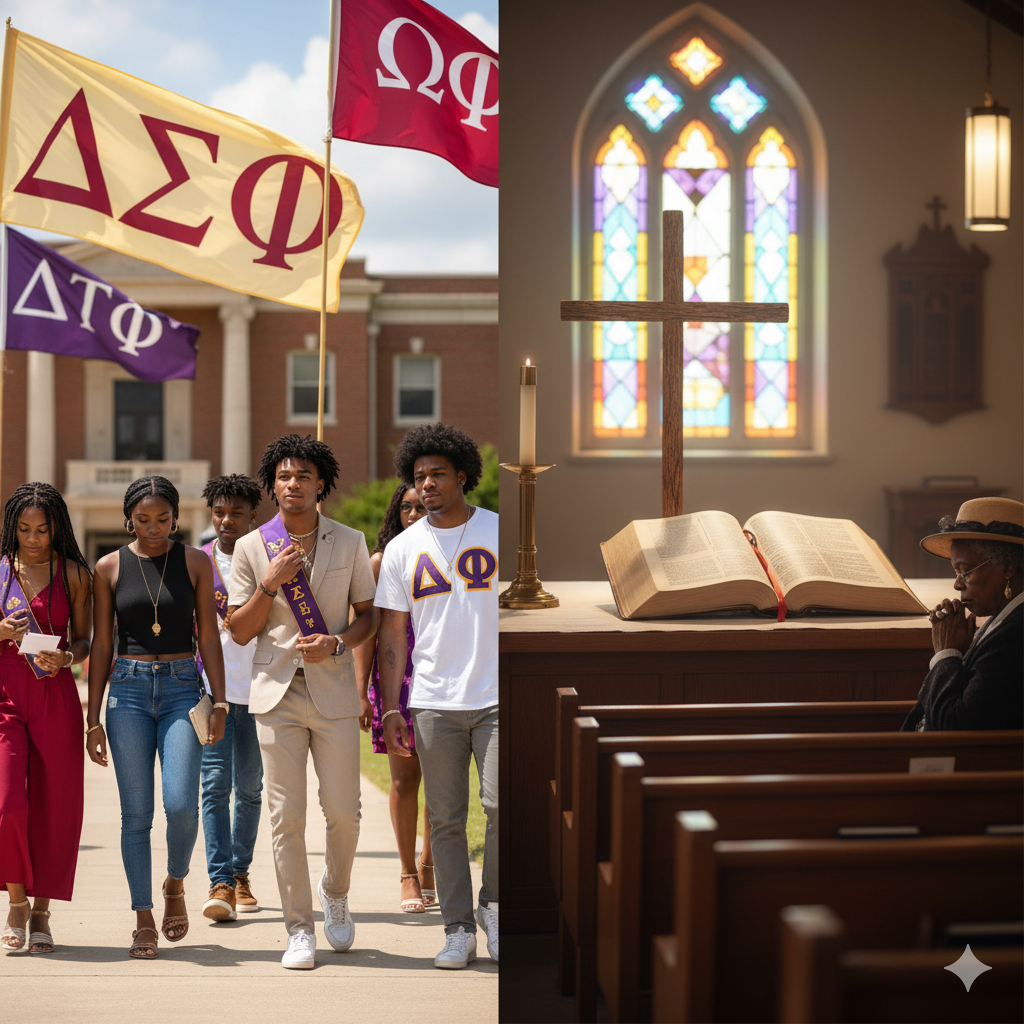
Origins of Brotherhood, Sisterhood, and Belief
To understand the modern tension, we must look back at the birth of these organizations in the early 1900s. Most Black Greek-letter organizations (BGLOs) were founded at historically Black colleges and universities (HBCUs) where faith and education intertwined. In fact, several founders were deeply involved in the church, and early initiation ceremonies often referenced spiritual ideals such as truth, service, and brotherly love.
For many members, joining a fraternity or sorority wasn’t just social—it was a spiritual calling to uplift the race. Their mottos and missions reflected biblical values like stewardship, compassion, and community building. Service projects, scholarship drives, and mentorship programs echoed the teachings of the Black Church, the heartbeat of African American life.
Even today, chapters partner with churches to host voter registration drives, youth mentoring programs, and scholarship fundraisers. The faith foundations of BGLOs are undeniable—yet over time, the evolution of these organizations introduced practices that sometimes blurred the line between spiritual fellowship and secret society.
When Brotherhood Crosses a Line: Hazing, Violence, and the “Burning Sands” Debate
Perhaps the most controversial issue surrounding Greek life and Christianity is hazing. Though outlawed by all national organizations, reports of mental and physical abuse persist, and tragic headlines have cost young lives and shaken faith in the institutions.
The phrase “crossing the burning sands”—symbolizing a member’s final initiation into the fraternity or sorority—has drawn scrutiny from Christian circles. To some, it represents endurance and transformation. To others, it mirrors spiritual testing in ways that appear unbiblical. Critics argue that these rituals echo pagan or occult-like undertones, creating tension for Christian initiates who see allegiance as belonging first to God.
One former fraternity member described the experience this way:
“I love my brothers, but some parts of the process made me question whether I was pledging my loyalty to them or to something higher than myself.”
This isn’t an isolated sentiment. Pastors, parents, and alumni have raised alarms about rituals that may compromise spiritual conviction for cultural tradition.
Still, reform is happening. Many chapters have shifted focus toward community service, mental health awareness, and faith-based mentorship. Some have even incorporated open prayers, Bible studies, and church partnerships into their chapter programming—proof that renewal is possible when the community leans toward transparency and purpose.
Faith in the Frat House: Reconciling Loyalty to God and Organization
The heart of the debate is personal. Many Christians in Greek life struggle privately with reconciling their spiritual faithand fraternal loyalty. On one side, there’s the deep bond of brotherhood or sisterhood; on the other, a commandment to place God above all else.
Ministers who are also members often frame the organizations as vehicles for service, not idols of worship. They argue that pledging a fraternity doesn’t have to conflict with one’s devotion to God—so long as the commitment remains anchored in purpose and love.
However, the tension is real. Some Christians have chosen to renounce their memberships, citing scriptures that warn against secret oaths or divided allegiance. Others have chosen reform from within—using their influence to bring their chapters back to their faith-centered roots.
For many young Black Christians, the real question is not “Should I join?” but “Can I serve both God and the organization faithfully?” The answer often lies in personal conviction and discernment.
The Mystique of Masons and Eastern Stars
The conversation deepens when Masonic and Eastern Star organizations enter the chat. Historically linked to fraternal orders, they’ve long drawn criticism from conservative churches for incorporating symbols, rituals, and oaths perceived as esoteric or un-Christian.
Yet, for many Black families, Masonry and the Order of the Eastern Star have represented community stability and leadership. These lodges have funded scholarships, supported widows, and served as safe spaces for Black excellence in times of exclusion.
Still, questions about secrecy and ritual persist, especially among pastors and church elders. Some view these organizations as incompatible with biblical teachings, while others see them as cultural institutions born out of necessity—bridging civic service and self-determination when the church alone could not.
The Modern Debate: Cultural Legacy or Spiritual Conflict?

Today’s debate plays out as much on TikTok and Twitter as it does in Bible study groups. Videos of pledging rituals or calls for “denouncing” fraternities circulate widely, sparking fiery threads between older alumni and younger believers.
For many in Gen Z, faith and identity are not mutually exclusive. They see Black fraternities and sororities as cultural inheritance—expressions of unity, resilience, and excellence. Yet, they also crave authenticity in faith, resisting anything that feels performative or hypocritical.
Churches, too, are beginning to bridge the divide. Some now host Greek Sunday celebrations, honoring the service work of fraternities and sororities while inviting critical reflection on faith. Others maintain caution, urging members to reflect on whether their participation glorifies God or merely tradition.
The question remains open, but the dialogue itself is a sign of growth—a community willing to examine its history, hold itself accountable, and chart a future grounded in truth.
Building Bridges Between Faith and Fellowship

What if the debate itself is the opportunity? Instead of framing faith and fraternity as enemies, we can view them as parallel movements for empowerment. Both emerged to provide belonging, leadership, and uplift when Black people were excluded from mainstream institutions.
The call now is for alignment, not abandonment. Churches can collaborate with local chapters to expand mentorship, host service days, and mentor youth. Greek organizations can make their faith-driven roots visible again—leading with prayer, humility, and transparency.
At their best, both institutions—the Church and the Divine Nine—share the same heartbeat: building community and embodying love in action.
Key Takeaways
- Faith and fraternity don’t have to be enemies. When guided by purpose and integrity, they can strengthen each other.
- Transparency and reform matter. Ending harmful rituals and returning to spiritual foundations honors both God and community.
- Dialogue is the bridge. The future lies in open conversation between churches, students, and alumni.
- Legacy evolves. Today’s youth can redefine Greek life to reflect both cultural pride and Christian conviction.
Call to Action
To those wrestling with the tension between Black fraternities and sororities and faith, know that questioning isn’t betrayal—it’s discernment. Have the conversations. Read your organization’s founding principles. Sit with scripture and mentors you trust.
And above all, remember this: Your light doesn’t dim when you ask for clarity; it shines brighter when you seek truth.
Related HfYC Content
- Dating While Black and Christian: A Guide to Navigating Faith, Culture, and Love
- Celebrating 50 Years of Sisterhood: Delta Sigma Theta’s Impact on New Jersey and Beyond
- Finding Our Reflection: Deconstructing the White-Washed Jesus
- Weekly Prayers, Weekly Pain: Families Gather Outside Delaney Hall in Search of Hope
- Where Should Black Parents Send Their Child?
Other Related Content
- National Pan-Hellenic Council – About Us
- The Christian Post – Faith, Greek Life, and the Modern Black Church
References
- Lincoln, C. E., & Mamiya, L. H. (1990). The Black Church in the African American Experience. Duke University Press.
- Parks, G. S., & Brown, M. W. (2019). Black Greek-letter Organizations in the Twenty-First Century: Our Fight Has Just Begun. University Press of Kentucky.
- The Christian Post. (2024, February). Faith, Greek Life, and the Modern Black Church. Retrieved from https://www.christianpost.com/news
- National Pan-Hellenic Council. (2024). About Us. Retrieved from https://www.nphchq.com




2 Comments