
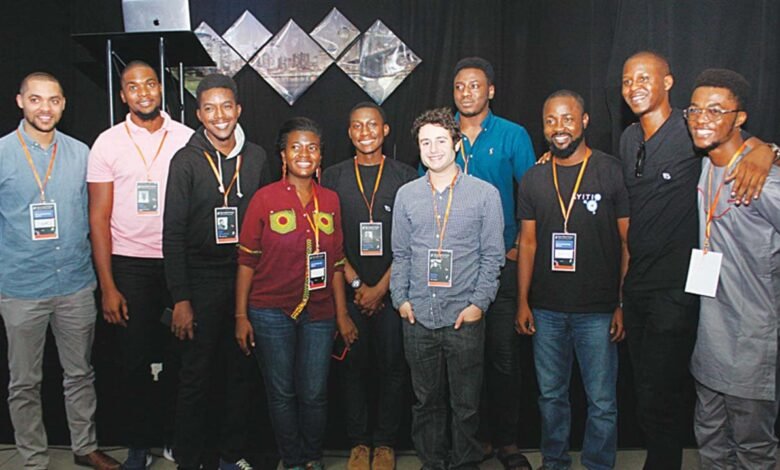
It’s not every day you get to show a future billionaire around your city.
Back in January 2018, my team at Ingressive Advisory and I hosted a seemingly soft-spoken, 25-year-old American founder named Dylan Field in Lagos, Nigeria. He was the co-founder of a promising design startup called Figma. The reason for his visit was simple, yet profound: he’d noticed a cluster of users—a blip on his global analytics map—in our corner of the world and wanted to understand why.
I didn’t know it then, but the intensely curious, almost reserved young man I spent the week with would go on to lead a company so essential that Adobe would offer a staggering $20 billion to acquire it. The lessons I learned from him during that visit, long before the world knew his name, have shaped my own approach to building ever since.

The Anti-CEO: Dylan Field was Calculated, Curious, and Allergic to the Spotlight
Dylan wasn’t what I expected from a Silicon Valley CEO. I’ve met a few, but I never really built a “This is a Silicon Valley CEO” mental framework. And let me not overstep, I don’t know if he’s a real chatterbox with friends, but the Dylan I met was measured. He was slow to speak, often taking long, deliberate pauses before answering a question. You could almost see the gears turning, as if his brain was a computer processing external data points in real-time before outputting a response.
This wasn’t cold or robotic; the humanity was in the answers themselves. He’d often reply to my questions with a gentle question of his own, always probing for more context. It was like talking to a supercomputer that was genuinely trying to build a better model of the world with you, not at you. Even his answers seemed to have question marks.
This trait was on full display at the Figma design meetup we hosted. It drew over 300 people from the Lagos tech community, a perfect opportunity for a CEO to take the stage and deliver a grand keynote. Dylan did the opposite. After a brief welcome, he melted into the crowd. For the rest of the day, you could find him in a corner, laptop open, with a small circle of designers huddled around him. He wasn’t pitching; he was listening, observing, and asking them to try new things right there on the spot. He was more interested in debugging a user’s problem than he was in building his own profile.
Lesson 1: Follow the Data—Even When It Leads You Off the Beaten Path
Perhaps the most powerful lesson was the one embodied by his very presence in Lagos. Figma’s analytics showed a surprising pocket of dedicated users in Nigeria. At the time, over 80% of Figma’s user base was outside the United States. Many founders might see that data and simply allocate more ad spend to the region. Dylan got on a plane.
He chose to trust the data over the often-sensationalized headlines about emerging markets. He wanted to see the reality for himself, to understand the context behind the numbers. He learned, for instance, that because Figma was browser-based and offered a generous free tier, young Nigerian designers could bypass the need for expensive hardware and software licenses. They were using his tool in internet cafés, collaborating on projects in ways he hadn’t fully anticipated.
He didn’t just show up and disappear, either. The insights from that trip directly informed Figma’s strategy. Soon after, the company launched a Global Design Community initiative across Africa, hosting roadshows and partnering with university tech communities my team at Ingressive had helped build alongside GitHub. He didn’t just visit a market; he came to learn, and then he invested back into the community that taught him. The lesson for founders is clear: your data will show you what is happening, but you’ll only understand why by leaving your comfort zone and meeting your users where they are.
Lesson 2: Learn First, Sell Later (Or Never)
Throughout his entire visit, I never once felt like I was being sold to. In meetings with local startup founders and tech hub managers, Dylan didn’t lead with a pitch. He led with questions: “How do designers and developers collaborate here?” or “What tools are students learning first?”
This approach is a masterclass in community-led growth. Claire Butler, one of Figma’s first employees and its marketing leader, later explained that their strategy was built on the understanding that designers “hate traditional SaaS marketing” and value authenticity above all else. Dylan’s behavior was the living embodiment of that strategy. By focusing on asking for feedback rather than pitching, he built trust.
By the end of his trip, the local design community was buzzing about Figma. Not because he hyped it up, but because he had listened so intently that everyone felt seen and understood. In a counterintuitive twist of business, by not trying to sell at all, he sold us all on his vision.
Lesson 3: Build a Team of Complements, Not Clones
A founder’s character is often revealed by the people they surround themselves with. Dylan traveled with Claire, who at the time ran marketing, the community and operations. Watching them work together was like seeing two perfectly matched puzzle pieces. Dylan was the laid-back, inquisitive innovator. Claire was outspoken, meticulous, and relentlessly results-driven. She was the operational force that made sure the vision connected with reality.
I remember us running behind schedule for a tour of tech hubs because Dylan, naturally, was lost in a deep conversation with a group of designers. It was Claire who stepped in, with her piercing, yet compassionate eyes, and said, “Alright folks, we’ve got to move!” Dylan simply nodded, trusting her completely. He had no ego about delegating the things he wasn’t best at or just didn’t want to do. It didn’t start this way, but it was a tough lesson he spoke about in later interviews. He empowered people who filled his gaps, which freed him up to stay in his zone of genius: the product and the user.
Years later, reading about Figma’s early days, I learned just how instrumental Claire’s operational leadership was to their growth. It was a powerful reminder that you don’t have to be the best at everything. True leadership lies in knowing your weaknesses and empowering those who are your complement, not your clone.
Lesson 4: Let the Product Do the Talking
For all his focus on the product, Dylan was remarkably humble about it. He never built himself up or postured as the next big thing. He let his work speak for itself. Even when he did talk about Figma, it was with a refreshing transparency. He’d openly discuss its shortcomings, like the lack of a robust offline mode, framing it as a trade-off of being a cloud-based tool.
This candor was disarming and built incredible trust. It showed a quiet confidence that didn’t need to be propped up by arrogance. He knew he was building something useful, and he was more interested in making it better than in convincing you it was already perfect. This humility is not just a personality trait; it’s a strategic advantage. It creates a culture where feedback is a gift, not an insult, and where the product can evolve based on reality, not ego.
As a guy who grew up in a small town in Mississippi, where understatedness is a virtue, this resonated deeply. It just seemed like he was raised right. It felt like no amount of money or success would fundamentally change who he was. And when the news of the Adobe deal broke years later, I wasn’t surprised. The foundation I saw in Lagos—curiosity, humility, and a relentless focus on the user—was built to last. The billions were just the outcome of getting the fundamentals right.
Lesson 5: Totally Ignore Everything in This Article and Find Your Own Path
As the phrase, famously associated with the film 500 Days of Summer, this is not a story about love… I think the biggest lesson for me was that Dylan didn’t fit the model of what I see as a founder and CEO of a big tech company. Whatever I envisioned a Silicon Valley CEO to be, he wasn’t it. I think that’s the beauty of it all. I also think it’s very important to mention that his path will not work or isn’t even accessible for 99% of the founders I know.
The Figma project technically started in 2012 by a barely 20 something year old man. Dylan was able to raise money multiple times on a private beta before we even knew the Figma name. This speaks to not only a less risk adverse market, access to more diverse capital sources, and even affordable debt structures, but a network replete with resources that many of us simply do not have access to. I believe that Dylan came from humble enough beginnings, but there’s levels to that. It’s hard to compare middle class America to backwater Mississippi or the depths of Oshodi.
There are some nuggets to consider, but when looking for the path, look local. Look for the people who came from where you came from and made it. People with access to capital and relationships similar to your own. Use that as data, not the Bible. Maybe in our world we have to kick the door off the hinges to make an entrance, maybe some of us will sneak in like a ninja. Whatever your path dictates, there are some things I’d highly recommend:
The Takeaways for Every Founder
Looking back, that week was a crash course in building something meaningful. Here are the lessons that have stuck with me:
- Be Intensely Curious: Your greatest insights will come from listening, not talking. Let your customers teach you what problem you’re actually solving.
- Follow the Data Off the Beaten Path: Your most passionate users might be in places you least expect. Don’t be afraid to go there and understand their world.
- Empower Your Team: Know what you’re not good at and hire people who excel in those areas. Then, trust them completely.
- Learn First, Sell Later: Build goodwill by genuinely trying to understand and solve problems. The sales will follow the trust you build.
- Stay Humble and Product-Focused: Let your work be your best marketing. A great product that delights users will speak louder than any keynote you could ever give.
P.S. This story is just one of many I’ve collected over the years about the non-obvious paths to success. I’ll be exploring more of these lessons with other founders in my upcoming Vision to Victory webinar series. If this story resonated with you, consider this an invitation to join the conversation. You can sign up here: burrowesenterprises.com/vision2victory.
Related HfYC Content:
- Boss Moves: How Black Gen Z Is Building a New Business Blueprint in New Jersey
- Digital Eyes, Enduring Bias: How Surveillance Tech Threatens New Jersey’s Black Community
- The Stories Our Neighborhoods Deserve







One Comment