A Summer of Adjustments in Plainfield
The Plainfield Splash Park is filling a summertime gap. For Plainfield residents, summer is usually defined by the rhythm of splashing water, neighborhood chatter, and the hum of kids lining up at the city’s pools. But this year, things shifted: several public pools closed, leaving families scrambling for alternatives in the middle of a heatwave.
The closures, caused by a mix of maintenance issues and budget constraints, sparked frustration across the city. Pools aren’t just recreational — they’ve historically been community anchors, offering a place to cool off, connect, and create memories.
Yet amid the closures, one space held strong: the Plainfield splash park, which stayed open and quickly became a lifeline for families in need of relief.
The Splash Park Becomes the New Gathering Spot
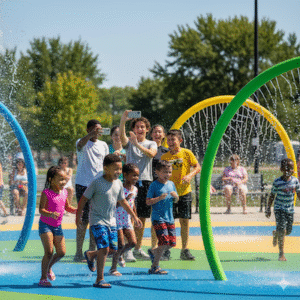

Instead of silent pool decks, the splash park has become Plainfield’s beating summer heart. Children dash through colorful water jets, teens crowd around to film playful moments, and grandparents look on from shaded benches.
For parents, it’s not just about fun — it’s about accessibility and safety. Unlike pools, splash parks don’t require lifeguards, making them easier to operate during a statewide shortage. And for families unable to travel out of town or pay for private memberships, it provides a free, reliable option to keep cool.
Youth Perspectives: More Than Just Play
While kids and parents celebrate the splash park’s open hours, older youth see what’s missing. Pools provide more than recreation:
- Jobs: Summer lifeguard positions and pool staff roles are often the first jobs for local teens.
- Swim Lessons: Many Black and Latino families rely on public pools for affordable access to swim programs — crucial in addressing racial disparities in swimming proficiency.
- Safe Hangouts: Pools offer structured spaces that keep youth engaged during the summer months.
As one local high schooler put it, “The splash park is fun, but it doesn’t teach you how to swim, and it doesn’t pay your summer job.”
Short-Term Relief vs. Long-Term Needs
The splash park’s popularity is proof of resilience, but the pool closures highlight bigger issues:
- Aging Infrastructure: Many of Plainfield’s pools are decades old, requiring costly repairs. Without consistent funding, closures will continue.
- Climate Pressures: Hotter summers — already hitting Union County — mean cooling spaces are more than luxuries. They’re public health necessities.
- Equity Questions: Who gets access to safe, well-maintained recreational spaces, and who doesn’t? That’s a question echoing beyond Plainfield, across North Jersey and the nation.
According to the CDC, Black children are disproportionately impacted by limited swim access and face higher drowning risks. Public pools are part of the solution.
Key Takeaways
- Plainfield’s pool closures disrupted summer traditions, but the splash park became a vital alternative.
- For families, the park provided immediate relief and community joy.
- For youth, the absence of pools highlights lost opportunities — from jobs to swim lessons.
- Long-term, the city must treat water recreation as infrastructure, not luxury.
Next Steps: Building Toward Equity
- Families: Keep showing up at the splash park and sharing experiences. Attendance demonstrates the need for sustained investment.
- Youth: Advocate for water equity. Push for lifeguard training programs, city investment in swim lessons, and funding for pools.
- City Leaders: Prioritize recreation budgets. Pools and splash parks should be maintained as core infrastructure, tied to public health and community safety.
Plainfield’s splash park proves the community can adapt and thrive, but it also underscores a truth: families deserve more than temporary fixes. A city shaped by resilience deserves long-term, equitable investment in safe spaces to gather, learn, and cool off.
More from HfYC