
“The gun violence in Newark is crazy. It happens too often.”
Tahgee says this with the chilling matter-of-factness of someone who knows it not as a headline, but as the air he breathes. This past summer, at seventeen, he was shot twice in his upper right arm. The trauma didn’t end there. In a world where survival feels like a daily gamble, fear becomes a constant companion. “I have multiple friends who were shot in the year of 2024 alone,” he shares. “Many of them are now in jail for guns they got caught with after being shot. Even I went right to jail for a gun after getting shot.”
His story is a portrait of a vicious cycle: violence creates trauma, trauma creates fear, and fear leads young Black men to feel that carrying a weapon is their only path to self-preservation, even if it leads them straight into the justice system they already distrust. For generations, this cycle has torn at the fabric of New Jersey’s cities. But something is shifting.
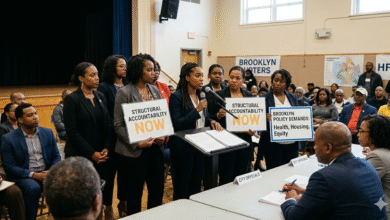
In Newark, Trenton, and Paterson, a new generation is rising. They’ve seen the cost of violence firsthand and are refusing to accept it as their inheritance. They are not just demanding an end to the shootings; they are fundamentally redefining what public safety means. Led by Black Gen Z activists and their allies, a revolutionary idea is taking root: treating violence not as a crime to be punished, but as a public health crisis to be healed. By reallocating funds from traditional policing to community-led initiatives, they are building an ecosystem of hope, turning their pain into a powerful purpose: to build a future where their neighborhoods can finally live free from fear.
For decades, the answer to violence in cities like Newark was more policing. But after the murder of George Floyd catalyzed a national reckoning, Newark took a radical step. In 2020, the city reallocated five percent of its police budget—roughly $12 million—to create the Office of Violence Prevention and Trauma Recovery. This wasn’t just a budget line change; it was a philosophical earthquake. It was an official acknowledgment that the root causes of violence—trauma, poverty, lack of opportunity—can’t be arrested away. This public health approach brings together everyone from community organizers to researchers to develop and implement evidence-based solutions. The results have been stunning. In 2020, Newark recorded a year where police officers did not fire a single shot.
At the heart of this transformation is the Brick City Peace Collective (BCPC), an alliance of over 50 organizations working in concert to create a citywide “public safety ecosystem”. This isn’t about disconnected programs; it’s about a coordinated, data-informed strategy that wraps around the community’s most vulnerable. One of its key partners, the
Newark Community Street Team (NCST), deploys outreach workers—many of whom have been formerly incarcerated and are now trained as mentors and interventionists—to support at-risk youth aged 14-30. They provide “Safe Passage” for students walking to and from school, mediate conflicts to stop violence before it starts, and run a Trauma Recovery Center (TRC) offering free mental health services to survivors of violent crime as young as 10 years old.
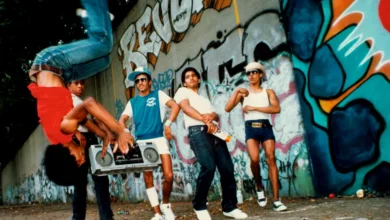
This work is deeply personal. Al-Tariq Best, known as Mr. HUBB, founded The HUBB Arts & Trauma Center after a moment of reckoning with his own son. After witnessing a violent street fight, his son asked him, “Dad, you always talk about being part of the solution… What are you doing about it?”. That question changed his life. Now, The HUBB provides a safe space where young people can process their trauma through art and music, using a full recording studio and peer counseling sessions called “My Thoughts Out Loud” to turn pain into creative expression. They even train youth ambassadors to go out into the community to de-escalate conflicts and connect their peers with services.
This movement of healing and youth empowerment is spreading. In Paterson, the Paterson Healing Collective (PHC)was born from the heartbreak of its director, Liza Chowdhury, a former juvenile probation officer who was tired of seeing young people she knew become statistics. The PHC runs a “Safe Summer Teen Club,” bringing together teens from rival neighborhoods to learn conflict mediation, financial literacy, and even how to use hip-hop to write and record songs about their experiences instead of about violence. In Trenton, the
Increase the Peace initiative is a citywide effort that explicitly calls on youth to lead the way in building a community intolerant to violence through positive messaging and community-driven projects.
These young people are not just marching; they are creating the world they want to live in. They are hosting open-mic nights and poetry slams where their peers can speak their truth about the trauma of living with the constant threat of violence. They are demanding and creating “safe summer” initiatives, knowing that violence often spikes when school is out. Newark’s annual
24 Hours of Peace festival, co-founded by Mayor Baraka, is a powerful example, drawing thousands for a full day and night of music, art, and community dialogue centered on nonviolence, with hip-hop culture as the main vehicle for connection.
The work is far from over. The trauma is deep, and the systemic issues that fuel violence still exist. But for the first time in a long time, the path forward is illuminated by a different kind of light—one lit by the young people who have decided that their stories will not end with a bullet. They are writing a new chapter for their cities, one where safety is built not on fear, but on healing, connection, and the unshakeable power of community.
For anyone who wants to be part of the solution, the message from these young leaders is clear: show up. Support the local organizations on the front lines doing this work every day. Amplify the stories of survivors and advocates. Demand that elected officials continue to invest in community-based public safety and trauma recovery services. Attend a peace march, a community healing event, or a festival like 24 Hours of Peace. This is a movement built on the belief that everyone has a role to play in creating a future where every young person, in every neighborhood, can live a life of peace and potential.